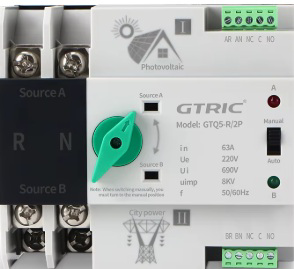
The ATS 230V 2P External Trigger is an Automatic Transfer Switch designed for 230V applications with a 2-pole configuration. This device ensures seamless switching between two power sources, such as a primary utility supply and a backup generator, to maintain continuous power during outages or scheduled maintenance. It is equipped with an external trigger mechanism for enhanced control and automation.
Explore Projects Built with ATS 230V 2P external trigger
Use Cirkit Designer to design, explore, and prototype these projects online. Some projects support real-time simulation. Click "Open Project" to start designing instantly!
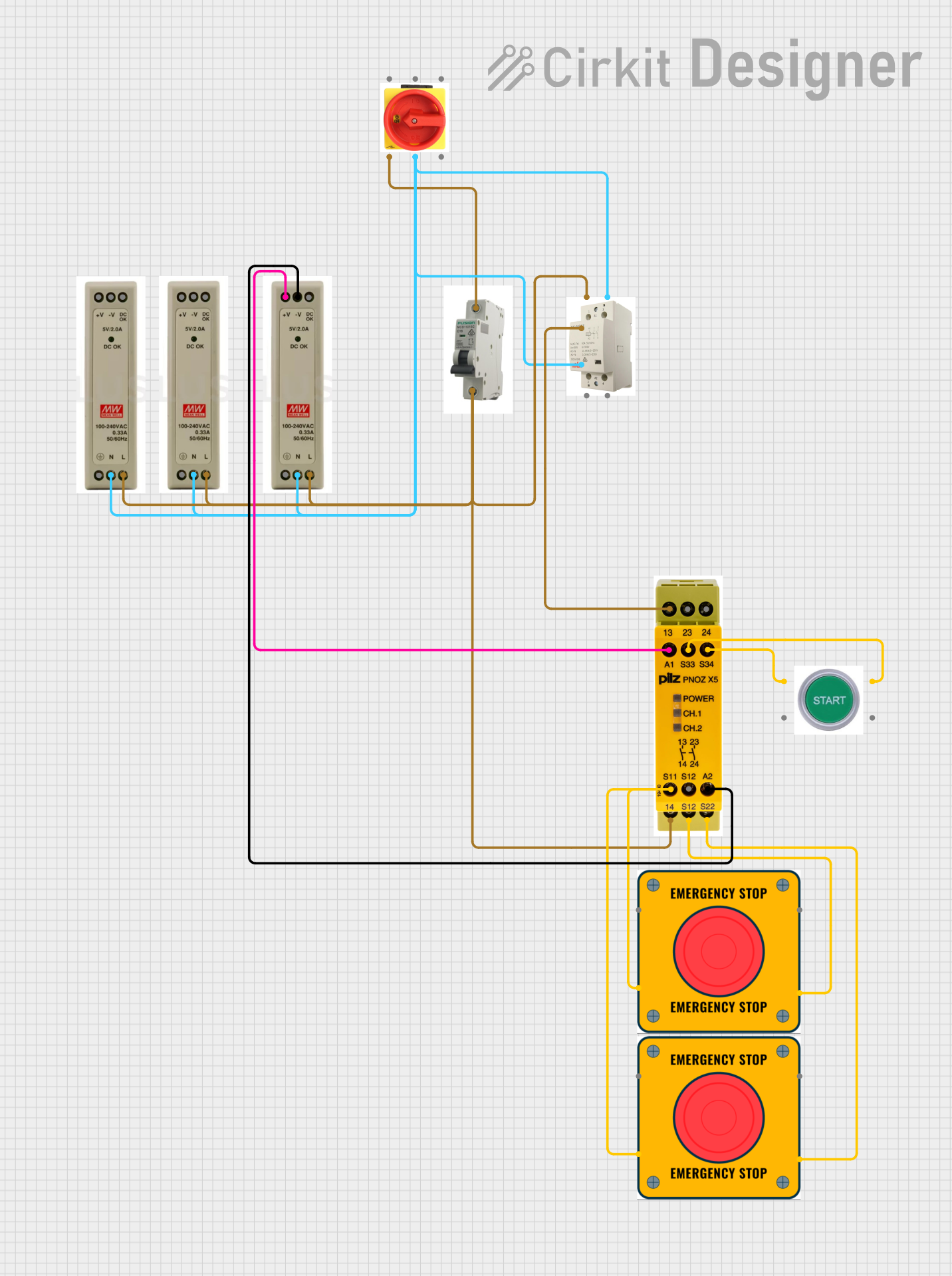
This circuit is designed for power distribution and safety control in an industrial setting. It features a main isolator and circuit breaker for power management, multiple PSUs for 5V, 12V, and 24V outputs, and a safety relay system that interfaces with E-stop buttons and a start switch to control a main contactor, ensuring safe operation and emergency power cut-off capabilities.
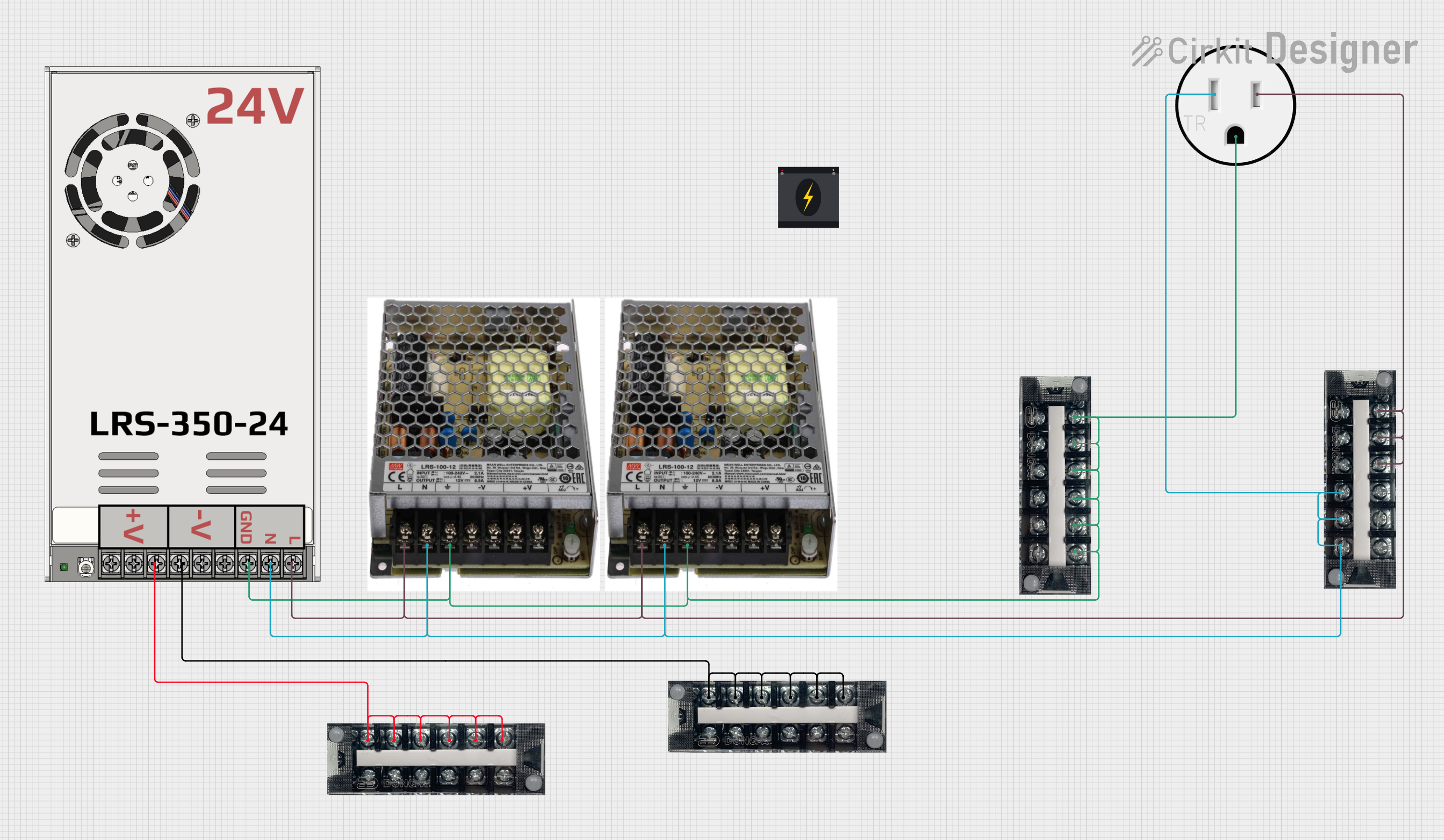
This circuit is designed to convert 240V AC power to both 12V and 24V DC outputs using multiple SMPS units. Terminal blocks are used to organize and distribute the power, while a 120V outlet provides additional AC power access. The circuit is likely used for powering various electronic devices that require different voltage levels.
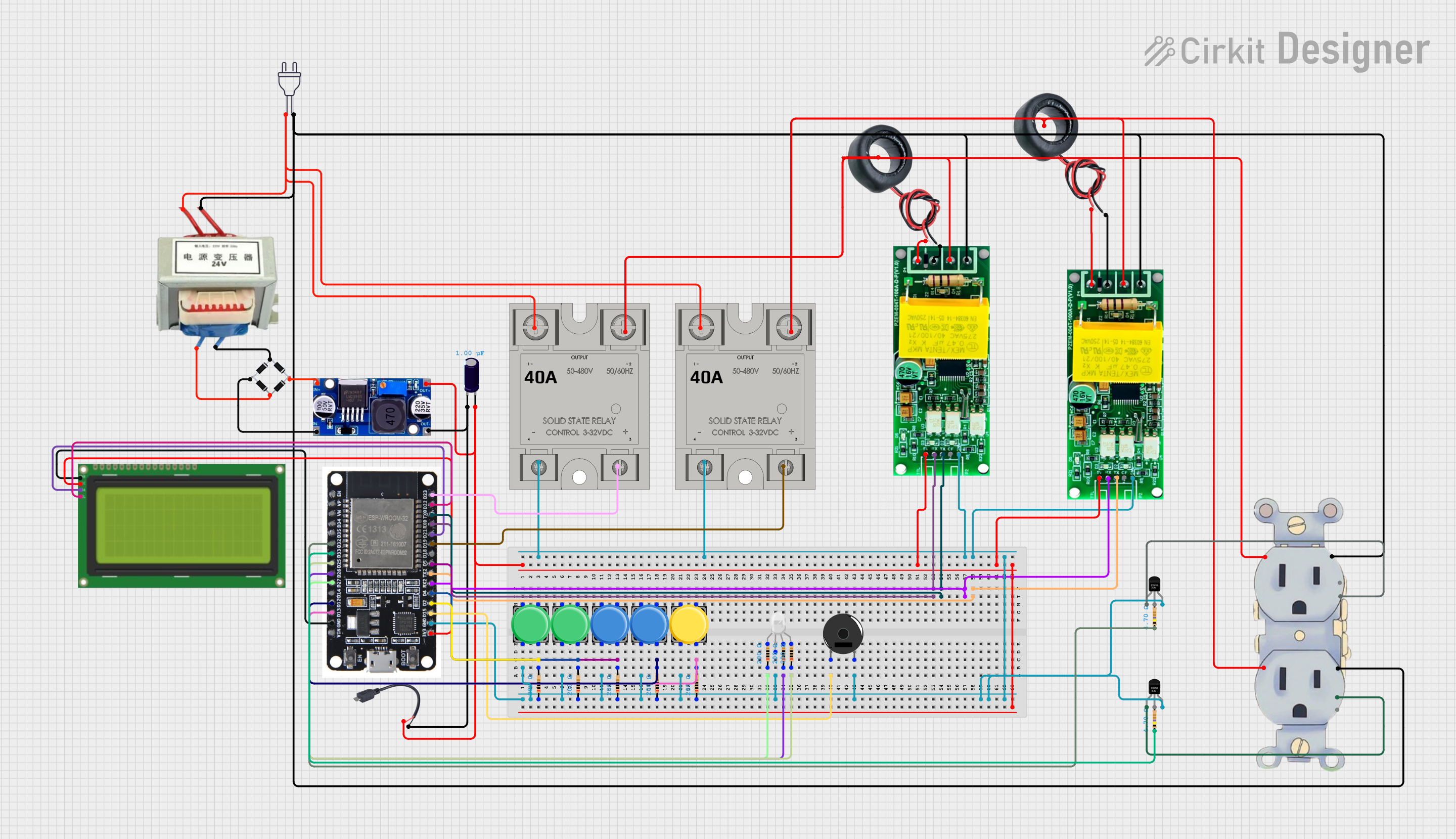
This circuit is a smart power monitoring and control system using an ESP32 microcontroller. It features multiple sensors and components, including PZEM-004T AC modules for voltage and current measurement, DS18B20 temperature sensors, an LCD for display, and solid-state relays for controlling power outlets. The system is integrated with Blynk for remote monitoring and control, and includes pushbuttons for local interaction.
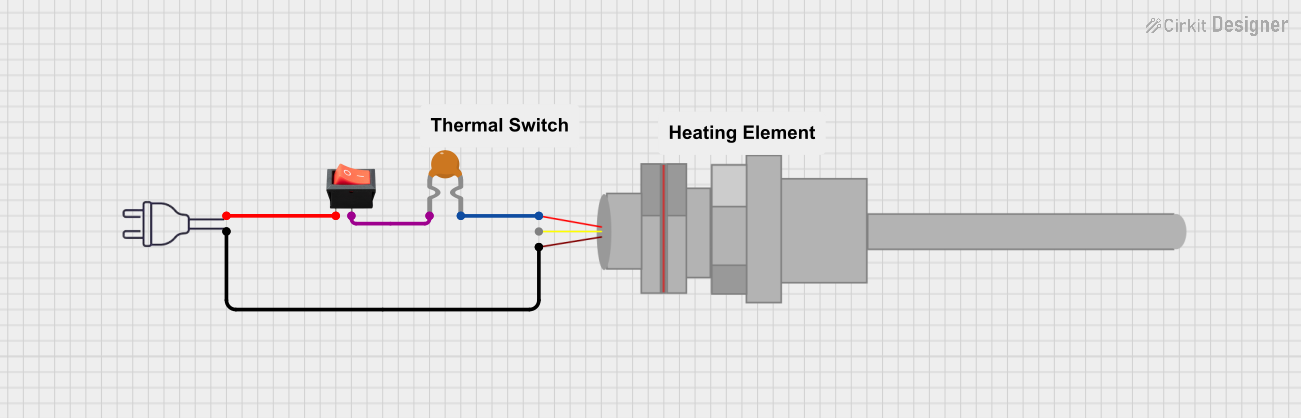
This circuit is a basic power control system that uses a rocker switch to control the flow of 220V power through a resettable fuse and a PT100 temperature sensor. The switch allows the user to turn the power on or off, while the fuse provides overcurrent protection and the PT100 sensor can be used for temperature monitoring.
Industrial equipment requiring uninterrupted power
Data centers and server rooms
Hospitals and critical infrastructure
Renewable energy systems (e.g., solar or wind power integration)
Technical Specifications
Key Technical Details
Parameter
Specification
Rated Voltage
230V AC
Rated Current
63A (varies by model)
Poles
2 (Double Pole)
Frequency
50/60 Hz
Switching Time
≤ 3 seconds
Control Method
External trigger
Operating Temperature
-20°C to 55°C
Insulation Resistance
≥ 2MΩ
Mechanical Life
≥ 10,000 cycles
Electrical Life
≥ 5,000 cycles
Pin Configuration and Descriptions
The ATS 230V 2P External Trigger typically features the following terminal connections:
Terminal Label
Description
L1 (Input)
Line input from primary power source
N1 (Input)
Neutral input from primary power source
L2 (Input)
Line input from secondary (backup) power source
N2 (Input)
Neutral input from secondary (backup) power source
L (Output)
Line output to the load
N (Output)
Neutral output to the load
Trigger+
Positive terminal for external trigger signal
Trigger-
Negative terminal for external trigger signal
Usage Instructions
How to Use the Component in a Circuit
Wiring the ATS:
Connect the primary power source (e.g., utility supply) to the L1 and N1 terminals.
Connect the backup power source (e.g., generator) to the L2 and N2 terminals.
Connect the load (e.g., appliances or equipment) to the L and N output terminals.
Ensure proper grounding for safety.
External Trigger Setup:
Connect the external trigger signal to the Trigger+ and Trigger- terminals.
The external trigger can be controlled by a microcontroller, relay, or manual switch.
Power On:
Turn on the primary and backup power sources.
The ATS will automatically switch to the primary source when available and switch to the backup source during outages.
Important Considerations and Best Practices
Ensure the ATS is rated for the load's voltage and current requirements.
Use appropriately sized wires and circuit breakers to prevent overheating or damage.
Test the ATS functionality periodically to ensure reliable operation.
Avoid exposing the ATS to moisture, dust, or extreme temperatures.
If using a generator, ensure it is properly grounded and synchronized with the ATS.
Example: Connecting to an Arduino UNO
The external trigger of the ATS can be controlled using an Arduino UNO. Below is an example code snippet to toggle the ATS using a digital output pin:
// Example code to control ATS external trigger using Arduino UNO
// Connect Arduino digital pin 7 to Trigger+ and GND to Trigger-

const int triggerPin = 7; // Define the pin connected to Trigger+

void setup() {
  pinMode(triggerPin, OUTPUT); // Set triggerPin as an output
  digitalWrite(triggerPin, LOW); // Ensure trigger is initially off
}

void loop() {
  // Simulate switching to backup power
  digitalWrite(triggerPin, HIGH); // Activate external trigger
  delay(5000); // Keep trigger active for 5 seconds

  // Simulate switching back to primary power
  digitalWrite(triggerPin, LOW); // Deactivate external trigger
  delay(10000); // Wait for 10 seconds before next cycle
}
Note: Ensure the external trigger voltage and current requirements are compatible with the Arduino's output.
Troubleshooting and FAQs
Common Issues and Solutions
Issue
Possible Cause
Solution
ATS does not switch to backup power
Backup power source is not connected
Verify wiring and ensure backup source is active
Delayed switching
External trigger signal is unstable
Check the trigger signal and connections
Load does not receive power
Incorrect wiring or loose connections
Double-check all terminal connections
ATS overheats
Load exceeds rated current
Reduce load or use a higher-rated ATS
FAQs
Can the ATS handle inductive loads like motors?
Yes, but ensure the ATS is rated for the inrush current of the inductive load.
What happens if both power sources fail?
The ATS will not supply power to the load. Consider adding a UPS for critical systems.
Can I manually override the ATS?
Some models include a manual override switch. Refer to the specific model's user manual.
Is the ATS compatible with solar inverters?
Yes, as long as the inverter's output matches the ATS's voltage and frequency ratings.
By following this documentation, users can effectively integrate and operate the ATS 230V 2P External Trigger in their power systems.

 Open Project in Cirkit Designer