
How to Use Soil Moisture Interceptor: Examples, Pinouts, and Specs

 Design with Soil Moisture Interceptor in Cirkit Designer
Introduction
The Soil Moisture Interceptor (Blox) by Sox is an innovative electronic component designed to measure the moisture content of soil. This sensor operates by detecting changes in electrical conductivity as moisture levels vary. It is an essential tool for agriculture, horticulture, and environmental monitoring, enabling users to optimize irrigation schedules, conserve water, and monitor plant health.
Explore Projects Built with Soil Moisture Interceptor
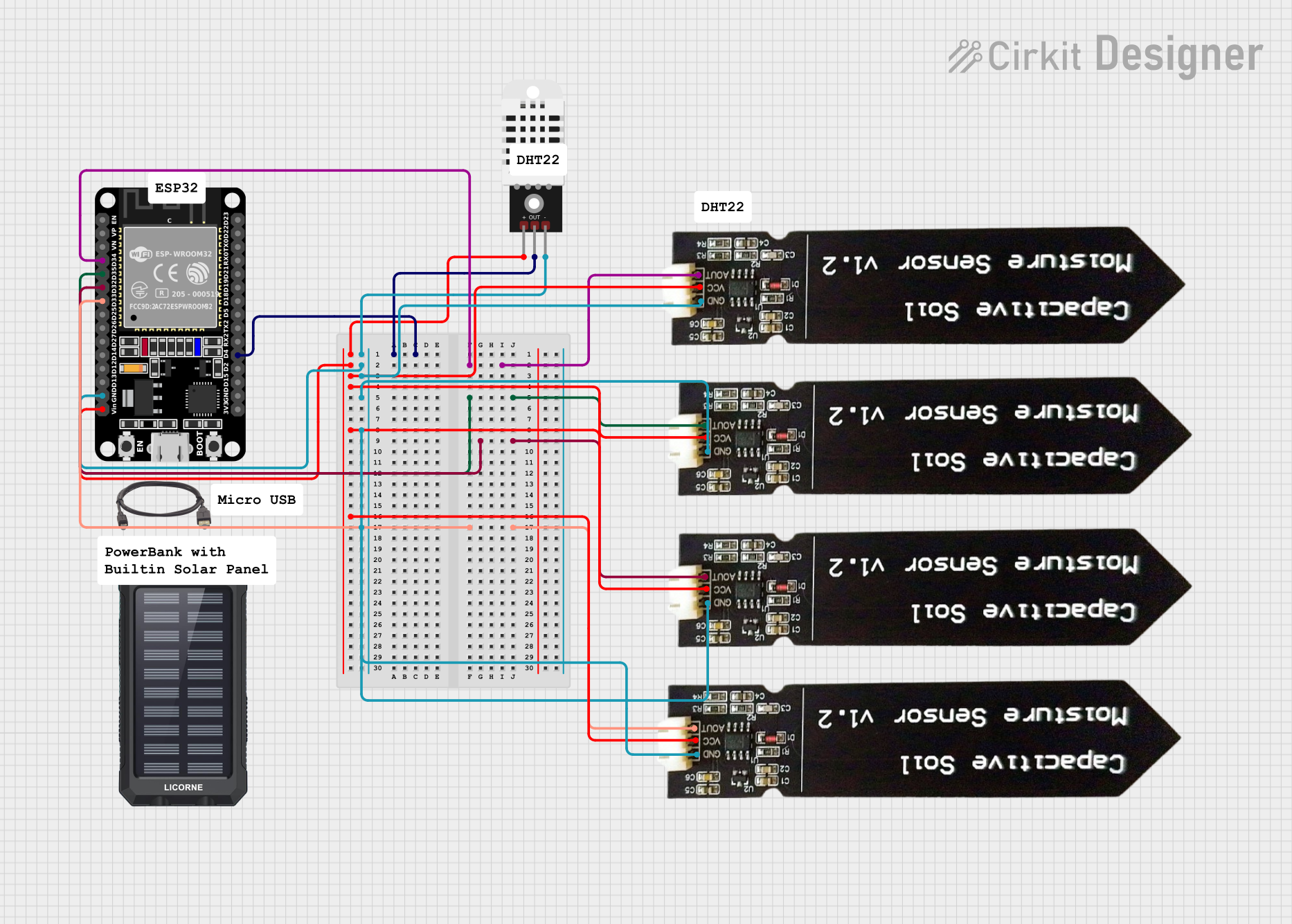 Open Project in Cirkit Designer
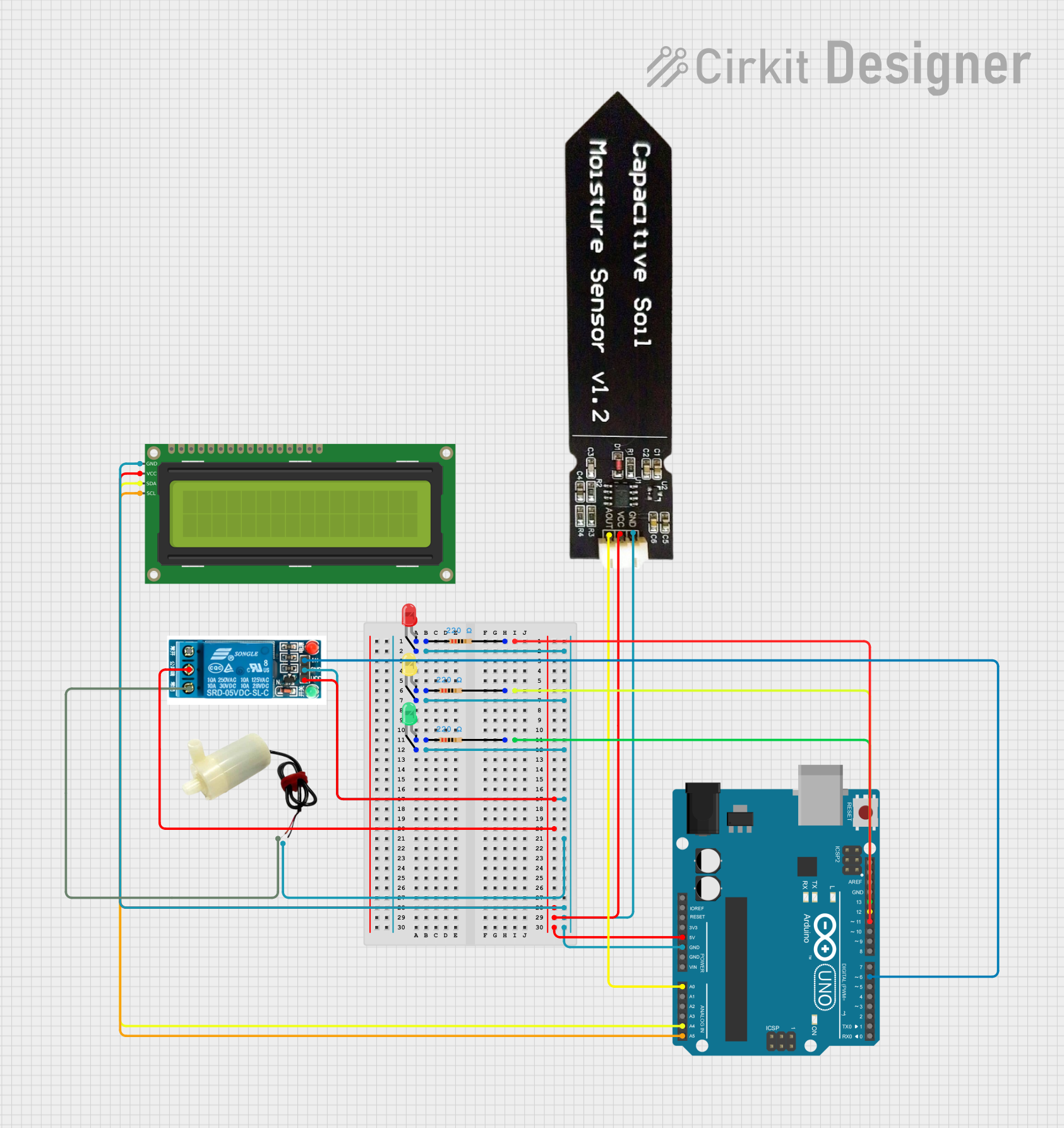 Open Project in Cirkit Designer
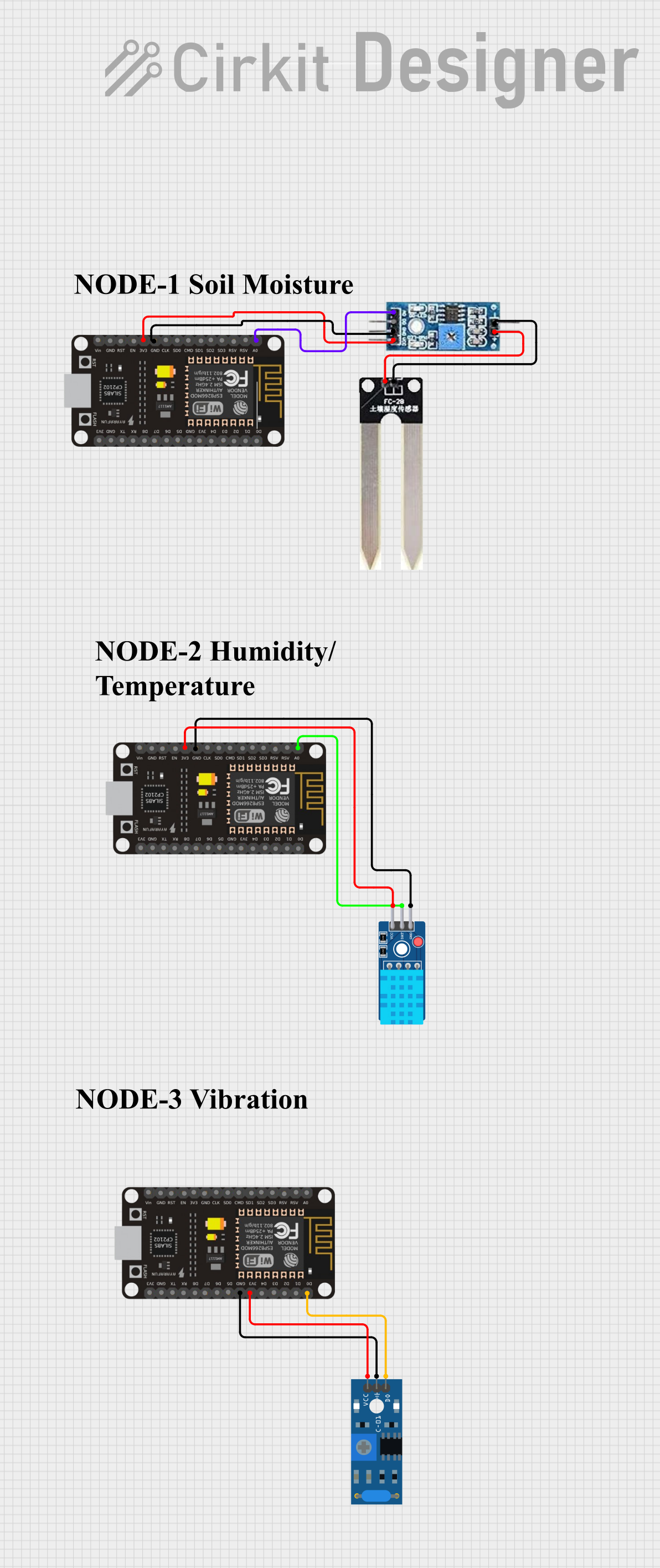 Open Project in Cirkit Designer
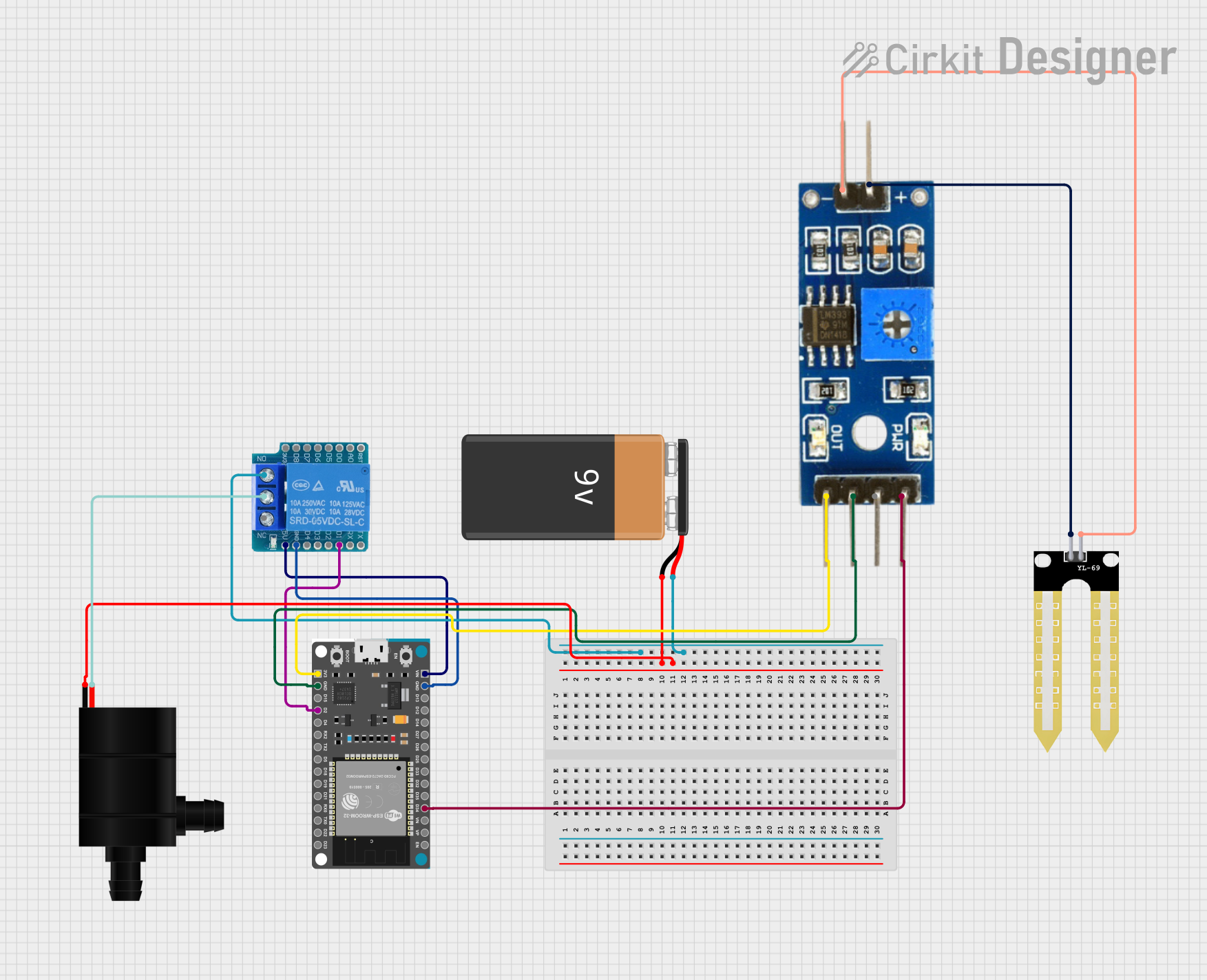 Open Project in Cirkit Designer
Explore Projects Built with Soil Moisture Interceptor
Open Project in Cirkit DesignerOpen Project in Cirkit DesignerOpen Project in Cirkit DesignerOpen Project in Cirkit DesignerCommon Applications and Use Cases:
- Automated gardening and farming systems
- Environmental monitoring
- Research in soil science
- Educational projects related to agriculture
Technical Specifications
Key Technical Details:
- Operating Voltage: 3.3V to 5V DC
- Output Voltage: 0V to 3.0V (proportional to soil moisture)
- Current Consumption: 5mA (typical)
- Sensing Accuracy: ±5%
- Operating Temperature: -10°C to +70°C
Pin Configuration and Descriptions:
| Pin Number | Name | Description |
|---|---|---|
| 1 | VCC | Power supply (3.3V to 5V DC) |
| 2 | GND | Ground |
| 3 | AOUT | Analog output (moisture level voltage) |
| 4 | DOUT | Digital output (threshold-detected level) |
Usage Instructions
How to Use the Component in a Circuit:
- Connect the VCC pin to a 3.3V or 5V power supply.
- Attach the GND pin to the ground of the power supply.
- Connect the AOUT pin to an analog input on your microcontroller to read the moisture level as an analog value.
- Optionally, connect the DOUT pin to a digital input on your microcontroller if you wish to use a threshold-based digital signal.
Important Considerations and Best Practices:
- Avoid submerging the sensor completely in water or exposing it to corrosive chemicals.
- Insert the sensor into the soil up to the indicated line to prevent damage to the onboard circuitry.
- Calibrate the sensor for the specific soil type to ensure accurate readings.
- Use a pull-up resistor if the digital output (DOUT) is used.
Example Code for Arduino UNO
// Soil Moisture Interceptor (Blox) by Sox - Example Arduino Code

int analogPin = A0; // Analog input pin connected to AOUT of the sensor
int digitalPin = 2; // Digital input pin connected to DOUT of the sensor
int sensorValue = 0; // Variable to store the sensor value

void setup() {
  pinMode(digitalPin, INPUT); // Set the digital pin as input
  Serial.begin(9600); // Initialize serial communication at 9600 baud rate
}

void loop() {
  sensorValue = analogRead(analogPin); // Read the analog value from sensor
  Serial.print("Moisture Level (Analog): ");
  Serial.println(sensorValue); // Print the moisture level to the serial monitor

  // Check the digital pin for threshold detection
  if (digitalRead(digitalPin) == HIGH) {
    Serial.println("Dry soil detected");
  } else {
    Serial.println("Moist soil detected");
  }

  delay(1000); // Wait for a second before reading again
}
Troubleshooting and FAQs
Common Issues Users Might Face:
- Inconsistent Readings: Ensure that the sensor is properly inserted into the soil and that there is no debris affecting the sensor's probes.
- No Readings: Check all connections and ensure that the power supply is within the specified voltage range.
- Sensor Corrosion: Prolonged exposure to moisture can lead to corrosion. Regularly inspect and clean the sensor probes.
Solutions and Tips for Troubleshooting:
- Calibrate the sensor by taking readings in known moisture conditions and adjusting the threshold accordingly.
- If using the digital output, adjust the potentiometer on the sensor to set the moisture threshold.
- Ensure that the sensor is not in contact with metal parts in the soil that could affect the readings.
FAQs:
Q: Can the sensor be left in the soil permanently? A: It is not recommended to leave the sensor in the soil permanently as it can lead to corrosion. Remove it when not in use.
Q: Is the sensor waterproof? A: The sensor's probes are water-resistant but the onboard circuitry is not waterproof. Avoid exposing the entire sensor to water.
Q: How do I clean the sensor? A: Gently wipe the probes with a soft, damp cloth. Do not use any abrasive materials.
Q: Can I use this sensor with a Raspberry Pi? A: Yes, but you will need an analog-to-digital converter (ADC) as the Raspberry Pi does not have built-in analog inputs.