
How to Use SSOP28DB: Examples, Pinouts, and Specs
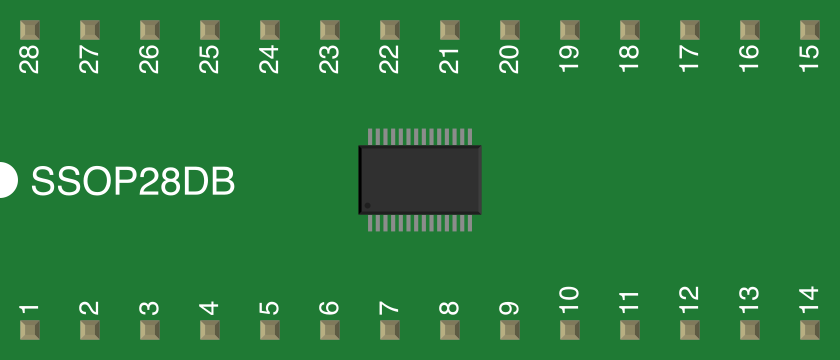
 Design with SSOP28DB in Cirkit Designer
Introduction
The SSOP28DB is a 28-pin Shrink Small Outline Package (SSOP) designed for integrated circuits. Its compact and lightweight design makes it ideal for high-density circuit layouts, particularly in applications where space is at a premium. The SSOP28DB is commonly used in consumer electronics, automotive systems, and industrial control circuits. Its small form factor and reliable performance make it a popular choice for modern electronic designs.
Explore Projects Built with SSOP28DB
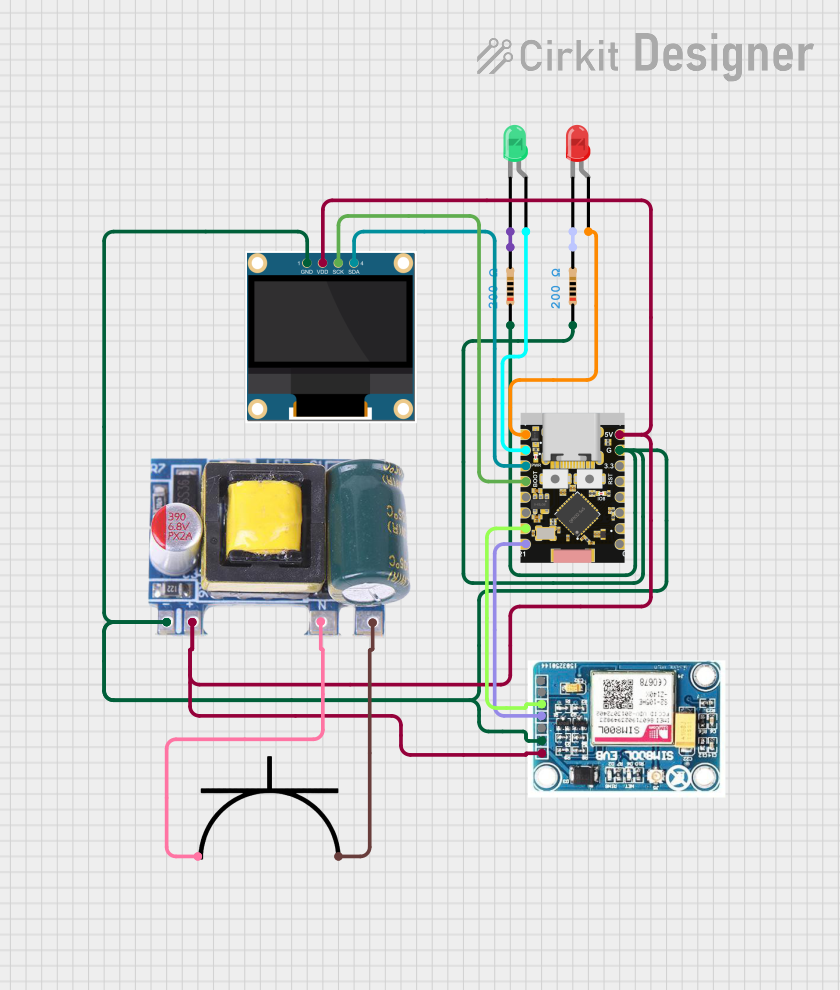 Open Project in Cirkit Designer
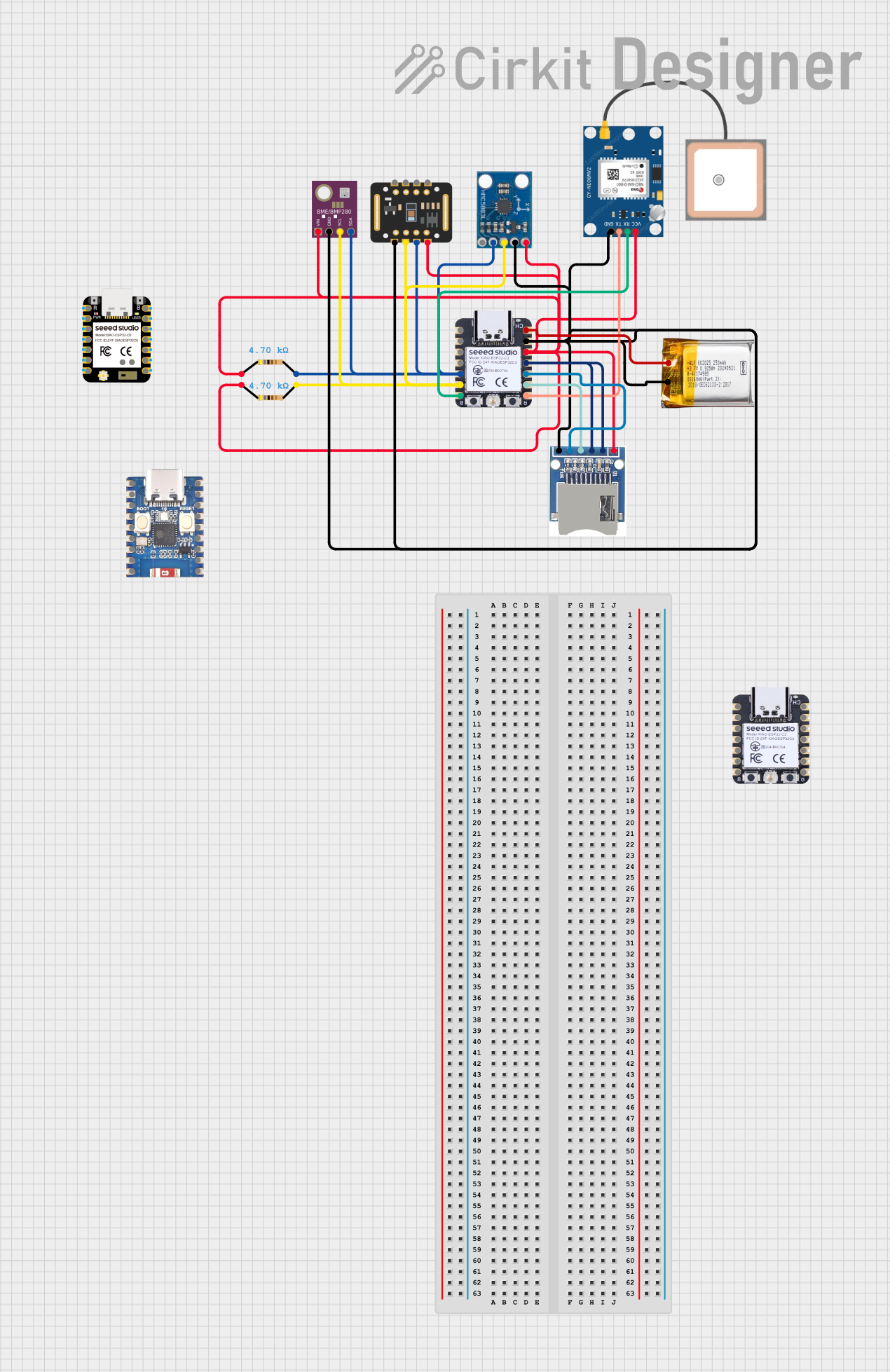 Open Project in Cirkit Designer
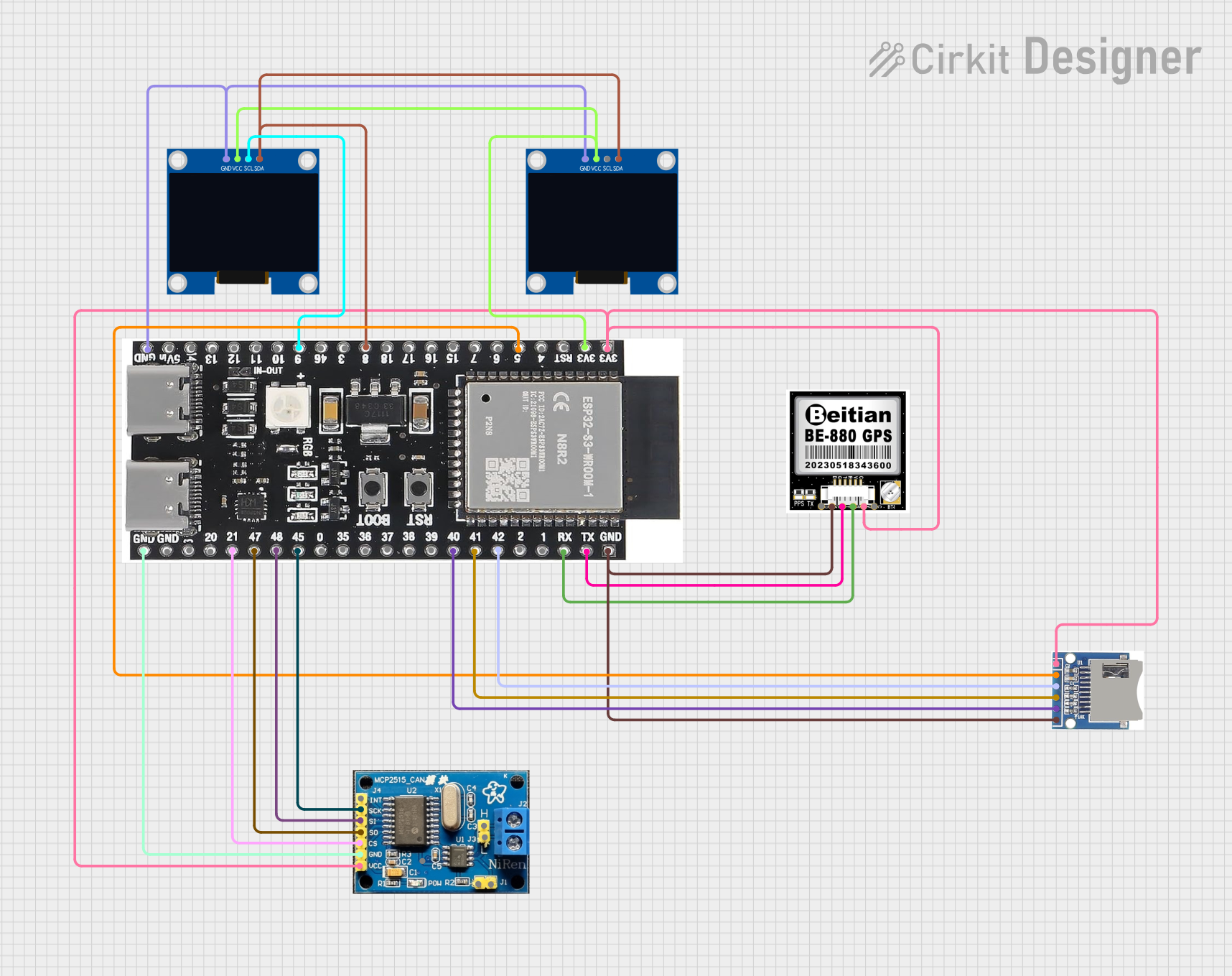 Open Project in Cirkit Designer
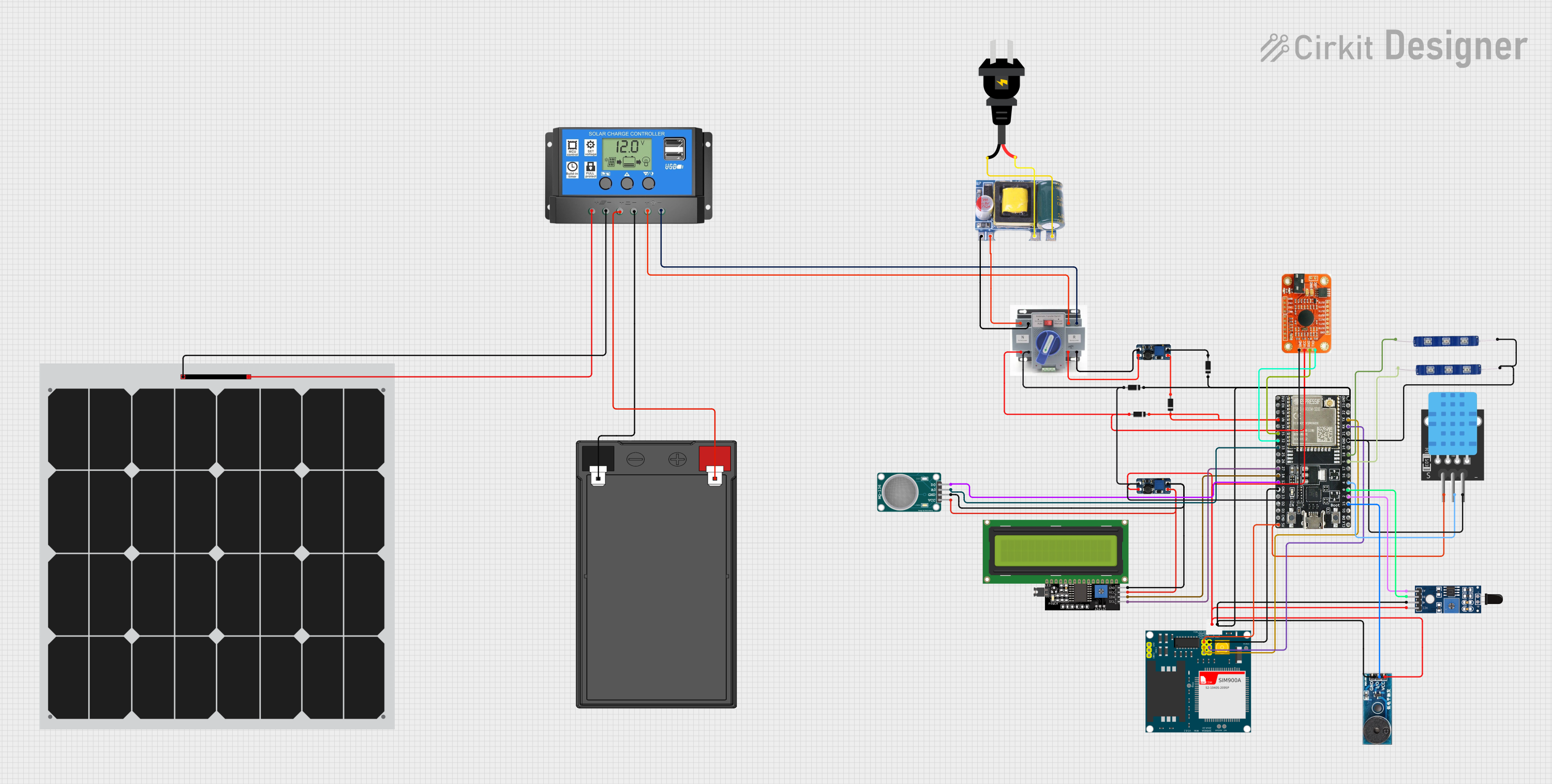 Open Project in Cirkit Designer
Explore Projects Built with SSOP28DB
Open Project in Cirkit DesignerOpen Project in Cirkit DesignerOpen Project in Cirkit DesignerOpen Project in Cirkit DesignerCommon Applications
- Microcontroller and microprocessor interfacing
- Signal processing and data conversion
- Consumer electronics (e.g., smartphones, tablets)
- Automotive electronics
- Industrial automation and control systems
Technical Specifications
The SSOP28DB is a package type, and its specifications depend on the IC it houses. Below are the general physical and electrical characteristics of the SSOP28DB package:
Key Technical Details
- Number of Pins: 28
- Package Type: Shrink Small Outline Package (SSOP)
- Pin Pitch: 0.65 mm
- Body Width: 5.3 mm
- Body Length: 10.2 mm
- Maximum Height: 1.75 mm
- Thermal Resistance: Varies based on IC housed (consult IC datasheet)
- Operating Temperature Range: -40°C to +125°C (typical for most ICs in this package)
Pin Configuration and Descriptions
The SSOP28DB package has 28 pins arranged in two parallel rows. The pin configuration depends on the specific IC housed in the package. Below is a generic example of pin assignments for a microcontroller IC in an SSOP28DB package:
| Pin Number | Pin Name | Description |
|---|---|---|
| 1 | VCC | Power supply input |
| 2 | GND | Ground |
| 3 | RESET | Reset input |
| 4 | GPIO1 | General-purpose I/O pin 1 |
| 5 | GPIO2 | General-purpose I/O pin 2 |
| 6 | TX | UART transmit |
| 7 | RX | UART receive |
| 8 | PWM1 | Pulse-width modulation output 1 |
| 9 | PWM2 | Pulse-width modulation output 2 |
| 10 | ADC1 | Analog-to-digital converter input 1 |
| 11 | ADC2 | Analog-to-digital converter input 2 |
| 12 | SPI_MOSI | SPI Master Out Slave In |
| 13 | SPI_MISO | SPI Master In Slave Out |
| 14 | SPI_SCK | SPI Clock |
| 15 | SPI_CS | SPI Chip Select |
| 16-28 | Custom | Application-specific functionality |
Note: Always refer to the datasheet of the specific IC housed in the SSOP28DB package for exact pin assignments and descriptions.
Usage Instructions
How to Use the SSOP28DB in a Circuit
- Soldering: The SSOP28DB package requires precise soldering due to its small pin pitch (0.65 mm). Use a fine-tip soldering iron or reflow soldering for best results.
- PCB Design: Ensure the PCB layout matches the SSOP28DB footprint. Use solder mask and silkscreen layers to aid in alignment.
- Power Supply: Provide a stable power supply to the VCC pin and connect the GND pin to the circuit ground.
- Bypass Capacitors: Place decoupling capacitors (e.g., 0.1 µF) close to the VCC pin to filter noise.
- Signal Integrity: Route high-speed signals carefully to minimize crosstalk and interference.
Important Considerations
- Thermal Management: Ensure adequate heat dissipation, especially for high-power ICs.
- Pin Mapping: Double-check the pin configuration for the specific IC housed in the SSOP28DB package.
- ESD Protection: Handle the component with care to avoid electrostatic discharge damage.
Example: Connecting an SSOP28DB Microcontroller to an Arduino UNO
If the SSOP28DB houses a microcontroller, you can interface it with an Arduino UNO using SPI. Below is an example Arduino sketch:
#include <SPI.h>

// Define SSOP28DB SPI pins
const int SSOP28_CS = 10; // Chip Select pin for SSOP28DB

void setup() {
  // Initialize SPI communication
  SPI.begin();

  // Set Chip Select pin as output
  pinMode(SSOP28_CS, OUTPUT);

  // Set Chip Select high (inactive)
  digitalWrite(SSOP28_CS, HIGH);

  Serial.begin(9600); // Initialize serial communication for debugging
  Serial.println("SSOP28DB SPI Communication Initialized");
}

void loop() {
  // Example: Send data to SSOP28DB
  digitalWrite(SSOP28_CS, LOW); // Activate SSOP28DB
  SPI.transfer(0x55); // Send a byte (example: 0x55)
  digitalWrite(SSOP28_CS, HIGH); // Deactivate SSOP28DB

  delay(1000); // Wait for 1 second
}
Note: Modify the code based on the specific IC functionality and communication protocol.
Troubleshooting and FAQs
Common Issues
- Incorrect Soldering: Misaligned pins or solder bridges can cause short circuits or poor connections.
- Solution: Use a magnifying glass or microscope to inspect solder joints. Rework as needed.
- Overheating: Excessive heat during soldering can damage the component.
- Solution: Use temperature-controlled soldering equipment and avoid prolonged heating.
- Incorrect Pin Mapping: Misinterpreting the pin configuration can lead to circuit malfunction.
- Solution: Refer to the IC datasheet for accurate pin assignments.
FAQs
Q1: Can I use the SSOP28DB package for high-frequency applications?
A1: Yes, the SSOP28DB is suitable for high-frequency applications, but proper PCB design (e.g., controlled impedance traces) is essential to maintain signal integrity.
Q2: How do I handle the SSOP28DB during assembly?
A2: Use ESD-safe tools and a grounded workstation to prevent electrostatic discharge damage.
Q3: What is the best way to prototype with an SSOP28DB IC?
A3: Use an SSOP-to-DIP adapter board to make the IC compatible with breadboards for prototyping.
By following this documentation, you can effectively integrate the SSOP28DB package into your electronic designs. Always consult the specific IC datasheet for detailed information.