
How to Use MQ135: Examples, Pinouts, and Specs
 Design with MQ135 in Cirkit Designer
Introduction
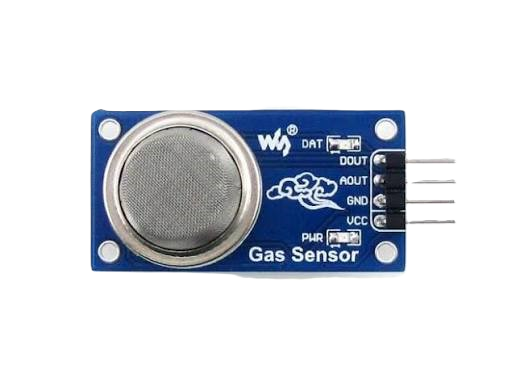
The MQ135 is a versatile gas sensor designed to detect a wide range of gases, including ammonia (NH3), benzene (C6H6), alcohol, smoke, and other harmful gases. It operates on the principle of resistive change, where the sensor's resistance varies in response to the concentration of target gases in the air. This makes it an ideal choice for air quality monitoring and environmental safety applications.
Explore Projects Built with MQ135
 Open Project in Cirkit Designer
 Open Project in Cirkit Designer
 Open Project in Cirkit Designer
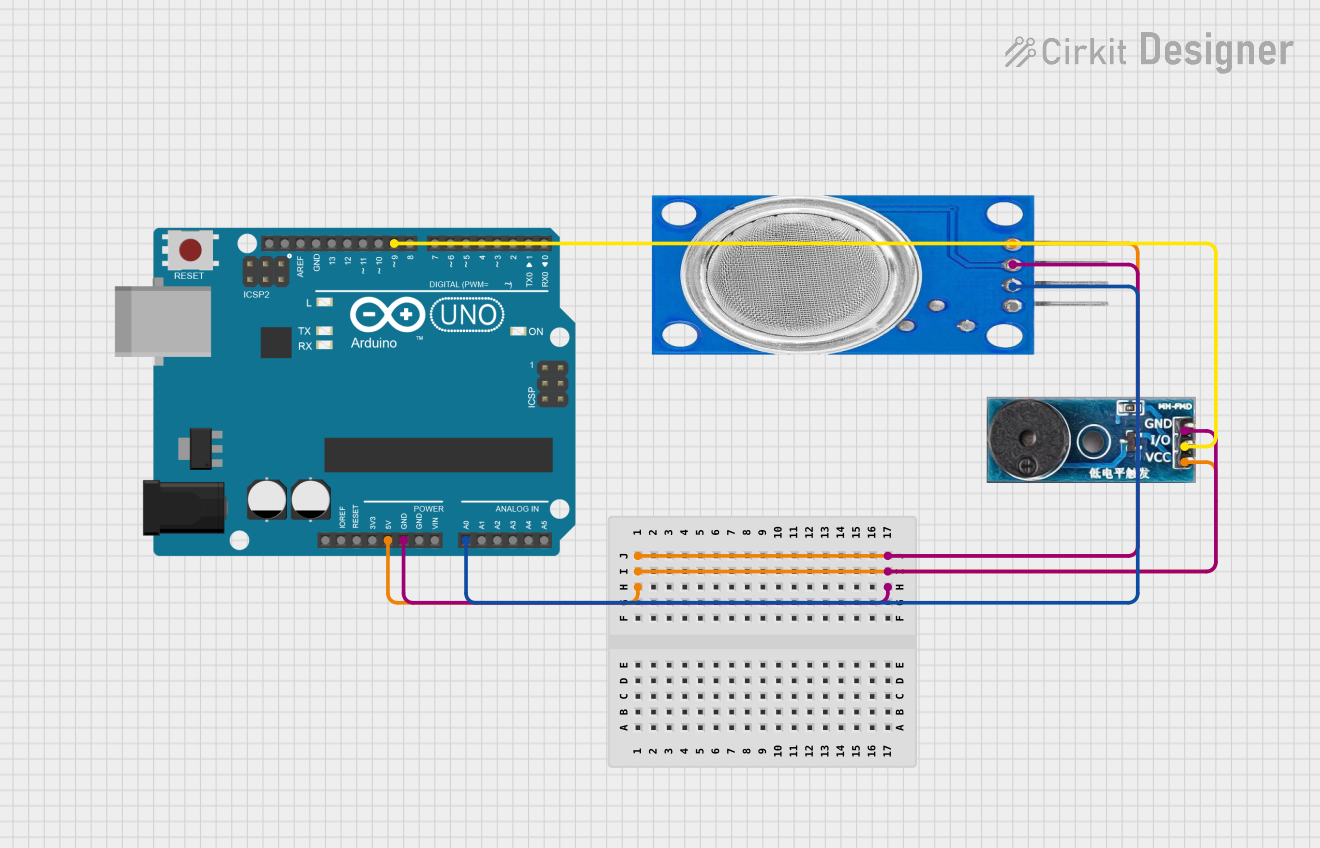 Open Project in Cirkit Designer
Explore Projects Built with MQ135
Open Project in Cirkit DesignerOpen Project in Cirkit DesignerOpen Project in Cirkit DesignerOpen Project in Cirkit DesignerCommon Applications
- Air quality monitoring systems
- Industrial gas detection
- Smoke and fire detection systems
- Environmental monitoring
- Home automation for air quality control
Technical Specifications
Below are the key technical details of the MQ135 gas sensor:
| Parameter | Value |
|---|---|
| Manufacturer | MQ135 |
| Manufacturer Part ID | MQ135 |
| Operating Voltage | 5V DC |
| Load Resistance (RL) | 10 kΩ (typical) |
| Heating Voltage (VH) | 5V ± 0.2V |
| Heating Current (IH) | ≤ 120 mA |
| Detection Range | 10 ppm to 1000 ppm |
| Preheat Time | ≥ 24 hours (for stable output) |
| Operating Temperature | -20°C to 50°C |
| Humidity Range | ≤ 95% RH |
| Sensitivity | Detects NH3, NOx, alcohol, benzene, smoke, and CO |
Pin Configuration
The MQ135 sensor typically comes with four pins. Below is the pin configuration:
| Pin | Name | Description |
|---|---|---|
| 1 | VCC | Power supply pin (5V DC) |
| 2 | GND | Ground pin |
| 3 | AOUT | Analog output pin (provides gas concentration as voltage) |
| 4 | DOUT | Digital output pin (high/low signal based on threshold) |
Usage Instructions
How to Use the MQ135 in a Circuit
- Power Supply: Connect the VCC pin to a 5V DC power source and the GND pin to ground.
- Analog Output: Connect the AOUT pin to an analog input pin of a microcontroller (e.g., Arduino UNO) to measure gas concentration as a voltage.
- Digital Output: Optionally, connect the DOUT pin to a digital input pin of a microcontroller. The DOUT pin provides a high or low signal based on a preset threshold, which can be adjusted using the onboard potentiometer.
- Preheat the Sensor: Allow the sensor to preheat for at least 24 hours for accurate readings.
Important Considerations
- Preheating: The sensor requires a preheating period of at least 24 hours for stable and accurate measurements.
- Calibration: Calibrate the sensor in a clean air environment to establish a baseline resistance value.
- Placement: Avoid placing the sensor in environments with high humidity or temperatures outside the operating range.
- Load Resistor: Use a 10 kΩ load resistor (RL) for typical applications. Adjust RL for specific sensitivity requirements.
Example Code for Arduino UNO
Below is an example of how to interface the MQ135 with an Arduino UNO to read analog values:
// MQ135 Gas Sensor Example Code for Arduino UNO
// This code reads the analog output of the MQ135 sensor and prints the value
// to the Serial Monitor. Ensure the sensor is connected to the correct pins.

const int MQ135_PIN = A0; // Analog pin connected to AOUT of MQ135

void setup() {
  Serial.begin(9600); // Initialize serial communication at 9600 baud
  Serial.println("MQ135 Gas Sensor Test");
}

void loop() {
  int sensorValue = analogRead(MQ135_PIN); // Read analog value from MQ135
  float voltage = sensorValue * (5.0 / 1023.0); // Convert to voltage (0-5V)

  // Print the raw sensor value and voltage to the Serial Monitor
  Serial.print("Sensor Value: ");
  Serial.print(sensorValue);
  Serial.print(" | Voltage: ");
  Serial.print(voltage);
  Serial.println(" V");

  delay(1000); // Wait for 1 second before the next reading
}
Notes:
- The analog value from the sensor corresponds to the concentration of gases. Higher values indicate higher concentrations.
- For precise gas concentration measurements, refer to the sensor's datasheet and perform calibration.
Troubleshooting and FAQs
Common Issues and Solutions
No Output or Incorrect Readings:
- Ensure the sensor is properly powered (5V DC).
- Verify that the sensor has been preheated for at least 24 hours.
- Check the wiring connections for loose or incorrect connections.
Fluctuating Readings:
- Place the sensor in a stable environment without sudden changes in temperature or humidity.
- Use a capacitor across the power supply pins to reduce noise.
Digital Output Not Triggering:
- Adjust the onboard potentiometer to set the desired threshold level.
- Verify that the DOUT pin is connected to the correct digital input pin on the microcontroller.
Sensor Not Detecting Specific Gases:
- Ensure the target gas concentration is within the sensor's detection range (10 ppm to 1000 ppm).
- Perform calibration in a clean air environment to improve sensitivity.
FAQs
Q1: Can the MQ135 detect CO2?
A1: The MQ135 is not specifically designed for CO2 detection. While it may respond to CO2, its sensitivity to other gases like NH3, benzene, and smoke is higher.
Q2: How long does the sensor last?
A2: The MQ135 has a typical lifespan of 2-3 years under normal operating conditions. Prolonged exposure to high concentrations of target gases may reduce its lifespan.
Q3: Can I use the MQ135 with a 3.3V microcontroller?
A3: The MQ135 requires a 5V power supply for proper operation. However, you can use a voltage divider or level shifter to interface its output with a 3.3V microcontroller.
Q4: How do I calibrate the MQ135?
A4: To calibrate, expose the sensor to clean air and measure the baseline resistance. Use this value to calculate gas concentrations based on the sensor's response curve provided in the datasheet.