
How to Use aht20: Examples, Pinouts, and Specs
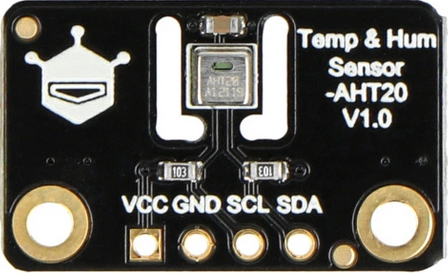
 Design with aht20 in Cirkit Designer
Introduction
The AHT20, manufactured by DFRobot (Part ID: AHT20), is a digital temperature and humidity sensor designed for precise environmental monitoring. It features a compact design, low power consumption, and I2C communication, making it ideal for integration into a wide range of microcontroller-based projects. The AHT20 is widely used in applications such as weather stations, HVAC systems, IoT devices, and industrial automation.
Explore Projects Built with aht20
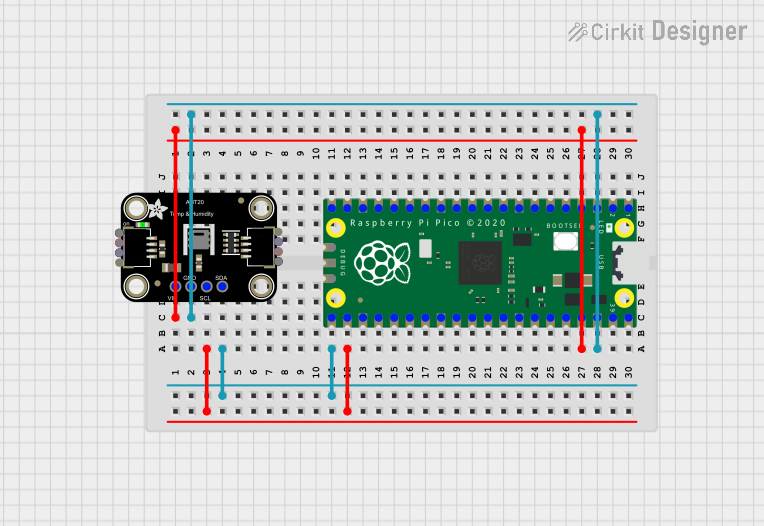 Open Project in Cirkit Designer
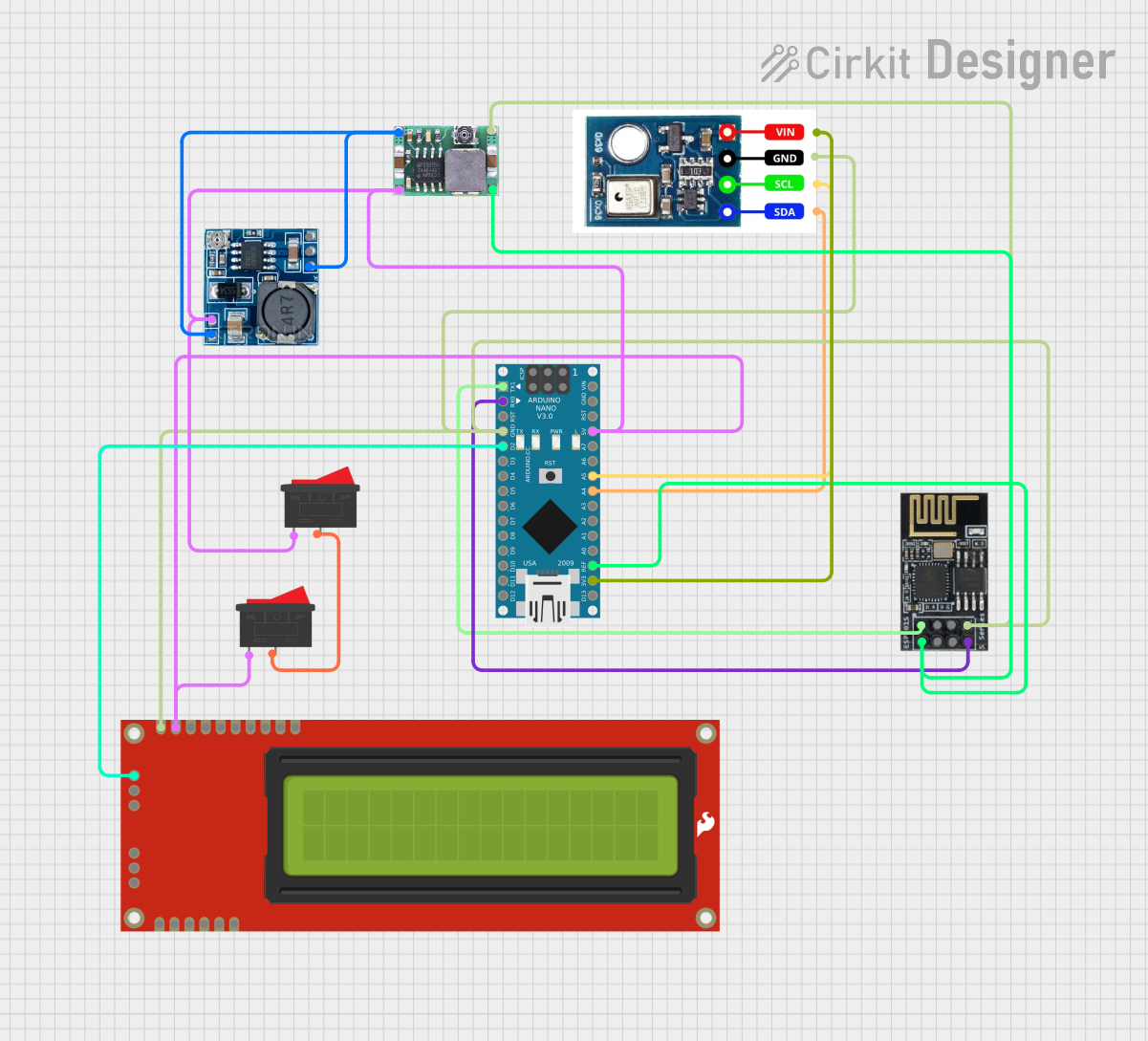 Open Project in Cirkit Designer
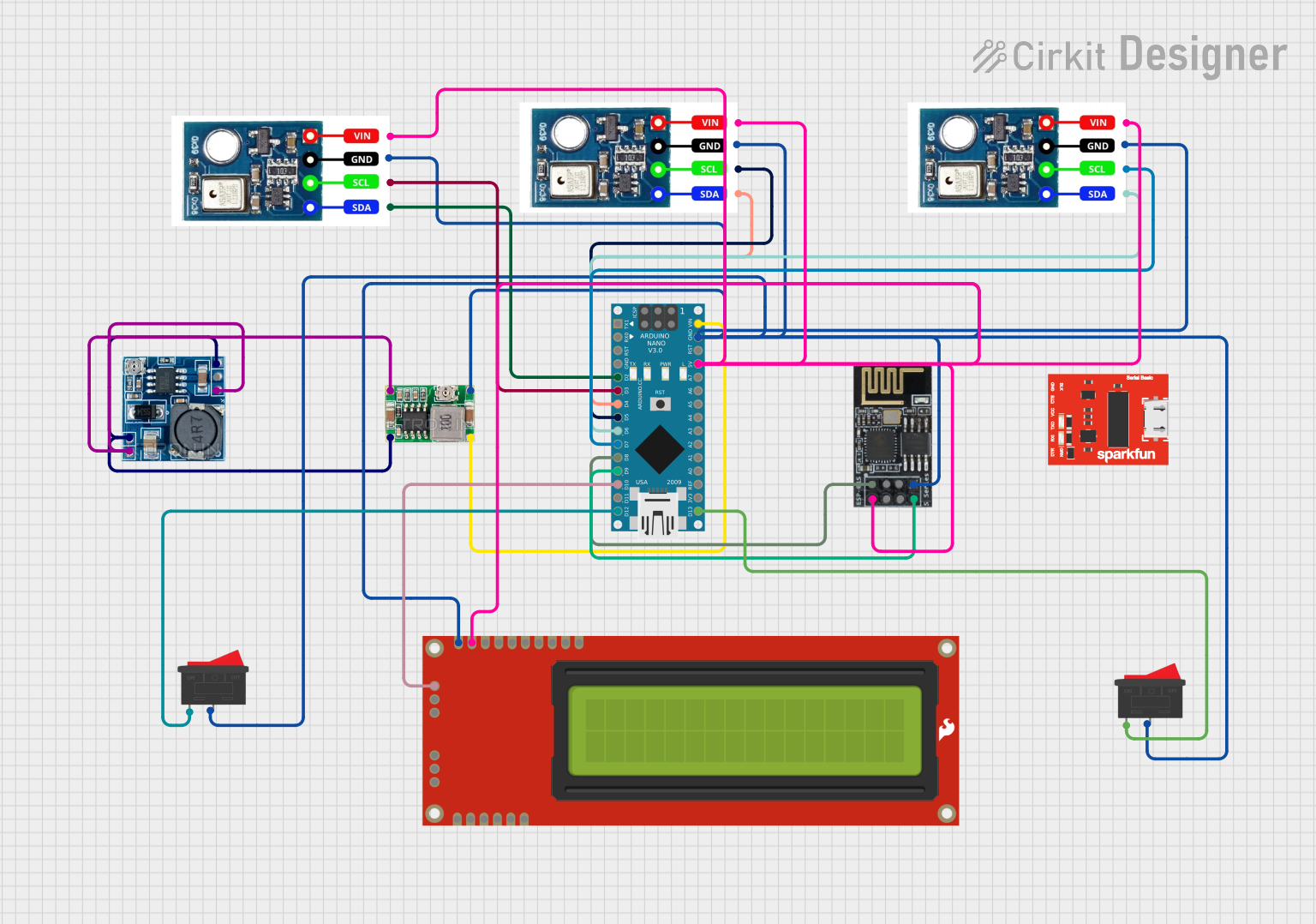 Open Project in Cirkit Designer
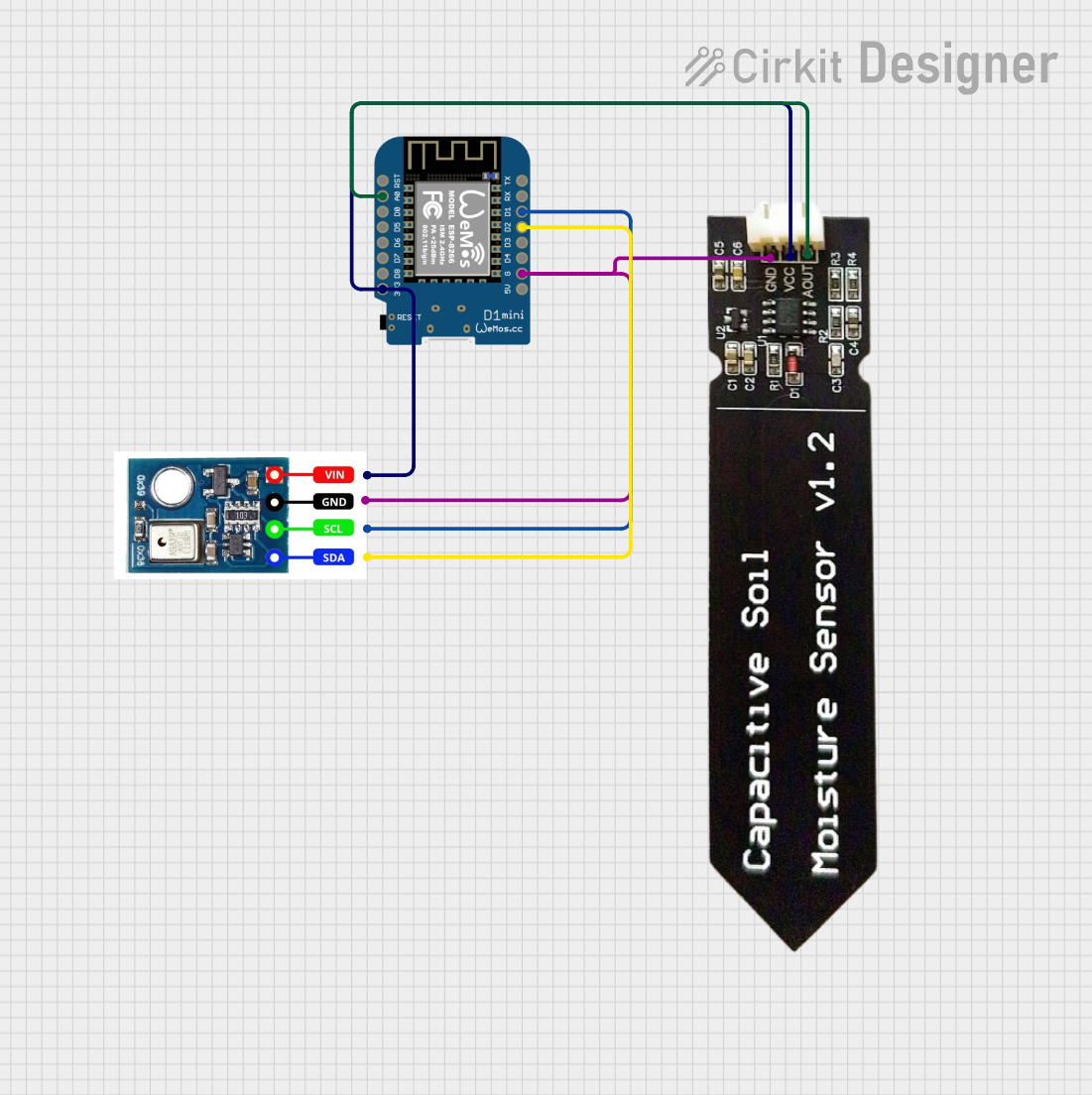 Open Project in Cirkit Designer
Explore Projects Built with aht20
Open Project in Cirkit DesignerOpen Project in Cirkit DesignerOpen Project in Cirkit DesignerOpen Project in Cirkit DesignerTechnical Specifications
The AHT20 offers reliable performance with the following key specifications:
| Parameter | Value |
|---|---|
| Supply Voltage | 2.0V to 5.5V |
| Operating Current | 0.25 mA (average) |
| Communication Interface | I2C |
| Temperature Range | -40°C to 85°C |
| Temperature Accuracy | ±0.3°C |
| Humidity Range | 0% to 100% RH |
| Humidity Accuracy | ±2% RH |
| Response Time | ≤8 seconds |
| Dimensions | 3.8mm x 3.8mm x 1.0mm |
Pin Configuration and Descriptions
The AHT20 sensor has four pins, as described in the table below:
| Pin Name | Description |
|---|---|
| VCC | Power supply input (2.0V to 5.5V) |
| GND | Ground |
| SDA | I2C data line |
| SCL | I2C clock line |
Usage Instructions
How to Use the AHT20 in a Circuit
- Power Supply: Connect the VCC pin to a 3.3V or 5V power source and the GND pin to ground.
- I2C Communication: Connect the SDA and SCL pins to the corresponding I2C pins on your microcontroller. Use pull-up resistors (typically 4.7kΩ) on the SDA and SCL lines if not already present.
- Address: The AHT20 has a fixed I2C address of
0x38.
Important Considerations and Best Practices
- Ensure the sensor is not exposed to direct sunlight or water to maintain accuracy.
- Avoid placing the sensor near heat sources or in areas with high airflow, as this may affect readings.
- Allow the sensor to stabilize for a few seconds after power-up before taking measurements.
Example Code for Arduino UNO
Below is an example of how to interface the AHT20 with an Arduino UNO using the I2C protocol:
#include <Wire.h>

// AHT20 I2C address
#define AHT20_ADDRESS 0x38

void setup() {
  Wire.begin(); // Initialize I2C communication
  Serial.begin(9600); // Start serial communication for debugging

  // Initialize the AHT20 sensor
  Wire.beginTransmission(AHT20_ADDRESS);
  Wire.write(0xBE); // Send initialization command
  Wire.endTransmission();
  delay(10); // Allow time for initialization
}

void loop() {
  // Trigger measurement
  Wire.beginTransmission(AHT20_ADDRESS);
  Wire.write(0xAC); // Trigger measurement command
  Wire.write(0x33); // Data byte 1
  Wire.write(0x00); // Data byte 2
  Wire.endTransmission();
  delay(80); // Wait for measurement to complete

  // Read measurement data
  Wire.requestFrom(AHT20_ADDRESS, 6); // Request 6 bytes of data
  if (Wire.available() == 6) {
    uint8_t data[6];
    for (int i = 0; i < 6; i++) {
      data[i] = Wire.read(); // Read each byte
    }

    // Process temperature and humidity data
    uint32_t humidity = ((uint32_t)data[1] << 12) | ((uint32_t)data[2] << 4) |
                        (data[3] >> 4);
    uint32_t temperature = ((uint32_t)(data[3] & 0x0F) << 16) |
                           ((uint32_t)data[4] << 8) | data[5];

    float humidityPercent = (humidity * 100.0) / 1048576.0;
    float temperatureCelsius = (temperature * 200.0 / 1048576.0) - 50.0;

    // Print results to the serial monitor
    Serial.print("Humidity: ");
    Serial.print(humidityPercent);
    Serial.println(" %");
    Serial.print("Temperature: ");
    Serial.print(temperatureCelsius);
    Serial.println(" °C");
  }

  delay(2000); // Wait 2 seconds before the next reading
}
Troubleshooting and FAQs
Common Issues
No Data from the Sensor:
- Ensure the sensor is properly connected to the I2C pins of the microcontroller.
- Verify that the pull-up resistors are in place on the SDA and SCL lines.
- Check the power supply voltage (2.0V to 5.5V).
Inaccurate Readings:
- Ensure the sensor is not exposed to extreme environmental conditions.
- Allow the sensor to stabilize after power-up before taking measurements.
I2C Communication Errors:
- Confirm the I2C address (
0x38) matches the one used in your code. - Check for loose or incorrect wiring.
- Confirm the I2C address (
FAQs
Q: Can the AHT20 operate at 5V?
A: Yes, the AHT20 supports a supply voltage range of 2.0V to 5.5V, making it compatible with both 3.3V and 5V systems.
Q: How often can I take measurements?
A: The AHT20 has a response time of ≤8 seconds, but it is recommended to wait at least 2 seconds between measurements for optimal performance.
Q: Do I need to calibrate the AHT20?
A: No, the AHT20 is factory-calibrated and does not require additional calibration.