
How to Use MAX30205 Human Body Temp Sensor: Examples, Pinouts, and Specs
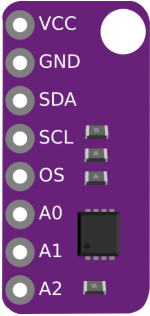
 Design with MAX30205 Human Body Temp Sensor in Cirkit Designer
Introduction
The MAX30205 is a high-accuracy digital temperature sensor specifically designed for measuring human body temperature. It provides precise temperature readings with a resolution of 16 bits and outputs the data digitally via an I²C interface. The sensor operates with low power consumption, making it ideal for battery-powered devices. Its compact design and high precision make it a popular choice for wearable devices, medical monitoring systems, and other health-related applications.
Explore Projects Built with MAX30205 Human Body Temp Sensor
 Open Project in Cirkit Designer
 Open Project in Cirkit Designer
 Open Project in Cirkit Designer
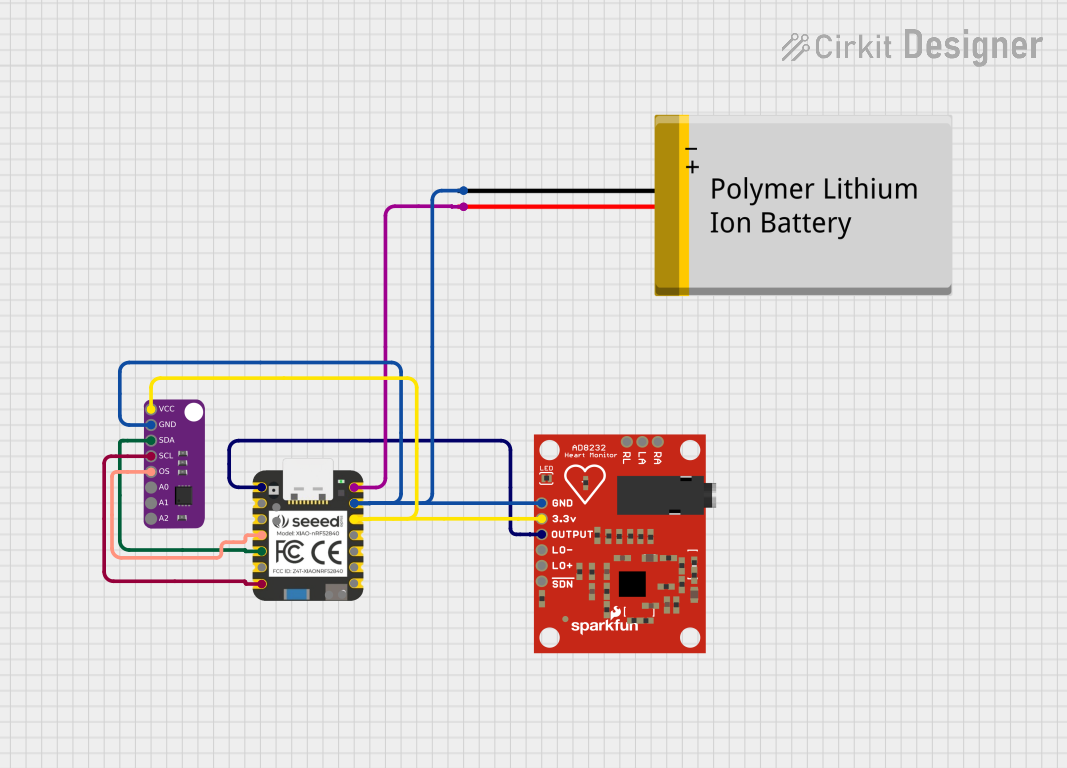 Open Project in Cirkit Designer
Explore Projects Built with MAX30205 Human Body Temp Sensor
Open Project in Cirkit DesignerOpen Project in Cirkit DesignerOpen Project in Cirkit DesignerOpen Project in Cirkit DesignerCommon Applications
- Wearable health monitoring devices
- Medical thermometers
- Fitness trackers
- Patient monitoring systems
- IoT health applications
Technical Specifications
The MAX30205 offers the following key technical features:
| Parameter | Value |
|---|---|
| Supply Voltage (VDD) | 2.7V to 3.3V |
| Temperature Range | +10°C to +50°C (optimized for body temperature) |
| Accuracy | ±0.1°C (from +30°C to +40°C) |
| Resolution | 16-bit |
| Interface | I²C (up to 400kHz) |
| Current Consumption | 600µA (typical) |
| Shutdown Current | 0.1µA (typical) |
| Package | 8-pin TDFN (2mm x 2mm) |
Pin Configuration and Descriptions
The MAX30205 comes in an 8-pin TDFN package. Below is the pinout and description:
| Pin | Name | Description |
|---|---|---|
| 1 | SDA | Serial Data Line for I²C communication |
| 2 | SCL | Serial Clock Line for I²C communication |
| 3 | ALERT | Over-temperature alert output (active low) |
| 4 | GND | Ground |
| 5 | VDD | Power supply (2.7V to 3.3V) |
| 6 | NC | No connection (leave unconnected) |
| 7 | NC | No connection (leave unconnected) |
| 8 | NC | No connection (leave unconnected) |
Usage Instructions
How to Use the MAX30205 in a Circuit
- Power Supply: Connect the VDD pin to a 3.3V power source and the GND pin to ground.
- I²C Communication: Connect the SDA and SCL pins to the corresponding I²C lines of your microcontroller. Use pull-up resistors (typically 4.7kΩ) on both lines.
- Alert Pin (Optional): The ALERT pin can be used to trigger an interrupt on the microcontroller when the temperature exceeds a user-defined threshold. If unused, leave it unconnected.
- Bypass Capacitor: Place a 0.1µF ceramic capacitor close to the VDD pin to stabilize the power supply.
Important Considerations
- The MAX30205 is optimized for body temperature measurement. Ensure the sensor is in direct contact with the skin for accurate readings.
- Avoid exposing the sensor to temperatures outside its operating range (+10°C to +50°C) to maintain accuracy.
- Use proper I²C pull-up resistors to ensure reliable communication.
- Minimize noise in the circuit by keeping the I²C lines short and using a ground plane.
Example Code for Arduino UNO
Below is an example of how to interface the MAX30205 with an Arduino UNO using the Wire library:
#include <Wire.h>

#define MAX30205_ADDRESS 0x48  // I²C address of the MAX30205

void setup() {
  Wire.begin();  // Initialize I²C communication
  Serial.begin(9600);  // Start serial communication for debugging

  // Configure the MAX30205 (optional: default settings are usually sufficient)
  Wire.beginTransmission(MAX30205_ADDRESS);
  Wire.write(0x01);  // Point to configuration register
  Wire.write(0x00);  // Set configuration to default (continuous conversion)
  Wire.endTransmission();
}

void loop() {
  float temperature = readTemperature();
  Serial.print("Temperature: ");
  Serial.print(temperature);
  Serial.println(" °C");
  delay(1000);  // Wait 1 second before the next reading
}

float readTemperature() {
  Wire.beginTransmission(MAX30205_ADDRESS);
  Wire.write(0x00);  // Point to temperature register
  Wire.endTransmission();

  Wire.requestFrom(MAX30205_ADDRESS, 2);  // Request 2 bytes of data
  if (Wire.available() == 2) {
    uint8_t msb = Wire.read();  // Most significant byte
    uint8_t lsb = Wire.read();  // Least significant byte
    int16_t rawTemp = (msb << 8) | lsb;  // Combine bytes into a 16-bit value
    return rawTemp * 0.00390625;  // Convert to Celsius (16-bit resolution)
  }
  return -999.0;  // Return error value if data is unavailable
}
Notes on the Code
- The I²C address of the MAX30205 is
0x48by default. Verify this in your setup. - The temperature is calculated by multiplying the raw 16-bit value by
0.00390625(1/256), as per the sensor's datasheet.
Troubleshooting and FAQs
Common Issues
No Temperature Reading:
- Ensure the sensor is powered correctly (VDD = 3.3V, GND connected).
- Verify the I²C connections (SDA and SCL) and check for proper pull-up resistors.
- Confirm the I²C address (
0x48) matches the sensor's default address.
Inaccurate Temperature Readings:
- Ensure the sensor is in direct contact with the skin for accurate body temperature measurement.
- Avoid placing the sensor near heat sources or in areas with high airflow.
I²C Communication Errors:
- Check the pull-up resistor values (4.7kΩ is typical).
- Ensure the I²C clock speed does not exceed 400kHz.
FAQs
Q: Can the MAX30205 measure ambient temperature?
A: While the MAX30205 is optimized for body temperature measurement, it can measure ambient temperatures within its operating range (+10°C to +50°C). However, accuracy may be reduced outside the +30°C to +40°C range.
Q: What is the ALERT pin used for?
A: The ALERT pin is an open-drain output that goes low when the temperature exceeds a user-defined threshold. It can be used to trigger interrupts or alarms in your system.
Q: Can I use the MAX30205 with a 5V microcontroller?
A: Yes, but you must use level shifters for the I²C lines (SDA and SCL) since the MAX30205 operates at 3.3V logic levels.
Q: How do I improve measurement accuracy?
A: Ensure the sensor is properly calibrated, minimize noise in the circuit, and maintain good thermal contact with the measurement surface.