
How to Use 2N2222: Examples, Pinouts, and Specs
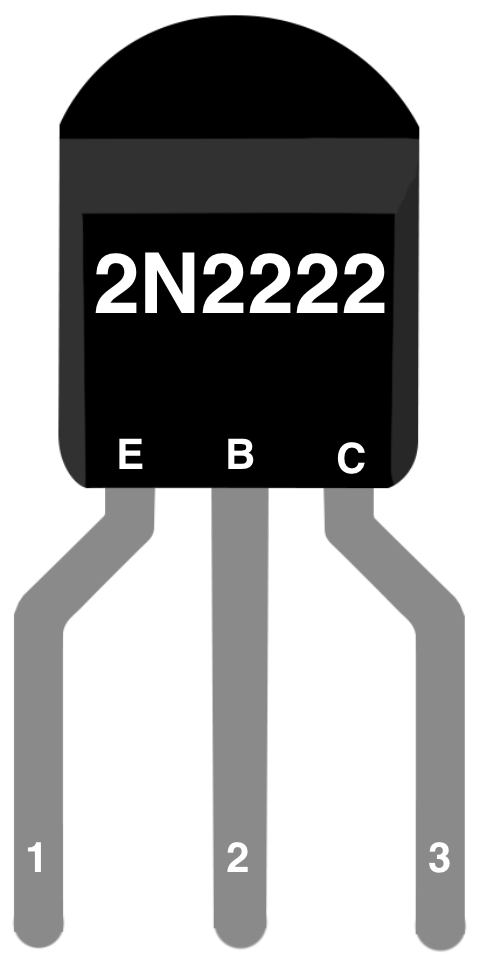
 Design with 2N2222 in Cirkit Designer
Introduction
The 2N2222 is a widely used NPN bipolar junction transistor (BJT) designed for low to medium power switching and amplification applications. Known for its reliability and versatility, the 2N2222 is commonly used in hobbyist projects, educational circuits, and professional designs. Its ability to handle moderate current and voltage levels makes it suitable for a variety of applications, including signal amplification, motor control, and switching operations.
Explore Projects Built with 2N2222
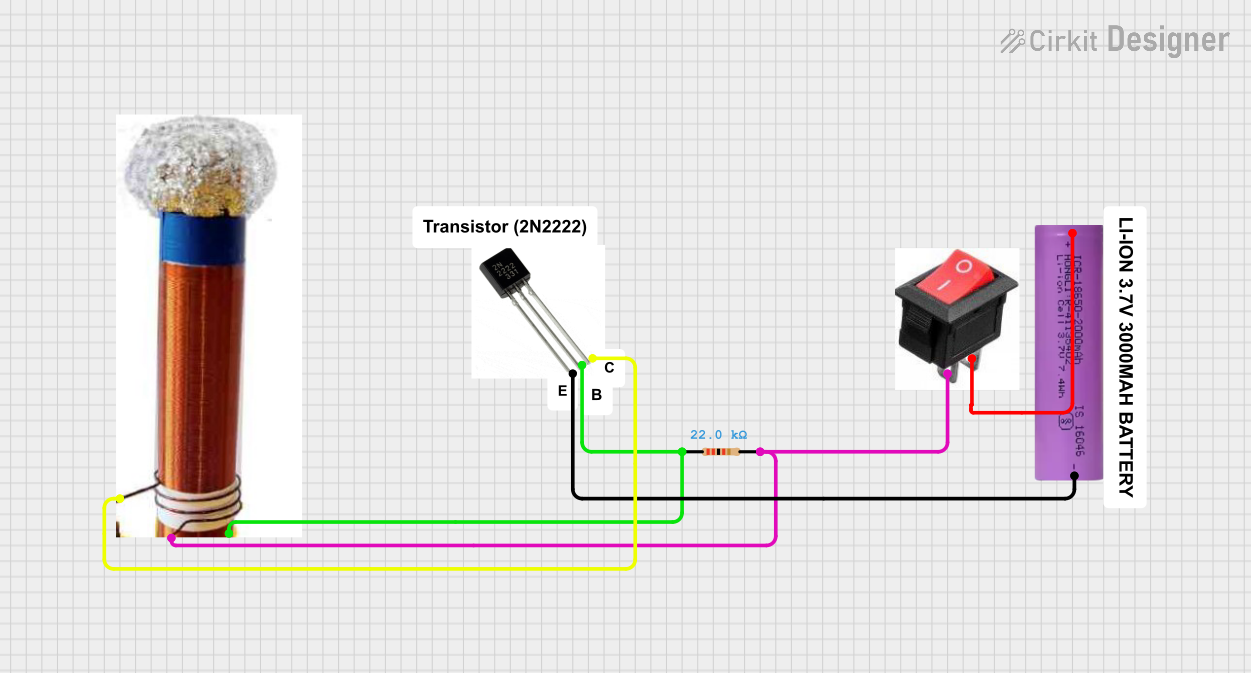 Open Project in Cirkit Designer
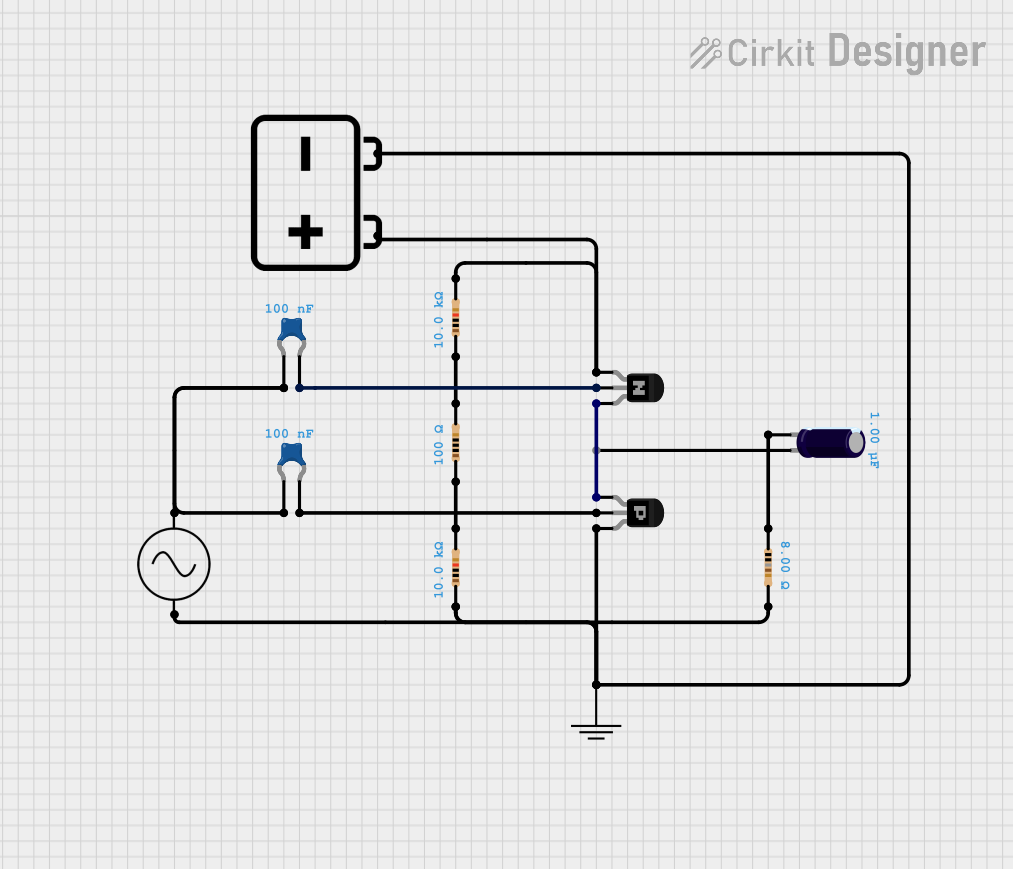 Open Project in Cirkit Designer
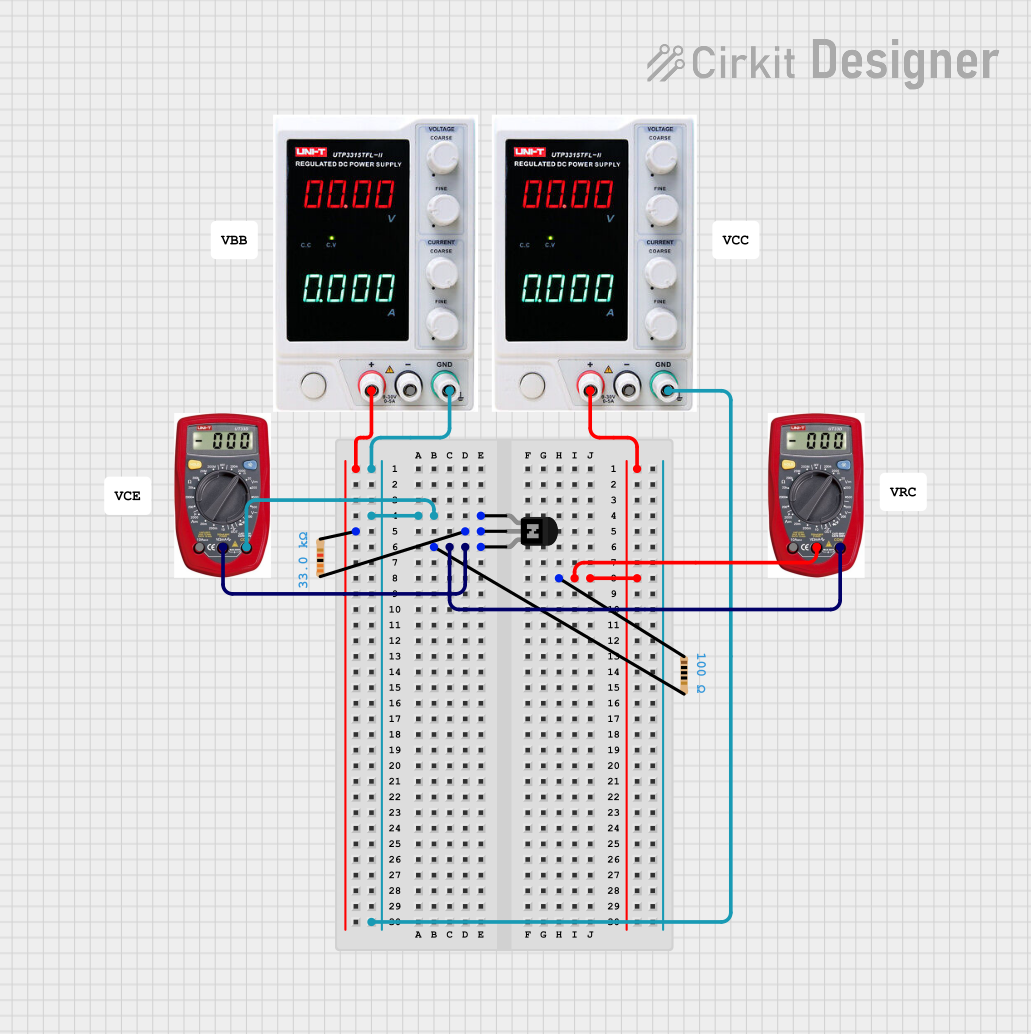 Open Project in Cirkit Designer
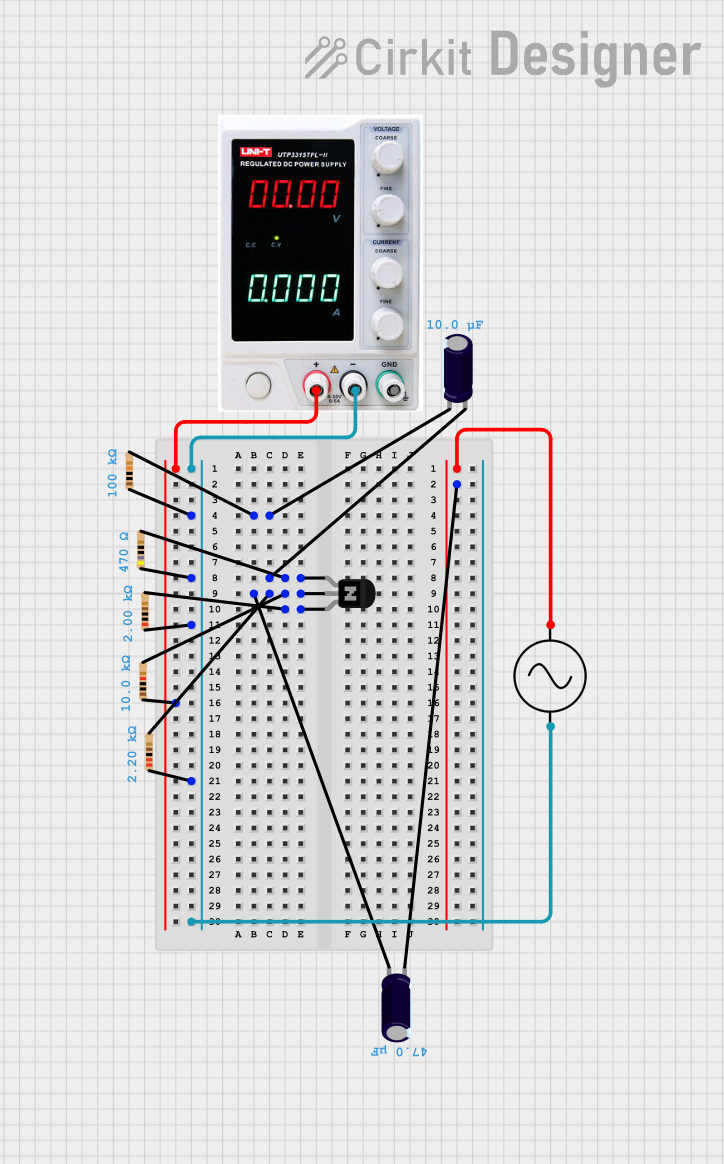 Open Project in Cirkit Designer
Explore Projects Built with 2N2222
Open Project in Cirkit DesignerOpen Project in Cirkit DesignerOpen Project in Cirkit DesignerOpen Project in Cirkit DesignerCommon Applications
- Signal amplification in audio and RF circuits
- Low-power motor drivers
- LED and relay switching
- Oscillator circuits
- General-purpose switching in digital and analog circuits
Technical Specifications
The following table outlines the key technical specifications of the 2N2222 transistor:
| Parameter | Value |
|---|---|
| Transistor Type | NPN |
| Maximum Collector-Emitter Voltage (VCEO) | 40V |
| Maximum Collector-Base Voltage (VCBO) | 75V |
| Maximum Emitter-Base Voltage (VEBO) | 6V |
| Maximum Collector Current (IC) | 800mA |
| Maximum Power Dissipation (PD) | 500mW |
| DC Current Gain (hFE) | 100 to 300 |
| Transition Frequency (fT) | 250 MHz |
| Package Type | TO-18 (metal can) or TO-92 (plastic) |
Pin Configuration
The 2N2222 is typically available in the TO-92 package. The pinout for this package is as follows:
| Pin Number | Pin Name | Description |
|---|---|---|
| 1 | Emitter | Connected to ground or negative terminal |
| 2 | Base | Controls the transistor's operation |
| 3 | Collector | Connected to the load or positive terminal |
Note: Ensure the flat side of the TO-92 package is facing you to correctly identify the pins.
Usage Instructions
Using the 2N2222 in a Circuit
The 2N2222 transistor operates as a switch or amplifier depending on the circuit configuration. Below are the steps to use it effectively:
Determine the Operating Mode:
- Switching Mode: Use the transistor to control a load (e.g., LED, motor, or relay) by applying a small current to the base.
- Amplification Mode: Use the transistor to amplify weak signals by biasing it in the active region.
Base Resistor Selection:
- To prevent damage to the transistor, calculate the base resistor value using the formula: [ R_b = \frac{V_{in} - V_{BE}}{I_B} ] where ( V_{in} ) is the input voltage, ( V_{BE} ) is typically 0.7V, and ( I_B ) is the base current (approximately ( I_C / h_{FE} )).
Connect the Circuit:
- Connect the emitter to ground (or the negative terminal of the power supply).
- Connect the collector to the load and then to the positive terminal of the power supply.
- Use a resistor between the base and the input signal to limit the base current.
Example: Controlling an LED with Arduino UNO
The following example demonstrates how to use the 2N2222 to control an LED with an Arduino UNO:
// Define the pin connected to the base of the 2N2222 transistor
const int transistorBasePin = 9; // Digital pin 9
const int ledState = HIGH;       // Set to HIGH to turn on the LED

void setup() {
  pinMode(transistorBasePin, OUTPUT); // Set the pin as an output
}

void loop() {
  digitalWrite(transistorBasePin, ledState); // Turn on the LED
  delay(1000);                              // Wait for 1 second
  digitalWrite(transistorBasePin, LOW);     // Turn off the LED
  delay(1000);                              // Wait for 1 second
}
Important Considerations:
- Always use a base resistor to limit the current into the base pin.
- Ensure the collector current does not exceed 800mA to avoid damaging the transistor.
- Use a heat sink if the transistor is dissipating significant power.
Troubleshooting and FAQs
Common Issues
Transistor Overheating:
- Cause: Exceeding the maximum collector current or power dissipation.
- Solution: Use a heat sink or reduce the load current.
No Output Signal:
- Cause: Incorrect base resistor value or insufficient base current.
- Solution: Recalculate the base resistor value and ensure the base current is adequate.
LED or Load Not Turning On:
- Cause: Incorrect wiring or insufficient input voltage.
- Solution: Double-check the circuit connections and ensure the input voltage is sufficient to drive the transistor.
FAQs
Q1: Can the 2N2222 handle AC signals?
A1: Yes, the 2N2222 can amplify AC signals when configured in the active region. It is commonly used in audio and RF circuits for this purpose.
Q2: What is the difference between the TO-18 and TO-92 packages?
A2: The TO-18 package is a metal can that provides better thermal dissipation, while the TO-92 package is a plastic casing that is more cost-effective and compact.
Q3: Can I use the 2N2222 for high-power applications?
A3: No, the 2N2222 is designed for low to medium power applications. For high-power applications, consider using power transistors like the TIP120 or MOSFETs.
By following this documentation, you can effectively use the 2N2222 transistor in your electronic projects.