
How to Use Solar Charge Controller: Examples, Pinouts, and Specs
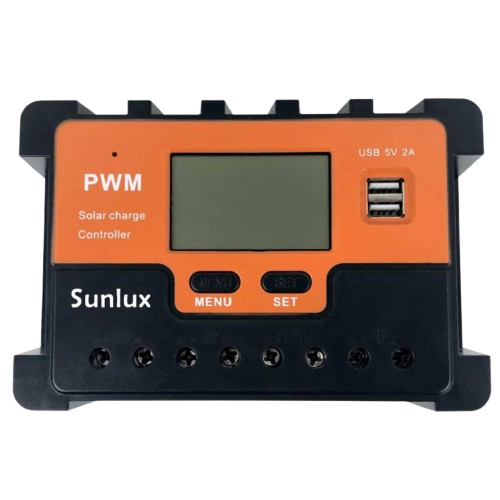
 Design with Solar Charge Controller in Cirkit Designer
Introduction
The Sunlux Orange Series PWM Solar Charge Controller is a device designed to regulate the voltage and current generated by solar panels to ensure safe and efficient charging of batteries. It prevents overcharging, over-discharging, and protects the battery from damage, thereby extending its lifespan. This controller uses Pulse Width Modulation (PWM) technology to optimize the charging process.
Explore Projects Built with Solar Charge Controller
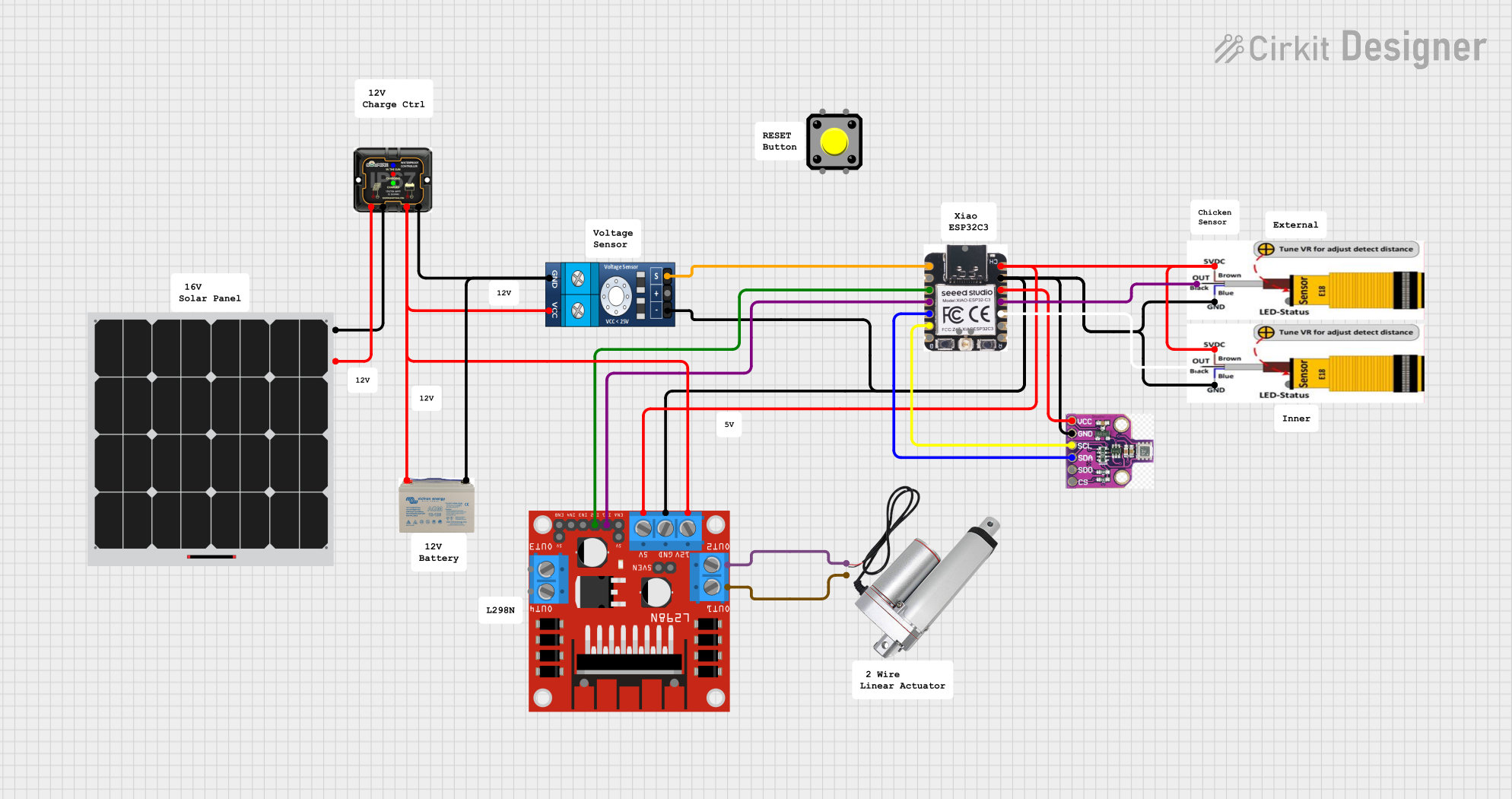 Open Project in Cirkit Designer
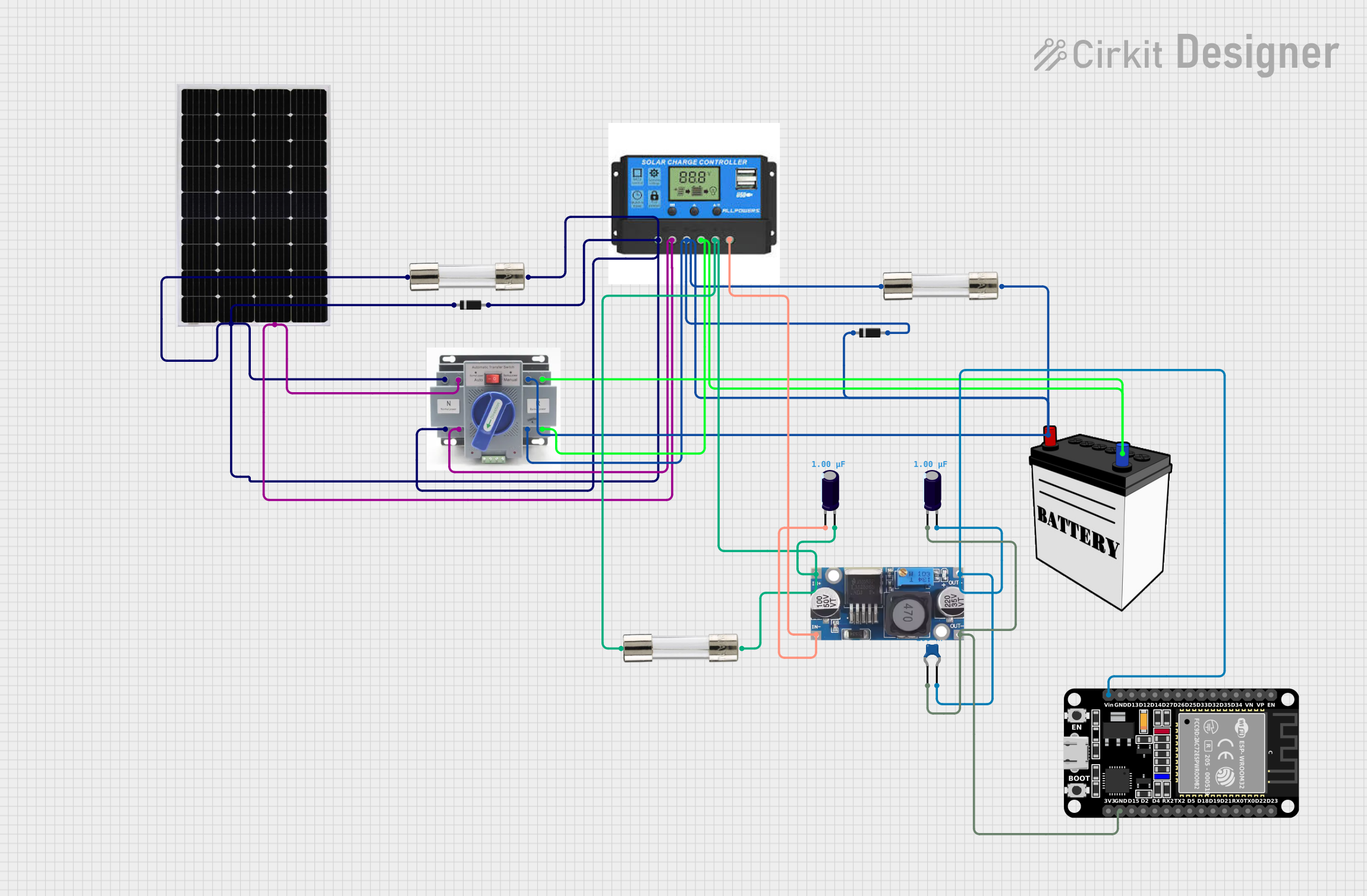 Open Project in Cirkit Designer
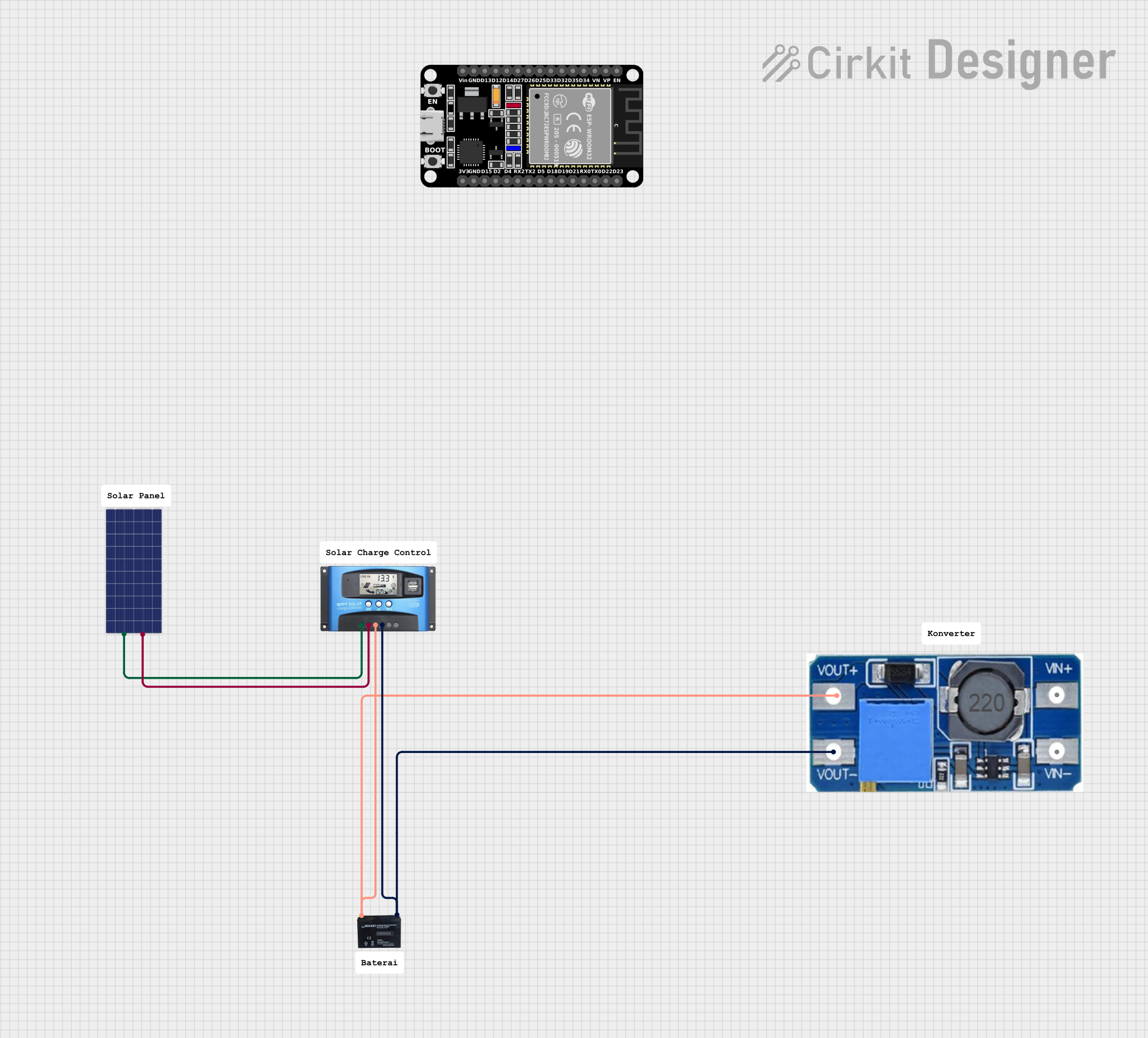 Open Project in Cirkit Designer
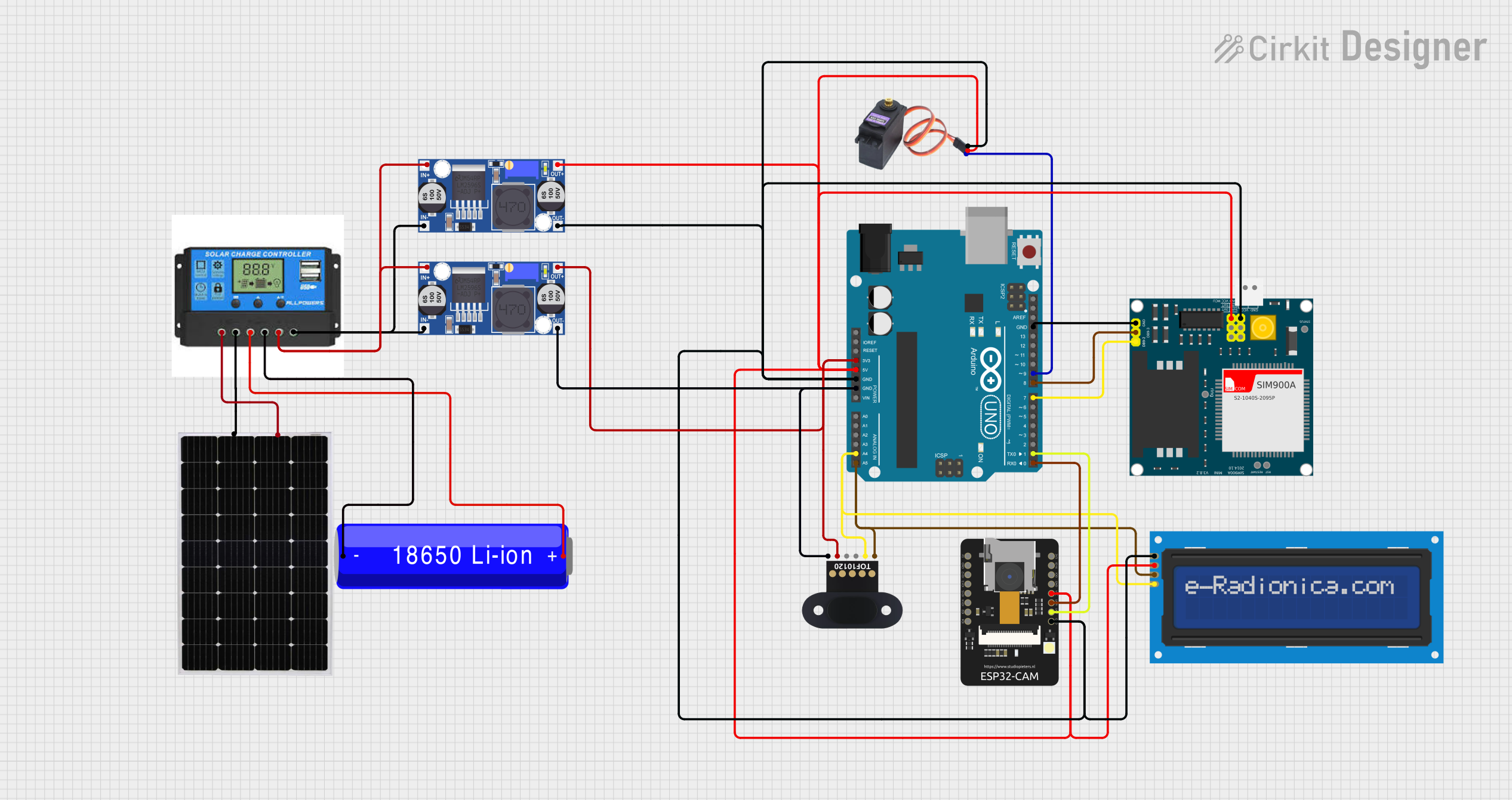 Open Project in Cirkit Designer
Explore Projects Built with Solar Charge Controller
Open Project in Cirkit DesignerOpen Project in Cirkit DesignerOpen Project in Cirkit DesignerOpen Project in Cirkit DesignerCommon Applications and Use Cases
- Off-grid solar power systems
- Solar-powered lighting systems
- RVs, boats, and caravans with solar setups
- Backup power systems with solar energy
- Small-scale renewable energy projects
Technical Specifications
Below are the key technical details for the Sunlux Orange Series PWM Solar Charge Controller:
General Specifications
| Parameter | Value |
|---|---|
| Manufacturer | Sunlux |
| Model | Orange Series PWM |
| Rated Voltage | 12V / 24V Auto Recognition |
| Maximum Input Voltage | 50V |
| Maximum Charging Current | 10A / 20A / 30A (varies by model) |
| Technology | PWM (Pulse Width Modulation) |
| Operating Temperature | -20°C to +50°C |
| Efficiency | ≥ 98% |
| Battery Type Supported | Lead-acid, AGM, Gel |
Pin Configuration and Descriptions
The Orange Series PWM Solar Charge Controller has the following terminal connections:
| Pin/Terminal | Description |
|---|---|
| Solar Panel (+) | Positive terminal for solar panel input |
| Solar Panel (-) | Negative terminal for solar panel input |
| Battery (+) | Positive terminal for battery connection |
| Battery (-) | Negative terminal for battery connection |
| Load (+) | Positive terminal for DC load output |
| Load (-) | Negative terminal for DC load output |
Usage Instructions
How to Use the Component in a Circuit
Connect the Battery First:
- Connect the battery's positive terminal to the controller's
Battery (+)pin. - Connect the battery's negative terminal to the controller's
Battery (-)pin. - This step ensures the controller detects the battery voltage (12V or 24V) correctly.
- Connect the battery's positive terminal to the controller's
Connect the Solar Panel:
- Connect the solar panel's positive terminal to the
Solar Panel (+)pin. - Connect the solar panel's negative terminal to the
Solar Panel (-)pin. - Ensure the solar panel voltage does not exceed the controller's maximum input voltage (50V).
- Connect the solar panel's positive terminal to the
Connect the Load (Optional):
- If you wish to power DC loads directly, connect the load's positive terminal to the
Load (+)pin and the negative terminal to theLoad (-)pin.
- If you wish to power DC loads directly, connect the load's positive terminal to the
Power On:
- Once all connections are secure, the controller will automatically start operating. The built-in LED indicators or LCD (if available) will display the system status.
Important Considerations and Best Practices
- Battery First Rule: Always connect the battery before connecting the solar panel to avoid damage to the controller.
- Proper Sizing: Ensure the controller's current rating matches or exceeds the maximum current output of your solar panel.
- Avoid Reverse Polarity: Double-check all connections to prevent reverse polarity, which can damage the controller.
- Ventilation: Install the controller in a well-ventilated area to prevent overheating.
- Fuse Protection: Use appropriate fuses on the battery and solar panel connections for added safety.
Arduino UNO Integration Example
While the Orange Series PWM Solar Charge Controller is not directly programmable, it can be monitored using an Arduino UNO by reading the battery voltage or load status. Below is an example of how to monitor the battery voltage:
// Arduino Code to Monitor Battery Voltage from Solar Charge Controller
const int batteryPin = A0; // Analog pin connected to Battery (+) via voltage divider
float voltage = 0.0;

void setup() {
  Serial.begin(9600); // Initialize serial communication
}

void loop() {
  int sensorValue = analogRead(batteryPin); // Read analog value
  voltage = sensorValue * (5.0 / 1023.0) * 11;
  // Convert to voltage (assuming a 10:1 voltage divider)
  // Adjust the multiplier based on your voltage divider ratio

  Serial.print("Battery Voltage: ");
  Serial.print(voltage);
  Serial.println(" V");

  delay(1000); // Wait 1 second before next reading
}
Note: Use a voltage divider circuit to step down the battery voltage to a safe range (0-5V) for the Arduino's analog input.
Troubleshooting and FAQs
Common Issues and Solutions
| Issue | Possible Cause | Solution |
|---|---|---|
| Controller not powering on | Battery not connected or low voltage | Ensure the battery is properly connected and charged. |
| Solar panel not charging battery | Incorrect wiring or low sunlight | Check solar panel connections and ensure sufficient sunlight. |
| Load not receiving power | Load current exceeds controller rating | Ensure the load current is within the controller's limits. |
| Overheating | Poor ventilation or high ambient temperature | Install the controller in a cooler, well-ventilated area. |
FAQs
Can I use this controller with lithium batteries?
- No, the Orange Series PWM Solar Charge Controller is designed for lead-acid, AGM, and Gel batteries only.
What happens if I connect the solar panel before the battery?
- The controller may not function correctly or could be damaged. Always connect the battery first.
Can I use this controller for a 48V system?
- No, this controller supports only 12V or 24V systems.
How do I know if the battery is fully charged?
- The controller's LED indicators or LCD (if available) will show the battery status. Refer to the user manual for specific indicator details.
By following this documentation, you can safely and effectively use the Sunlux Orange Series PWM Solar Charge Controller in your solar power system.