
How to Use Buzzer: Examples, Pinouts, and Specs
 Design with Buzzer in Cirkit Designer
Introduction
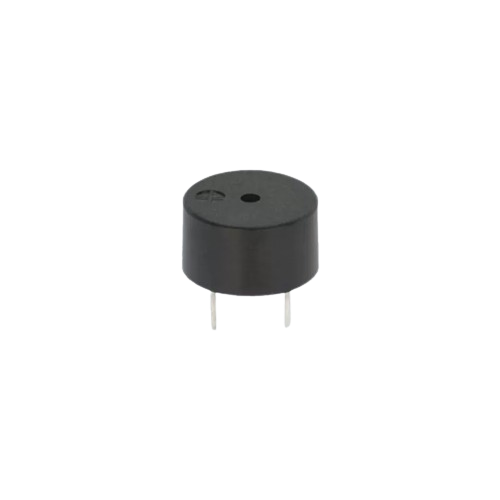
A buzzer is an audio signaling device that produces sound when an electric current passes through it. It is widely used in various electronic applications to provide audible alerts or notifications. Buzzers are commonly found in alarms, timers, household appliances, and embedded systems. They are available in two main types: active buzzers, which generate sound when powered, and passive buzzers, which require an external signal to produce sound.
Explore Projects Built with Buzzer
 Open Project in Cirkit Designer
 Open Project in Cirkit Designer
 Open Project in Cirkit Designer
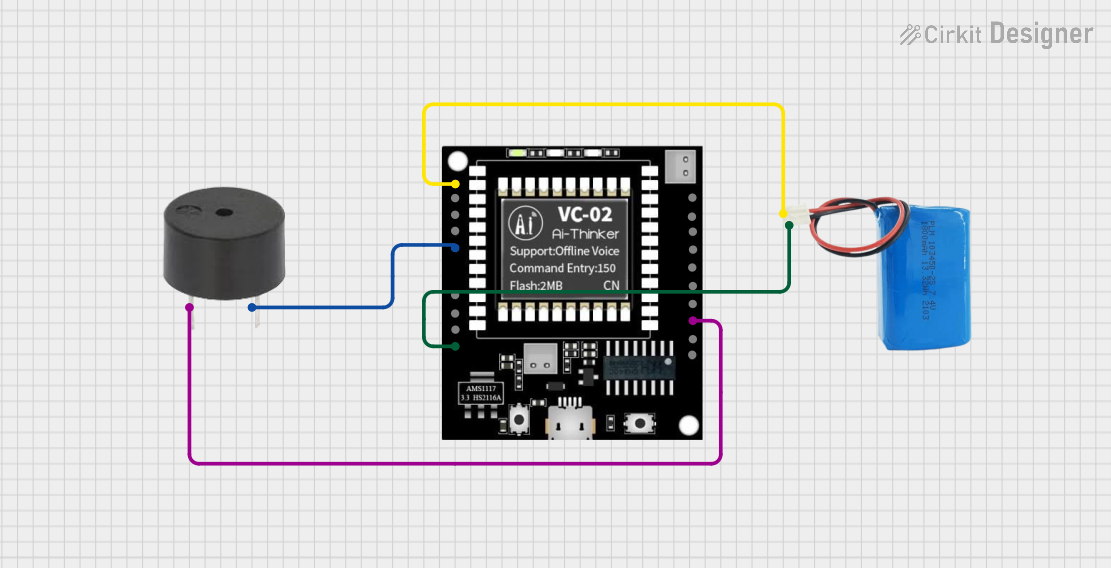 Open Project in Cirkit Designer
Explore Projects Built with Buzzer
Open Project in Cirkit DesignerOpen Project in Cirkit DesignerOpen Project in Cirkit DesignerOpen Project in Cirkit DesignerTechnical Specifications
Below are the general technical specifications for a typical buzzer. Note that specific values may vary depending on the manufacturer and model.
General Specifications
- Operating Voltage: 3V to 12V (commonly 5V)
- Operating Current: 10mA to 50mA
- Sound Output: 85dB to 100dB (at 10cm distance)
- Frequency Range: 2kHz to 4kHz
- Type: Active or Passive
- Size: Varies (commonly 12mm diameter)
Pin Configuration
The buzzer typically has two pins for connection. Below is the pin configuration:
| Pin | Description |
|---|---|
| Positive (+) | Connect to the positive terminal of the power supply or signal source. |
| Negative (-) | Connect to the ground (GND) of the circuit. |
Usage Instructions
How to Use the Buzzer in a Circuit
- Identify the Type of Buzzer: Determine whether the buzzer is active or passive. Active buzzers only require a DC voltage to operate, while passive buzzers need a PWM (Pulse Width Modulation) signal.
- Connect the Pins:
- For an active buzzer, connect the positive pin to the power supply (e.g., 5V) and the negative pin to ground.
- For a passive buzzer, connect the positive pin to a PWM-capable pin of a microcontroller (e.g., Arduino) and the negative pin to ground.
- Add a Current-Limiting Resistor (if needed): To protect the buzzer and circuit, use a resistor (e.g., 220Ω) in series with the buzzer if the current exceeds the buzzer's rating.
- Test the Buzzer: Apply power or a signal to verify that the buzzer produces sound.
Example: Connecting a Buzzer to an Arduino UNO
Below is an example of how to connect and control a passive buzzer using an Arduino UNO.
Circuit Diagram
- Connect the positive pin of the buzzer to Arduino pin 9.
- Connect the negative pin of the buzzer to the GND pin of the Arduino.
Arduino Code
// Example code to control a passive buzzer with Arduino UNO
// This code generates a tone on the buzzer for 1 second, then pauses for 1 second.

#define BUZZER_PIN 9  // Define the pin connected to the buzzer

void setup() {
  pinMode(BUZZER_PIN, OUTPUT);  // Set the buzzer pin as an output
}

void loop() {
  tone(BUZZER_PIN, 1000);  // Generate a 1kHz tone on the buzzer
  delay(1000);             // Wait for 1 second
  noTone(BUZZER_PIN);      // Stop the tone
  delay(1000);             // Wait for 1 second
}
Important Considerations
- Voltage Compatibility: Ensure the buzzer's operating voltage matches your circuit's power supply.
- Type of Buzzer: Use an active buzzer for simple on/off sound applications. Use a passive buzzer for more complex sound patterns.
- Distance: The sound output decreases with distance. Place the buzzer close to the listener for maximum effectiveness.
Troubleshooting and FAQs
Common Issues
No Sound from the Buzzer:
- Cause: Incorrect wiring or insufficient voltage.
- Solution: Verify the connections and ensure the power supply matches the buzzer's operating voltage.
Buzzer Produces Weak or Distorted Sound:
- Cause: Insufficient current or incorrect signal frequency (for passive buzzers).
- Solution: Check the power supply and ensure the signal frequency is within the buzzer's range (e.g., 2kHz to 4kHz).
Buzzer Overheats:
- Cause: Excessive current or prolonged operation.
- Solution: Use a current-limiting resistor and avoid continuous operation beyond the buzzer's rated duration.
FAQs
Q: Can I use a passive buzzer without a microcontroller?
A: Yes, but you will need an external oscillator circuit to generate the required signal.Q: How do I differentiate between an active and passive buzzer?
A: Active buzzers typically have a built-in oscillator and produce sound when powered. Passive buzzers require an external signal and are usually smaller in size.Q: Can I control the volume of the buzzer?
A: The volume is generally fixed, but you can reduce it by lowering the supply voltage (within the operating range).Q: Is it safe to connect a buzzer directly to a microcontroller pin?
A: For active buzzers, yes, if the current draw is within the microcontroller's pin limit. For passive buzzers, use a resistor or transistor to avoid overloading the pin.
This concludes the documentation for the buzzer component.