The 1N4007 is a general-purpose silicon rectifier diode manufactured by X-MIND TECH. It is widely used in electronic circuits for rectification purposes, converting alternating current (AC) to direct current (DC). This diode is part of the 1N400x series and is known for its high voltage and current handling capabilities, making it suitable for a variety of applications.
Explore Projects Built with X MIND TECH
Use Cirkit Designer to design, explore, and prototype these projects online. Some projects support real-time simulation. Click "Open Project" to start designing instantly!
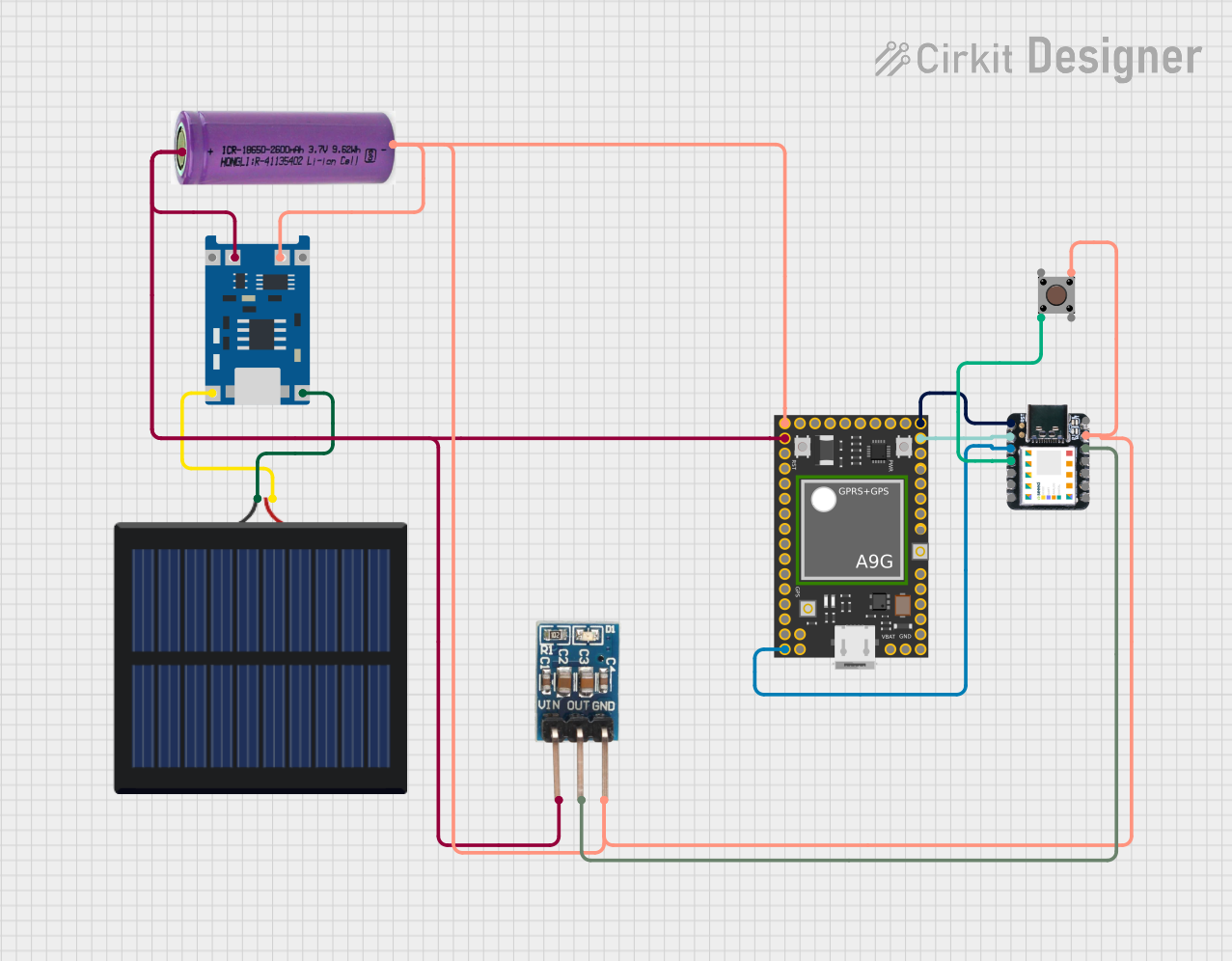
This circuit features an Ai Thinker A9G development board for GSM/GPRS and GPS/BDS connectivity, interfaced with a Seeeduino XIAO microcontroller for control and data processing. A solar cell, coupled with a TP4056 charging module, charges a 3.3V battery, which powers the system through a 3.3V regulator ensuring stable operation. The circuit likely serves for remote data communication and location tracking, with the capability to be powered by renewable energy and interfaced with additional sensors or input devices via the Seeeduino XIAO.
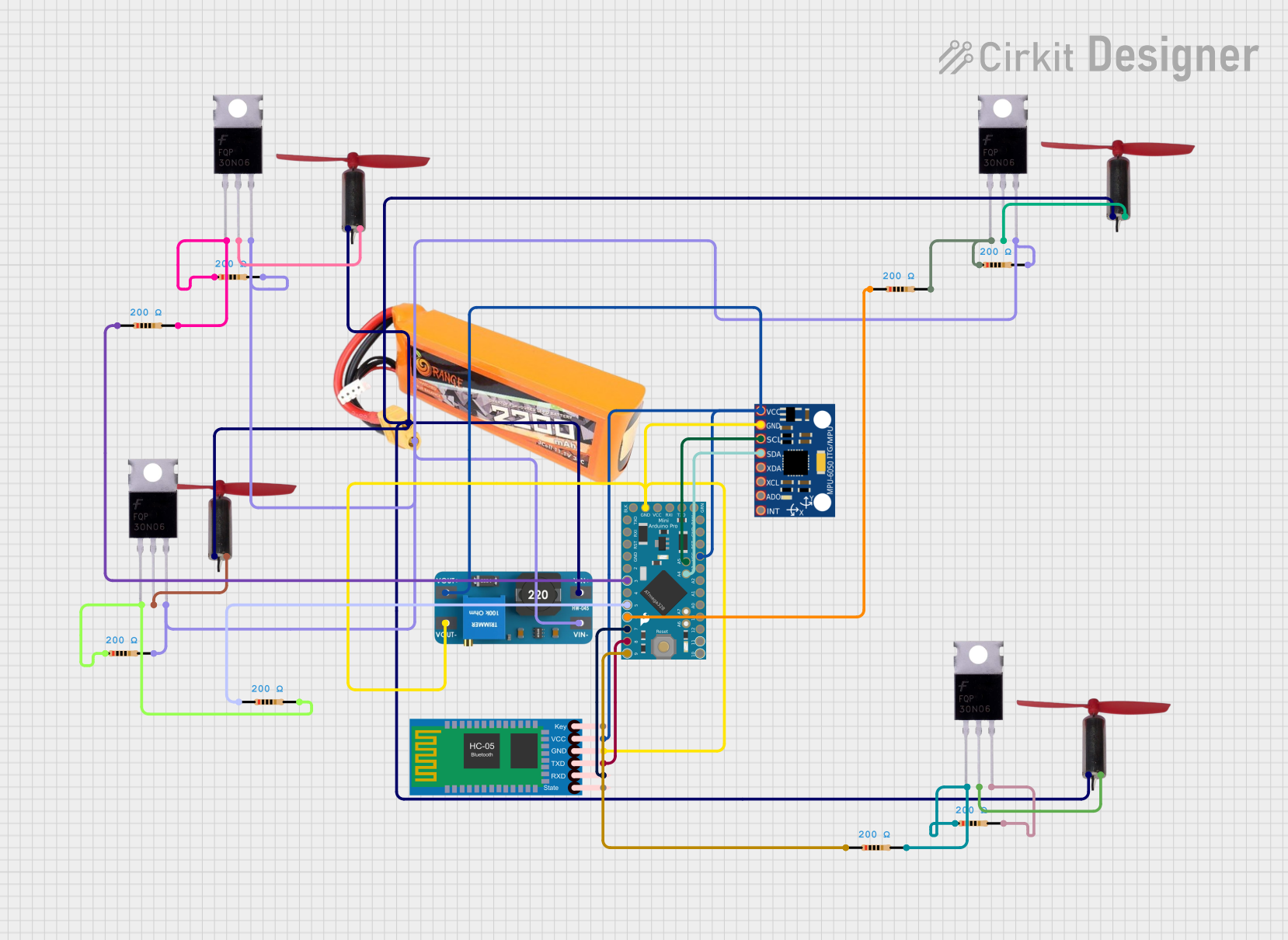
This is a motion-controlled device with wireless capabilities, powered by a LiPo battery with voltage regulation. It uses an Arduino Pro Mini to process MPU-6050 sensor data and control coreless motors via MOSFETs, interfacing with an external device through an HC-05 Bluetooth module.
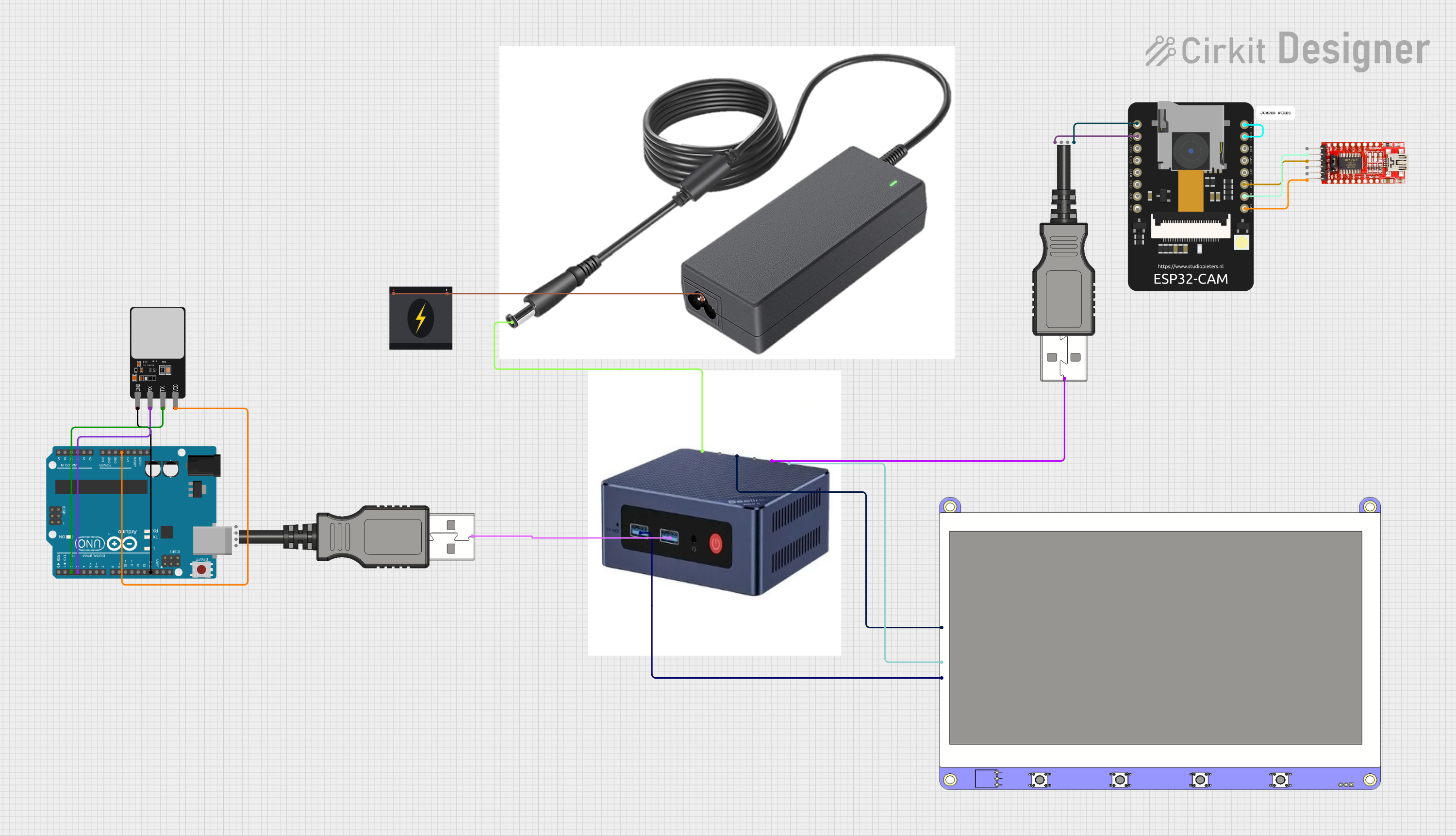
This circuit features a Beelink MINI S12 N95 computer connected to a 7-inch display via HDMI for video output and two USB connections for power and touch screen functionality. An Arduino UNO is interfaced with a fingerprint scanner for biometric input. The Beelink MINI S12 N95 is powered by a PC power supply, which in turn is connected to a 240V power source. Additionally, an ESP32 CAM module is powered and programmed via a USB plug and an FTDI programmer, respectively, for wireless camera capabilities.
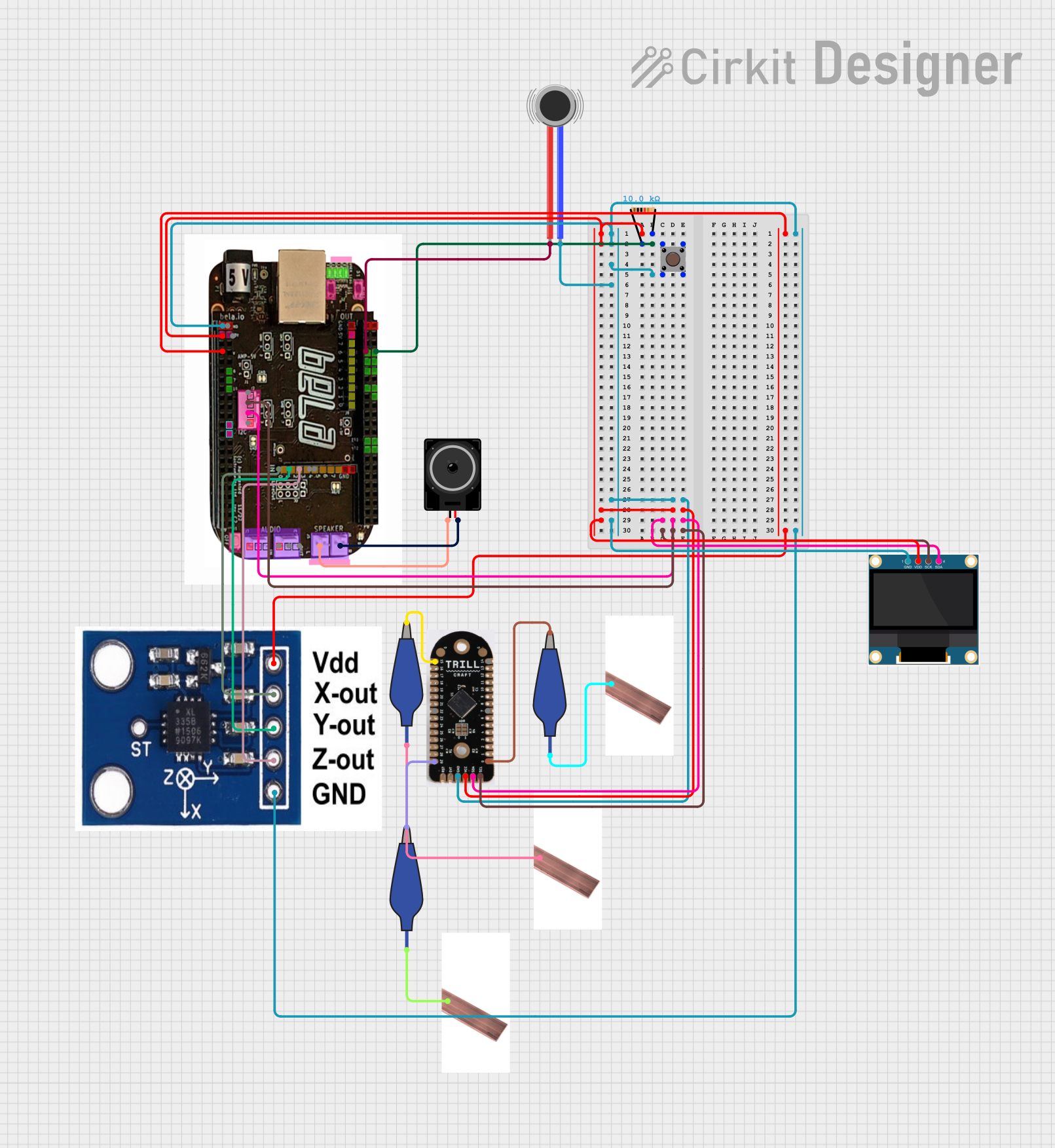
This circuit integrates a Bela Board with various sensors and actuators, including a TRILL CRAFT touch sensor, an ADXXL335 accelerometer, a vibration motor, and a loudspeaker. The Bela Board processes input from the touch sensor and accelerometer, and controls the vibration motor and loudspeaker, while an OLED display provides visual feedback.
Power Supplies: Used in bridge rectifiers to convert AC to DC.
Voltage Protection: Protects circuits from voltage spikes by clamping.
Freewheeling Diode: Used in inductive loads to prevent back EMF damage.
General Rectification: Suitable for low- to medium-power rectification tasks.
Technical Specifications
The 1N4007 diode is designed for high reliability and performance in rectification applications. Below are its key technical specifications:
Parameter
Value
Maximum Repetitive Peak Reverse Voltage (VRRM)
1000 V
Maximum RMS Voltage
700 V
Maximum DC Blocking Voltage (VDC)
1000 V
Average Rectified Forward Current (IF(AV))
1 A
Peak Forward Surge Current (IFSM)
30 A (8.3 ms single half-sine wave)
Forward Voltage Drop (VF)
1.1 V (at 1 A)
Reverse Current (IR)
5 µA (at 25°C, VR = 1000 V)
Operating Temperature Range
-55°C to +150°C
Package Type
DO-41
Pin Configuration and Descriptions
The 1N4007 diode has two terminals:
Pin
Description
Anode
Positive terminal; current enters here.
Cathode
Negative terminal; current exits here. Marked with a band.
Usage Instructions
The 1N4007 diode is straightforward to use in electronic circuits. Below are the steps and considerations for its proper usage:
How to Use the 1N4007 in a Circuit
Identify the Terminals: The cathode is marked with a silver or white band, while the other terminal is the anode.
Connect in the Correct Orientation: Ensure the anode is connected to the positive side of the circuit and the cathode to the negative side for forward bias operation.
Use in Rectification:
For a half-wave rectifier, connect the diode in series with the load.
For a full-wave rectifier, use four 1N4007 diodes in a bridge configuration.
Add a Filter Capacitor: To smooth the rectified DC output, connect a capacitor in parallel with the load.
Important Considerations and Best Practices
Voltage Ratings: Ensure the reverse voltage in your circuit does not exceed 1000 V.
Current Ratings: Do not exceed the average forward current of 1 A to avoid overheating.
Heat Dissipation: If the diode operates near its maximum ratings, consider adding a heatsink or improving ventilation.
Polarity: Incorrect polarity can damage the diode or the circuit.
Example: Using 1N4007 with Arduino UNO
The 1N4007 can be used to protect an Arduino UNO from reverse polarity or voltage spikes. Below is an example circuit and code:
Circuit Description
Connect the 1N4007 diode in series with the Arduino's power input (VIN pin).
The anode connects to the power source, and the cathode connects to the Arduino's VIN pin.
Arduino Code Example
// Example code to blink an LED connected to pin 13
// Ensure the 1N4007 diode is protecting the Arduino's power input

void setup() {
  pinMode(13, OUTPUT); // Set pin 13 as an output
}

void loop() {
  digitalWrite(13, HIGH); // Turn the LED on
  delay(1000);            // Wait for 1 second
  digitalWrite(13, LOW);  // Turn the LED off
  delay(1000);            // Wait for 1 second
}
Troubleshooting and FAQs
Common Issues and Solutions
Diode Overheating:
Cause: Exceeding the maximum current rating.
Solution: Use a diode with a higher current rating or reduce the load current.
No Output Voltage:
Cause: Incorrect diode orientation.
Solution: Verify the anode and cathode connections.
High Reverse Leakage Current:
Cause: Operating at high temperatures or exceeding reverse voltage rating.
Solution: Ensure proper cooling and stay within voltage limits.
Circuit Not Working in Rectification:
Cause: Missing or improperly connected filter capacitor.
Solution: Add a capacitor in parallel with the load to smooth the output.
FAQs
Q1: Can the 1N4007 be used for high-frequency applications?
A1: No, the 1N4007 is not suitable for high-frequency applications due to its slow recovery time. Use a fast recovery or Schottky diode instead.
Q2: What is the difference between the 1N4007 and other diodes in the 1N400x series?
A2: The primary difference is the maximum reverse voltage rating. The 1N4007 has the highest rating (1000 V) in the series.
Q3: Can I use the 1N4007 for AC voltage rectification?
A3: Yes, the 1N4007 is commonly used in bridge rectifiers for AC to DC conversion.
Q4: How do I identify the cathode on the 1N4007?
A4: The cathode is marked with a silver or white band on the diode's body.
By following this documentation, users can effectively integrate the 1N4007 diode into their electronic projects and troubleshoot common issues.


 Open Project in Cirkit Designer