
How to Use MAX30102: Examples, Pinouts, and Specs
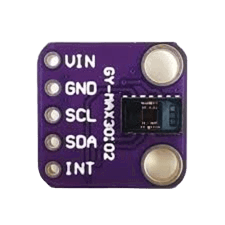
 Design with MAX30102 in Cirkit Designer
Introduction
The MAX30102 is a pulse oximeter and heart-rate sensor module manufactured by Analog Devices (formerly Maxim Integrated). It utilizes photoplethysmography (PPG) technology to measure blood oxygen saturation (SpO2) and heart rate. The module integrates red and infrared LEDs, a photodetector, optical elements, and low-noise electronics in a compact package, making it ideal for wearable health monitoring devices.
Explore Projects Built with MAX30102
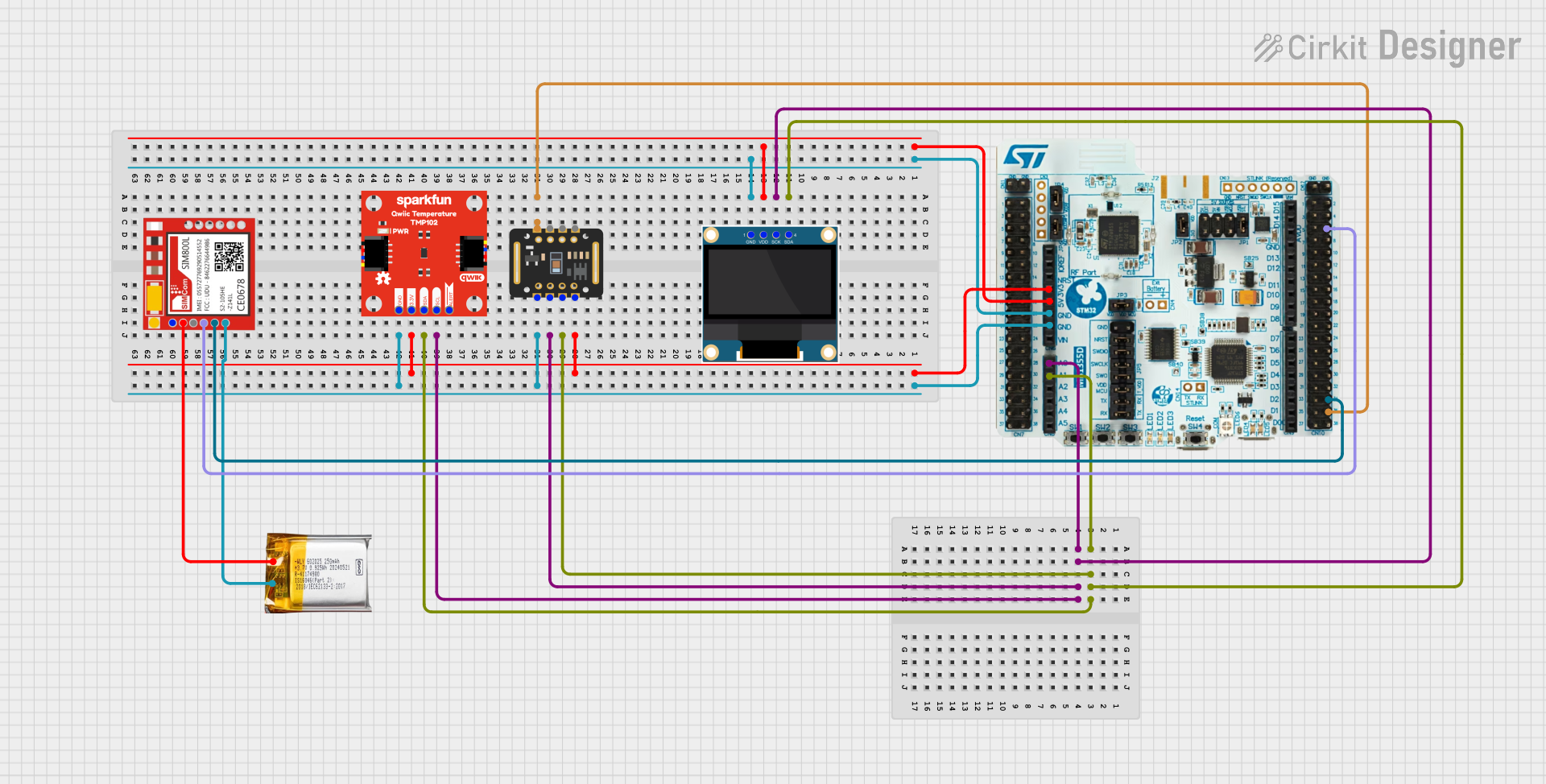 Open Project in Cirkit Designer
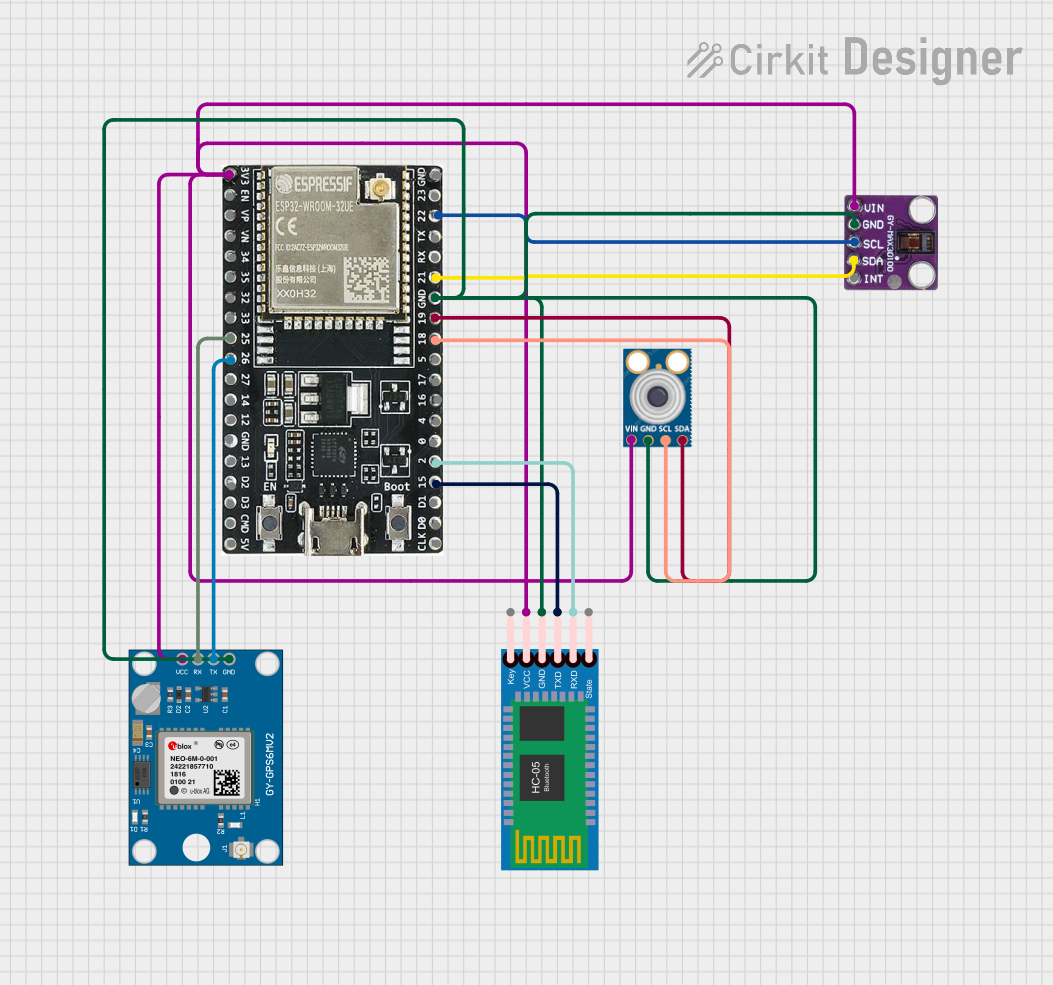 Open Project in Cirkit Designer
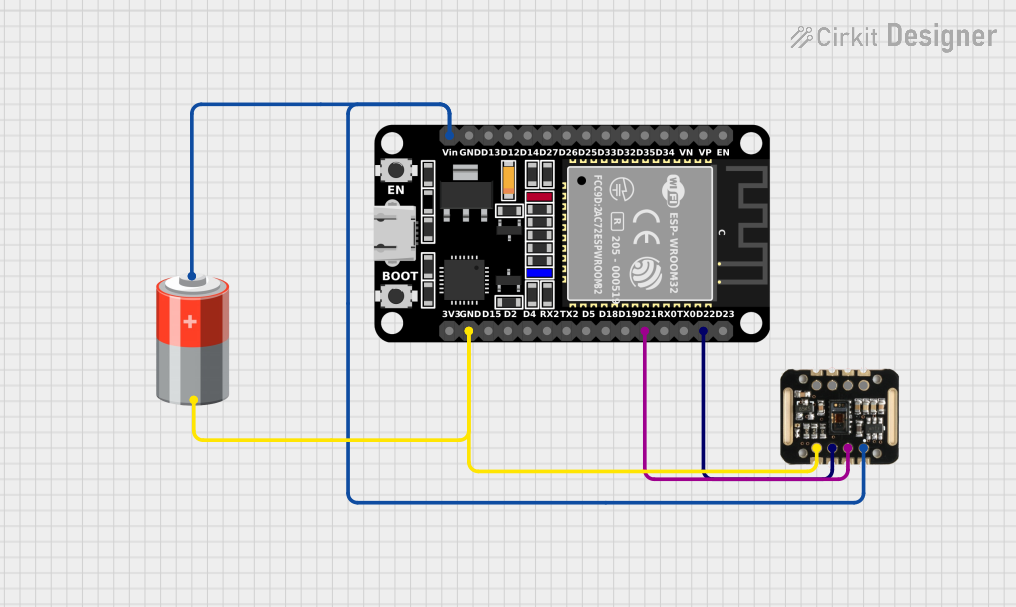 Open Project in Cirkit Designer
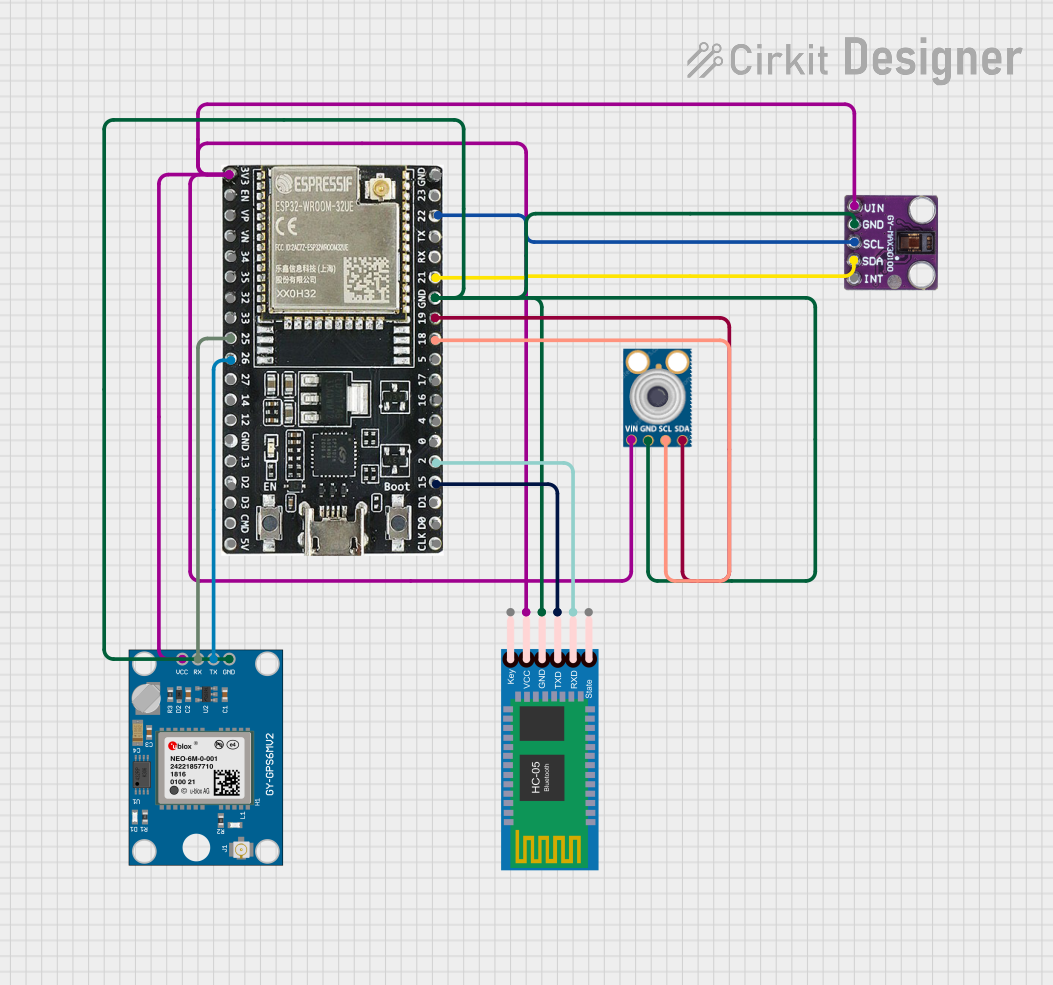 Open Project in Cirkit Designer
Explore Projects Built with MAX30102
Open Project in Cirkit DesignerOpen Project in Cirkit DesignerOpen Project in Cirkit DesignerOpen Project in Cirkit DesignerCommon Applications
- Wearable fitness trackers and smartwatches
- Medical devices for heart rate and SpO2 monitoring
- Health monitoring systems
- Research and development in biomedical applications
Technical Specifications
The MAX30102 is designed for low-power operation and high performance. Below are its key technical specifications:
| Parameter | Value |
|---|---|
| Supply Voltage (VDD) | 1.8V |
| LED Supply Voltage (VLED) | 3.3V to 5.5V |
| Operating Current | 600 µA (typical) |
| Standby Current | 0.7 µA (typical) |
| Measurement Wavelengths | Red: 660 nm, Infrared: 880 nm |
| Communication Interface | I²C |
| I²C Address | 0x57 (default) |
| Operating Temperature Range | -40°C to +85°C |
| Package Size | 5.6 mm x 3.3 mm x 1.55 mm |
Pin Configuration and Descriptions
The MAX30102 module has the following pin configuration:
| Pin Name | Pin Number | Description |
|---|---|---|
| GND | 1 | Ground |
| VDD | 2 | Power supply for the internal circuitry (1.8V) |
| VLED | 3 | Power supply for the LEDs (3.3V to 5.5V) |
| SDA | 4 | I²C data line |
| SCL | 5 | I²C clock line |
| INT | 6 | Interrupt output (active low) |
Usage Instructions
The MAX30102 is straightforward to use in a circuit, but proper configuration is essential for accurate measurements. Below are the steps and considerations for using the module:
Circuit Connection
- Power Supply: Connect the VDD pin to a 1.8V power source and the VLED pin to a 3.3V or 5V power source. Ensure a common ground connection between the module and the microcontroller.
- I²C Communication: Connect the SDA and SCL pins to the corresponding I²C pins on the microcontroller. Use pull-up resistors (typically 4.7 kΩ) on both lines if not already included in the module.
- Interrupt Pin: Optionally, connect the INT pin to a GPIO pin on the microcontroller to handle interrupts.
Arduino UNO Example Code
The following example demonstrates how to interface the MAX30102 with an Arduino UNO to read heart rate and SpO2 data. This code uses the SparkFun MAX3010x Library, which can be installed via the Arduino Library Manager.
#include <Wire.h>
#include "MAX30105.h" // Include the SparkFun MAX3010x library

MAX30105 particleSensor; // Create an instance of the MAX30105 class

void setup() {
  Serial.begin(9600); // Initialize serial communication at 9600 baud
  Serial.println("Initializing MAX30102...");

  // Initialize the MAX30102 sensor
  if (!particleSensor.begin()) {
    Serial.println("MAX30102 was not found. Please check wiring/power.");
    while (1); // Halt execution if the sensor is not detected
  }

  // Configure the sensor for heart rate and SpO2 measurement
  particleSensor.setup(); // Use default settings
  particleSensor.setPulseAmplitudeRed(0x0A); // Set red LED brightness
  particleSensor.setPulseAmplitudeIR(0x0A);  // Set IR LED brightness
}

void loop() {
  // Read raw data from the sensor
  long redValue = particleSensor.getRed(); // Red LED data
  long irValue = particleSensor.getIR();   // IR LED data

  // Print the raw data to the serial monitor
  Serial.print("Red: ");
  Serial.print(redValue);
  Serial.print(" IR: ");
  Serial.println(irValue);

  delay(100); // Delay for 100 ms before the next reading
}
Important Considerations
- Power Supply: Ensure the correct voltage levels for VDD and VLED to avoid damaging the module.
- Ambient Light: Minimize ambient light interference by enclosing the sensor in a dark environment or using it in low-light conditions.
- Skin Contact: For accurate measurements, ensure the sensor is in direct contact with the skin.
- I²C Address: The default I²C address is 0x57. If multiple MAX30102 modules are used, ensure each has a unique address.
Troubleshooting and FAQs
Common Issues
Sensor Not Detected:
- Cause: Incorrect wiring or power supply.
- Solution: Verify all connections and ensure the correct voltage levels are supplied to VDD and VLED.
Inaccurate Readings:
- Cause: Poor skin contact or excessive ambient light.
- Solution: Ensure the sensor is in direct contact with the skin and shield it from ambient light.
I²C Communication Failure:
- Cause: Missing pull-up resistors or incorrect I²C address.
- Solution: Add 4.7 kΩ pull-up resistors to the SDA and SCL lines and verify the I²C address.
FAQs
Q: Can the MAX30102 measure SpO2 and heart rate simultaneously?
A: Yes, the MAX30102 can measure both SpO2 and heart rate simultaneously using its red and infrared LEDs.
Q: What is the maximum sampling rate of the MAX30102?
A: The MAX30102 supports a maximum sampling rate of 3200 samples per second.
Q: Is the MAX30102 suitable for continuous monitoring?
A: Yes, the MAX30102 is designed for low-power operation, making it suitable for continuous monitoring in wearable devices.
Q: Can the MAX30102 be used with a 5V microcontroller?
A: Yes, the MAX30102 can be used with a 5V microcontroller, but ensure proper voltage levels for VDD (1.8V) and VLED (3.3V to 5.5V). Use level shifters if necessary for I²C communication.