
How to Use 1000W Grid Tie Solar Inverter: Examples, Pinouts, and Specs
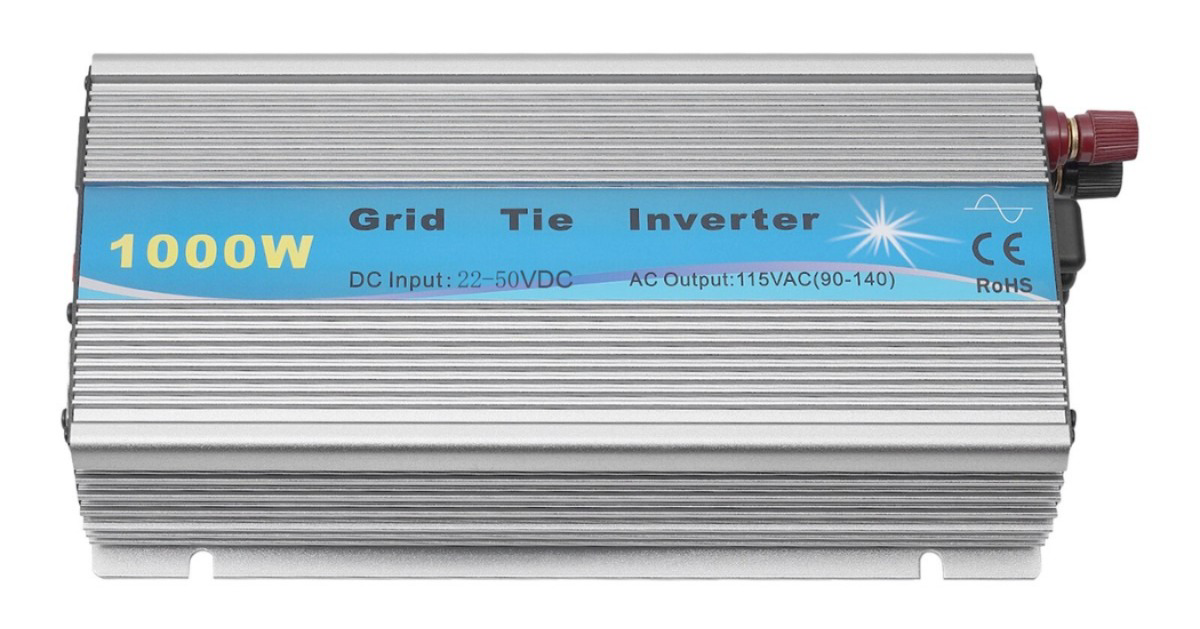
 Design with 1000W Grid Tie Solar Inverter in Cirkit Designer
Introduction
The 1000W Grid Tie Solar Inverter by Vevor is a high-performance device designed to convert direct current (DC) electricity generated by solar panels into alternating current (AC) electricity. This AC electricity can then be fed directly into the electrical grid, making it an essential component for grid-tied solar power systems. With a maximum output of 1000 watts, this inverter is ideal for small to medium-sized solar installations.
Explore Projects Built with 1000W Grid Tie Solar Inverter
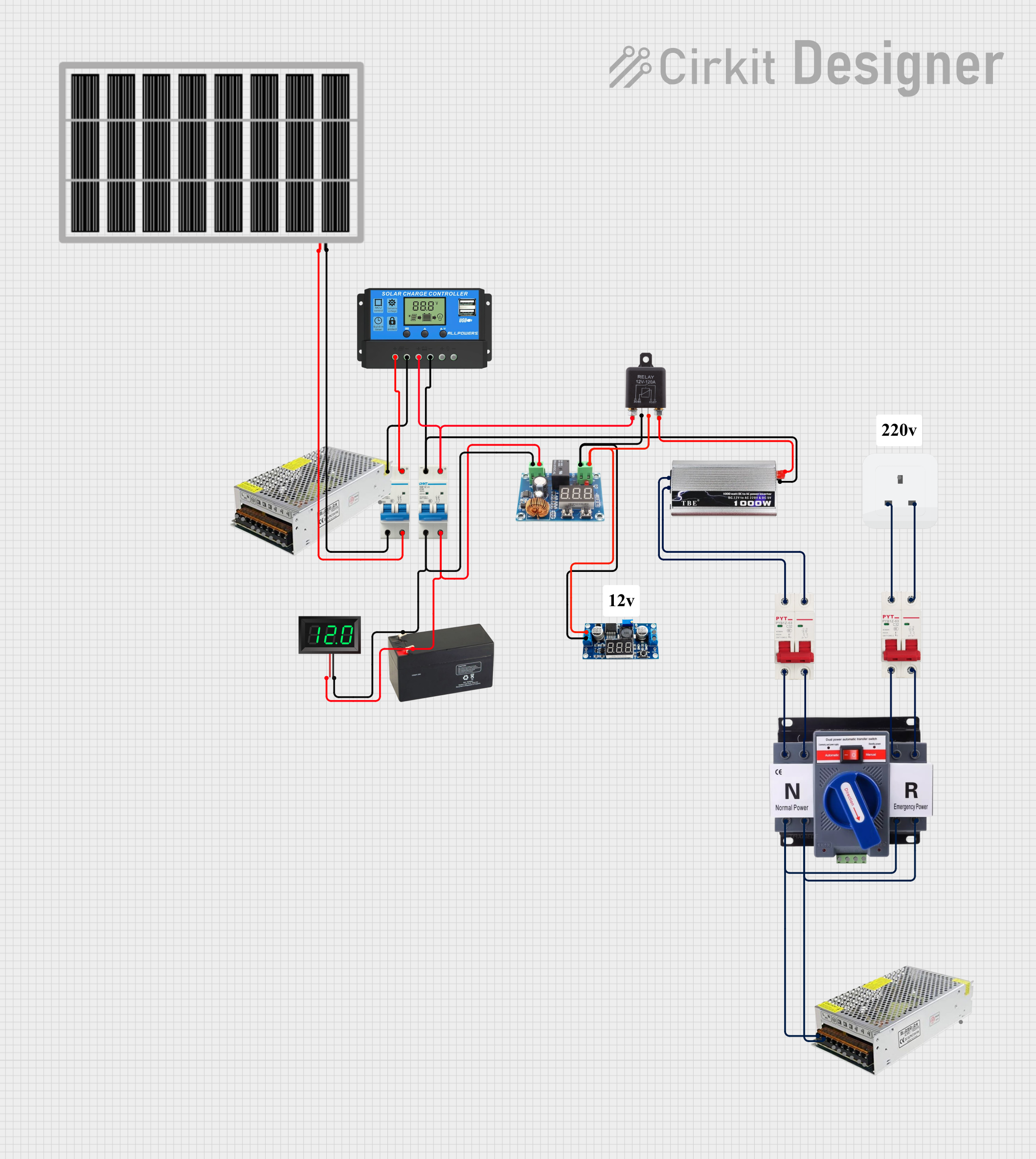 Open Project in Cirkit Designer
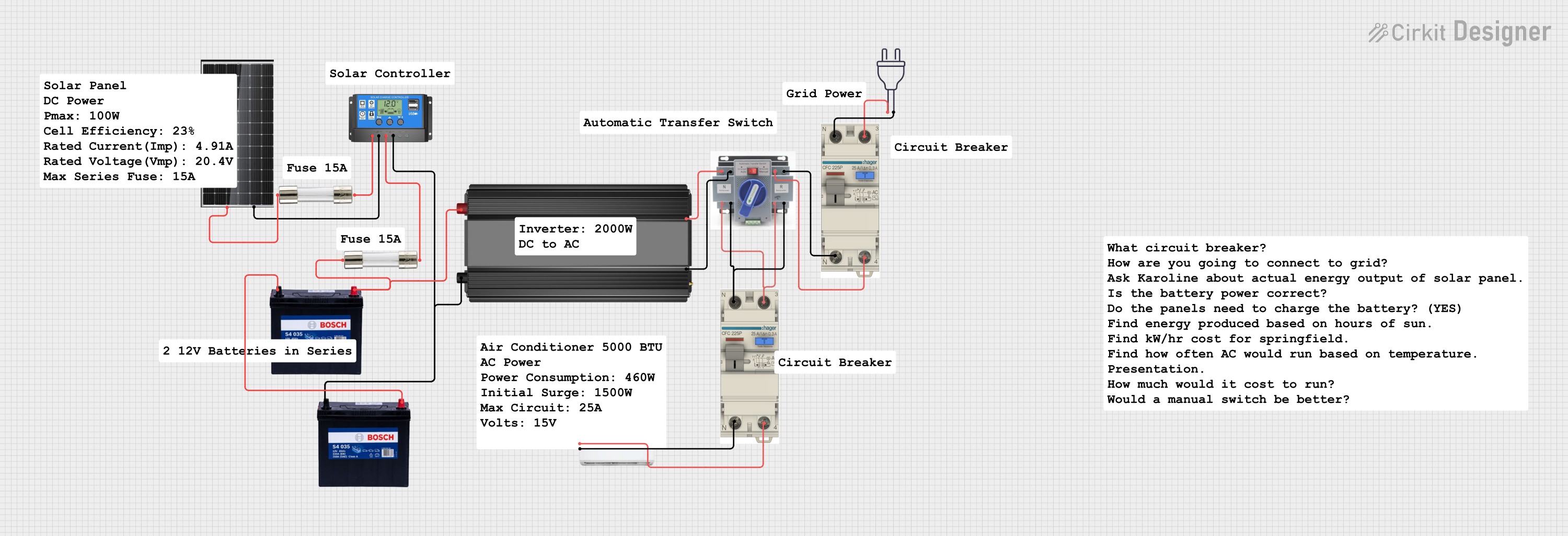 Open Project in Cirkit Designer
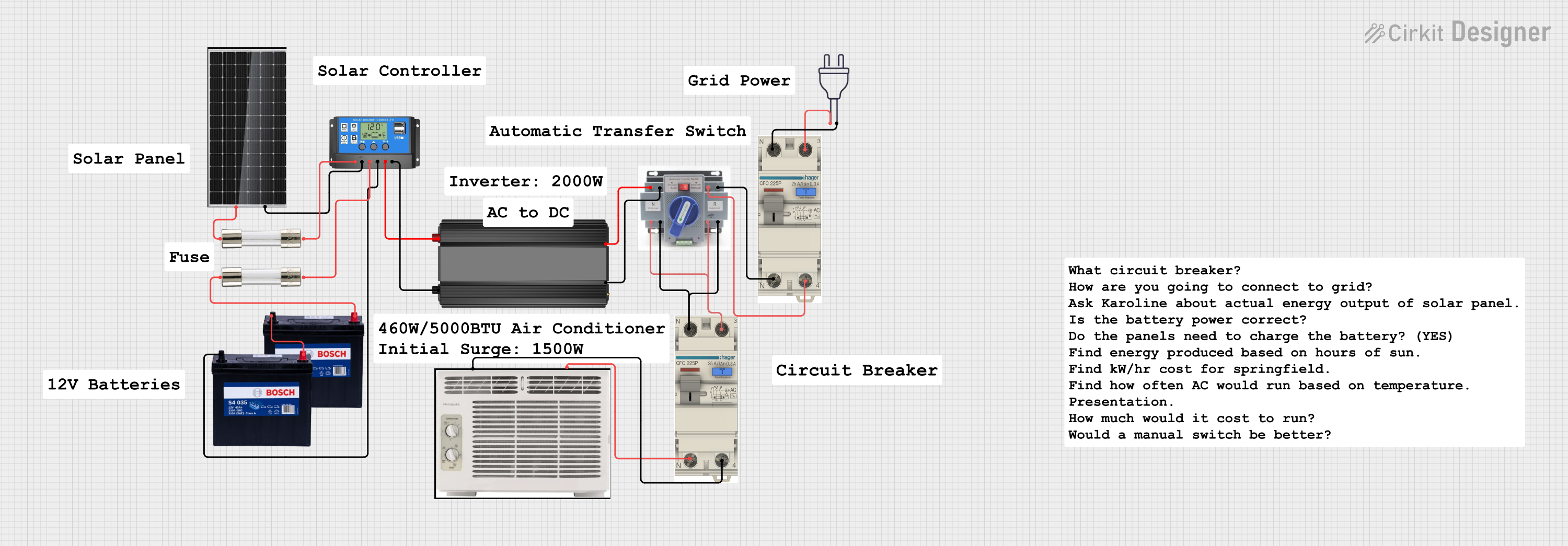 Open Project in Cirkit Designer
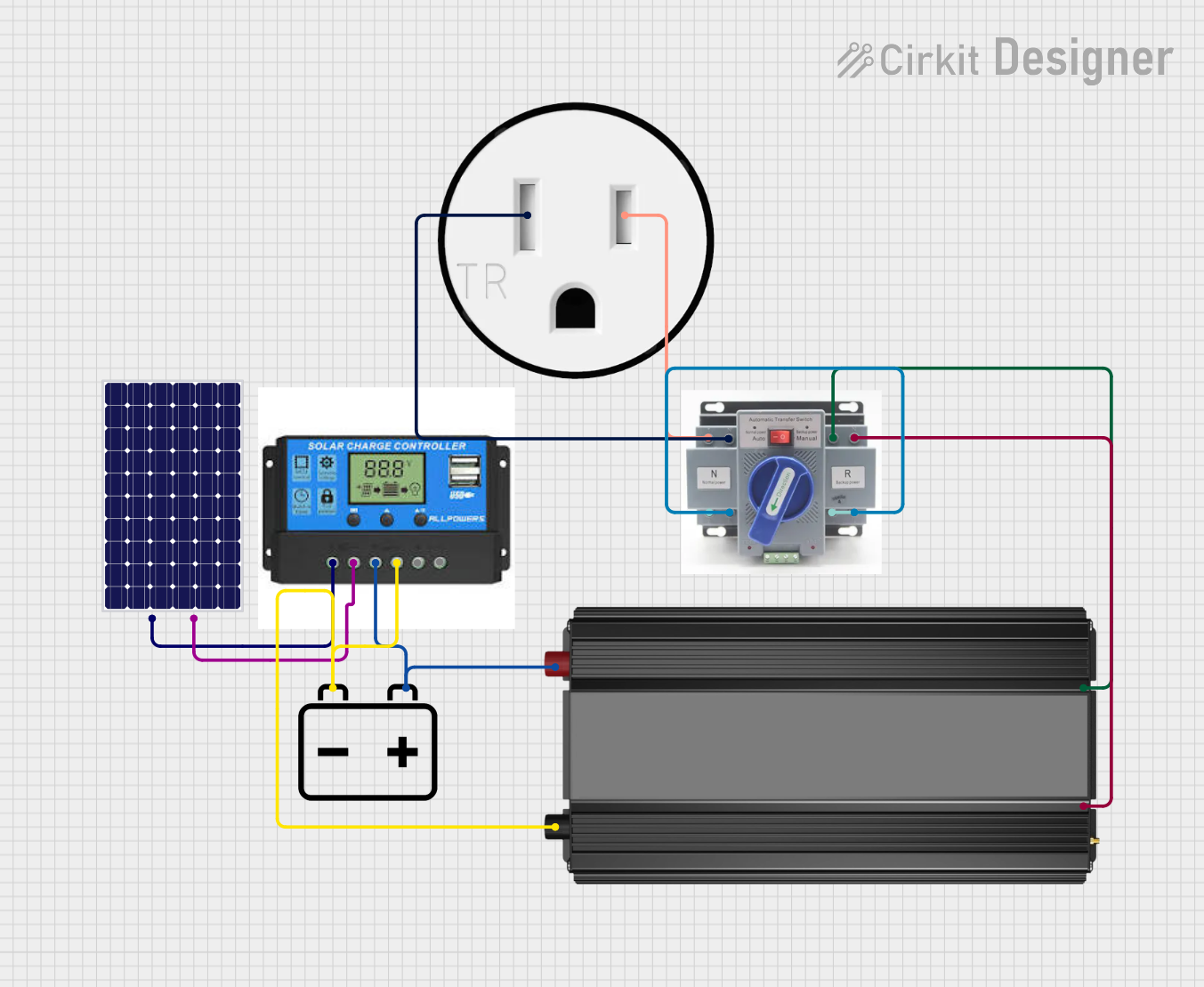 Open Project in Cirkit Designer
Explore Projects Built with 1000W Grid Tie Solar Inverter
Open Project in Cirkit DesignerOpen Project in Cirkit DesignerOpen Project in Cirkit DesignerOpen Project in Cirkit DesignerCommon Applications and Use Cases
- Residential solar power systems for reducing electricity bills.
- Small-scale renewable energy projects.
- Supplementing grid power with solar energy.
- Educational and experimental setups for learning about solar energy systems.
Technical Specifications
The following table outlines the key technical details of the 1000W Grid Tie Solar Inverter:
| Parameter | Specification |
|---|---|
| Manufacturer | Vevor |
| Maximum Output Power | 1000W |
| Input Voltage Range (DC) | 22V - 60V |
| Output Voltage (AC) | 110V/220V (auto-sensing) |
| Output Frequency | 50Hz/60Hz (auto-sensing) |
| Efficiency | ≥ 90% |
| Cooling Method | Intelligent cooling fan |
| Protection Features | Over-voltage, under-voltage, over-temperature, short-circuit |
| Dimensions | 12.2 x 8.3 x 3.1 inches (approx.) |
| Weight | 5.5 lbs (approx.) |
Pin Configuration and Descriptions
The inverter does not have traditional "pins" but instead features the following key input/output connections:
| Connection | Description |
|---|---|
| DC Input Terminals | Connect to the positive (+) and negative (-) terminals of the solar panel. |
| AC Output Port | Standard AC outlet for feeding electricity into the grid. |
| Cooling Fan Vent | Allows heat dissipation to maintain optimal performance. |
| LED Indicators | Display operational status (e.g., power, fault, etc.). |
Usage Instructions
How to Use the Component in a Circuit
Connect the Solar Panel:
- Ensure the solar panel's output voltage is within the inverter's input range (22V - 60V DC).
- Connect the positive (+) and negative (-) terminals of the solar panel to the corresponding DC input terminals on the inverter.
Connect to the Grid:
- Plug the inverter's AC output port into a standard wall outlet. This allows the inverter to synchronize with the grid and feed power into it.
Power On:
- Once all connections are secure, turn on the inverter. The LED indicators will display the operational status.
Monitor Performance:
- Use the LED indicators to monitor the inverter's performance. Some models may also support external monitoring via an app or display.
Important Considerations and Best Practices
- Safety First: Always ensure the inverter is properly grounded to prevent electrical hazards.
- Voltage Matching: Verify that the solar panel's voltage and power output match the inverter's specifications.
- Avoid Overloading: Do not exceed the inverter's maximum power rating of 1000W.
- Cooling: Ensure the cooling fan vents are not obstructed to prevent overheating.
- Grid Compatibility: Confirm that the inverter's output voltage and frequency match your local grid standards (110V/220V, 50Hz/60Hz).
Arduino Integration
While the 1000W Grid Tie Solar Inverter is not directly controlled by an Arduino, you can use an Arduino to monitor the solar panel's voltage and current. Below is an example code snippet for monitoring solar panel performance:
// Example Arduino code to monitor solar panel voltage and current
const int voltagePin = A0; // Analog pin for voltage sensor
const int currentPin = A1; // Analog pin for current sensor

void setup() {
  Serial.begin(9600); // Initialize serial communication
}

void loop() {
  // Read voltage and current sensor values
  int voltageRaw = analogRead(voltagePin);
  int currentRaw = analogRead(currentPin);

  // Convert raw values to actual voltage and current
  float voltage = (voltageRaw / 1023.0) * 5.0 * 11; // Assuming a 10:1 voltage divider
  float current = (currentRaw / 1023.0) * 5.0 * 20; // Assuming a 20A current sensor

  // Print the values to the Serial Monitor
  Serial.print("Voltage: ");
  Serial.print(voltage);
  Serial.print(" V, Current: ");
  Serial.print(current);
  Serial.println(" A");

  delay(1000); // Wait 1 second before the next reading
}
Troubleshooting and FAQs
Common Issues Users Might Face
Inverter Does Not Turn On:
- Cause: Insufficient input voltage from the solar panel.
- Solution: Check the solar panel's output voltage and ensure it is within the 22V - 60V range.
Low Power Output:
- Cause: Solar panel is not receiving enough sunlight.
- Solution: Adjust the panel's angle or location to maximize sunlight exposure.
Overheating:
- Cause: Obstructed cooling vents or high ambient temperature.
- Solution: Ensure proper ventilation and avoid placing the inverter in direct sunlight.
Grid Synchronization Failure:
- Cause: Mismatch between inverter output and grid voltage/frequency.
- Solution: Verify that the inverter's output settings match your local grid standards.
Solutions and Tips for Troubleshooting
- Check Connections: Ensure all connections are secure and free of corrosion.
- Inspect LED Indicators: Refer to the user manual for LED indicator meanings to diagnose issues.
- Test Solar Panel Output: Use a multimeter to measure the panel's voltage and current.
- Contact Support: If issues persist, contact Vevor's customer support for assistance.
By following this documentation, users can effectively integrate and operate the 1000W Grid Tie Solar Inverter in their solar power systems.