
How to Use BuckConverter12V: Examples, Pinouts, and Specs
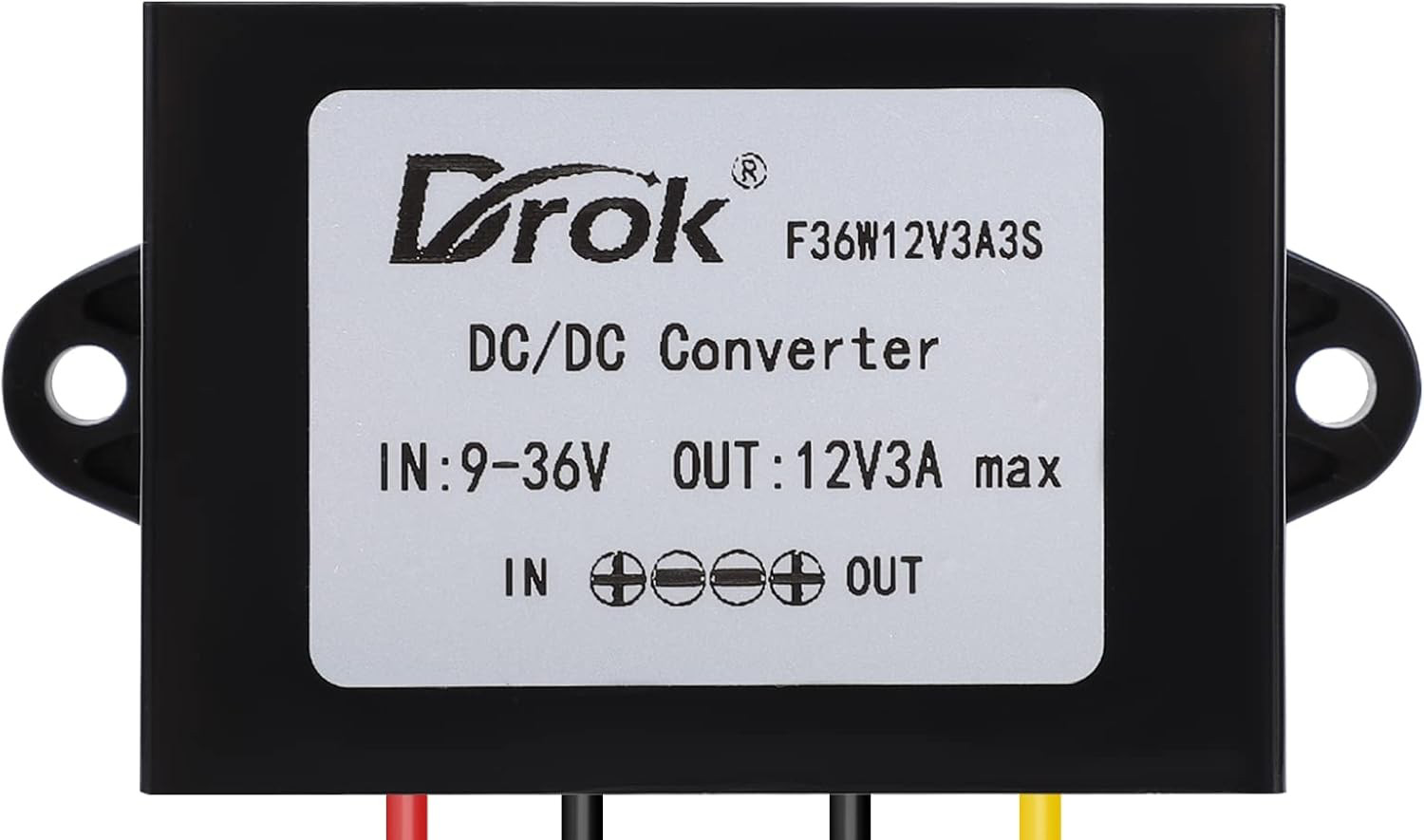
 Design with BuckConverter12V in Cirkit Designer
Introduction
A Buck Converter is a type of DC-DC converter that steps down voltage from a higher level to a lower level while maintaining high efficiency. The BuckConverter12V is specifically designed to output a regulated 12 volts, making it ideal for powering devices that require a stable 12V supply from a higher voltage source, such as 24V or 48V systems.
Explore Projects Built with BuckConverter12V
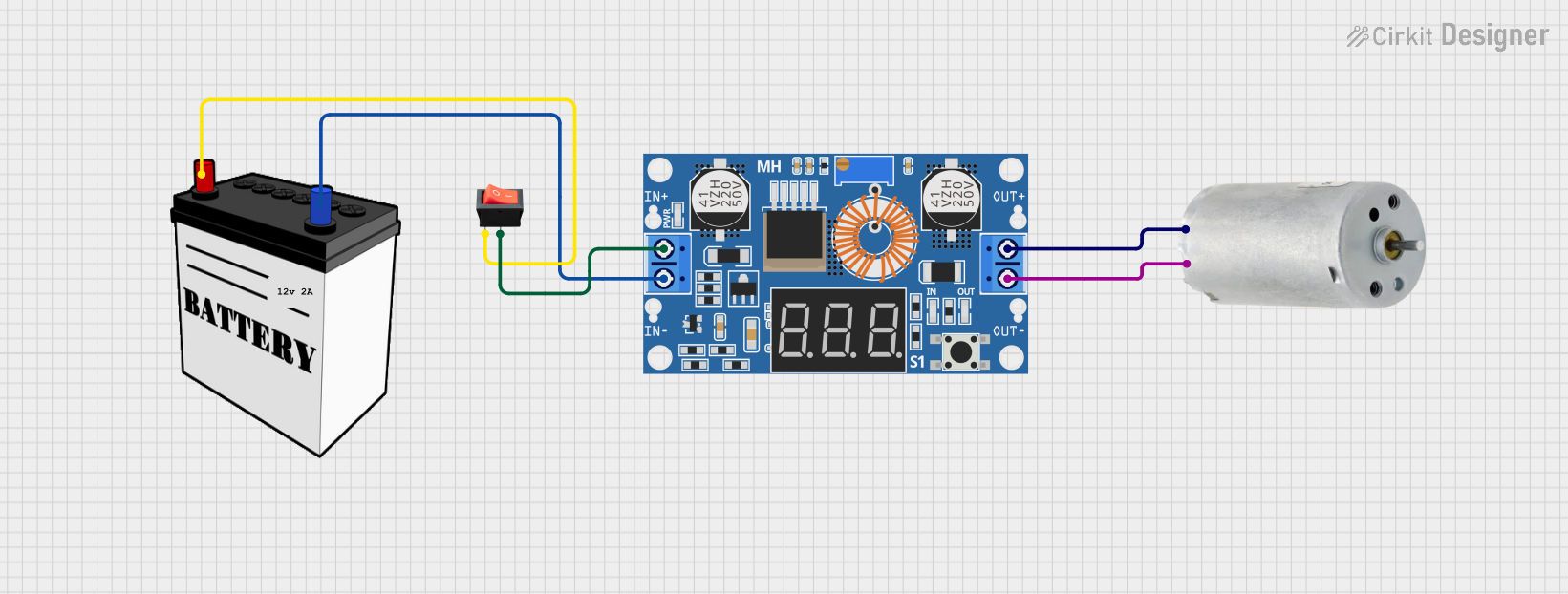 Open Project in Cirkit Designer
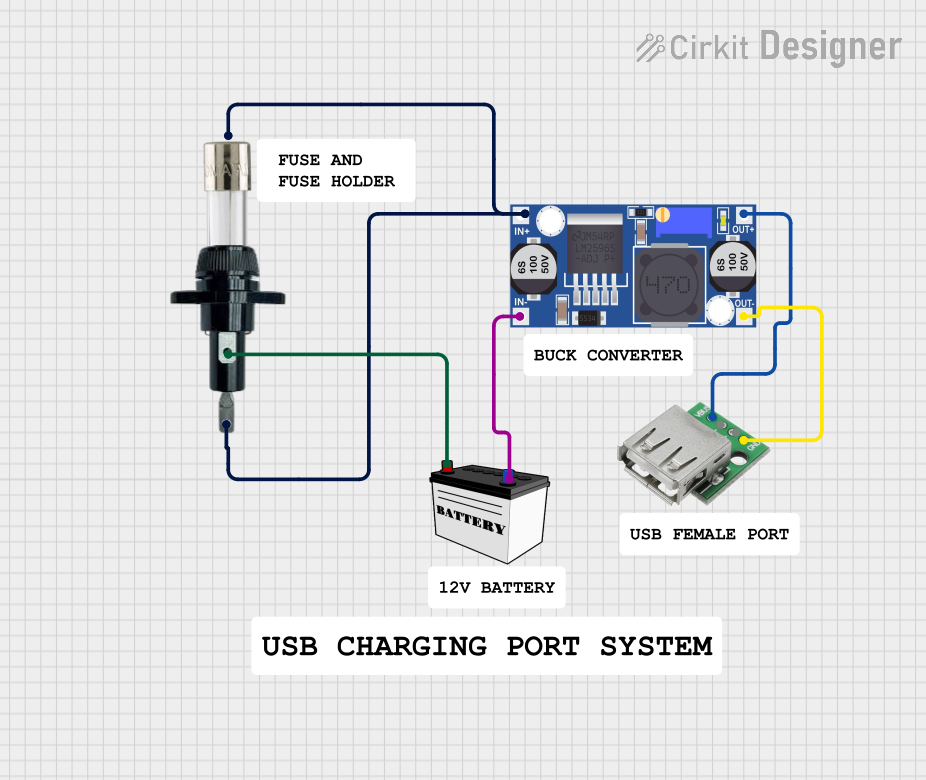 Open Project in Cirkit Designer
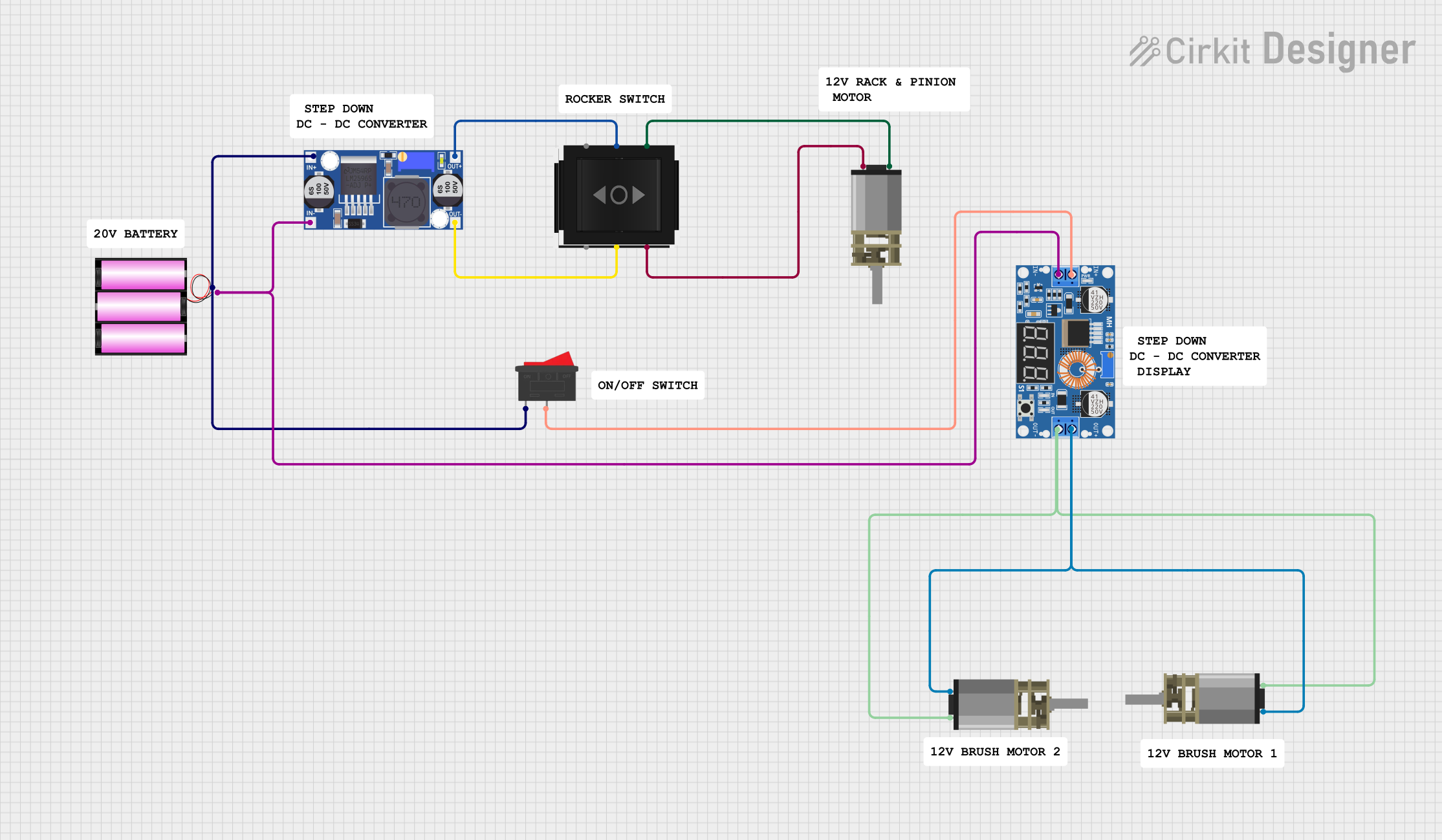 Open Project in Cirkit Designer
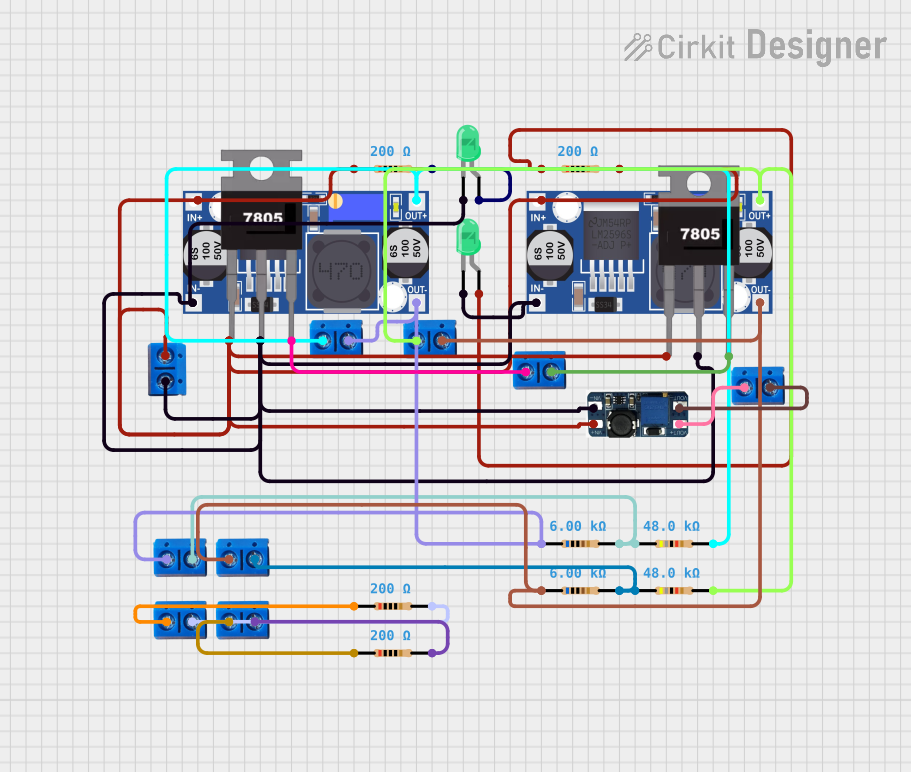 Open Project in Cirkit Designer
Explore Projects Built with BuckConverter12V
Open Project in Cirkit DesignerOpen Project in Cirkit DesignerOpen Project in Cirkit DesignerOpen Project in Cirkit DesignerCommon Applications and Use Cases
- Powering 12V devices (e.g., LED strips, fans, and sensors) from higher voltage sources.
- Battery-powered systems where voltage regulation is required.
- Automotive applications to step down voltage from a car battery (e.g., 24V to 12V).
- Industrial equipment requiring a stable 12V power supply.
- DIY electronics projects and prototyping.
Technical Specifications
Key Technical Details
| Parameter | Value |
|---|---|
| Input Voltage Range | 15V to 40V |
| Output Voltage | 12V (regulated) |
| Output Current | Up to 5A |
| Efficiency | Up to 95% (depending on load) |
| Switching Frequency | 150 kHz |
| Operating Temperature | -40°C to +85°C |
| Dimensions | 45mm x 25mm x 15mm |
Pin Configuration and Descriptions
| Pin Name | Description |
|---|---|
| VIN+ | Positive input voltage terminal (connect to the higher voltage source). |
| VIN- | Negative input voltage terminal (connect to the ground of the source). |
| VOUT+ | Positive output voltage terminal (provides regulated 12V output). |
| VOUT- | Negative output voltage terminal (connect to the ground of the load). |
| EN (optional) | Enable pin (used to turn the converter on/off; active high). |
Usage Instructions
How to Use the BuckConverter12V in a Circuit
Connect the Input Voltage:
- Connect the VIN+ pin to the positive terminal of your input voltage source (e.g., 24V).
- Connect the VIN- pin to the ground of your input voltage source.
- Ensure the input voltage is within the specified range (15V to 40V).
Connect the Output Voltage:
- Connect the VOUT+ pin to the positive terminal of your load (e.g., a 12V device).
- Connect the VOUT- pin to the ground of your load.
Enable the Converter (if applicable):
- If the module has an EN (Enable) pin, connect it to a HIGH signal (e.g., 5V) to activate the converter.
- Leave the EN pin unconnected or pull it LOW to disable the converter.
Power On:
- Turn on the input voltage source. The BuckConverter12V will regulate the input voltage and provide a stable 12V output.
Important Considerations and Best Practices
- Input Voltage Range: Ensure the input voltage is always within the specified range (15V to 40V). Exceeding this range may damage the converter.
- Heat Dissipation: At high loads, the converter may generate heat. Use a heatsink or ensure proper ventilation to prevent overheating.
- Load Requirements: Do not exceed the maximum output current of 5A. Overloading the converter may cause it to shut down or fail.
- Polarity: Double-check the polarity of your connections. Reversing the input or output connections can damage the module.
- Filtering: For sensitive applications, consider adding input and output capacitors to reduce noise and ripple.
Example: Using BuckConverter12V with Arduino UNO
The BuckConverter12V can be used to power an Arduino UNO from a 24V source. Here's how to connect it:
- Connect the VIN+ and VIN- pins of the BuckConverter12V to the 24V source.
- Connect the VOUT+ pin to the Arduino's VIN pin.
- Connect the VOUT- pin to the Arduino's GND pin.
Sample Arduino Code
// Example code to blink an LED connected to pin 13 of the Arduino UNO
// Ensure the Arduino is powered via the BuckConverter12V module.

void setup() {
  pinMode(13, OUTPUT); // Set pin 13 as an output
}

void loop() {
  digitalWrite(13, HIGH); // Turn the LED on
  delay(1000);            // Wait for 1 second
  digitalWrite(13, LOW);  // Turn the LED off
  delay(1000);            // Wait for 1 second
}
Troubleshooting and FAQs
Common Issues and Solutions
| Issue | Possible Cause | Solution |
|---|---|---|
| No output voltage | Input voltage is too low or disconnected | Ensure input voltage is within 15V-40V. |
| Output voltage is unstable | Insufficient input filtering | Add input capacitors (e.g., 100µF). |
| Module overheats | Excessive load or poor ventilation | Reduce load or add a heatsink. |
| Device does not power on | EN pin is not connected or is LOW | Connect EN pin to a HIGH signal (e.g., 5V). |
| Output voltage is not 12V | Faulty module or incorrect connections | Verify connections and replace module if needed. |
FAQs
Q1: Can I use the BuckConverter12V to power a Raspberry Pi?
A1: Yes, as long as the Raspberry Pi's power requirements (voltage and current) are within the module's output specifications.
Q2: What happens if I exceed the maximum input voltage?
A2: Exceeding the input voltage range (40V) can permanently damage the module. Always use a voltage source within the specified range.
Q3: Can I adjust the output voltage?
A3: No, the BuckConverter12V is designed to provide a fixed 12V output. For adjustable output, consider using a different buck converter model.
Q4: Is the module protected against short circuits?
A4: Many BuckConverter12V modules include short-circuit protection, but it is recommended to check the specific datasheet for your module.
Q5: Can I use this module in parallel with another BuckConverter12V?
A5: It is not recommended to connect multiple modules in parallel unless specifically designed for such use, as it may cause instability.
This concludes the documentation for the BuckConverter12V.