
How to Use POWER SUPPLY 12V: Examples, Pinouts, and Specs
 Design with POWER SUPPLY 12V in Cirkit Designer
Introduction
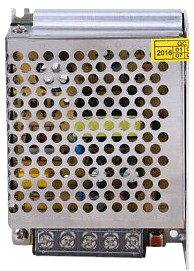
The POWER SUPPLY 12V is a device designed to convert electrical energy from an input source (such as AC mains or a DC source) into a stable 12V DC output. It is widely used in powering electronic circuits, modules, and devices that require a reliable 12V power source. This component is essential in applications ranging from hobbyist projects to industrial systems.
Explore Projects Built with POWER SUPPLY 12V
 Open Project in Cirkit Designer
 Open Project in Cirkit Designer
 Open Project in Cirkit Designer
 Open Project in Cirkit Designer
Explore Projects Built with POWER SUPPLY 12V
Open Project in Cirkit DesignerOpen Project in Cirkit DesignerOpen Project in Cirkit DesignerOpen Project in Cirkit DesignerCommon Applications and Use Cases
- Powering microcontrollers, sensors, and modules in embedded systems
- Driving DC motors, relays, and solenoids
- Supplying power to LED strips and lighting systems
- Providing a stable voltage for audio amplifiers and other analog circuits
- General-purpose power supply for prototyping and testing electronic circuits
Technical Specifications
The following table outlines the key technical details of the POWER SUPPLY 12V:
| Parameter | Value |
|---|---|
| Input Voltage Range | 100-240V AC (for AC-DC models) |
| Output Voltage | 12V DC |
| Output Current | Typically 1A to 10A (varies by model) |
| Output Power | 12W to 120W (depending on model) |
| Efficiency | ≥ 85% |
| Ripple and Noise | ≤ 120mV |
| Operating Temperature | -10°C to 50°C |
| Protection Features | Overload, short circuit, overvoltage |
Pin Configuration and Descriptions
For a typical AC-DC POWER SUPPLY 12V module, the pin configuration is as follows:
| Pin Name | Description |
|---|---|
| AC-L | Live input for AC mains |
| AC-N | Neutral input for AC mains |
| GND | Ground connection for the DC output |
| +12V | Positive 12V DC output |
For DC-DC converters, the pin configuration may differ:
| Pin Name | Description |
|---|---|
| VIN+ | Positive input voltage (e.g., 24V DC) |
| VIN- | Negative input voltage (ground) |
| GND | Ground connection for the DC output |
| +12V | Positive 12V DC output |
Usage Instructions
How to Use the POWER SUPPLY 12V in a Circuit
Connect the Input:
- For AC-DC models, connect the AC-L and AC-N pins to the live and neutral wires of the AC mains supply. Ensure proper insulation and safety precautions.
- For DC-DC models, connect the VIN+ and VIN- pins to the appropriate DC input voltage source.
Connect the Output:
- Connect the +12V pin to the positive terminal of your load or circuit.
- Connect the GND pin to the ground terminal of your load or circuit.
Verify Connections:
- Double-check all connections to ensure there are no short circuits or reversed polarities.
Power On:
- Turn on the input power source. The POWER SUPPLY 12V will regulate the input and provide a stable 12V output.
Important Considerations and Best Practices
- Load Requirements: Ensure the total current drawn by the connected devices does not exceed the maximum output current rating of the power supply.
- Heat Dissipation: If the power supply operates at high currents, ensure adequate ventilation or heat sinking to prevent overheating.
- Polarity: Always observe correct polarity when connecting the output to your circuit to avoid damage.
- Safety: For AC-DC models, handle the AC input connections with care and follow electrical safety standards.
Example: Using with an Arduino UNO
The POWER SUPPLY 12V can be used to power an Arduino UNO via its barrel jack or VIN pin. Below is an example of how to connect and use it:
- Connect the +12V output of the power supply to the barrel jack of the Arduino UNO.
- Alternatively, connect the +12V output to the VIN pin and the GND output to the GND pin of the Arduino UNO.
- Ensure the power supply is turned on and providing a stable 12V output.
Here is a simple Arduino sketch to blink an LED while powered by the 12V supply:
// Simple LED Blink Example
// This code blinks an LED connected to pin 13 of the Arduino UNO.
// Ensure the Arduino is powered by the 12V power supply.

void setup() {
  pinMode(13, OUTPUT); // Set pin 13 as an output
}

void loop() {
  digitalWrite(13, HIGH); // Turn the LED on
  delay(1000);            // Wait for 1 second
  digitalWrite(13, LOW);  // Turn the LED off
  delay(1000);            // Wait for 1 second
}
Troubleshooting and FAQs
Common Issues and Solutions
No Output Voltage:
- Cause: Input power is not connected or insufficient.
- Solution: Verify the input connections and ensure the input voltage is within the specified range.
Output Voltage Fluctuates:
- Cause: Load exceeds the maximum current rating or input voltage is unstable.
- Solution: Reduce the load or stabilize the input voltage.
Overheating:
- Cause: Insufficient ventilation or excessive load.
- Solution: Ensure proper airflow around the power supply and reduce the load if necessary.
Short Circuit Protection Triggered:
- Cause: Output terminals are shorted.
- Solution: Disconnect the power supply, check for shorts, and reconnect after resolving the issue.
FAQs
Q1: Can I use the POWER SUPPLY 12V to charge a 12V battery?
A1: No, this power supply is not designed for battery charging. Use a dedicated battery charger with appropriate charging profiles.
Q2: Is the POWER SUPPLY 12V suitable for outdoor use?
A2: Most models are not weatherproof. Use an enclosure or select a weatherproof model for outdoor applications.
Q3: Can I connect multiple devices to the power supply?
A3: Yes, as long as the total current draw does not exceed the maximum output current rating.
Q4: What happens if I connect a 5V device to the 12V output?
A4: The device may be damaged due to overvoltage. Always match the voltage requirements of your devices with the power supply output.