
How to Use 2s 7.4v lipo: Examples, Pinouts, and Specs
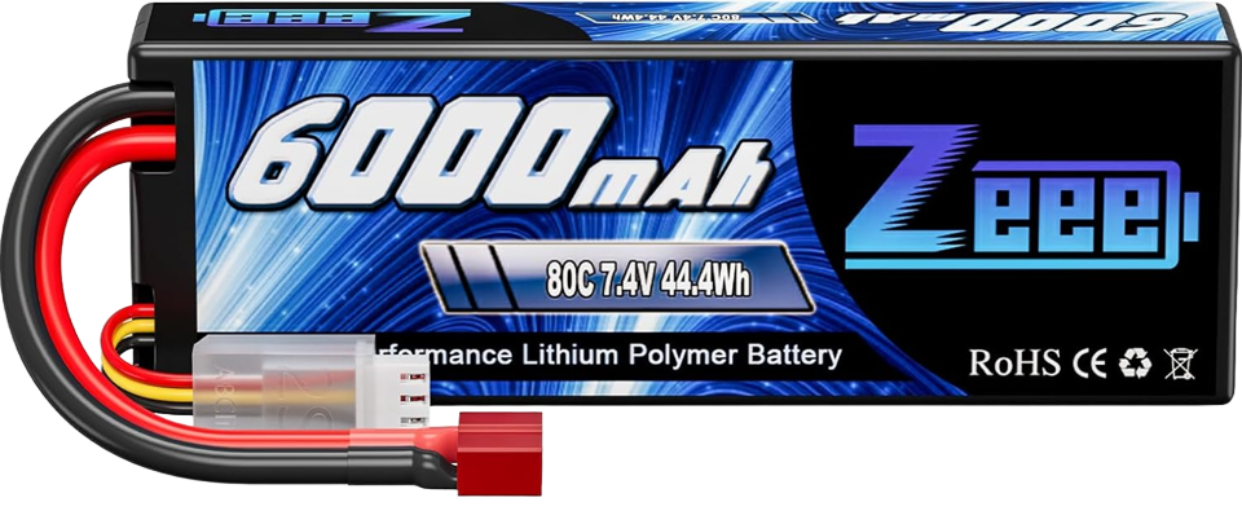
 Design with 2s 7.4v lipo in Cirkit Designer
Introduction
The 2S 7.4V LiPo Battery (Manufacturer: HA, Part ID: 2S 7.4) is a 2-cell lithium polymer (LiPo) battery pack that delivers a nominal voltage of 7.4 volts. Known for its high energy density and lightweight design, this battery is widely used in applications requiring compact and efficient power sources. It is particularly popular in remote-controlled (RC) vehicles, drones, robotics, and portable electronic devices.
Explore Projects Built with 2s 7.4v lipo
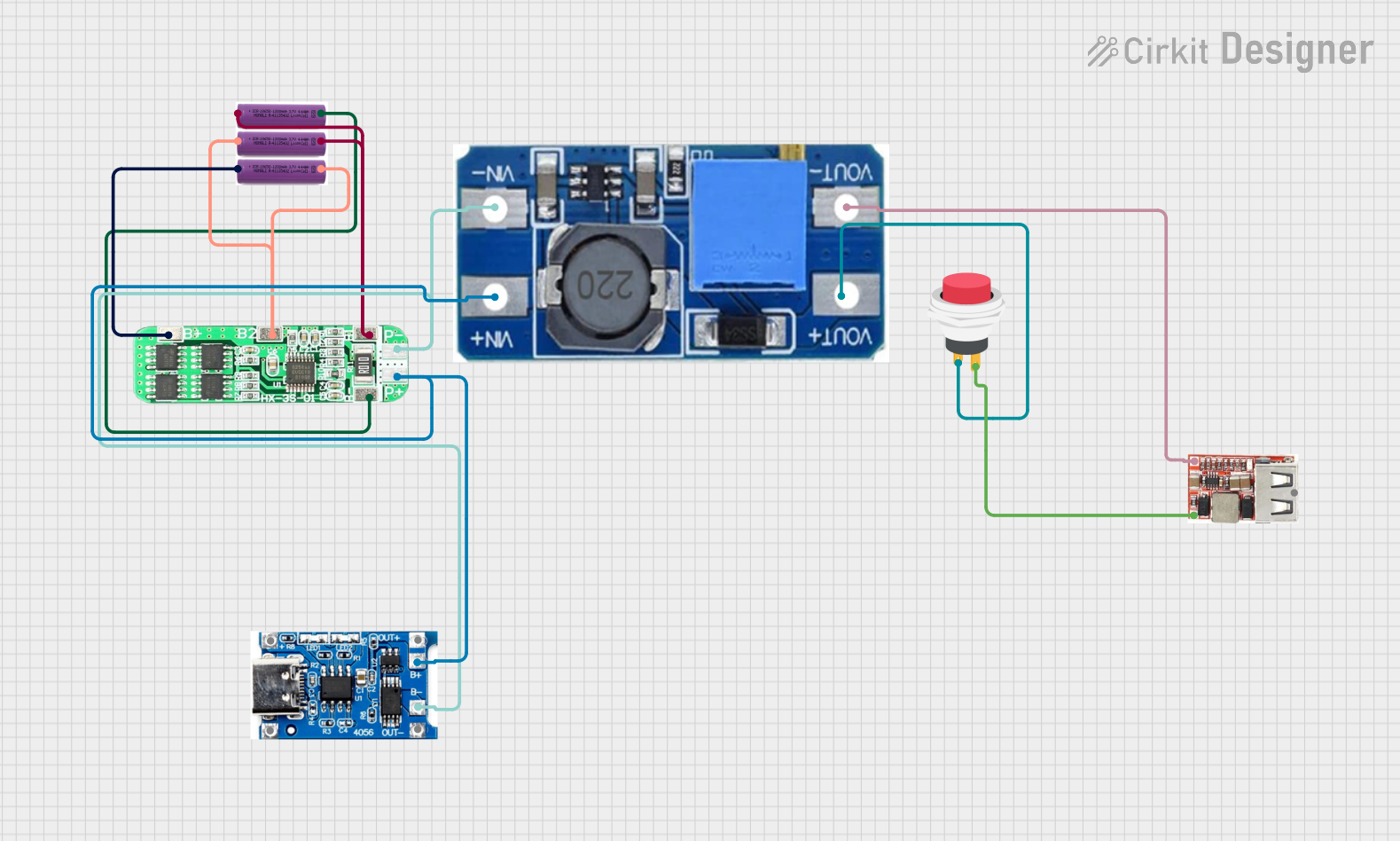 Open Project in Cirkit Designer
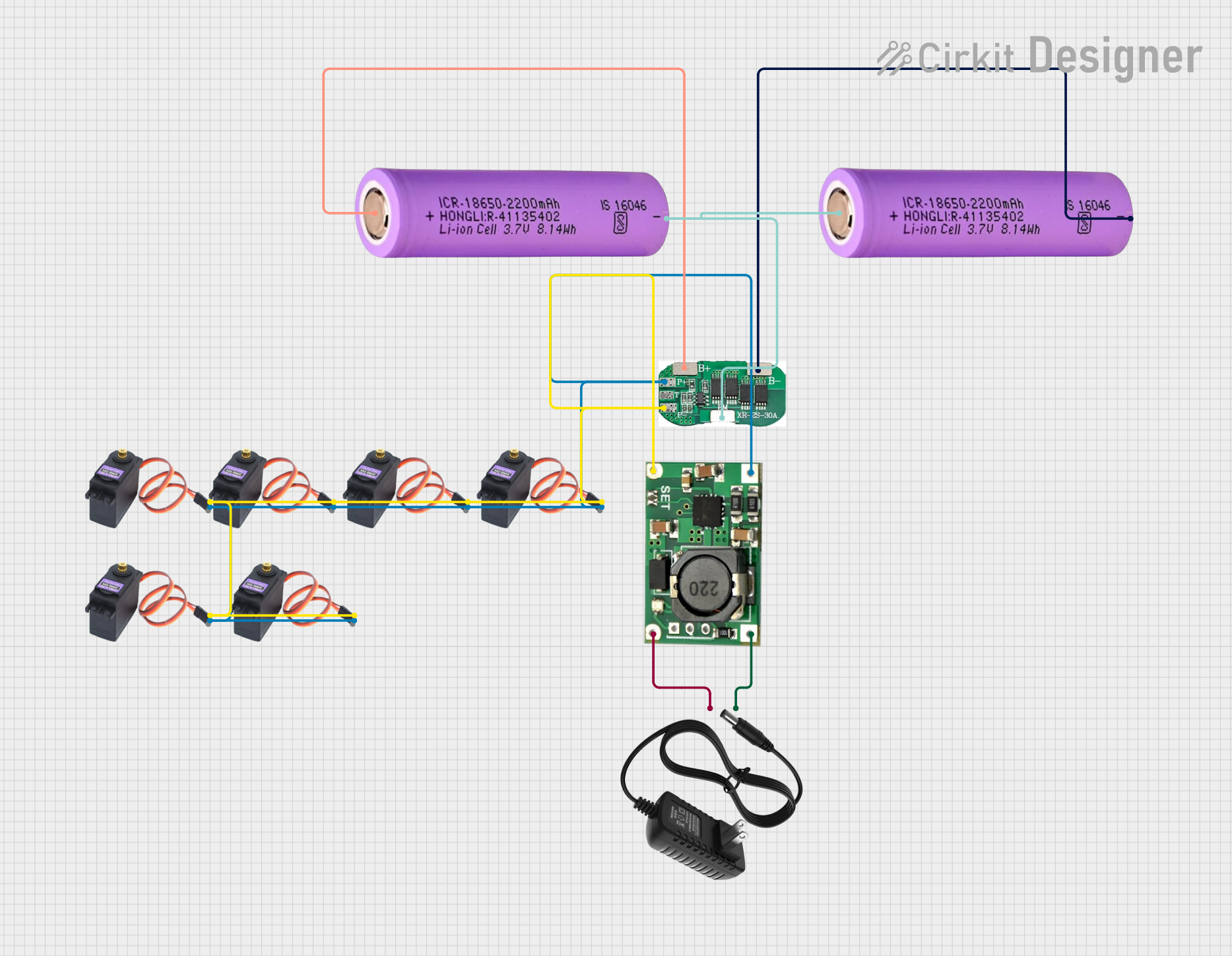 Open Project in Cirkit Designer
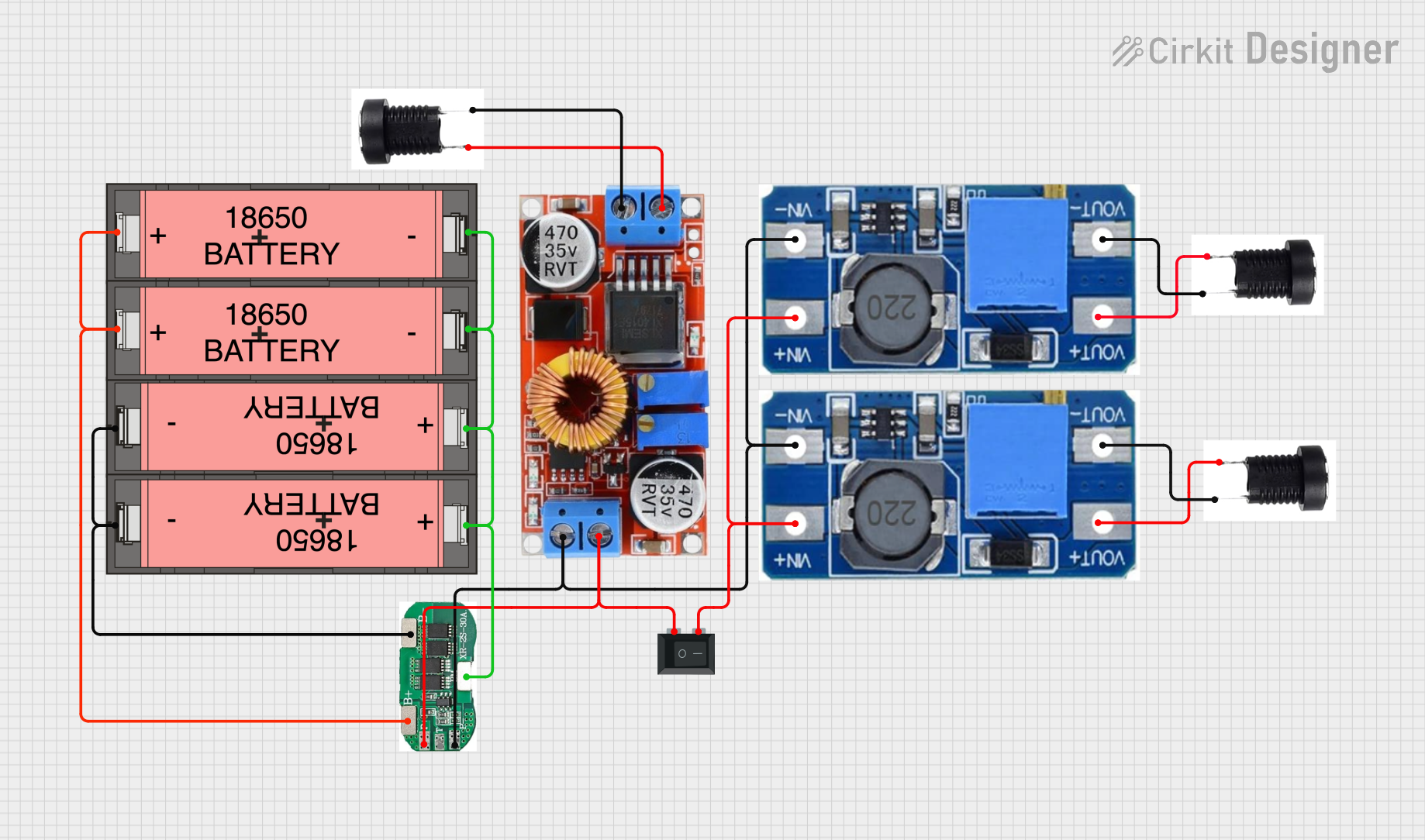 Open Project in Cirkit Designer
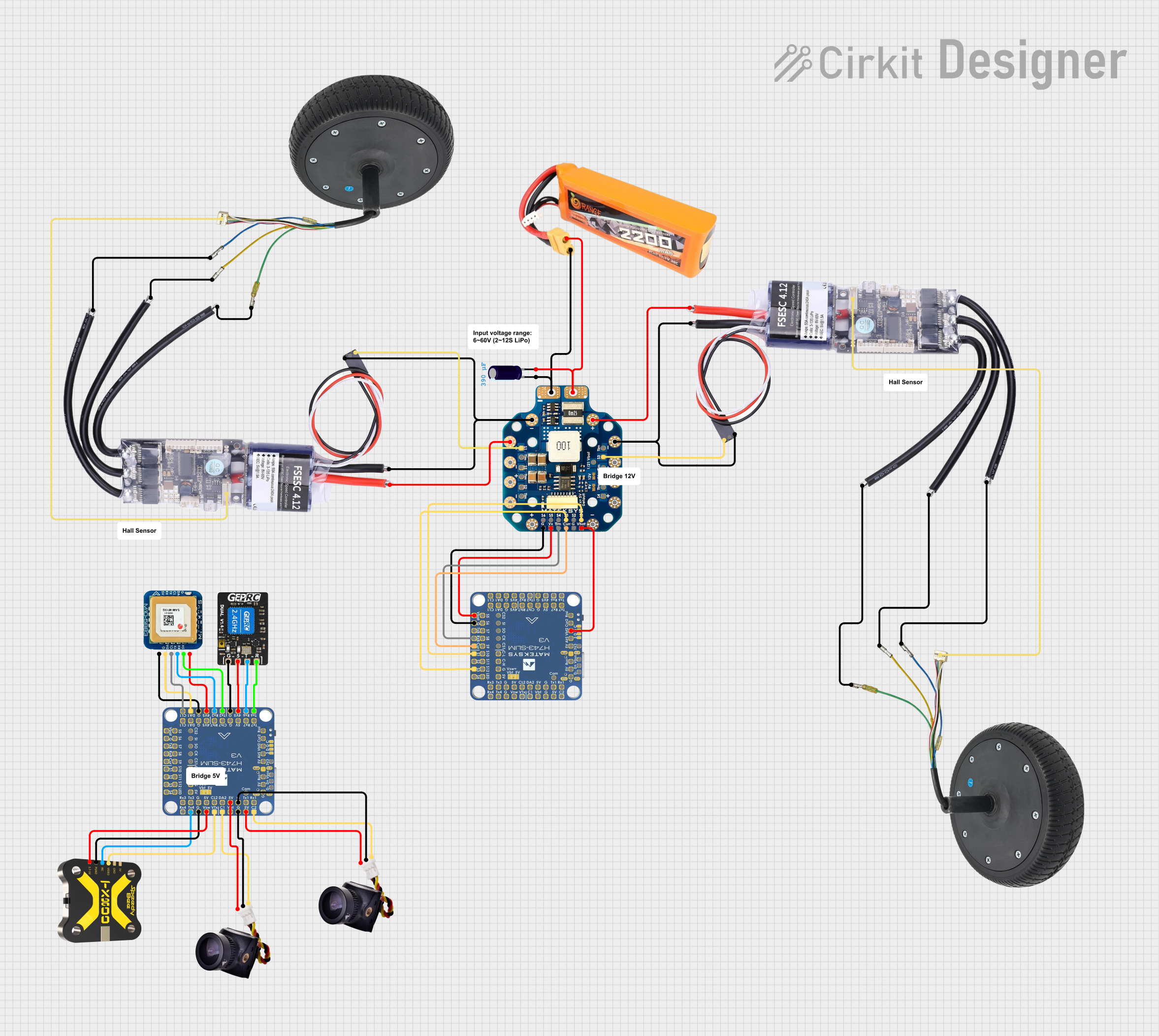 Open Project in Cirkit Designer
Explore Projects Built with 2s 7.4v lipo
Open Project in Cirkit DesignerOpen Project in Cirkit DesignerOpen Project in Cirkit DesignerOpen Project in Cirkit DesignerCommon Applications
- RC cars, boats, and aircraft
- Drones and quadcopters
- Robotics and automation systems
- Portable electronic devices
- DIY electronics projects
Technical Specifications
The following table outlines the key technical specifications of the 2S 7.4V LiPo Battery:
| Parameter | Specification |
|---|---|
| Nominal Voltage | 7.4V (2 cells in series) |
| Cell Configuration | 2S (2 cells in series) |
| Capacity | Varies (e.g., 1000mAh, 2200mAh, etc.) |
| Maximum Discharge Rate | Typically 20C to 50C (varies by model) |
| Charging Voltage | 8.4V (maximum) |
| Recommended Charge Rate | 1C (e.g., 2.2A for a 2200mAh battery) |
| Connector Type | XT60, JST, or other (varies by model) |
| Balancing Connector | JST-XH (standard for 2S LiPo packs) |
| Weight | Varies (e.g., ~100g for 2200mAh) |
| Dimensions | Varies (e.g., ~100mm x 35mm x 20mm) |
Pin Configuration
The 2S 7.4V LiPo Battery typically includes two connectors:
- Main Power Connector: Supplies power to the load.
- Balance Connector: Used for charging and balancing the cells.
Balance Connector Pinout (JST-XH for 2S LiPo)
| Pin Number | Function | Description |
|---|---|---|
| 1 | Cell 1 Negative | Negative terminal of the first cell |
| 2 | Cell 1 Positive | Positive terminal of the first cell |
| 3 | Cell 2 Positive | Positive terminal of the second cell |
Usage Instructions
How to Use the 2S 7.4V LiPo Battery in a Circuit
- Connect the Main Power Connector: Attach the main power connector (e.g., XT60 or JST) to the input of your circuit or electronic device.
- Use a Compatible Charger: Always use a LiPo-compatible charger with a balance charging feature to ensure safe and efficient charging.
- Monitor Voltage Levels: Avoid discharging the battery below 3.0V per cell (6.0V total for a 2S pack) to prevent damage.
- Balance Charge Regularly: Use the balance connector to ensure both cells are charged evenly, which extends battery life and maintains performance.
Important Considerations and Best Practices
- Charging Safety: Never charge the battery unattended. Use a fireproof LiPo charging bag for added safety.
- Storage: Store the battery at a voltage of 3.7V to 3.85V per cell (7.4V to 7.7V total) when not in use for extended periods.
- Temperature: Avoid exposing the battery to extreme temperatures (below 0°C or above 60°C).
- Inspect Regularly: Check for physical damage, swelling, or puffing before each use. Do not use a damaged battery.
- Discharge Rate: Ensure the load does not exceed the battery's maximum discharge rate (e.g., 20C to 50C).
Example: Using the Battery with an Arduino UNO
The 2S 7.4V LiPo Battery can power an Arduino UNO through its VIN pin. Below is an example circuit and code:
Circuit Connection
- Connect the positive terminal of the battery to the VIN pin of the Arduino UNO.
- Connect the negative terminal of the battery to the GND pin of the Arduino UNO.
- Optionally, use a voltage regulator if your circuit requires a stable 5V output.
Sample Code
// Example code to read an analog sensor and print the value to the Serial Monitor
// Ensure the battery voltage is within the Arduino's operating range (7-12V).

const int sensorPin = A0; // Analog pin connected to the sensor
int sensorValue = 0;      // Variable to store the sensor reading

void setup() {
  Serial.begin(9600); // Initialize serial communication at 9600 baud
}

void loop() {
  sensorValue = analogRead(sensorPin); // Read the sensor value
  Serial.print("Sensor Value: ");
  Serial.println(sensorValue); // Print the sensor value to the Serial Monitor
  delay(1000); // Wait for 1 second before the next reading
}
Troubleshooting and FAQs
Common Issues and Solutions
Battery Not Charging
- Cause: Charger not set to LiPo mode or incorrect settings.
- Solution: Verify the charger is set to LiPo mode and the correct cell count (2S).
Battery Swelling or Puffing
- Cause: Overcharging, over-discharging, or physical damage.
- Solution: Stop using the battery immediately. Dispose of it safely according to local regulations.
Device Not Powering On
- Cause: Low battery voltage or loose connections.
- Solution: Check the battery voltage with a multimeter and ensure all connections are secure.
Uneven Cell Voltages
- Cause: Cells are out of balance due to improper charging.
- Solution: Use a balance charger to equalize the cell voltages.
FAQs
Q: Can I use the 2S 7.4V LiPo Battery with a 5V device?
A: Yes, but you will need a voltage regulator to step down the voltage to 5V.
Q: How do I know when the battery is fully charged?
A: A fully charged 2S LiPo battery will have a voltage of 8.4V (4.2V per cell).
Q: What happens if I over-discharge the battery?
A: Over-discharging can permanently damage the battery and reduce its capacity. Always use a low-voltage alarm or cutoff circuit to prevent this.
Q: Can I charge the battery without a balance charger?
A: It is not recommended. A balance charger ensures both cells are charged evenly, which is critical for safety and performance.
By following these guidelines, you can safely and effectively use the 2S 7.4V LiPo Battery in your projects.