
How to Use 3A PWM Solar Charge Controller 12V: Examples, Pinouts, and Specs
 Design with 3A PWM Solar Charge Controller 12V in Cirkit Designer
Introduction
The 3A PWM Solar Charge Controller 12V by Powertech is a compact and efficient device designed to regulate the voltage and current from solar panels to charge 12V batteries safely and effectively. Utilizing Pulse Width Modulation (PWM) technology, this controller ensures optimal charging performance while protecting batteries from overcharging, deep discharge, and short circuits. It is ideal for small-scale solar power systems, such as those used in off-grid setups, RVs, boats, and portable solar kits.
Explore Projects Built with 3A PWM Solar Charge Controller 12V
 Open Project in Cirkit Designer
 Open Project in Cirkit Designer
 Open Project in Cirkit Designer
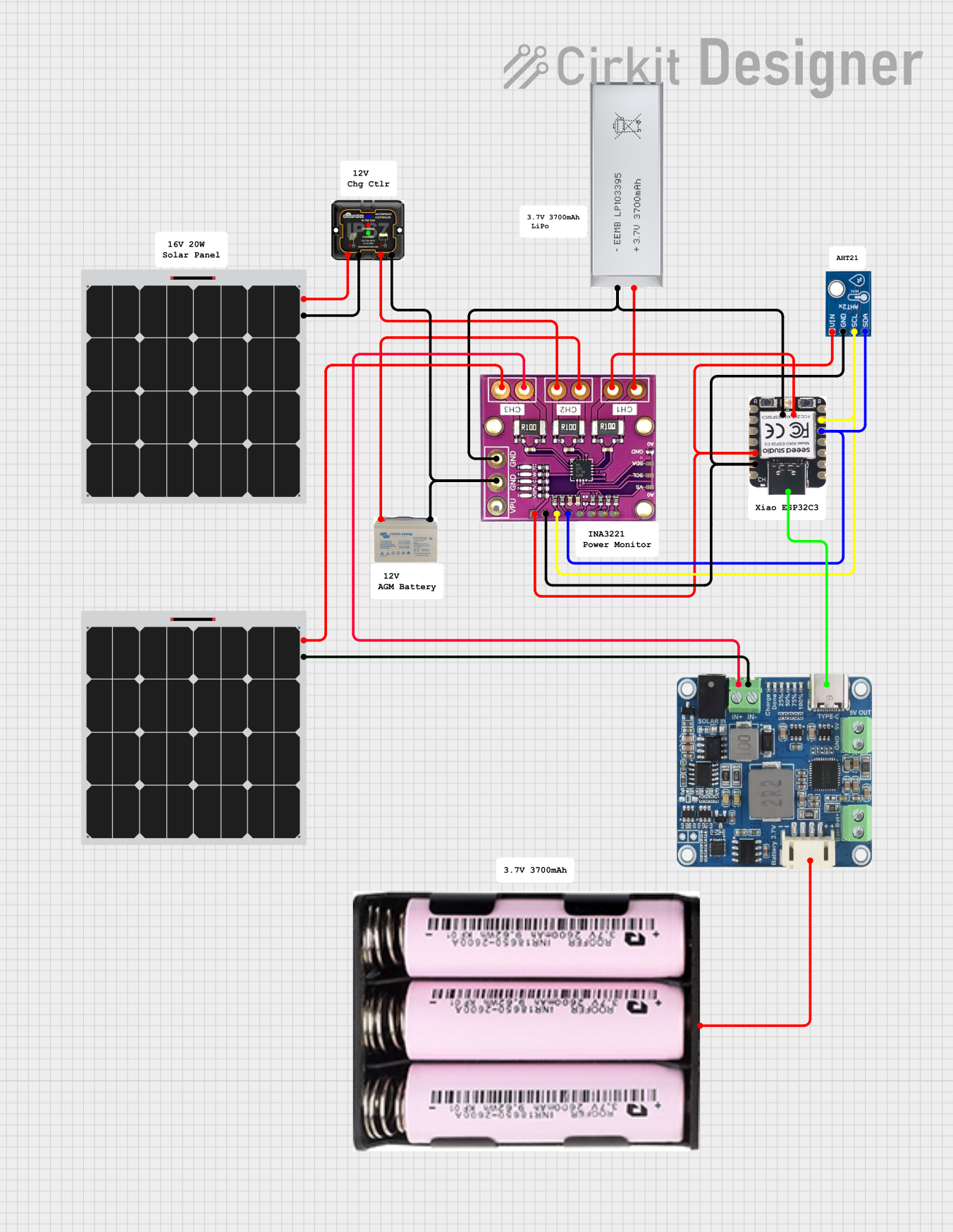 Open Project in Cirkit Designer
Explore Projects Built with 3A PWM Solar Charge Controller 12V
Open Project in Cirkit DesignerOpen Project in Cirkit DesignerOpen Project in Cirkit DesignerOpen Project in Cirkit DesignerCommon Applications
- Off-grid solar power systems for homes, cabins, and RVs
- Solar-powered lighting systems
- Portable solar kits for camping or outdoor activities
- Battery maintenance for 12V lead-acid, AGM, or gel batteries
Technical Specifications
Key Technical Details
| Parameter | Value |
|---|---|
| Rated Voltage | 12V DC |
| Maximum Charging Current | 3A |
| PWM Charging Efficiency | ≥ 90% |
| Battery Type Compatibility | Lead-acid, AGM, Gel |
| Operating Temperature | -20°C to +50°C |
| Self-Consumption | < 10mA |
| Protection Features | Overcharge, Over-discharge, |
| Short Circuit, Reverse Polarity |
Pin Configuration and Descriptions
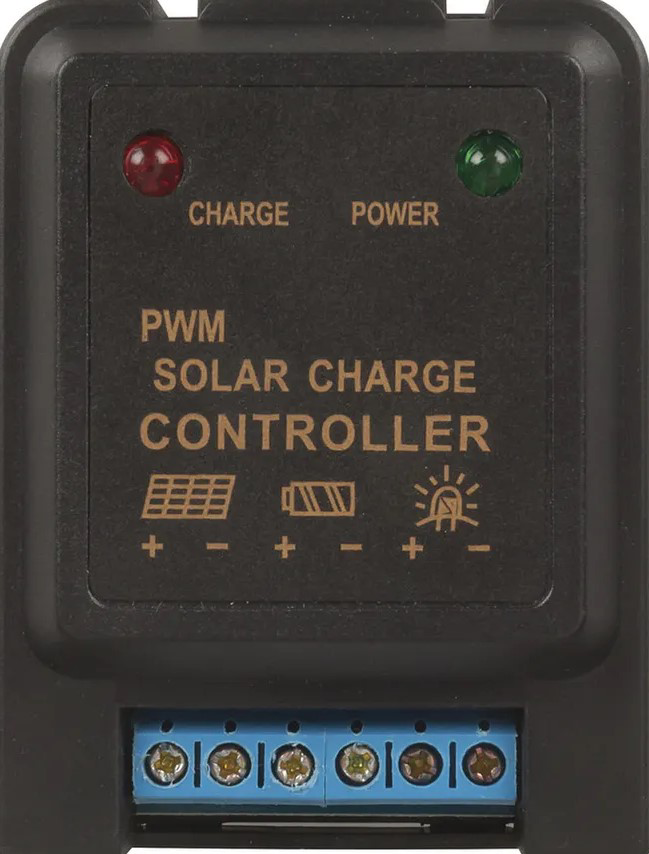
The 3A PWM Solar Charge Controller has three main terminal blocks for connections:
| Pin Label | Description |
|---|---|
| SOLAR | Connects to the positive (+) and negative (-) terminals of the solar panel. |
| BATTERY | Connects to the positive (+) and negative (-) terminals of the battery. |
| LOAD | Connects to the positive (+) and negative (-) terminals of the DC load. |
Usage Instructions
How to Use the Component in a Circuit
- Connect the Battery First:
- Attach the battery's positive (+) and negative (-) terminals to the BATTERY pins on the controller. This ensures the controller initializes correctly.
- Connect the Solar Panel:
- Connect the solar panel's positive (+) and negative (-) terminals to the SOLAR pins. Ensure the panel's voltage matches the controller's input range.
- Connect the Load (Optional):
- If you wish to power a DC load directly, connect the load's positive (+) and negative (-) terminals to the LOAD pins.
- Monitor the LEDs:
- The controller features LED indicators for charging status, battery level, and load status. Refer to the user manual for specific LED behavior.
Important Considerations and Best Practices
- Battery Compatibility: Ensure the battery is a 12V lead-acid, AGM, or gel type. Do not use lithium-ion batteries unless explicitly supported.
- Solar Panel Voltage: The solar panel's open-circuit voltage (Voc) should not exceed 22V.
- Wiring: Use appropriately rated wires to handle the current (3A) and minimize voltage drops.
- Ventilation: Install the controller in a well-ventilated area to prevent overheating.
- Reverse Polarity: Double-check all connections to avoid reverse polarity, which could damage the controller.
Arduino Integration Example
While the 3A PWM Solar Charge Controller is not directly programmable, it can be monitored using an Arduino UNO to track battery voltage or solar panel performance. Below is an example of how to measure battery voltage using an Arduino:
// Arduino code to measure battery voltage using a voltage divider
// Ensure the voltage divider scales the 12V battery voltage to within 0-5V range
const int batteryPin = A0; // Analog pin connected to the voltage divider
float voltageDividerRatio = 5.0; // Adjust based on your resistor values

void setup() {
  Serial.begin(9600); // Initialize serial communication
}

void loop() {
  int rawValue = analogRead(batteryPin); // Read the analog value
  float batteryVoltage = (rawValue / 1023.0) * 5.0 * voltageDividerRatio;

  // Print the battery voltage to the Serial Monitor
  Serial.print("Battery Voltage: ");
  Serial.print(batteryVoltage);
  Serial.println(" V");

  delay(1000); // Wait for 1 second before the next reading
}
Troubleshooting and FAQs
Common Issues and Solutions
| Issue | Possible Cause | Solution |
|---|---|---|
| No LED indicators are lit | No power or incorrect connections | Check battery and solar panel connections. |
| Battery not charging | Solar panel not producing enough power | Ensure the panel is in direct sunlight. |
| Load not powering on | Load exceeds controller's capacity | Use a load within the 3A limit. |
| Overheating | Poor ventilation or high ambient temp | Install in a cooler, well-ventilated area. |
FAQs
- Can I use this controller with a 24V system?
- No, this controller is designed specifically for 12V systems.
- What happens if I connect the battery in reverse polarity?
- The controller has reverse polarity protection, but it is always best to double-check connections to avoid potential damage.
- Can I use this controller with lithium-ion batteries?
- No, this controller is optimized for lead-acid, AGM, and gel batteries. Lithium-ion batteries require specialized charge controllers.
- How do I know if the battery is fully charged?
- The LED indicators on the controller will show the battery's charge status. Refer to the user manual for specific LED behavior.
This concludes the documentation for the 3A PWM Solar Charge Controller 12V by Powertech. For further assistance, consult the manufacturer's user manual or contact technical support.