
How to Use 35Kg/Cm: Examples, Pinouts, and Specs
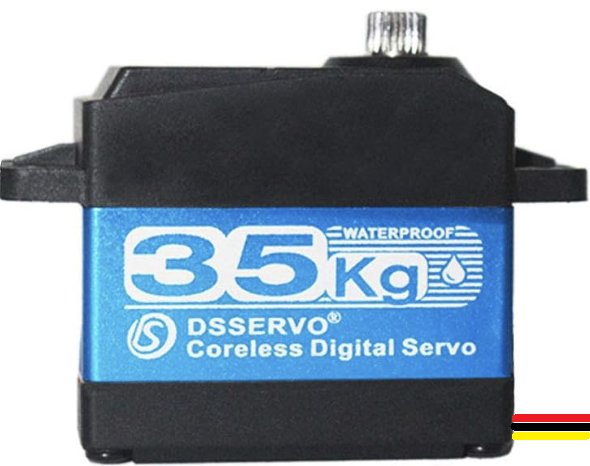
 Design with 35Kg/Cm in Cirkit Designer
Introduction
The 35Kg/Cm is a unit of measurement commonly used to describe the force exerted by a weight of 35 kilograms per square centimeter. Manufactured by Miuzei under the part ID MS61, this component is typically used in applications requiring precise load or pressure specifications. It is often integrated into systems such as servo motors, hydraulic systems, and load-bearing devices to ensure accurate force measurement and control.
Explore Projects Built with 35Kg/Cm
 Open Project in Cirkit Designer
 Open Project in Cirkit Designer
 Open Project in Cirkit Designer
 Open Project in Cirkit Designer
Explore Projects Built with 35Kg/Cm
Open Project in Cirkit DesignerOpen Project in Cirkit DesignerOpen Project in Cirkit DesignerOpen Project in Cirkit DesignerCommon Applications and Use Cases
- Servo motor torque ratings for robotics and automation
- Hydraulic pressure systems in industrial machinery
- Load-bearing calculations in structural engineering
- Force measurement in testing and calibration equipment
Technical Specifications
The 35Kg/Cm is not a physical component but rather a specification used to describe force or torque. However, when applied to devices like servo motors or pressure systems, the following technical details are relevant:
General Specifications
| Parameter | Value |
|---|---|
| Manufacturer | Miuzei |
| Part ID | MS61 |
| Force/Pressure Rating | 35 kilograms per cm² |
| Typical Application | Torque, pressure, load |
Example: Servo Motor Pin Configuration
If the 35Kg/Cm specification is applied to a servo motor, the pin configuration might look like this:
| Pin Name | Description |
|---|---|
| VCC | Power supply (typically 4.8V to 6V) |
| GND | Ground connection |
| Signal | PWM signal input for position control |
Usage Instructions
The 35Kg/Cm specification is often used in servo motors or pressure systems. Below is an example of how to use a servo motor rated for 35Kg/Cm torque with an Arduino UNO.
Connecting the Servo Motor
- Connect the VCC pin of the servo motor to the 5V pin on the Arduino UNO.
- Connect the GND pin of the servo motor to the GND pin on the Arduino UNO.
- Connect the Signal pin of the servo motor to a PWM-capable pin on the Arduino UNO (e.g., pin 9).
Arduino Code Example
#include <Servo.h> // Include the Servo library

Servo myServo; // Create a Servo object

void setup() {
  myServo.attach(9); // Attach the servo to pin 9
  // Set the initial position of the servo to 0 degrees
  myServo.write(0);
}

void loop() {
  // Move the servo to 90 degrees
  myServo.write(90);
  delay(1000); // Wait for 1 second

  // Move the servo back to 0 degrees
  myServo.write(0);
  delay(1000); // Wait for 1 second
}
Important Considerations
- Ensure the power supply can handle the current requirements of the servo motor.
- Avoid exceeding the torque rating of 35Kg/Cm to prevent damage to the motor.
- Use a stable PWM signal to maintain precise control of the servo motor.
Troubleshooting and FAQs
Common Issues
Servo Motor Not Moving
- Cause: Incorrect wiring or insufficient power supply.
- Solution: Double-check the wiring and ensure the power supply meets the motor's requirements.
Inconsistent Movement
- Cause: Unstable PWM signal or interference.
- Solution: Use shielded cables and ensure the Arduino code generates a stable PWM signal.
Overheating
- Cause: Exceeding the torque rating or prolonged operation under heavy load.
- Solution: Operate within the specified torque rating and allow the motor to cool periodically.
FAQs
Q: Can I use a 35Kg/Cm servo motor with a 3.3V microcontroller?
A: Most servo motors require a 4.8V to 6V power supply. If your microcontroller operates at 3.3V, use a level shifter for the signal pin and a separate power source for the servo motor.
Q: What happens if I exceed the 35Kg/Cm torque rating?
A: Exceeding the torque rating can damage the motor's internal gears or cause overheating. Always operate within the specified limits.
Q: How do I calculate the force in Newtons?
A: To convert 35Kg/Cm to Newtons, multiply by 9.81 (gravitational constant). For example, 35Kg × 9.81 = 343.35 Newtons per cm².
This documentation provides a comprehensive guide to understanding and using the 35Kg/Cm specification in practical applications.