
How to Use VEML6070: Examples, Pinouts, and Specs
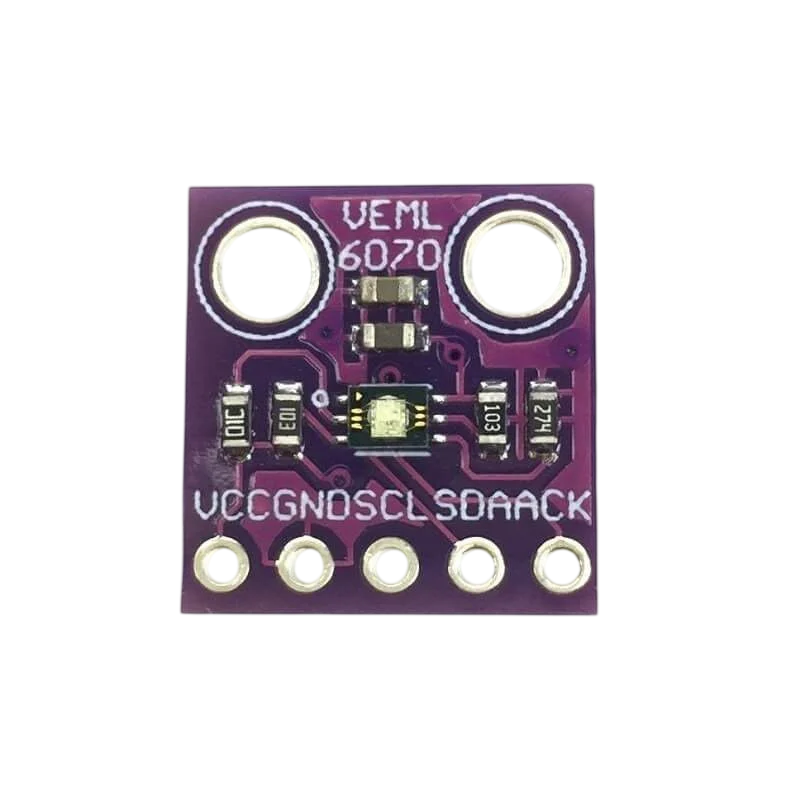
 Design with VEML6070 in Cirkit Designer
Introduction
The VEML6070 is a high-precision UV light sensor manufactured by MODUL MOD, with the part ID GY-VEML6070. This sensor is designed to measure UVA and UVB radiation, providing a digital output via the I2C interface. Its compact design and low power consumption make it ideal for applications such as UV exposure monitoring, environmental sensing, and wearable devices.
Explore Projects Built with VEML6070
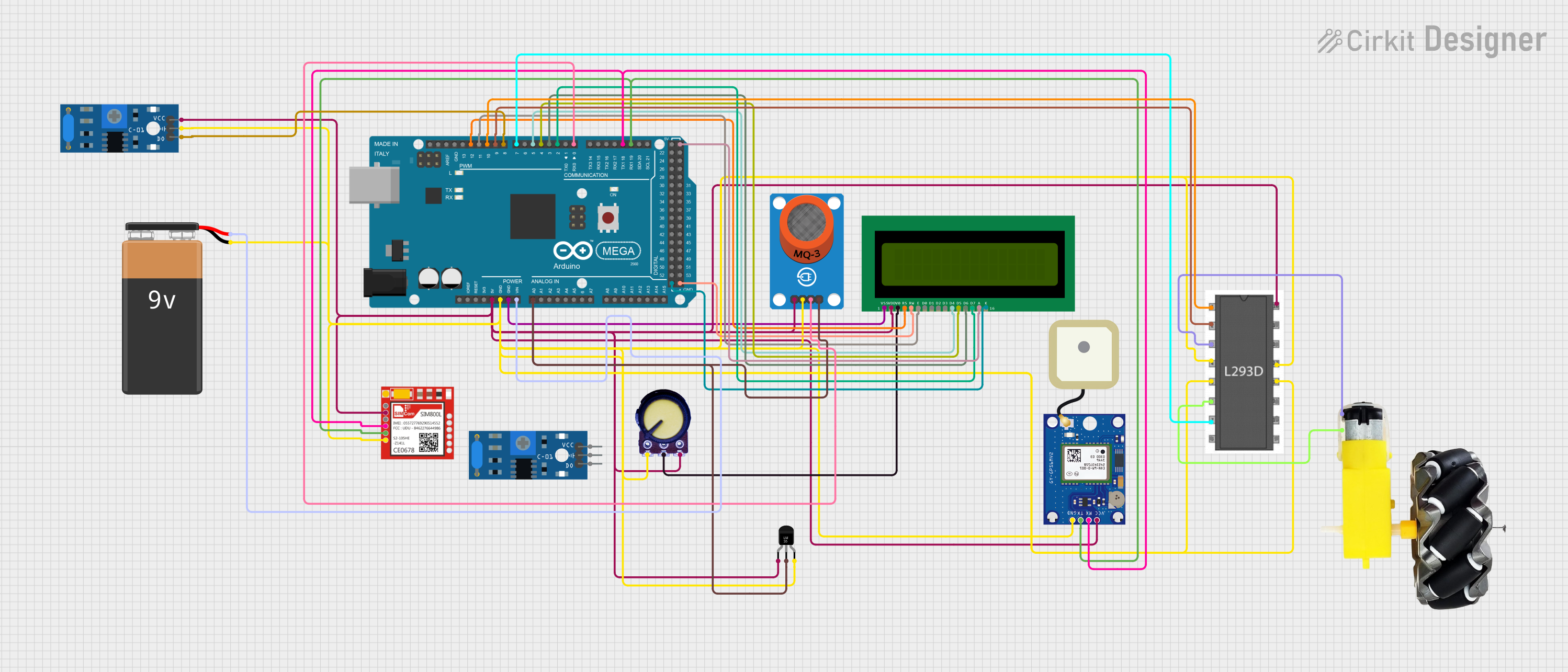 Open Project in Cirkit Designer
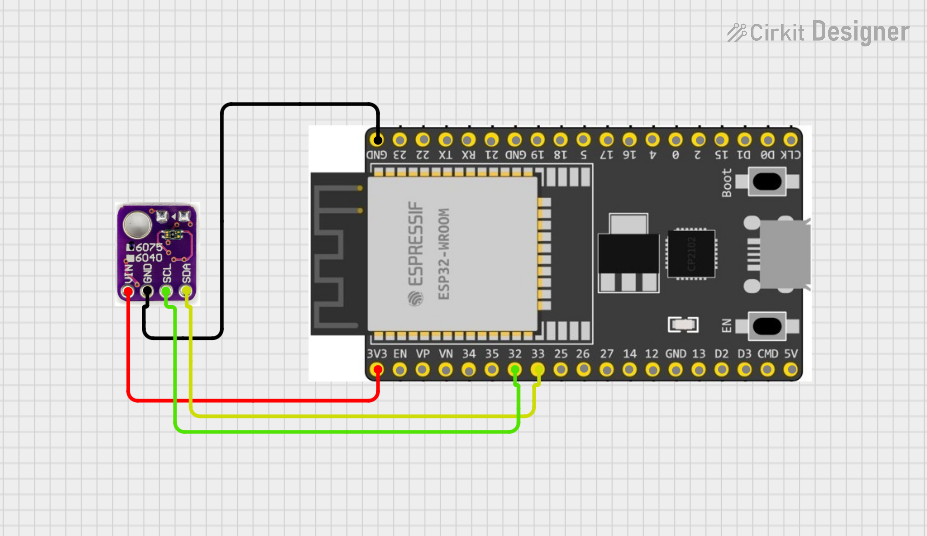 Open Project in Cirkit Designer
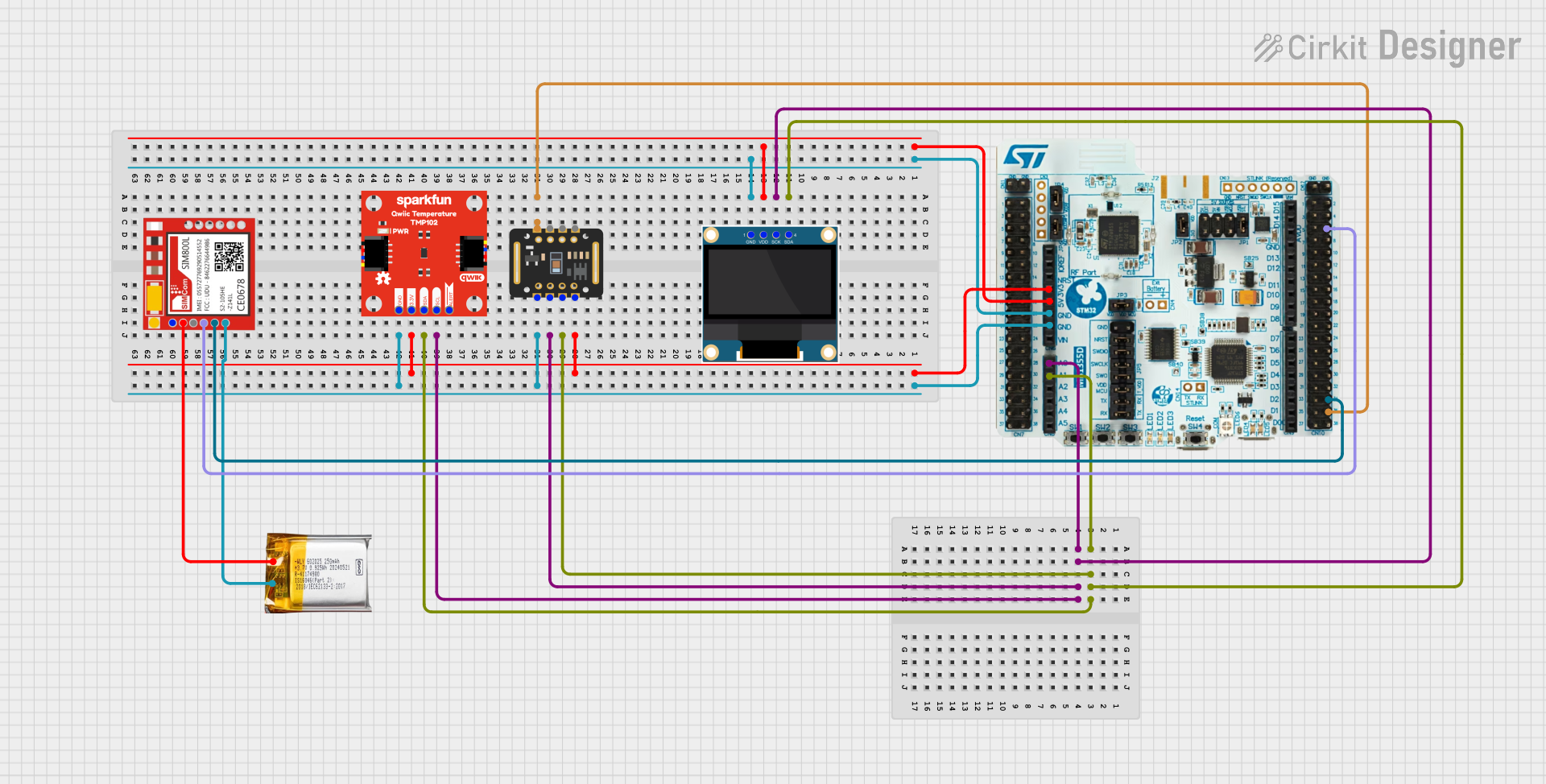 Open Project in Cirkit Designer
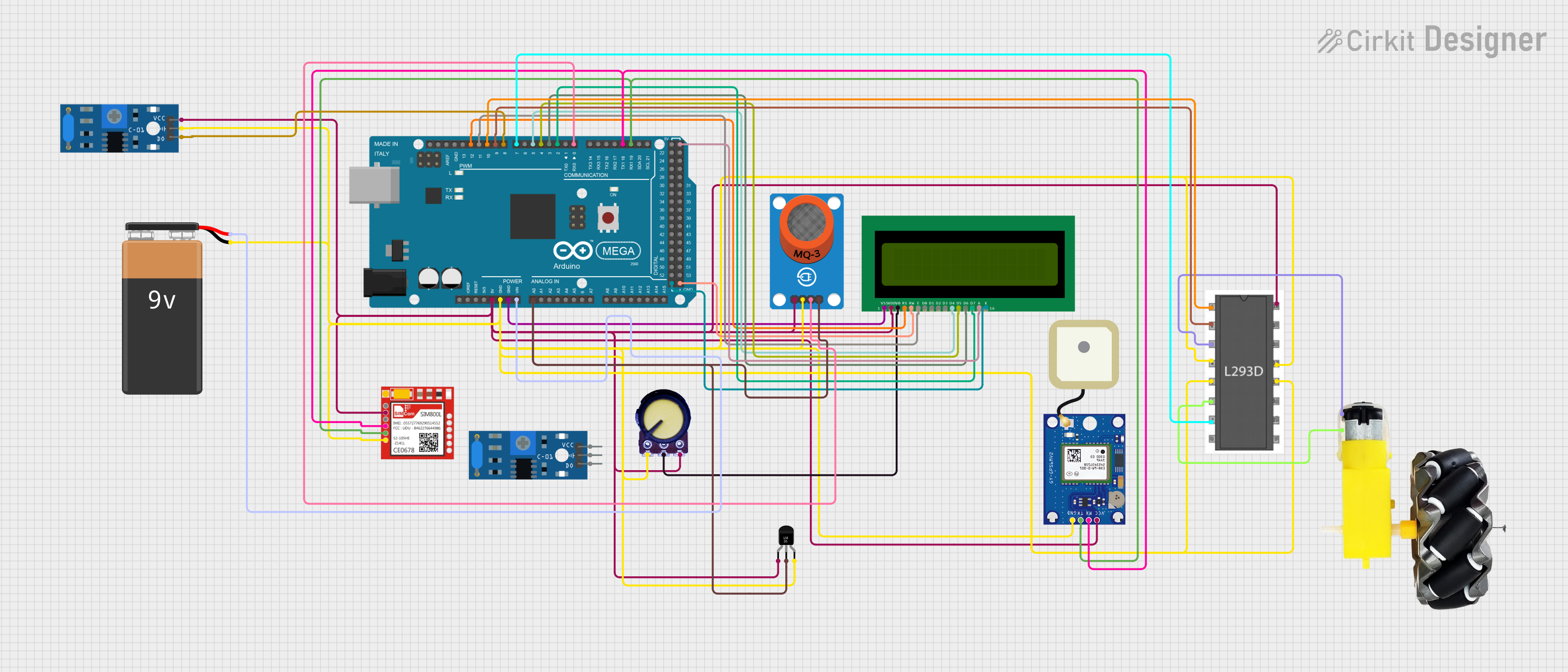 Open Project in Cirkit Designer
Explore Projects Built with VEML6070
Open Project in Cirkit DesignerOpen Project in Cirkit DesignerOpen Project in Cirkit DesignerOpen Project in Cirkit DesignerCommon Applications
- UV index monitoring for weather stations
- Wearable devices for UV exposure tracking
- Environmental sensing in IoT systems
- Smart agriculture for UV radiation measurement
- Consumer electronics for skin protection alerts
Technical Specifications
The following table outlines the key technical details of the VEML6070:
| Parameter | Value |
|---|---|
| Operating Voltage | 2.7V to 5.5V |
| Communication Interface | I2C |
| UV Wavelength Range | 320 nm to 400 nm (UVA and UVB) |
| Operating Current | 1 µA (typical) |
| Resolution | 16-bit digital output |
| Operating Temperature | -40°C to +85°C |
| Package Type | Surface Mount (SMD) |
Pin Configuration and Descriptions
The VEML6070 module has the following pin configuration:
| Pin Name | Pin Number | Description |
|---|---|---|
| VCC | 1 | Power supply input (2.7V to 5.5V) |
| GND | 2 | Ground |
| SDA | 3 | I2C data line |
| SCL | 4 | I2C clock line |
| ADDR | 5 | Address selection pin (connect to GND or VCC) |
Usage Instructions
How to Use the VEML6070 in a Circuit
- Power Supply: Connect the VCC pin to a 3.3V or 5V power source and the GND pin to ground.
- I2C Communication: Connect the SDA and SCL pins to the corresponding I2C pins on your microcontroller (e.g., Arduino UNO).
- Address Selection: Use the ADDR pin to set the I2C address:
- Connect ADDR to GND for address
0x38. - Connect ADDR to VCC for address
0x39.
- Connect ADDR to GND for address
- Pull-Up Resistors: Ensure that the SDA and SCL lines have pull-up resistors (typically 4.7 kΩ) for proper I2C communication.
Important Considerations and Best Practices
- UV Index Calculation: The raw digital output from the VEML6070 corresponds to UV intensity. Use the manufacturer's formula or library to convert this value into a UV index.
- Avoid Direct Sunlight: Prolonged exposure to direct sunlight may degrade the sensor's performance over time.
- I2C Bus Speed: Operate the I2C bus at a standard speed of 100 kHz for reliable communication.
- Temperature Effects: Ensure the sensor operates within its specified temperature range (-40°C to +85°C) for accurate readings.
Example Code for Arduino UNO
Below is an example of how to interface the VEML6070 with an Arduino UNO:
#include <Wire.h>
#include <Adafruit_VEML6070.h>

// Create an instance of the VEML6070 library
Adafruit_VEML6070 uv = Adafruit_VEML6070();

void setup() {
  Serial.begin(9600); // Initialize serial communication at 9600 baud
  Serial.println("VEML6070 UV Sensor Test");

  // Initialize the VEML6070 sensor
  if (!uv.begin(Adafruit_VEML6070::VEML6070_1_T)) {
    Serial.println("Failed to initialize VEML6070. Check connections!");
    while (1); // Halt execution if initialization fails
  }
  Serial.println("VEML6070 initialized successfully.");
}

void loop() {
  // Read the UV intensity from the sensor
  uint16_t uvReading = uv.readUV();

  // Print the UV reading to the serial monitor
  Serial.print("UV Reading: ");
  Serial.println(uvReading);

  // Delay for 1 second before the next reading
  delay(1000);
}
Notes on the Code
- The
Adafruit_VEML6070library is used for simplified communication with the sensor. Install it via the Arduino Library Manager. - The
VEML6070_1_Tparameter sets the integration time for UV measurements. Adjust this based on your application.
Troubleshooting and FAQs
Common Issues and Solutions
No Response from the Sensor
- Cause: Incorrect I2C address or wiring.
- Solution: Verify the ADDR pin connection and ensure proper SDA/SCL wiring.
Inconsistent UV Readings
- Cause: Electrical noise or improper pull-up resistors.
- Solution: Add pull-up resistors (4.7 kΩ) to the SDA and SCL lines and ensure a stable power supply.
Sensor Overheating
- Cause: Operating outside the specified voltage or temperature range.
- Solution: Ensure the supply voltage is between 2.7V and 5.5V and the temperature is within -40°C to +85°C.
Library Not Found
- Cause: Missing or outdated library.
- Solution: Install the latest version of the
Adafruit_VEML6070library from the Arduino Library Manager.
FAQs
Q1: Can the VEML6070 measure UV-C radiation?
A1: No, the VEML6070 is designed to measure UVA and UVB radiation in the 320 nm to 400 nm range.
Q2: What is the maximum I2C bus length for the VEML6070?
A2: The maximum bus length depends on the pull-up resistor values and the capacitance of the bus. For reliable communication, keep the bus length under 1 meter.
Q3: Can I use the VEML6070 with a 3.3V microcontroller?
A3: Yes, the VEML6070 operates at 2.7V to 5.5V, making it compatible with both 3.3V and 5V systems.
Q4: How do I calculate the UV index from the sensor's output?
A4: Use the manufacturer's formula or a library like Adafruit_VEML6070 to convert the raw digital output into a UV index value.