
How to Use 32140 LifePO4 4S 12.8V With BMS: Examples, Pinouts, and Specs
 Design with 32140 LifePO4 4S 12.8V With BMS in Cirkit Designer
Introduction
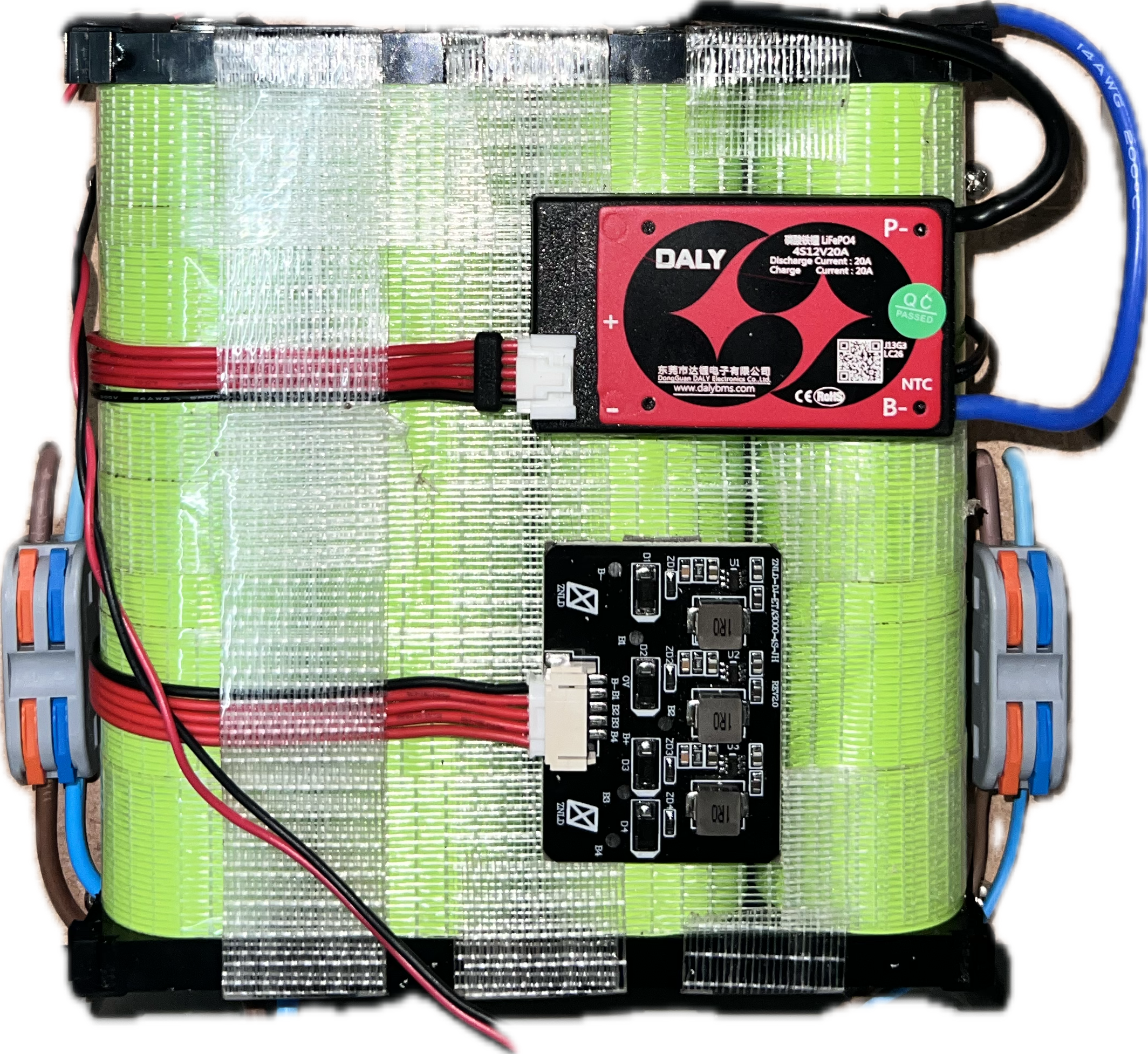
The 32140 LifePO4 4S 12.8V With BMS is a lithium iron phosphate (LiFePO4) battery pack designed for reliable and safe energy storage. Configured in a 4-series (4S) arrangement, it provides a nominal voltage of 12.8V and includes an integrated Battery Management System (BMS). The BMS ensures the battery operates safely by protecting against overcharging, over-discharging, and short circuits.
Explore Projects Built with 32140 LifePO4 4S 12.8V With BMS
 Open Project in Cirkit Designer
 Open Project in Cirkit Designer
 Open Project in Cirkit Designer
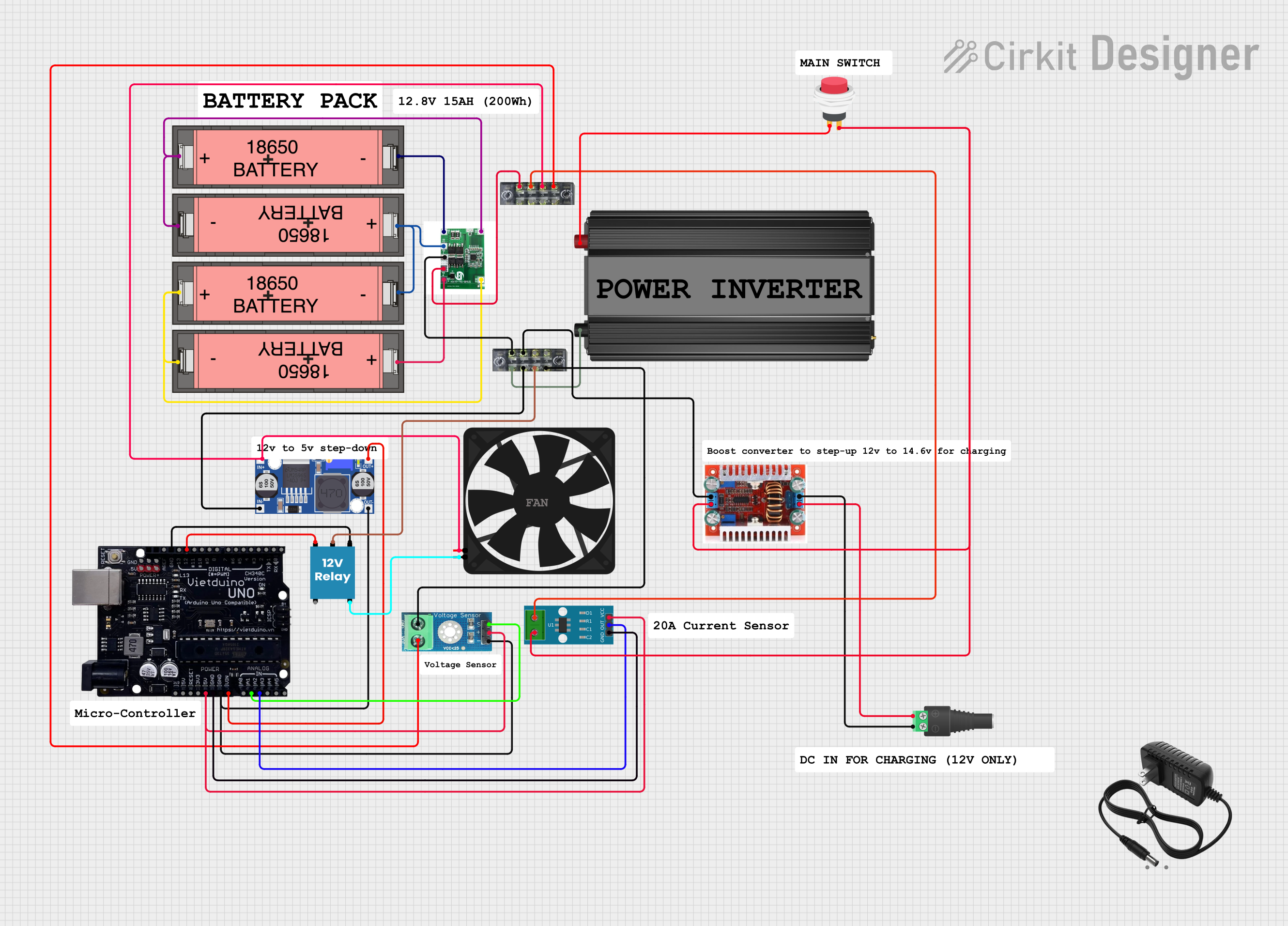 Open Project in Cirkit Designer
Explore Projects Built with 32140 LifePO4 4S 12.8V With BMS
Open Project in Cirkit DesignerOpen Project in Cirkit DesignerOpen Project in Cirkit DesignerOpen Project in Cirkit DesignerCommon Applications
- Solar energy storage systems
- Uninterruptible Power Supplies (UPS)
- Electric vehicles and e-bikes
- Portable power stations
- Robotics and IoT devices
Technical Specifications
Key Specifications
| Parameter | Value |
|---|---|
| Nominal Voltage | 12.8V |
| Nominal Capacity | Varies (e.g., 10Ah, 20Ah, etc.) |
| Configuration | 4S (4 cells in series) |
| Chemistry | Lithium Iron Phosphate (LiFePO4) |
| Maximum Charge Voltage | 14.6V |
| Discharge Cut-off Voltage | 10.0V |
| Maximum Continuous Current | Depends on model (e.g., 20A) |
| Peak Discharge Current | Depends on model (e.g., 40A) |
| Operating Temperature | -20°C to 60°C |
| Storage Temperature | -10°C to 45°C |
| Cycle Life | >2000 cycles (at 80% DOD) |
Pin Configuration and Descriptions
The battery pack typically includes two main terminals and optional communication ports depending on the model.
| Pin/Terminal | Description |
|---|---|
| Positive (+) | Positive terminal for charging/discharging |
| Negative (-) | Negative terminal for charging/discharging |
| BMS Port | Optional port for monitoring or communication (if available) |
Usage Instructions
How to Use the Component in a Circuit
Connecting the Battery:
- Connect the positive terminal (
+) of the battery to the positive input of your load or charging circuit. - Connect the negative terminal (
-) of the battery to the negative input of your load or charging circuit. - Ensure proper polarity to avoid damage to the battery or connected devices.
- Connect the positive terminal (
Charging the Battery:
- Use a LiFePO4-compatible charger with a maximum charge voltage of 14.6V.
- Ensure the charger’s current rating does not exceed the battery’s maximum charge current.
Discharging the Battery:
- Ensure the load does not draw more current than the battery’s maximum continuous current rating.
- Avoid discharging the battery below the cut-off voltage (10.0V) to prevent damage.
Mounting and Handling:
- Secure the battery in a vibration-free environment to prevent physical damage.
- Avoid exposing the battery to water, extreme temperatures, or direct sunlight.
Important Considerations and Best Practices
- BMS Protection: The integrated BMS will automatically disconnect the battery in case of overcharging, over-discharging, or short circuits. Ensure the BMS is functioning properly before use.
- Parallel/Series Connections: If connecting multiple batteries in parallel or series, ensure all batteries are of the same capacity, voltage, and state of charge.
- Storage: Store the battery at 40%-60% charge for long-term storage to maintain its lifespan.
Arduino UNO Example Code
If you are using this battery to power an Arduino UNO, ensure the voltage is regulated to 5V using a voltage regulator or a DC-DC converter. Below is an example of monitoring the battery voltage using an Arduino UNO and a voltage divider circuit.
// Arduino code to monitor battery voltage using a voltage divider
// Voltage divider resistors: R1 = 10k, R2 = 10k
// Battery voltage is divided by 2 before being read by the Arduino

const int voltagePin = A0; // Analog pin connected to the voltage divider
const float R1 = 10000.0;  // Resistor R1 value in ohms
const float R2 = 10000.0;  // Resistor R2 value in ohms
const float referenceVoltage = 5.0; // Arduino reference voltage (5V)

void setup() {
  Serial.begin(9600); // Initialize serial communication
}

void loop() {
  int rawValue = analogRead(voltagePin); // Read analog value
  float voltage = (rawValue / 1023.0) * referenceVoltage; // Convert to voltage
  float batteryVoltage = voltage * ((R1 + R2) / R2); // Calculate battery voltage

  Serial.print("Battery Voltage: ");
  Serial.print(batteryVoltage);
  Serial.println(" V");

  delay(1000); // Wait for 1 second before next reading
}
Troubleshooting and FAQs
Common Issues and Solutions
| Issue | Possible Cause | Solution |
|---|---|---|
| Battery does not charge | Charger not compatible or faulty | Use a LiFePO4-compatible charger |
| Battery shuts off unexpectedly | Overcurrent or undervoltage protection | Check load current and battery voltage |
| Low capacity or runtime | Battery aging or improper storage | Replace battery or follow proper storage practices |
| BMS not functioning | Faulty BMS or wiring issue | Inspect BMS connections and functionality |
FAQs
Can I use this battery with a solar charge controller?
- Yes, ensure the charge controller is compatible with LiFePO4 batteries and set to the correct charge voltage (14.6V).
How do I know if the BMS is working?
- The BMS will disconnect the battery in case of overcharging, over-discharging, or short circuits. You can test its functionality by simulating these conditions carefully.
Can I connect multiple batteries in series or parallel?
- Yes, but ensure all batteries are of the same capacity, voltage, and state of charge. Use a BMS designed for the new configuration.
What is the expected lifespan of this battery?
- The battery can last over 2000 cycles at 80% Depth of Discharge (DOD) under proper usage conditions.