
How to Use Brushless ESC: Examples, Pinouts, and Specs
 Design with Brushless ESC in Cirkit Designer
Introduction
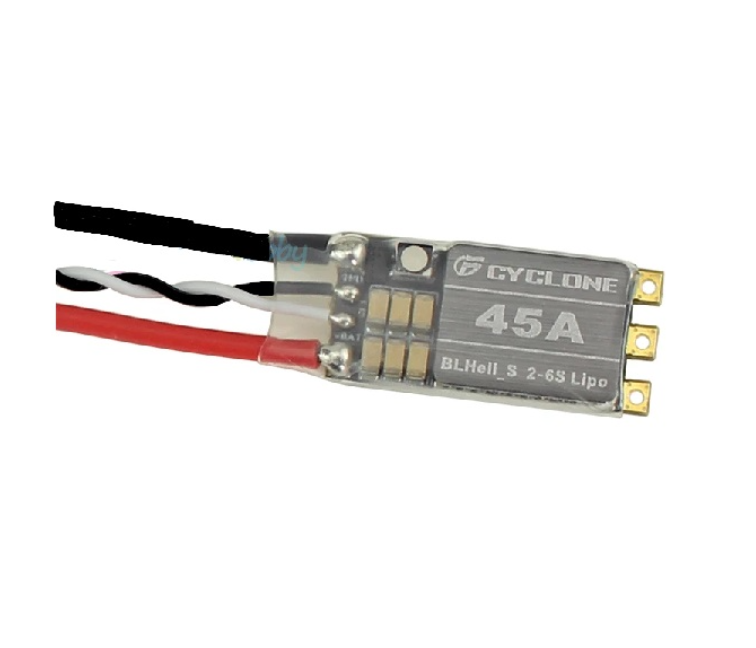
A Brushless Electronic Speed Controller (ESC) is a critical component used to regulate the speed, direction, and braking of brushless motors. It achieves this by controlling the power supplied to the motor, ensuring smooth and precise operation. Manufactured by Robu.in, the Brushless ESC (Part ID: SKU: 1345171) is designed for high-performance applications, including drones, RC vehicles, electric bikes, and robotics.
Explore Projects Built with Brushless ESC
 Open Project in Cirkit Designer
 Open Project in Cirkit Designer
 Open Project in Cirkit Designer
 Open Project in Cirkit Designer
Explore Projects Built with Brushless ESC
Open Project in Cirkit DesignerOpen Project in Cirkit DesignerOpen Project in Cirkit DesignerOpen Project in Cirkit DesignerCommon Applications
- Drones and Quadcopters: For precise motor control and stable flight.
- Electric Vehicles: To regulate motor speed and direction.
- RC Cars and Boats: For smooth acceleration and braking.
- Robotics: For controlling brushless motors in robotic arms or mobile robots.
Technical Specifications
The following table outlines the key technical details of the Robu.in Brushless ESC:
| Specification | Value |
|---|---|
| Manufacturer | Robu.in |
| Part ID | SKU: 1345171 |
| Input Voltage Range | 7.4V - 22.2V (2S to 6S LiPo batteries) |
| Continuous Current | 30A |
| Peak Current | 40A (for 10 seconds) |
| Motor Compatibility | Brushless DC motors |
| BEC Output | 5V/2A (Battery Eliminator Circuit) |
| Signal Input | PWM (Pulse Width Modulation) |
| Weight | 25g |
| Dimensions | 45mm x 25mm x 8mm |
| Operating Temperature | -10°C to 60°C |
Pin Configuration and Descriptions
The Brushless ESC has the following pin and wire configuration:
| Wire/Pin | Description |
|---|---|
| Red (Thick Wire) | Positive input from the battery (VCC). |
| Black (Thick Wire) | Negative input from the battery (GND). |
| 3 Motor Wires | Connect to the three terminals of the brushless motor. |
| Signal Wire (White) | PWM signal input from the microcontroller or receiver. |
| Red (Thin Wire) | 5V output from the BEC to power external devices (e.g., microcontroller). |
| Black (Thin Wire) | Ground connection for the BEC output. |
Usage Instructions
How to Use the Brushless ESC in a Circuit
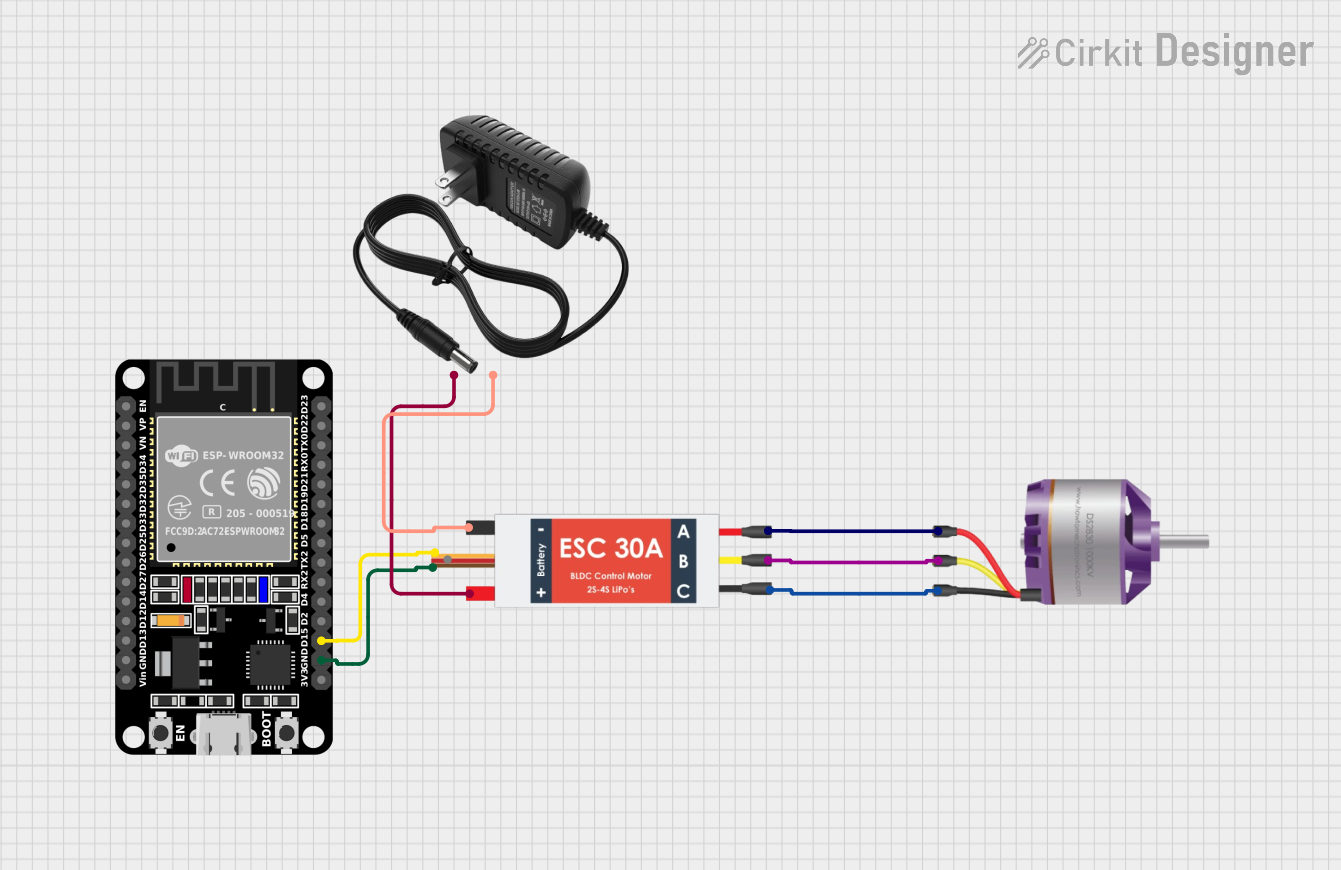
- Connect the Battery: Attach the thick red and black wires to the positive and negative terminals of the battery, respectively.
- Connect the Motor: Connect the three motor wires to the brushless motor. If the motor spins in the wrong direction, swap any two wires.
- Connect the Signal Wire: Attach the white signal wire to the PWM output pin of your microcontroller or receiver.
- Power the Microcontroller: Use the thin red and black wires to power your microcontroller or receiver with the 5V BEC output.
- Calibrate the ESC: Follow the ESC calibration procedure (usually involving setting the throttle range) as per the manufacturer’s instructions.
- Test the Setup: Gradually increase the throttle signal to test motor operation.
Important Considerations
- Battery Compatibility: Ensure the battery voltage is within the ESC's input range (7.4V to 22.2V).
- Cooling: Avoid overheating by ensuring proper airflow or adding a heatsink if necessary.
- PWM Signal: Use a PWM signal with a frequency of 50Hz to 500Hz for optimal performance.
- Safety: Always disconnect the battery when making wiring changes to prevent short circuits.
Example Code for Arduino UNO
Below is an example of how to control the Brushless ESC using an Arduino UNO:
#include <Servo.h> // Include the Servo library to generate PWM signals

Servo esc; // Create a Servo object to control the ESC

void setup() {
  esc.attach(9); // Attach the ESC signal wire to pin 9
  esc.writeMicroseconds(1000); // Send minimum throttle signal (1000 µs)
  delay(2000); // Wait for 2 seconds to initialize the ESC
}

void loop() {
  esc.writeMicroseconds(1500); // Set throttle to 50% (1500 µs)
  delay(5000); // Run the motor at 50% throttle for 5 seconds

  esc.writeMicroseconds(1000); // Set throttle to 0% (1000 µs)
  delay(5000); // Stop the motor for 5 seconds
}
Note: Ensure the ESC is calibrated before running the code. Calibration typically involves setting the throttle range by following the ESC's user manual.
Troubleshooting and FAQs
Common Issues and Solutions
Motor Does Not Spin:
- Cause: Incorrect wiring or no PWM signal.
- Solution: Verify all connections and ensure the PWM signal is being sent from the microcontroller.
Motor Spins in the Wrong Direction:
- Cause: Incorrect motor wire connections.
- Solution: Swap any two of the three motor wires.
ESC Overheats:
- Cause: Excessive current draw or poor ventilation.
- Solution: Ensure the motor is not overloaded and improve airflow around the ESC.
No Power to Microcontroller:
- Cause: BEC output not connected or damaged.
- Solution: Check the thin red and black wires for proper connection and functionality.
FAQs
Q: Can I use this ESC with a brushed motor?
A: No, this ESC is designed specifically for brushless motors.Q: What happens if I exceed the input voltage range?
A: Exceeding the voltage range may damage the ESC permanently. Always use a compatible battery.Q: How do I calibrate the ESC?
A: Calibration typically involves setting the throttle to maximum, powering on the ESC, and then setting the throttle to minimum. Refer to the ESC's user manual for detailed steps.Q: Can I use this ESC without a microcontroller?
A: Yes, you can use it with an RC receiver that outputs a PWM signal.
This concludes the documentation for the Robu.in Brushless ESC (SKU: 1345171). For further assistance, refer to the manufacturer's support resources.