Introduction
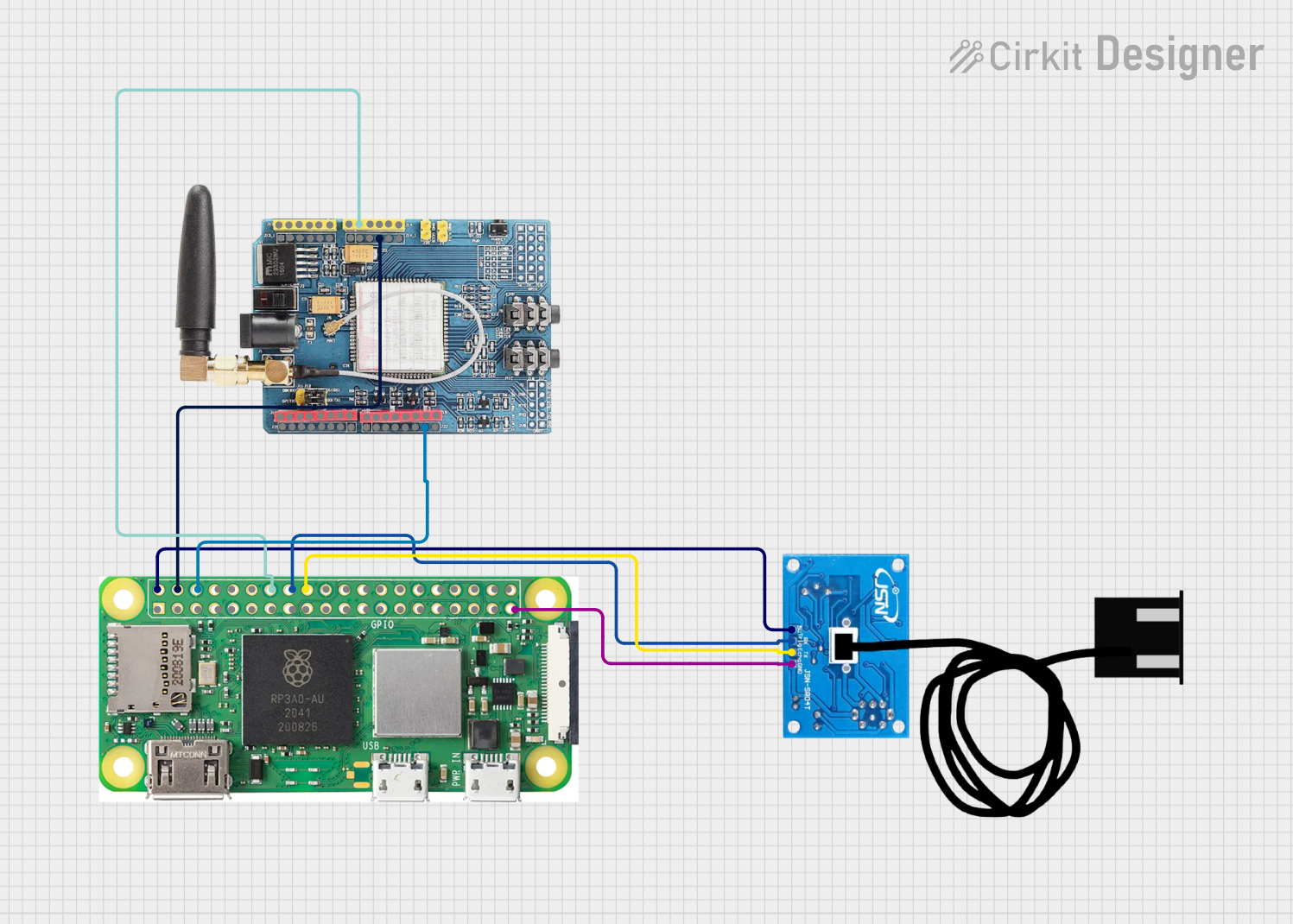
The Waterproof Integrated Ultrasonic Sensor is a robust and reliable device designed to measure distances or detect objects using ultrasonic waves. Its waterproof design makes it ideal for use in harsh environments, such as outdoor installations, industrial applications, and underwater systems. This sensor emits ultrasonic waves and calculates the time it takes for the waves to return after hitting an object, providing accurate distance measurements.
Common Applications and Use Cases
- Water level monitoring in tanks and reservoirs
- Obstacle detection in robotics and automation
- Parking assistance systems
- Industrial equipment monitoring
- Underwater object detection
Technical Specifications
The following table outlines the key technical details of the Waterproof Integrated Ultrasonic Sensor:
Pin Configuration and Descriptions
The sensor typically has four pins, as described in the table below:
Usage Instructions
How to Use the Sensor in a Circuit
- Power the Sensor: Connect the VCC pin to a 3.3V or 5V power source and the GND pin to the ground.
- Trigger the Sensor: Send a HIGH signal to the TRIG pin for at least 10 microseconds to emit an ultrasonic pulse.
- Read the Echo: Measure the duration of the HIGH signal on the ECHO pin. This duration corresponds to the time taken for the ultrasonic pulse to travel to the object and back.
- Calculate Distance: Use the formula below to calculate the distance:
[
\text{Distance (cm)} = \frac{\text{Pulse Duration (µs)} \times 0.034}{2}
]
The factor 0.034 represents the speed of sound in cm/µs, and the division by 2 accounts for the round trip of the pulse.
Important Considerations and Best Practices
- Ensure the sensor is mounted securely to avoid vibrations that could affect accuracy.
- Avoid placing the sensor near reflective surfaces that could cause false readings.
- Use a pull-down resistor on the ECHO pin if the signal is unstable.
- For outdoor use, ensure the sensor is not obstructed by debris or dirt.
Example Code for Arduino UNO
The following code demonstrates how to use the Waterproof Integrated Ultrasonic Sensor with an Arduino UNO:
// Define pin connections
const int trigPin = 9; // TRIG pin connected to digital pin 9
const int echoPin = 10; // ECHO pin connected to digital pin 10

void setup() {
  pinMode(trigPin, OUTPUT); // Set TRIG pin as output
  pinMode(echoPin, INPUT);  // Set ECHO pin as input
  Serial.begin(9600);       // Initialize serial communication
}

void loop() {
  // Send a 10µs pulse to the TRIG pin
  digitalWrite(trigPin, LOW);
  delayMicroseconds(2);
  digitalWrite(trigPin, HIGH);
  delayMicroseconds(10);
  digitalWrite(trigPin, LOW);

  // Measure the duration of the pulse on the ECHO pin
  long duration = pulseIn(echoPin, HIGH);

  // Calculate the distance in cm
  float distance = (duration * 0.034) / 2;

  // Print the distance to the Serial Monitor
  Serial.print("Distance: ");
  Serial.print(distance);
  Serial.println(" cm");

  delay(500); // Wait for 500ms before the next reading
}
Troubleshooting and FAQs
Common Issues and Solutions
No Output or Incorrect Readings:
- Ensure the sensor is powered correctly (3.3V to 5V).
- Verify the TRIG and ECHO pins are connected to the correct Arduino pins.
- Check for loose or damaged wires.
Unstable or Fluctuating Readings:
- Use a pull-down resistor on the ECHO pin to stabilize the signal.
- Ensure there are no obstructions or reflective surfaces near the sensor.
Sensor Not Detecting Objects:
- Verify the object is within the detection range (2cm to 4.5m).
- Ensure the object is not made of a material that absorbs ultrasonic waves (e.g., soft fabrics).
FAQs
Q: Can this sensor be used underwater?
A: Yes, the sensor is waterproof (IP67 rated) and can be used in underwater applications.
Q: What is the maximum detection range?
A: The sensor can detect objects up to 4.5 meters away.
Q: Can I use this sensor with a 3.3V microcontroller?
A: Yes, the sensor operates within a voltage range of 3.3V to 5V, making it compatible with 3.3V microcontrollers.
Q: How do I improve accuracy in outdoor environments?
A: Minimize environmental noise, avoid direct sunlight on the sensor, and ensure the sensor is clean and unobstructed.


 Open Project in Cirkit Designer