
How to Use 12V Energy Saving PTC Car Fan Air Heater : Examples, Pinouts, and Specs
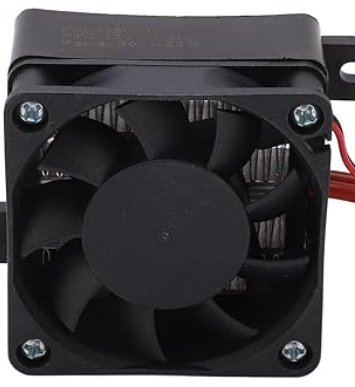
 Design with 12V Energy Saving PTC Car Fan Air Heater in Cirkit Designer
Introduction
The 12V Energy Saving PTC Car Fan Air Heater by WON is a compact and efficient heating device designed for automotive applications. It utilizes Positive Temperature Coefficient (PTC) technology, which ensures safe and energy-efficient heating. The heater operates on a 12V DC power supply, making it ideal for use in cars, trucks, and other 12V systems. Equipped with a built-in fan, it quickly distributes warm air, providing comfort in cold weather conditions.
Explore Projects Built with 12V Energy Saving PTC Car Fan Air Heater
 Open Project in Cirkit Designer
 Open Project in Cirkit Designer
 Open Project in Cirkit Designer
 Open Project in Cirkit Designer
Explore Projects Built with 12V Energy Saving PTC Car Fan Air Heater
Open Project in Cirkit DesignerOpen Project in Cirkit DesignerOpen Project in Cirkit DesignerOpen Project in Cirkit DesignerCommon Applications and Use Cases
- Automotive Heating: Provides supplemental heating for cars, trucks, and RVs.
- Defrosting and Demisting: Clears fog or frost from windshields and windows.
- Compact Heating Solutions: Suitable for small enclosures or portable heating needs.
- DIY Projects: Used in custom heating setups for vehicles or other 12V systems.
Technical Specifications
Key Technical Details
| Parameter | Specification |
|---|---|
| Operating Voltage | 12V DC |
| Power Consumption | 100W - 150W |
| Heating Element | PTC (Positive Temperature Coefficient) |
| Fan Type | Built-in DC fan |
| Airflow Output | ~20-30 CFM (Cubic Feet per Minute) |
| Dimensions | ~100mm x 70mm x 40mm |
| Weight | ~200g |
| Safety Features | Overheat protection, self-regulating PTC |
Pin Configuration and Descriptions
The heater typically comes with two wires for connection:
| Wire Color | Function | Description |
|---|---|---|
| Red | Positive (+12V) | Connect to the 12V DC power supply positive terminal. |
| Black | Ground (GND) | Connect to the 12V DC power supply ground terminal. |
Usage Instructions
How to Use the Component in a Circuit
- Power Supply: Ensure you have a stable 12V DC power source capable of supplying at least 10A to handle the heater's power requirements.
- Wiring:
- Connect the red wire to the positive terminal of the 12V power supply.
- Connect the black wire to the ground terminal of the power supply.
- Mounting: Secure the heater in a location where airflow is unobstructed and away from flammable materials.
- Operation: Once powered, the PTC element will heat up, and the fan will distribute warm air.
Important Considerations and Best Practices
- Ventilation: Ensure proper ventilation around the heater to prevent overheating.
- Power Supply: Use a power supply with sufficient current capacity to avoid voltage drops or damage.
- Polarity: Double-check the wiring polarity before powering the device to prevent damage.
- Safety: Avoid direct contact with the heating element during operation, as it can become very hot.
- Fuse Protection: Add an inline fuse (10A-15A) to the positive wire for safety.
Example: Connecting to an Arduino UNO
While the heater itself cannot be directly powered by an Arduino UNO due to its high current requirements, you can use the Arduino to control the heater via a relay module. Below is an example circuit and code:
Circuit Setup
- Use a 12V DC power supply to power the heater.
- Connect the heater's red and black wires to the relay's NO (Normally Open) and COM (Common) terminals, respectively.
- Connect the relay module's control pin to an Arduino digital pin (e.g., pin 7).
- Power the relay module using the Arduino's 5V and GND pins.
Arduino Code
// This code controls the 12V PTC heater using a relay module.
// The heater will turn on for 10 seconds, then turn off for 10 seconds.

const int relayPin = 7; // Relay control pin connected to Arduino pin 7

void setup() {
  pinMode(relayPin, OUTPUT); // Set relay pin as output
  digitalWrite(relayPin, LOW); // Ensure relay is off at startup
}

void loop() {
  digitalWrite(relayPin, HIGH); // Turn on the relay (heater ON)
  delay(10000); // Keep heater ON for 10 seconds
  digitalWrite(relayPin, LOW); // Turn off the relay (heater OFF)
  delay(10000); // Keep heater OFF for 10 seconds
}
Troubleshooting and FAQs
Common Issues and Solutions
| Issue | Possible Cause | Solution |
|---|---|---|
| Heater does not turn on | Incorrect wiring or no power supply | Verify wiring and ensure a stable 12V supply. |
| Heater turns off unexpectedly | Overcurrent or overheating protection | Check power supply capacity and ventilation. |
| Weak airflow | Obstructed fan or low voltage supply | Clear obstructions and ensure 12V is supplied. |
| Burning smell during operation | Dust accumulation on the heating element | Clean the heater and ensure proper airflow. |
FAQs
Can I use this heater with a 24V system?
- No, this heater is designed specifically for 12V systems. Using a higher voltage may damage the device.
Is the heater safe to use continuously?
- Yes, the PTC technology ensures self-regulation and prevents overheating. However, ensure proper ventilation and power supply capacity.
Can I control the heater's temperature?
- The heater's temperature is self-regulated by the PTC element. For additional control, you can use a PWM controller to adjust the power supplied.
What is the expected lifespan of the heater?
- With proper usage and maintenance, the heater can last several years.
Can I use this heater in a non-automotive application?
- Yes, as long as the power supply is 12V DC and sufficient ventilation is provided.
This concludes the documentation for the 12V Energy Saving PTC Car Fan Air Heater by WON. For further assistance, refer to the manufacturer's support resources.