
How to Use 3S LiPo Battery: Examples, Pinouts, and Specs
 Design with 3S LiPo Battery in Cirkit Designer
Introduction
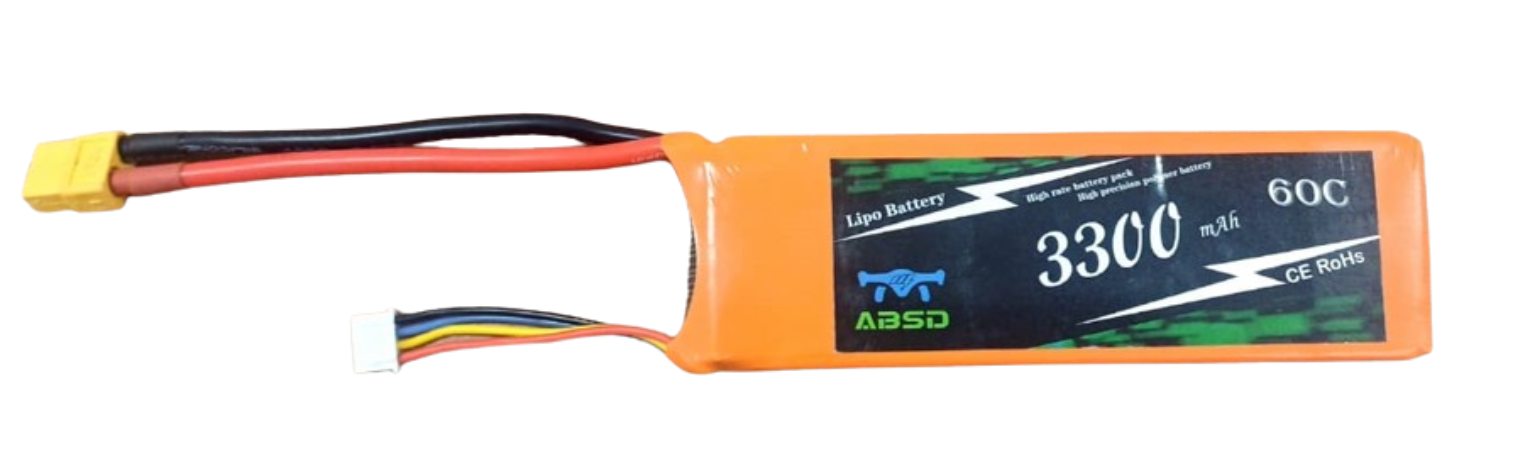
A 3S LiPo (Lithium Polymer) battery consists of three cells connected in series, providing a nominal voltage of 11.1V (3.7V per cell). This type of battery is widely used in applications requiring a lightweight, high-energy-density power source. Common use cases include remote-controlled (RC) vehicles, drones, robotics, and portable electronic devices. The "3S" designation indicates the series configuration of three cells, which increases the voltage while maintaining the same capacity as a single cell.
Explore Projects Built with 3S LiPo Battery
 Open Project in Cirkit Designer
 Open Project in Cirkit Designer
 Open Project in Cirkit Designer
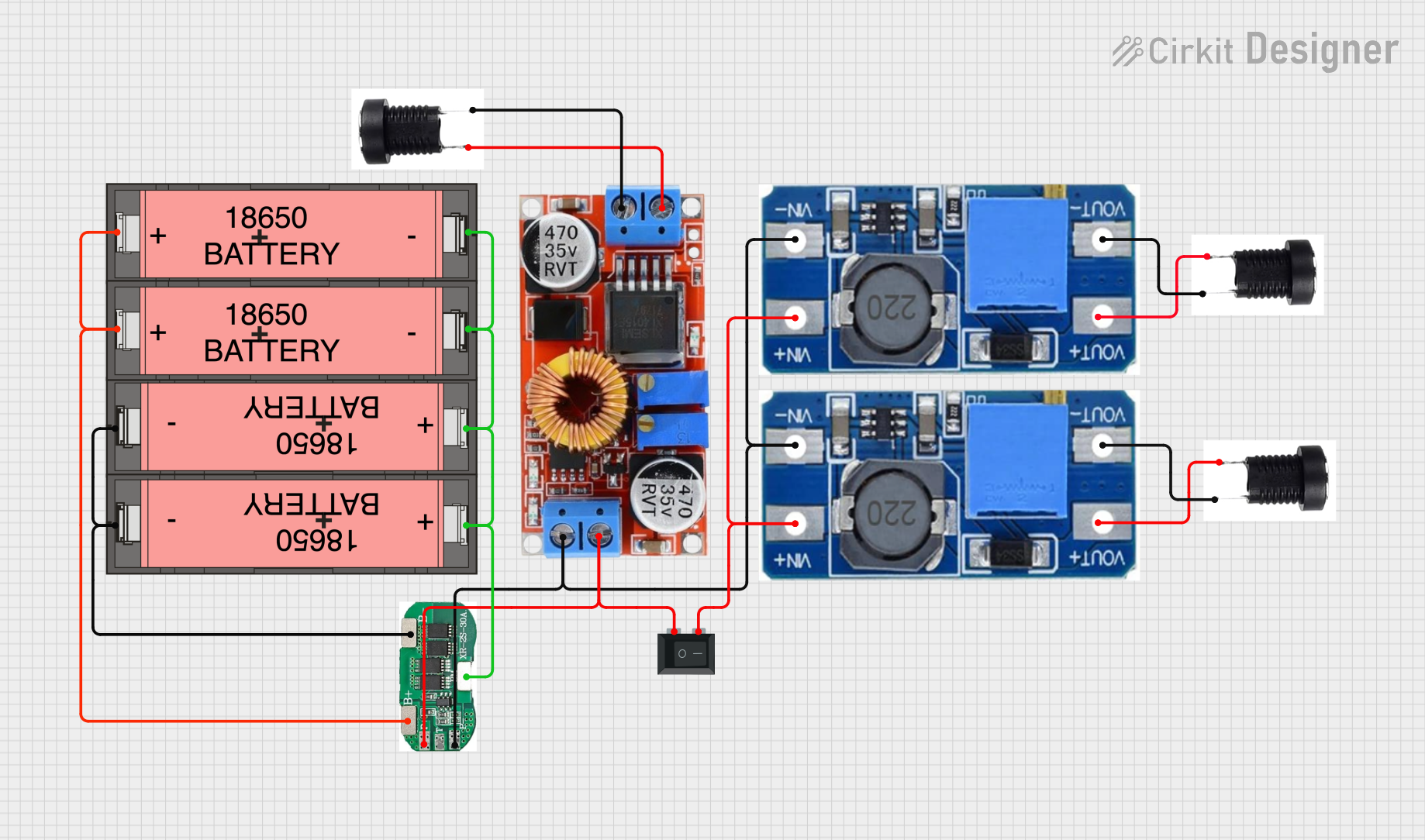 Open Project in Cirkit Designer
Explore Projects Built with 3S LiPo Battery
Open Project in Cirkit DesignerOpen Project in Cirkit DesignerOpen Project in Cirkit DesignerOpen Project in Cirkit DesignerTechnical Specifications
Below are the key technical details for the Generic 3S LiPo 3300 mAh Battery:
| Parameter | Value |
|---|---|
| Nominal Voltage | 11.1V (3.7V per cell) |
| Maximum Voltage | 12.6V (4.2V per cell) |
| Minimum Safe Voltage | 9.0V (3.0V per cell) |
| Capacity | 3300 mAh |
| Discharge Rate (C-Rating) | 25C (82.5A maximum continuous) |
| Charge Voltage | 12.6V |
| Charge Current | 1C (3.3A recommended) |
| Connector Type | XT60 (or other, depending on model) |
| Balance Connector | JST-XH |
| Weight | ~250g |
| Dimensions | ~135mm x 45mm x 25mm |
Pin Configuration and Descriptions
The 3S LiPo battery typically has two connectors: a main power connector and a balance connector.
Main Power Connector (e.g., XT60)
| Pin | Description |
|---|---|
| + | Positive terminal |
| - | Negative terminal |
Balance Connector (e.g., JST-XH)
| Pin | Description |
|---|---|
| 1 | Negative terminal of Cell 1 |
| 2 | Positive terminal of Cell 1 / Negative terminal of Cell 2 |
| 3 | Positive terminal of Cell 2 / Negative terminal of Cell 3 |
| 4 | Positive terminal of Cell 3 |
Usage Instructions
How to Use the 3S LiPo Battery in a Circuit
- Connect the Main Power Connector: Use the XT60 connector (or equivalent) to supply power to your circuit or device. Ensure the polarity matches the input terminals of your device.
- Balance Charging: Always use a LiPo-compatible balance charger to charge the battery. Connect the balance connector (JST-XH) to the charger to ensure all cells are charged evenly.
- Voltage Monitoring: Use a LiPo voltage alarm or a battery management system (BMS) to monitor the voltage of each cell. This prevents over-discharge, which can damage the battery.
- Discharge Limits: Do not discharge the battery below 9.0V (3.0V per cell). Over-discharging can permanently damage the cells.
Important Considerations and Best Practices
- Charging Safety: Always charge the battery on a non-flammable surface and never leave it unattended while charging.
- Storage: Store the battery at a voltage of approximately 11.4V (3.8V per cell) for long-term storage. Avoid storing in extreme temperatures.
- Handling: Avoid puncturing, crushing, or exposing the battery to water or fire.
- Current Draw: Ensure the connected device does not exceed the maximum continuous discharge current (82.5A for this model).
- Arduino Integration: If using the battery to power an Arduino UNO, ensure the voltage is stepped down to 5V using a voltage regulator or a DC-DC buck converter.
Example Arduino Code for Voltage Monitoring
The following code demonstrates how to monitor the voltage of a 3S LiPo battery using an Arduino UNO and a voltage divider circuit:
// Define the analog pin connected to the voltage divider
const int voltagePin = A0;

// Define the voltage divider ratio (e.g., 10k and 2k resistors)
const float voltageDividerRatio = 6.0; // Adjust based on your resistor values

// Define the reference voltage of the Arduino (5V for most boards)
const float referenceVoltage = 5.0;

void setup() {
  Serial.begin(9600); // Initialize serial communication
}

void loop() {
  // Read the analog value from the voltage divider
  int analogValue = analogRead(voltagePin);

  // Convert the analog value to a voltage
  float batteryVoltage = (analogValue / 1023.0) * referenceVoltage * voltageDividerRatio;

  // Print the battery voltage to the Serial Monitor
  Serial.print("Battery Voltage: ");
  Serial.print(batteryVoltage);
  Serial.println(" V");

  // Add a delay to avoid flooding the Serial Monitor
  delay(1000);
}
Note: Ensure the voltage divider reduces the battery voltage to a safe level for the Arduino's analog input (0-5V).
Troubleshooting and FAQs
Common Issues and Solutions
Battery Not Charging
- Cause: Faulty charger or incorrect connection.
- Solution: Verify the charger is LiPo-compatible and check all connections, including the balance connector.
Battery Swelling
- Cause: Overcharging, over-discharging, or physical damage.
- Solution: Stop using the battery immediately. Dispose of it safely following local regulations.
Device Shuts Down Prematurely
- Cause: Battery voltage too low or high current draw.
- Solution: Check the battery voltage and ensure the device's current draw is within the battery's discharge limits.
Uneven Cell Voltages
- Cause: Imbalanced charging or aging cells.
- Solution: Use a balance charger to equalize the cell voltages.
FAQs
Q: Can I use a 3S LiPo battery without a balance charger?
- A: It is not recommended. A balance charger ensures all cells are charged evenly, preventing overcharging or undercharging of individual cells.
Q: How do I safely dispose of a damaged LiPo battery?
- A: Discharge the battery completely, submerge it in saltwater for 24 hours, and then dispose of it according to local e-waste regulations.
Q: Can I connect multiple 3S LiPo batteries in series or parallel?
- A: Yes, but ensure the batteries are of the same capacity, voltage, and charge level. Use proper connectors and monitor the total voltage/current.
By following these guidelines, you can safely and effectively use the Generic 3S LiPo 3300 mAh Battery in your projects.