Cirkit Designer LogoCirkit DesignerYour all-in-one circuit design IDE Launch Cirkit Designer App

How to Use 11KW KONTAKTOR + OVERLOAD: Examples, Pinouts, and Specs

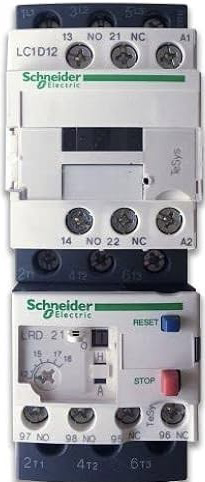
Image of 11KW KONTAKTOR + OVERLOADDesign with 11KW KONTAKTOR + OVERLOAD in Cirkit Designer

Introduction

The 11KW KONTAKTOR + OVERLOAD (Manufacturer: Schneider, Part ID: MCE 2-25) is an electromechanical device designed to control and protect electrical circuits, particularly for motor applications. This contactor is rated for 11 kW and includes an integrated overload relay to safeguard motors from overheating or damage caused by excessive current. It is widely used in industrial automation, HVAC systems, and motor control centers.

Explore Projects Built with 11KW KONTAKTOR + OVERLOAD

Use Cirkit Designer to design, explore, and prototype these projects online. Some projects support real-time simulation. Click "Open Project" to start designing instantly!
Image of Industrial Power Distribution and Safety Control System: A project utilizing 11KW KONTAKTOR + OVERLOAD in a practical application
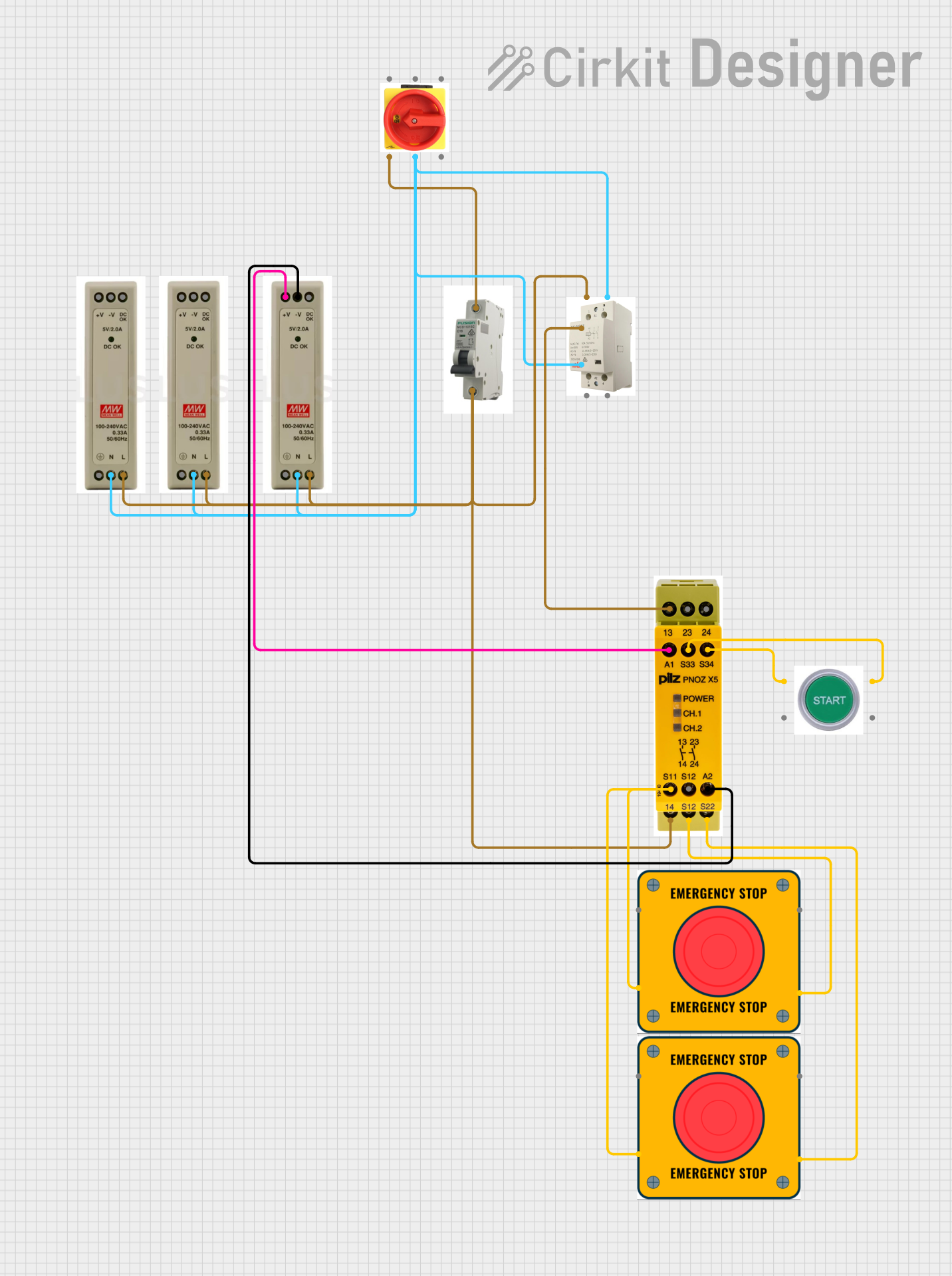
Industrial Power Distribution and Safety Control System

This circuit is designed for power distribution and safety control in an industrial setting. It features a main isolator and circuit breaker for power management, multiple PSUs for 5V, 12V, and 24V outputs, and a safety relay system that interfaces with E-stop buttons and a start switch to control a main contactor, ensuring safe operation and emergency power cut-off capabilities.

Open Project in Cirkit Designer
Image of Arduino UNO Controlled GSM Interface with LCD Feedback and Relay Switching: A project utilizing 11KW KONTAKTOR + OVERLOAD in a practical application
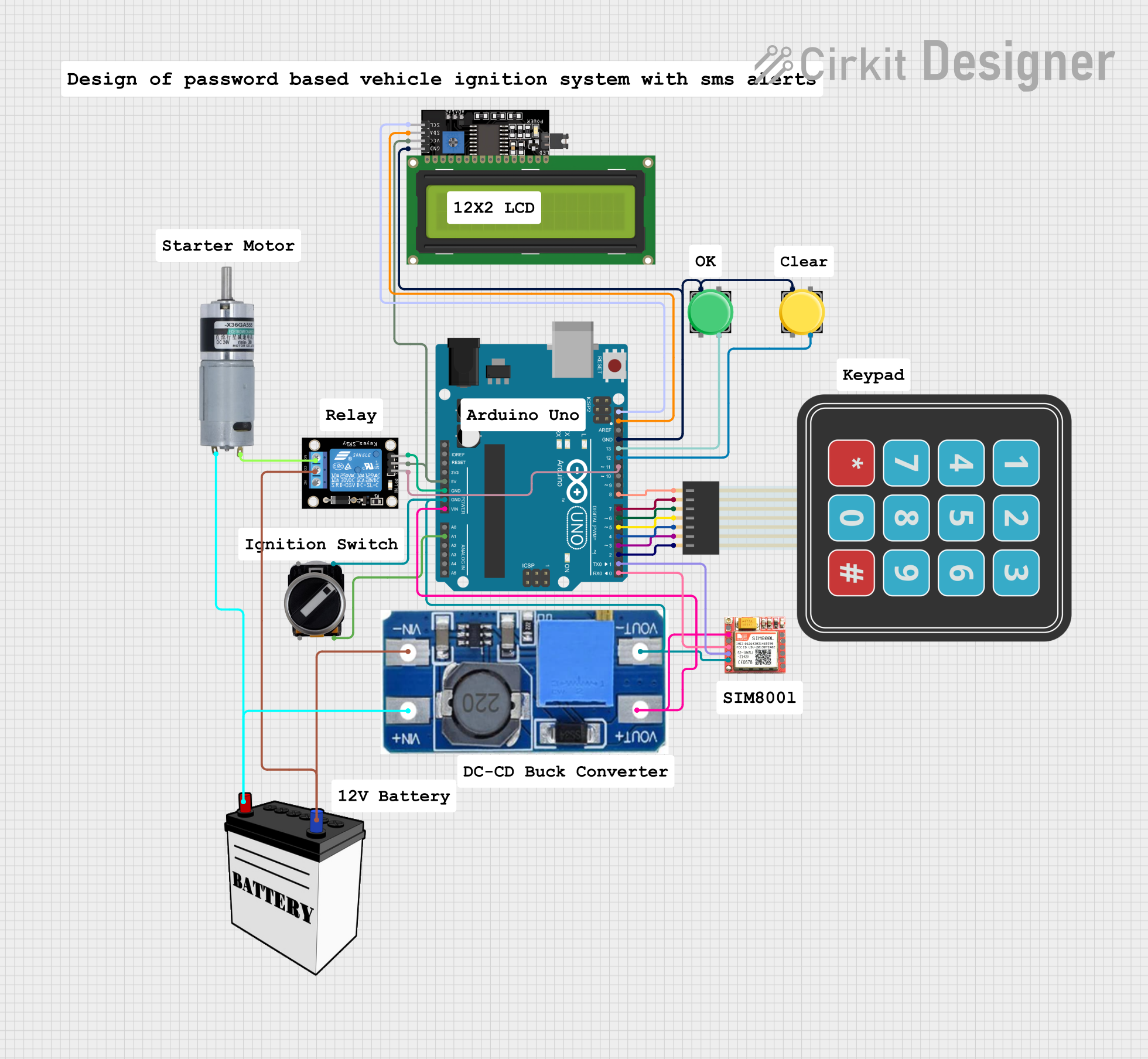
Arduino UNO Controlled GSM Interface with LCD Feedback and Relay Switching

This circuit features an Arduino UNO microcontroller interfaced with a variety of components. It controls a KY-019 relay module to switch power to a motor and communicates with a SIM800L module for cellular connectivity. User inputs are handled via a membrane matrix keypad and pushbuttons, and feedback is provided through an I2C-connected LCD display. A step-up boost converter adjusts voltage from a 12V battery to power the motor, and a 3-position switch is used for additional control.

Open Project in Cirkit Designer

Common Applications:

Technical Specifications

Key Technical Details:

Parameter Value
Manufacturer Schneider
Part ID MCE 2-25
Rated Power 11 kW
Rated Voltage (AC) Up to 690V
Rated Current 25 A
Control Voltage (Coil) 24V AC/DC, 110V AC, or 230V AC
Overload Relay Range Adjustable (e.g., 6-25 A)
Number of Poles 3P (Three-phase)
Operating Temperature -20°C to +60°C
Mechanical Durability 10 million operations
Electrical Durability 1 million operations
Mounting Type DIN rail or panel mount

Pin Configuration and Descriptions:

The MCE 2-25 contactor has the following terminal layout:

Power Terminals:

Terminal Label Description
L1, L2, L3 Input terminals for three-phase power
T1, T2, T3 Output terminals to the load (motor)

Control Terminals:

Terminal Label Description
A1, A2 Coil terminals for control voltage
95, 96 Overload relay normally closed (NC)
97, 98 Overload relay normally open (NO)

Auxiliary Contacts (if included):

Terminal Label Description
13, 14 Auxiliary contact (NO)
21, 22 Auxiliary contact (NC)

Usage Instructions

How to Use the Component in a Circuit:

  1. Power Connections:

    • Connect the three-phase power supply to the input terminals (L1, L2, L3).
    • Connect the motor or load to the output terminals (T1, T2, T3).
  2. Control Circuit:

    • Connect the control voltage to the coil terminals (A1, A2) as per the rated control voltage.
    • Use auxiliary contacts (if available) for additional control logic or feedback.
  3. Overload Relay:

    • Adjust the overload relay settings to match the motor's rated current. This ensures proper protection against overcurrent conditions.
    • Connect the overload relay terminals (95, 96, 97, 98) to the control circuit for automatic disconnection in case of overload.
  4. Mounting:

    • Secure the contactor on a DIN rail or panel mount as per the installation requirements.

Important Considerations and Best Practices:

Example: Connecting to an Arduino UNO for Control

The contactor can be controlled using an Arduino UNO by driving a relay module or transistor circuit to energize the contactor's coil. Below is an example code snippet:

// Example: Controlling the 11KW KONTAKTOR with Arduino UNO
// This code uses pin 7 to control the contactor via a relay module.

const int contactorPin = 7; // Pin connected to the relay module

void setup() {
  pinMode(contactorPin, OUTPUT); // Set pin as output
  digitalWrite(contactorPin, LOW); // Ensure contactor is off initially
}

void loop() {
  // Turn the contactor ON
  digitalWrite(contactorPin, HIGH);
  delay(5000); // Keep it ON for 5 seconds

  // Turn the contactor OFF
  digitalWrite(contactorPin, LOW);
  delay(5000); // Keep it OFF for 5 seconds
}

Note: Use a relay module or transistor circuit to interface the Arduino with the contactor's coil, as the Arduino cannot directly supply the required current.

Troubleshooting and FAQs

Common Issues and Solutions:

  1. Contactor Does Not Energize:

    • Cause: Incorrect control voltage or loose connections.
    • Solution: Verify the control voltage matches the coil rating and check all connections.
  2. Overload Relay Trips Frequently:

    • Cause: Overload relay setting is too low or motor is drawing excessive current.
    • Solution: Adjust the overload relay to the correct motor full-load current. Inspect the motor for faults.
  3. Excessive Noise During Operation:

    • Cause: Worn-out coil or mechanical parts.
    • Solution: Replace the contactor if mechanical wear is evident.
  4. Burnt Contacts:

    • Cause: Overcurrent or frequent switching.
    • Solution: Ensure the contactor is rated for the load. Replace damaged contacts or the entire unit.

FAQs: