
How to Use LED module 220V 16W: Examples, Pinouts, and Specs
 Design with LED module 220V 16W in Cirkit Designer
Introduction
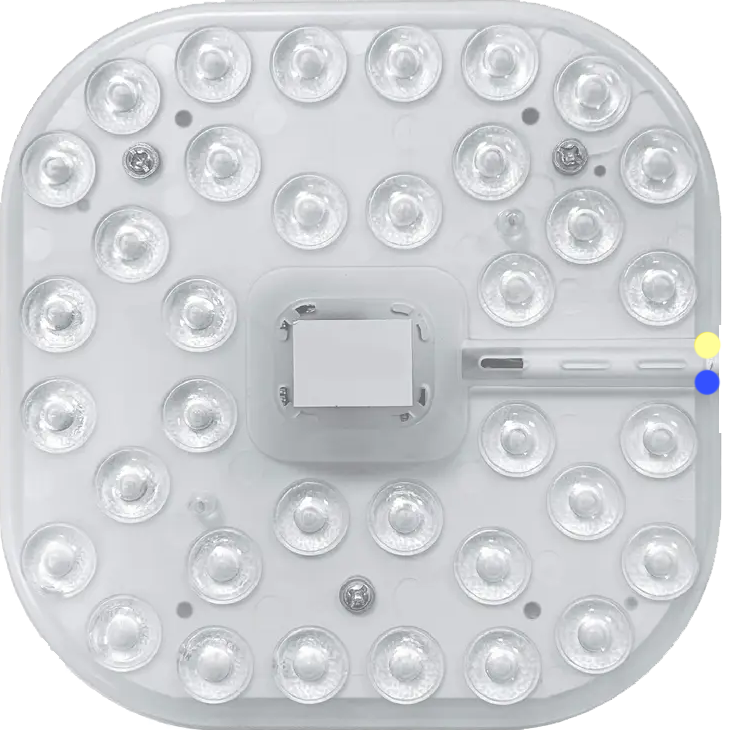
The LED Module 220V 16W is a high-efficiency light-emitting diode (LED) module designed to operate directly on a 220V AC power supply. With a power consumption of just 16 watts, this module provides bright illumination while maintaining low energy usage. Its robust design ensures a long lifespan, making it an ideal choice for various lighting applications.
Explore Projects Built with LED module 220V 16W
 Open Project in Cirkit Designer
 Open Project in Cirkit Designer
 Open Project in Cirkit Designer
 Open Project in Cirkit Designer
Explore Projects Built with LED module 220V 16W
Open Project in Cirkit DesignerOpen Project in Cirkit DesignerOpen Project in Cirkit DesignerOpen Project in Cirkit DesignerCommon Applications and Use Cases
- Residential and commercial lighting
- Streetlights and outdoor lighting
- Industrial lighting systems
- Decorative and architectural lighting
- Retrofitting traditional incandescent or CFL lighting systems
Technical Specifications
Below are the key technical details and pin configuration for the LED Module 220V 16W:
Key Technical Details
| Parameter | Value |
|---|---|
| Operating Voltage | 220V AC |
| Power Consumption | 16W |
| Luminous Flux | ~1600 lumens |
| Color Temperature | 3000K (Warm White) / 6000K (Cool White) |
| Efficiency | ~100 lumens per watt |
| Lifespan | ~25,000 to 50,000 hours |
| Operating Temperature | -20°C to 50°C |
| Dimensions | Varies by model (e.g., 120mm x 60mm) |
| Mounting Type | Screw or adhesive mount |
Pin Configuration and Descriptions
The LED Module 220V 16W typically has two connection points for AC input. These are labeled as follows:
| Pin Name | Description |
|---|---|
| L | Live wire connection (220V AC input) |
| N | Neutral wire connection |
Note: Ensure proper polarity when connecting the module to avoid damage or malfunction.
Usage Instructions
How to Use the Component in a Circuit
Power Supply Connection:
- Connect the L pin of the module to the live wire of the 220V AC power supply.
- Connect the N pin of the module to the neutral wire of the 220V AC power supply.
- Ensure all connections are secure and insulated to prevent short circuits or electric shock.
Mounting:
- Secure the module to a heat-dissipating surface (e.g., aluminum heatsink) to ensure proper thermal management.
- Use screws or adhesive mounts as per the module's design.
Testing:
- After connecting the module, switch on the power supply to test the illumination.
- Avoid looking directly at the LED when powered on, as it emits bright light that can strain the eyes.
Important Considerations and Best Practices
- Heat Management: Ensure adequate heat dissipation to prevent overheating, which can reduce the lifespan of the module.
- Voltage Compatibility: Verify that the power supply is stable and within the specified 220V AC range.
- Safety Precautions: Always disconnect the power supply before handling or installing the module.
- Environment: Avoid using the module in excessively humid or wet conditions unless it is rated for such environments (e.g., IP65 or higher).
Arduino Compatibility
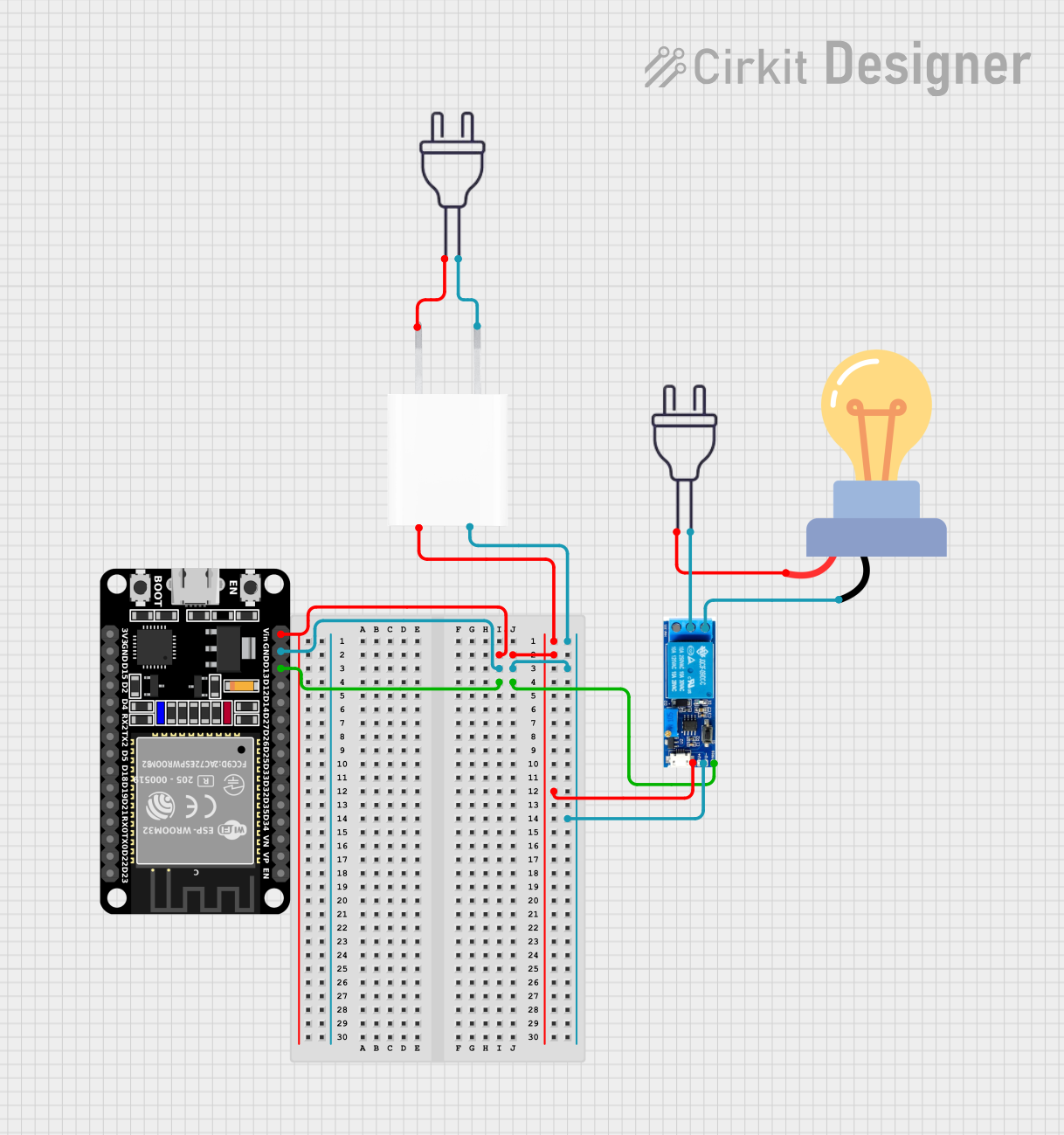
The LED Module 220V 16W is not directly compatible with Arduino or other microcontrollers due to its high voltage AC operation. However, it can be controlled indirectly using a relay module or a solid-state relay (SSR). Below is an example of how to control the LED module using an Arduino and a relay:
/*
  Example: Controlling a 220V LED Module with Arduino and Relay
  Note: Ensure proper isolation between the high-voltage and low-voltage sides.
*/

const int relayPin = 7; // Pin connected to the relay module

void setup() {
  pinMode(relayPin, OUTPUT); // Set relay pin as output
  digitalWrite(relayPin, LOW); // Ensure relay is off at startup
}

void loop() {
  digitalWrite(relayPin, HIGH); // Turn on the LED module
  delay(5000); // Keep it on for 5 seconds
  digitalWrite(relayPin, LOW); // Turn off the LED module
  delay(5000); // Keep it off for 5 seconds
}
Warning: Always exercise caution when working with high-voltage components. Use proper insulation and isolation techniques to ensure safety.
Troubleshooting and FAQs
Common Issues and Solutions
| Issue | Possible Cause | Solution |
|---|---|---|
| LED module does not light up | Loose or incorrect wiring | Check and secure all connections. |
| Flickering light | Unstable power supply | Use a voltage stabilizer or filter. |
| Overheating | Insufficient heat dissipation | Attach a heatsink or improve airflow. |
| Reduced brightness over time | Aging or overheating of LEDs | Ensure proper cooling and replace if necessary. |
| Module fails after installation | Incorrect voltage or polarity | Verify voltage and polarity before connecting. |
FAQs
Can I dim the LED Module 220V 16W?
- Only if the module is specifically designed for dimming. Check the product specifications for compatibility with dimmer switches.
Is the module waterproof?
- Not all models are waterproof. Look for an IP65 or higher rating if you need a waterproof module.
Can I use this module with a battery?
- No, this module is designed for 220V AC operation and cannot be powered by a DC battery.
What should I do if the module stops working?
- Check the wiring, power supply, and ensure there is no physical damage. Replace the module if necessary.
By following this documentation, you can safely and effectively use the LED Module 220V 16W in your lighting projects.