
How to Use SS14 Schottky Diode: Examples, Pinouts, and Specs
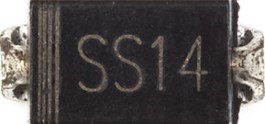
 Design with SS14 Schottky Diode in Cirkit Designer
Introduction
The SS14 is a Schottky diode designed for applications requiring low forward voltage drop and high-speed switching. Its compact design and efficient performance make it ideal for use in power rectification, voltage clamping, and reverse polarity protection circuits. The SS14 is widely used in DC-DC converters, battery chargers, and other power management systems.
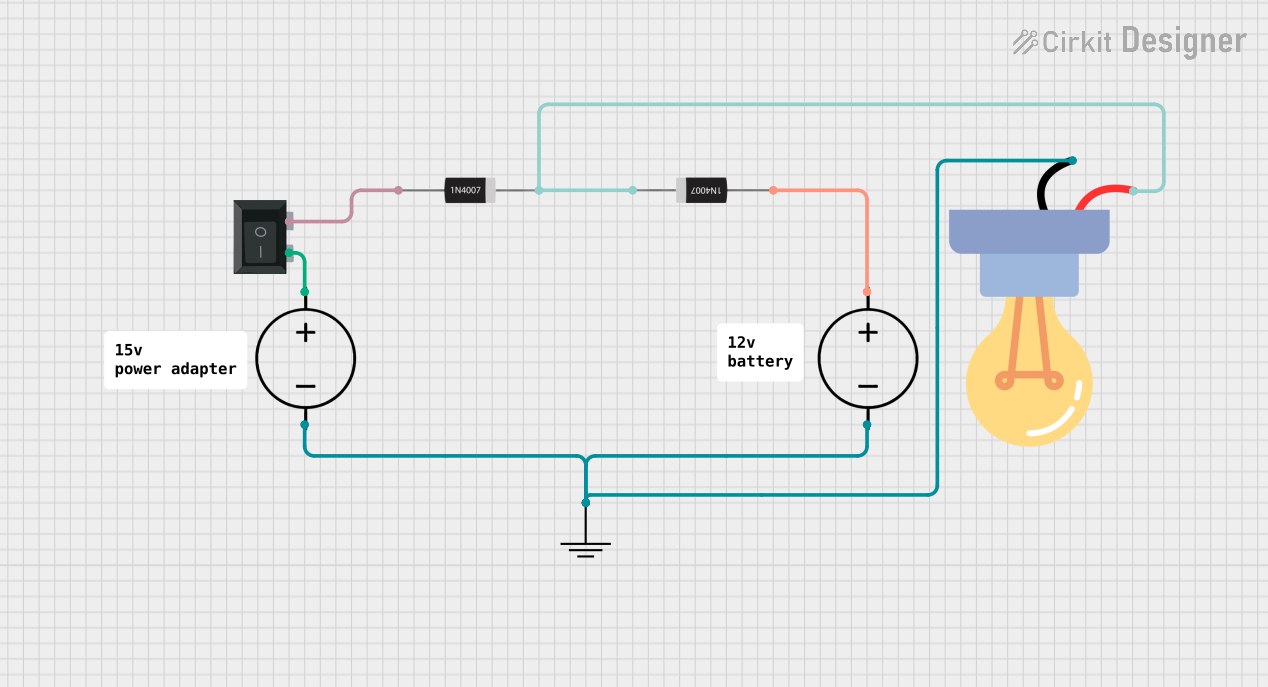
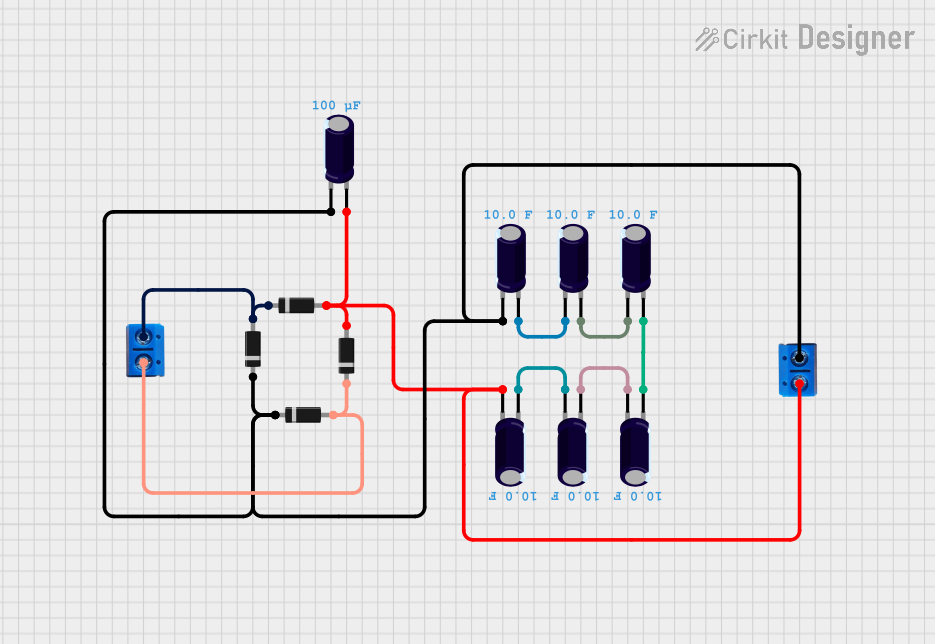
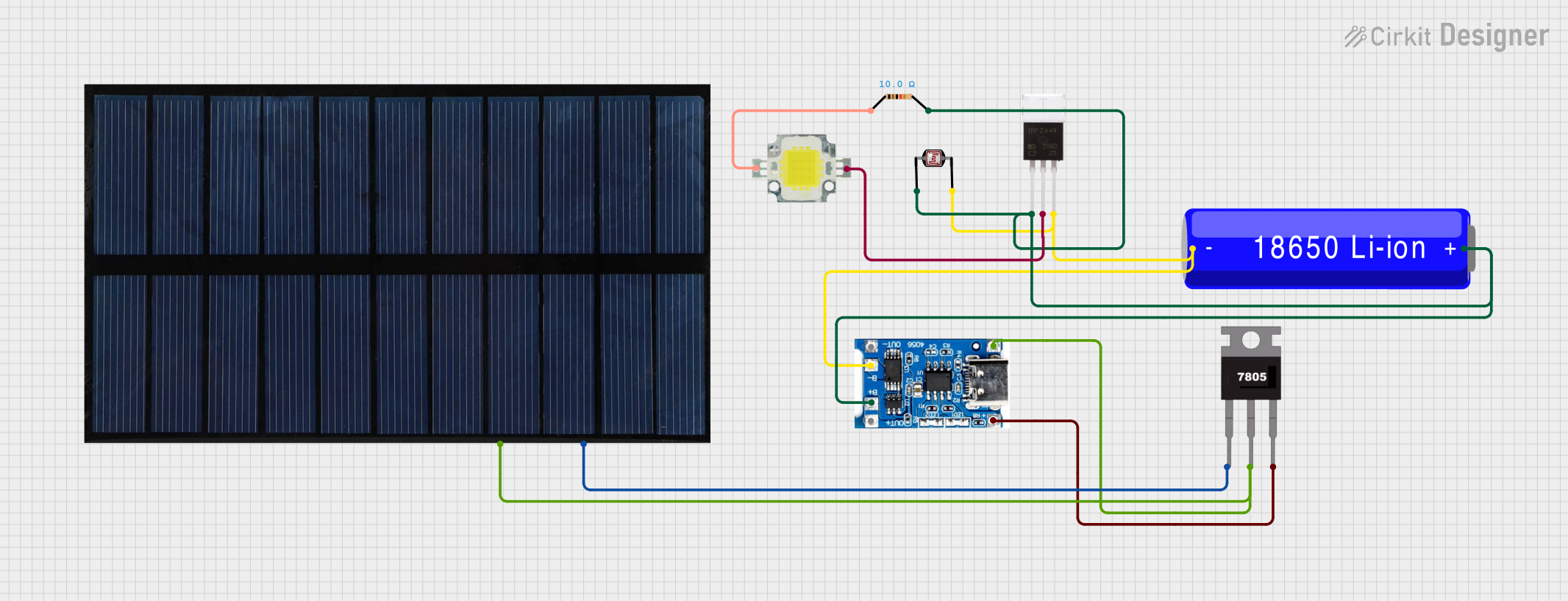
Explore Projects Built with SS14 Schottky Diode
 Open Project in Cirkit Designer
 Open Project in Cirkit Designer
 Open Project in Cirkit Designer
 Open Project in Cirkit Designer
Explore Projects Built with SS14 Schottky Diode
Open Project in Cirkit DesignerOpen Project in Cirkit DesignerOpen Project in Cirkit DesignerOpen Project in Cirkit DesignerCommon Applications
- Power rectification in AC-DC and DC-DC converters
- Voltage clamping to protect sensitive components
- Reverse polarity protection in circuits
- Freewheeling diodes in motor control applications
Technical Specifications
The SS14 Schottky diode is a surface-mount device (SMD) with the following key specifications:
| Parameter | Value |
|---|---|
| Maximum Repetitive Peak Reverse Voltage (VRRM) | 40V |
| Maximum Average Forward Rectified Current (IF(AV)) | 1A |
| Peak Forward Surge Current (IFSM) | 30A (8.3ms single half sine wave) |
| Forward Voltage Drop (VF) | 0.45V (at 1A) |
| Reverse Current (IR) | 0.5mA (at 40V) |
| Operating Temperature Range | -55°C to +125°C |
| Package Type | SMA (DO-214AC) |
Pin Configuration
The SS14 diode has two terminals:
| Pin | Name | Description |
|---|---|---|
| 1 | Anode | Positive terminal of the diode |
| 2 | Cathode | Negative terminal of the diode |
The cathode is typically marked with a stripe on the diode's body for easy identification.
Usage Instructions
How to Use the SS14 in a Circuit
- Determine the Orientation: Identify the cathode (marked with a stripe) and anode terminals. Connect the anode to the positive side of the circuit and the cathode to the negative side.
- Voltage and Current Ratings: Ensure the diode's voltage and current ratings are not exceeded. For example, the reverse voltage should not exceed 40V, and the forward current should not exceed 1A under normal operation.
- Soldering: If using the SMD version, solder the SS14 diode onto the PCB pads carefully to avoid overheating the component.
- Heat Dissipation: If the diode operates near its maximum current rating, ensure proper heat dissipation by using a PCB with adequate thermal management.
Example: Reverse Polarity Protection with Arduino UNO
The SS14 can be used to protect an Arduino UNO from reverse polarity damage. Below is an example circuit and code:
Circuit Description
- Connect the SS14 diode in series with the Arduino's power input (VIN pin).
- The anode of the diode connects to the positive terminal of the power source.
- The cathode connects to the VIN pin of the Arduino.
Arduino Code Example
// This example demonstrates a simple LED blink program.
// The SS14 diode protects the Arduino from reverse polarity damage.

const int ledPin = 13; // Built-in LED pin on Arduino UNO

void setup() {
  pinMode(ledPin, OUTPUT); // Set the LED pin as an output
}

void loop() {
  digitalWrite(ledPin, HIGH); // Turn the LED on
  delay(1000);                // Wait for 1 second
  digitalWrite(ledPin, LOW);  // Turn the LED off
  delay(1000);                // Wait for 1 second
}
Best Practices
- Use a heat sink or thermal vias on the PCB if the diode operates at high currents.
- Avoid exceeding the diode's maximum ratings to prevent damage.
- For high-frequency applications, ensure the circuit design minimizes parasitic inductance.
Troubleshooting and FAQs
Common Issues
Diode Overheating:
- Cause: Exceeding the maximum current rating or insufficient heat dissipation.
- Solution: Reduce the current load or improve thermal management (e.g., use a heat sink).
High Reverse Leakage Current:
- Cause: Operating the diode at high temperatures or near its reverse voltage limit.
- Solution: Ensure the diode operates within its specified temperature and voltage range.
Incorrect Orientation:
- Cause: The diode is installed backward in the circuit.
- Solution: Verify the cathode stripe and ensure proper orientation during installation.
FAQs
Q1: Can the SS14 handle AC signals?
A1: The SS14 is primarily designed for rectification in DC circuits. However, it can be used in AC circuits for half-wave or full-wave rectification when paired with other diodes.
Q2: What happens if the diode is exposed to a reverse voltage higher than 40V?
A2: Exceeding the reverse voltage rating can cause the diode to break down and fail permanently.
Q3: Is the SS14 suitable for high-frequency applications?
A3: Yes, the SS14's fast switching speed makes it suitable for high-frequency rectification and switching applications.
By following this documentation, users can effectively integrate the SS14 Schottky diode into their electronic designs while avoiding common pitfalls.