
How to Use VL53L0X: Examples, Pinouts, and Specs
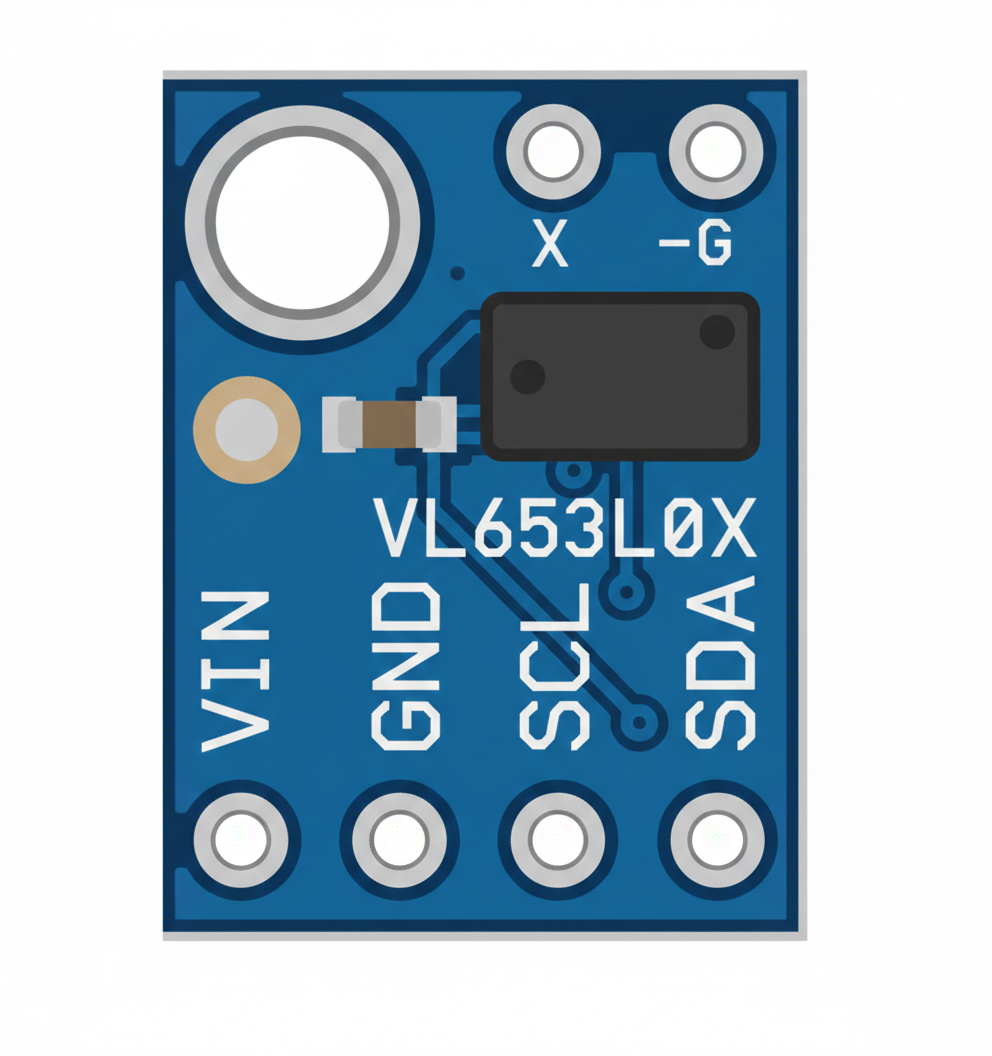
 Design with VL53L0X in Cirkit Designer
Introduction
The VL53L0X is a compact and high-performance time-of-flight (ToF) distance sensor manufactured by STMicroelectronics. It uses laser technology to measure distances with high accuracy and speed, making it ideal for applications requiring precise distance measurements. The sensor can measure distances up to 2 meters and is designed to work in a variety of lighting conditions.
Explore Projects Built with VL53L0X
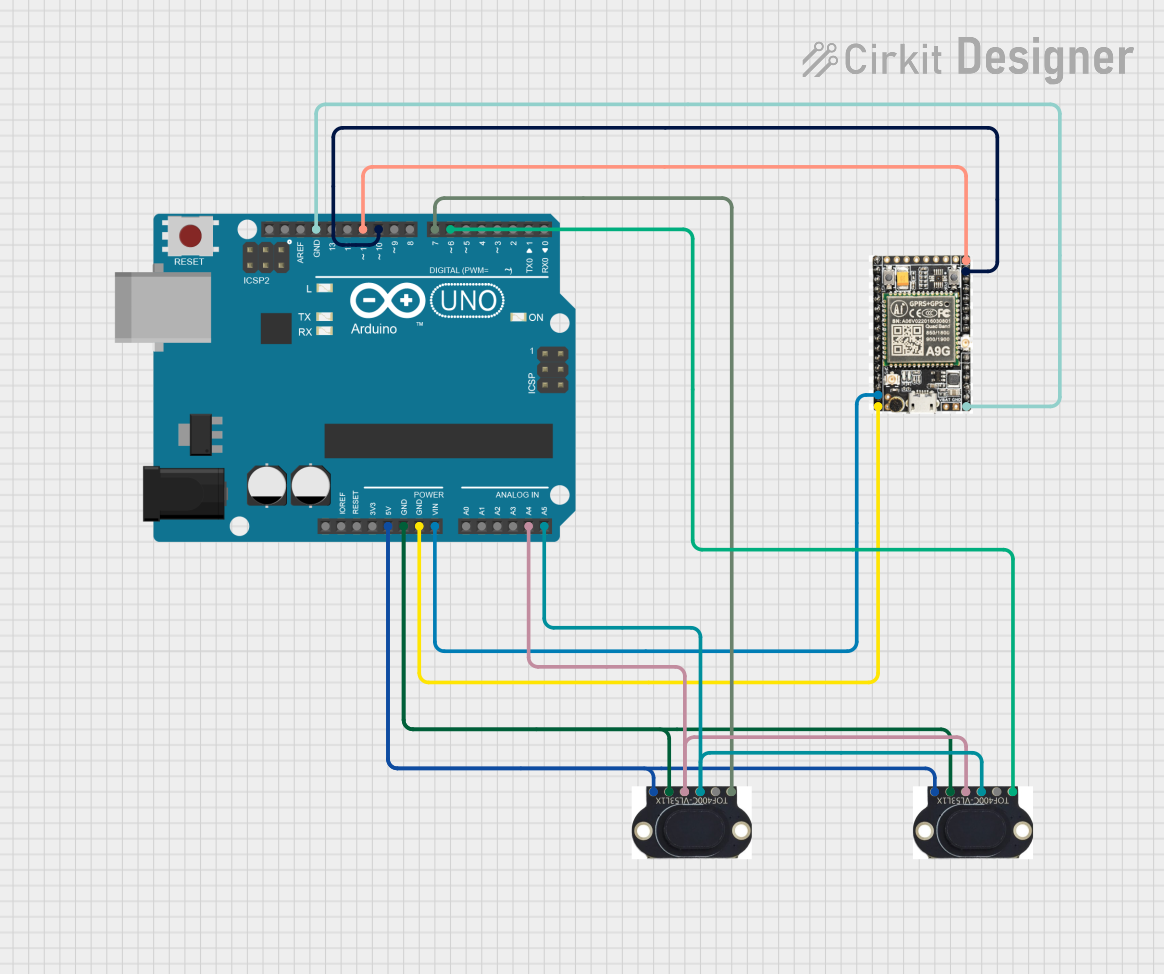 Open Project in Cirkit Designer
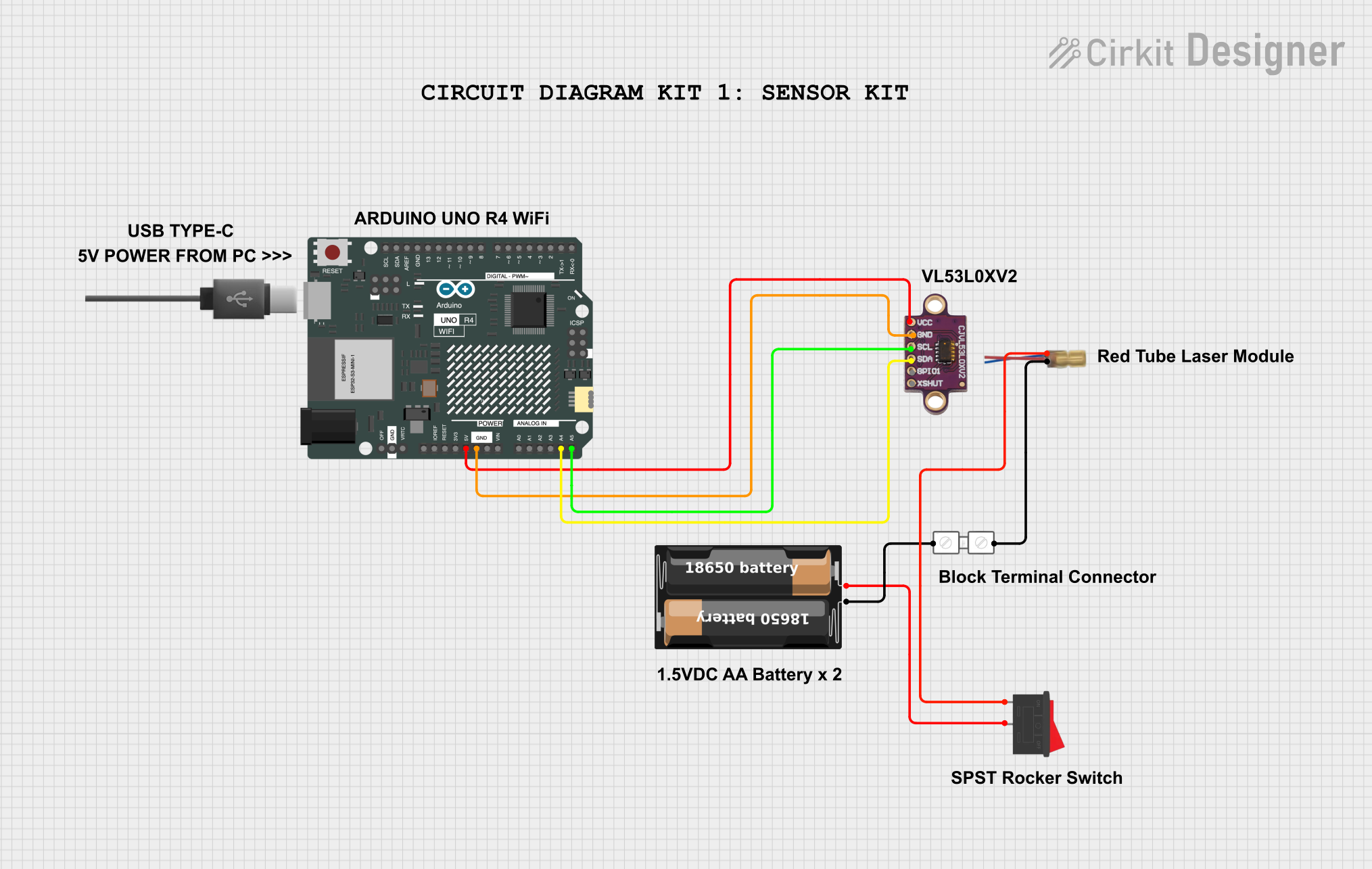 Open Project in Cirkit Designer
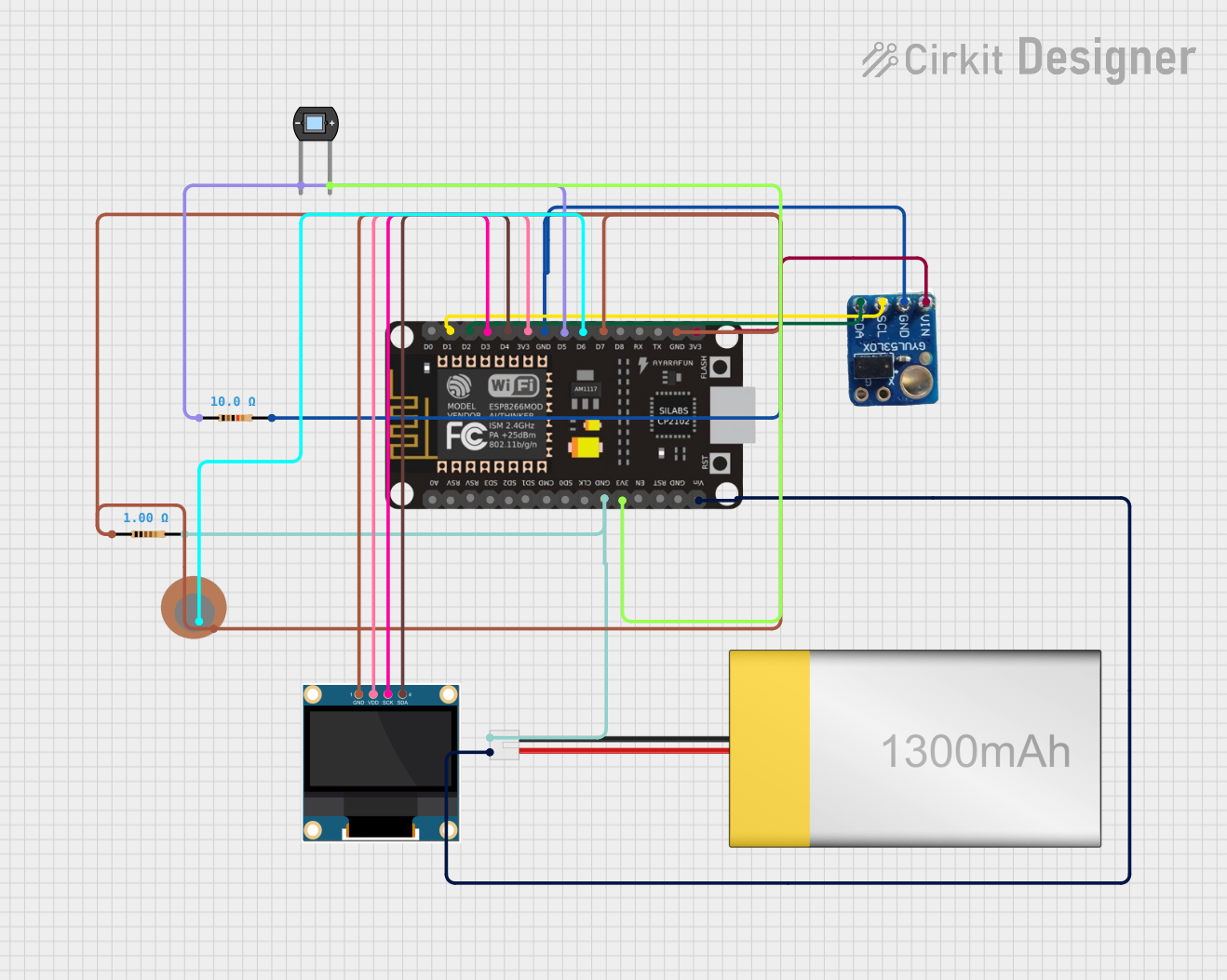 Open Project in Cirkit Designer
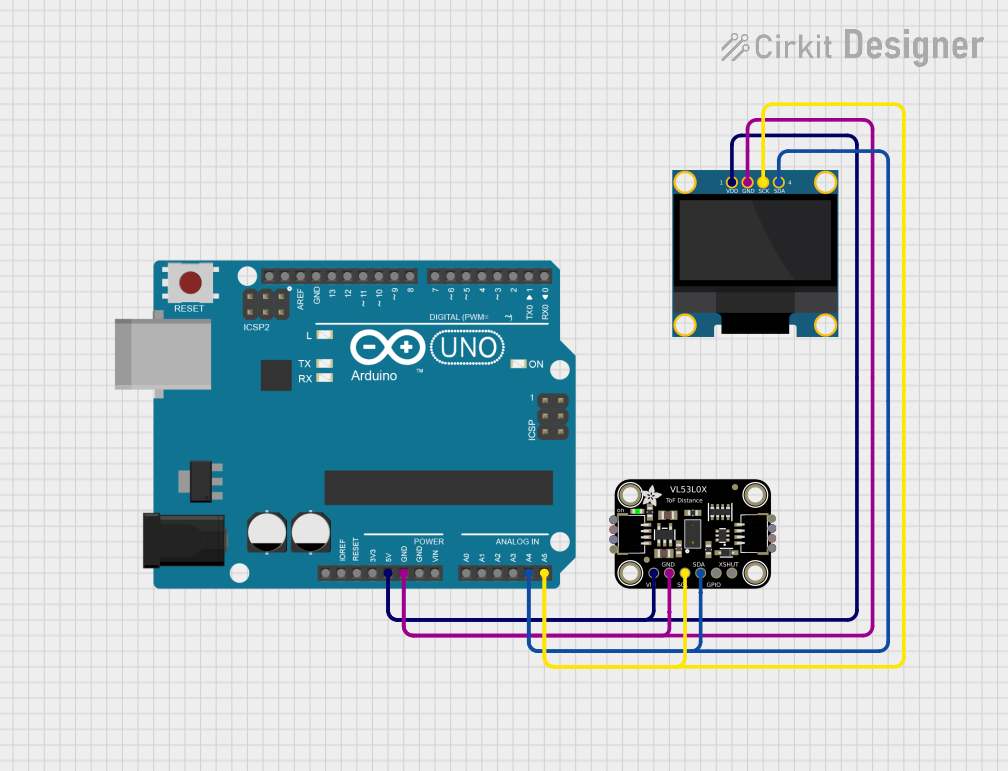 Open Project in Cirkit Designer
Explore Projects Built with VL53L0X
Open Project in Cirkit DesignerOpen Project in Cirkit DesignerOpen Project in Cirkit DesignerOpen Project in Cirkit DesignerCommon Applications
- Robotics and automation
- Obstacle detection and avoidance
- Gesture recognition
- Proximity sensing
- Industrial and consumer electronics
Technical Specifications
The following table outlines the key technical details of the VL53L0X sensor:
| Parameter | Value |
|---|---|
| Operating Voltage | 2.6V to 3.5V |
| Communication Interface | I²C |
| Measurement Range | 30mm to 2000mm (2 meters) |
| Measurement Accuracy | ±3% (typical) |
| Field of View (FoV) | 25° |
| Operating Temperature Range | -20°C to +70°C |
| Power Consumption (Active) | ~20mW |
| Dimensions | 4.4mm x 2.4mm x 1.0mm |
Pin Configuration and Descriptions
The VL53L0X sensor has the following pinout:
| Pin Name | Pin Number | Description |
|---|---|---|
| VIN | 1 | Power supply input (2.6V to 3.5V) |
| GND | 2 | Ground |
| SDA | 3 | I²C data line |
| SCL | 4 | I²C clock line |
| XSHUT | 5 | Shutdown pin (active low, used to reset the sensor) |
| GPIO1 | 6 | Interrupt output (optional, configurable) |
Usage Instructions
How to Use the VL53L0X in a Circuit
- Power Supply: Connect the VIN pin to a 3.3V power source and the GND pin to ground.
- I²C Communication: Connect the SDA and SCL pins to the corresponding I²C pins on your microcontroller. Use pull-up resistors (typically 4.7kΩ) on both lines if not already present.
- Shutdown Control: Optionally, connect the XSHUT pin to a GPIO pin on your microcontroller to enable or disable the sensor.
- Interrupt Pin: The GPIO1 pin can be used for interrupt-driven applications but is not mandatory for basic operation.
Important Considerations
- I²C Address: The default I²C address of the VL53L0X is
0x29. Ensure no other devices on the I²C bus share this address. - Ambient Light: The sensor is designed to work in various lighting conditions, but excessive ambient light may slightly affect accuracy.
- Distance Limitations: The sensor performs best within its specified range (30mm to 2000mm). Measurements outside this range may be unreliable.
Example Code for Arduino UNO
Below is an example of how to interface the VL53L0X with an Arduino UNO using the Adafruit VL53L0X library:
#include <Wire.h>
#include <Adafruit_VL53L0X.h>

// Create an instance of the VL53L0X sensor
Adafruit_VL53L0X lox = Adafruit_VL53L0X();

void setup() {
  Serial.begin(9600); // Initialize serial communication
  while (!Serial) {
    delay(10); // Wait for the serial port to be ready
  }

  Serial.println("VL53L0X Test");

  // Initialize the sensor
  if (!lox.begin()) {
    Serial.println("Failed to find VL53L0X sensor!");
    while (1) {
      delay(10); // Halt execution if the sensor is not found
    }
  }
}

void loop() {
  VL53L0X_RangingMeasurementData_t measure;

  // Perform a distance measurement
  lox.rangingTest(&measure, false);

  // Check if the measurement is valid
  if (measure.RangeStatus != 4) { // 4 indicates an out-of-range error
    Serial.print("Distance (mm): ");
    Serial.println(measure.RangeMilliMeter);
  } else {
    Serial.println("Out of range");
  }

  delay(100); // Wait before the next measurement
}
Best Practices
- Use decoupling capacitors (e.g., 0.1µF) near the VIN pin to stabilize the power supply.
- Keep the sensor's optical path clear of obstructions for accurate measurements.
- Avoid placing the sensor too close to highly reflective surfaces, as this may cause measurement errors.
Troubleshooting and FAQs
Common Issues and Solutions
Sensor Not Detected on I²C Bus
- Ensure the sensor is powered correctly (VIN and GND connected).
- Verify the I²C connections (SDA and SCL) and check for proper pull-up resistors.
- Confirm the I²C address (
0x29) is not conflicting with other devices.
Inaccurate Distance Measurements
- Ensure the sensor is within its specified range (30mm to 2000mm).
- Check for obstructions or reflective surfaces in the sensor's field of view.
- Minimize ambient light interference by shielding the sensor if necessary.
Sensor Not Responding After Power-Up
- Toggle the XSHUT pin to reset the sensor.
- Verify the power supply voltage is within the specified range (2.6V to 3.5V).
FAQs
Q: Can the VL53L0X measure distances beyond 2 meters?
A: No, the sensor is designed for a maximum range of 2 meters. Measurements beyond this range may be unreliable.
Q: Is the VL53L0X suitable for outdoor use?
A: While the sensor can operate in various lighting conditions, it is not weatherproof and should be protected from moisture and extreme temperatures.
Q: Can multiple VL53L0X sensors be used on the same I²C bus?
A: Yes, but each sensor must have a unique I²C address. This can be achieved by toggling the XSHUT pin and reprogramming the address for each sensor.
Q: What is the typical response time for a distance measurement?
A: The sensor can perform measurements in as little as 30ms, depending on the configuration.
By following this documentation, users can effectively integrate the VL53L0X into their projects and troubleshoot common issues.