The 12V 3000mAh battery is a rechargeable power source designed to deliver 12 volts of electrical energy with a capacity of 3000 milliampere-hours (mAh). This battery is ideal for powering a wide range of electronic devices, circuits, and small appliances. Its compact size and reliable performance make it a popular choice for hobbyists, engineers, and professionals alike.
Explore Projects Built with 12V 3000MAh Battery
Use Cirkit Designer to design, explore, and prototype these projects online. Some projects support real-time simulation. Click "Open Project" to start designing instantly!
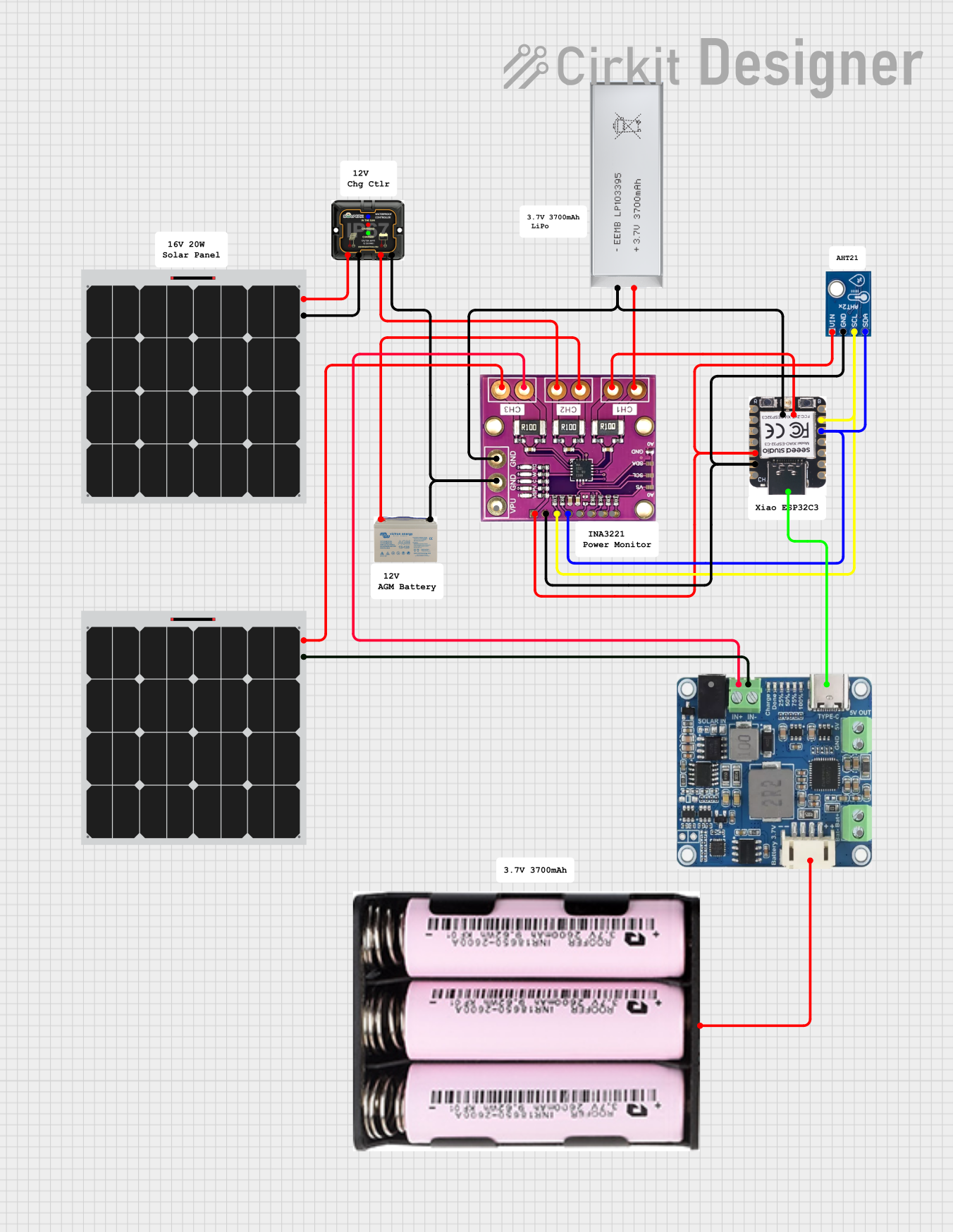
This circuit is designed for solar energy management and monitoring. It includes a 12V AGM battery charged by solar panels through an MPPT charge controller, with voltage monitoring provided by an INA3221 sensor. Additionally, a 3.7V battery is connected to an ESP32-C3 microcontroller and an AHT21 sensor for environmental data collection, with power management handled by a Waveshare Solar Manager.
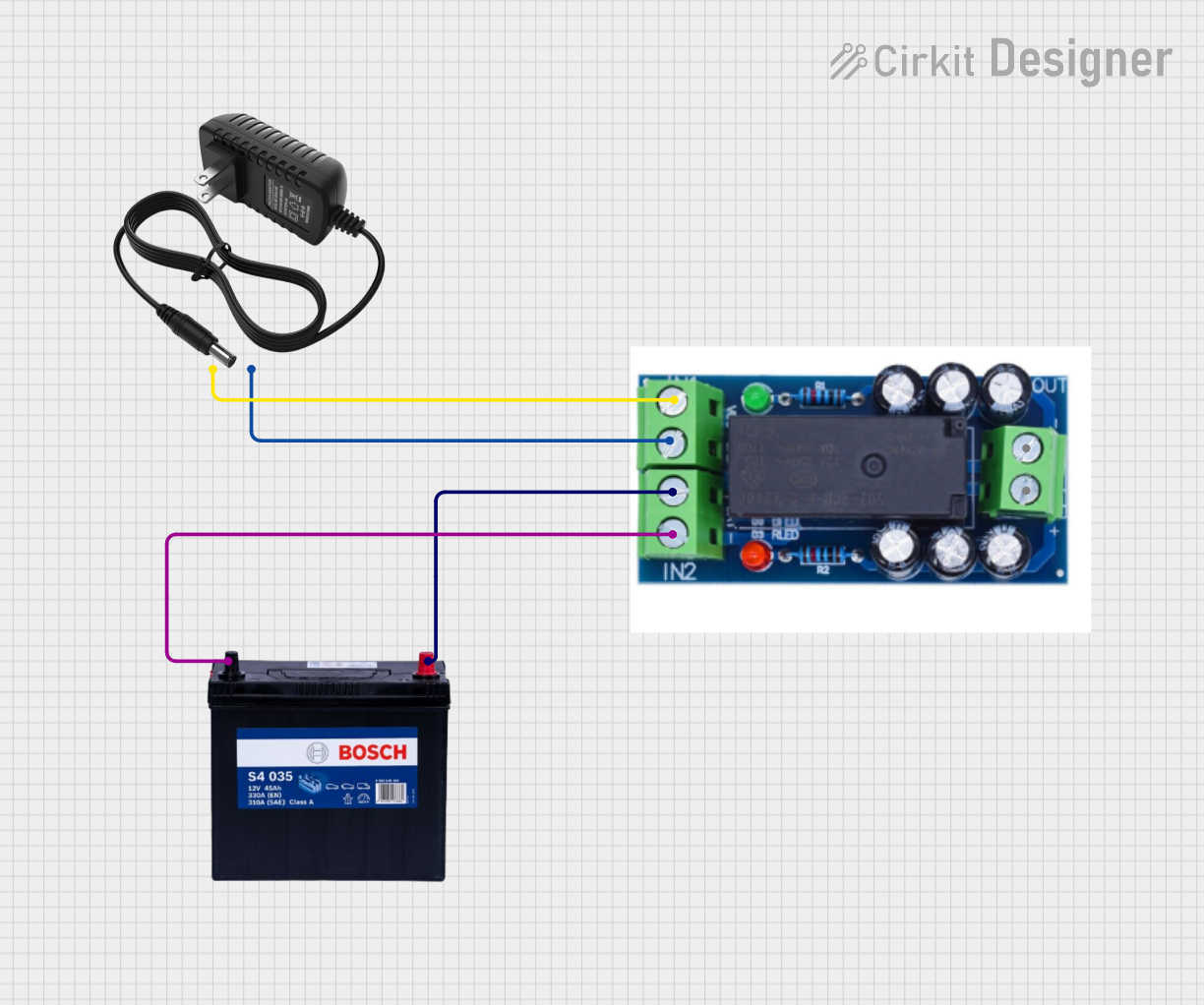
This circuit is designed to provide a backup power solution using a 12V 200Ah battery and a 12V power supply, with the HX-M350 module managing the switching between these power sources. The HX-M350 module automatically switches to the battery power when the main 12V power supply fails or is unavailable, ensuring uninterrupted power to the load. There is no microcontroller or additional control logic involved, indicating that the switching mechanism is likely handled entirely by the HX-M350 module itself.
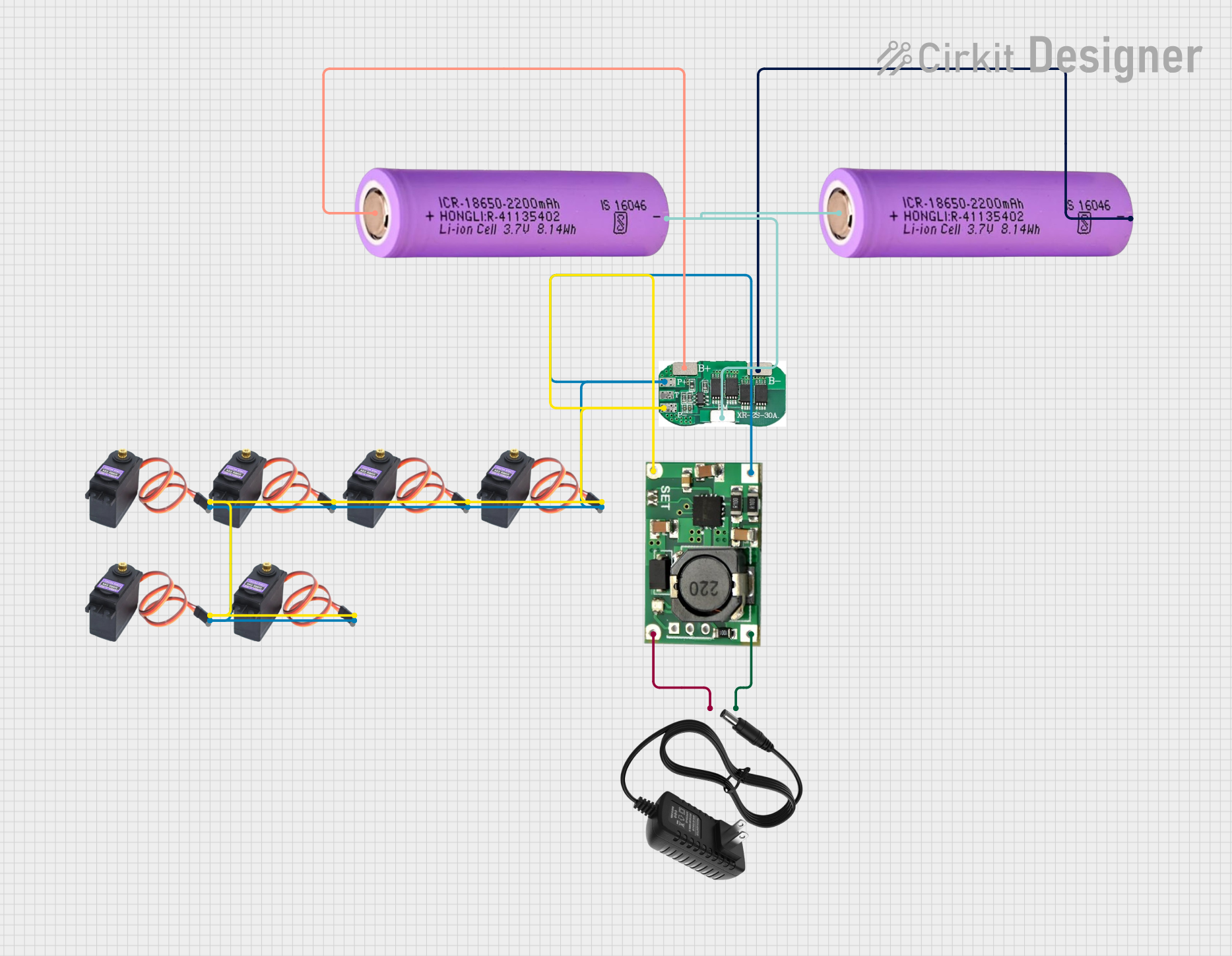
This circuit is a battery management and charging system for a 2S lithium-ion battery pack, which powers multiple MG996R servos. The TP5100 module charges the battery pack from a 12V power supply, while the 2S 30A BMS ensures safe operation and distribution of power to the servos.
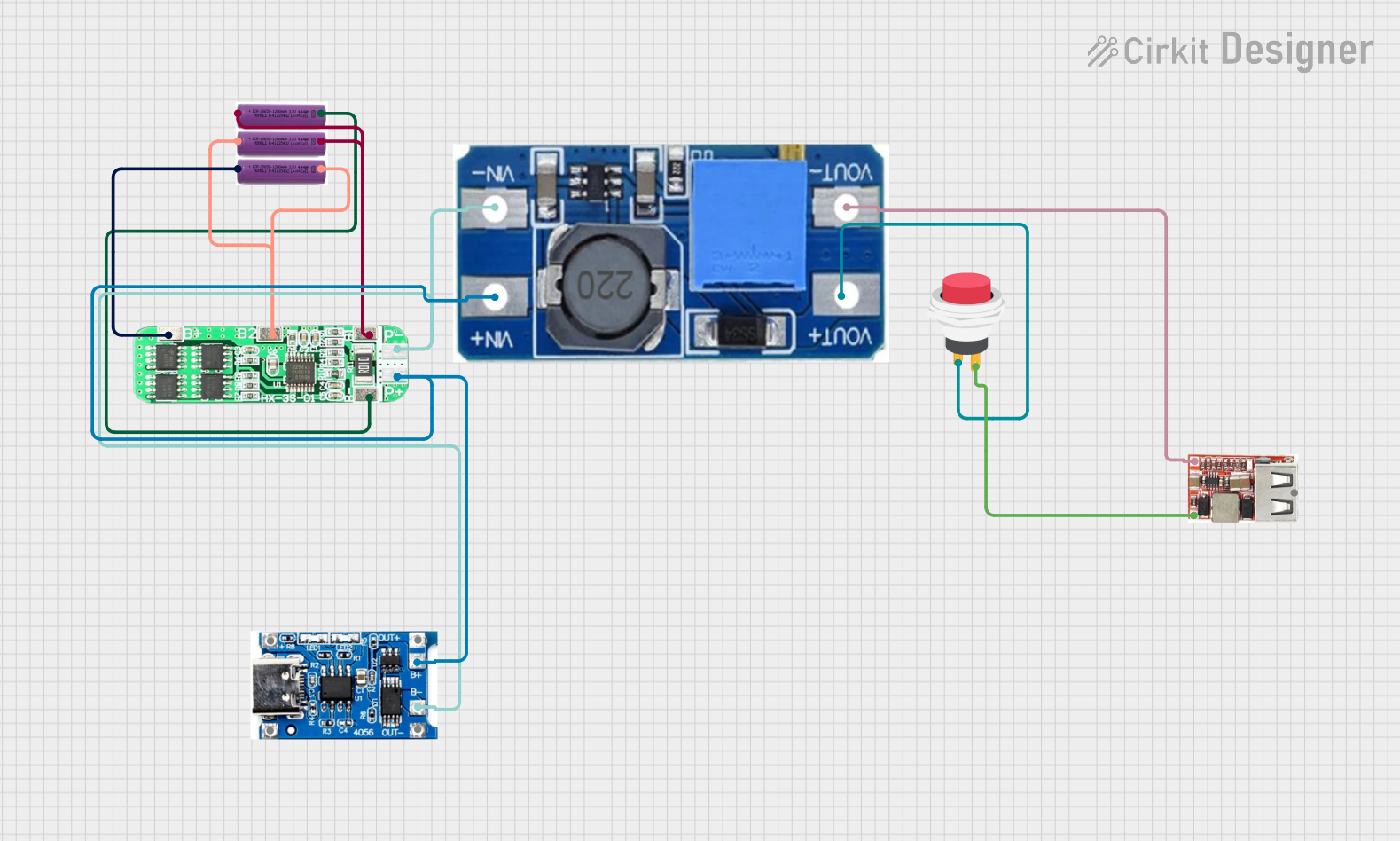
This circuit is a battery management and power supply system that uses three 3.7V batteries connected to a 3S 10A Li-ion 18650 Charger Protection Board Module for balanced charging and protection. The system includes a TP4056 Battery Charging Protection Module for additional charging safety, a Step Up Boost Power Converter to regulate and boost the voltage, and a USB regulator to provide a stable 5V output, controlled by a push switch.
Powering Arduino, Raspberry Pi, and other microcontroller-based projects
LED lighting systems
Technical Specifications
The following table outlines the key technical details of the 12V 3000mAh battery:
Specification
Details
Nominal Voltage
12V
Capacity
3000mAh (3Ah)
Battery Type
Rechargeable (e.g., Li-ion, SLA)
Maximum Discharge Current
Varies by model (e.g., 3A-5A)
Charging Voltage
12.6V (for Li-ion)
Charging Current
Typically 0.5A to 1A
Dimensions
Varies by manufacturer
Weight
Varies by manufacturer
Operating Temperature
-20°C to 60°C
Storage Temperature
-20°C to 45°C
Pin Configuration and Descriptions
The battery typically has two terminals for connection:
Pin/Terminal
Description
Positive (+)
Connects to the positive terminal of the circuit
Negative (-)
Connects to the ground or negative terminal of the circuit
Note: Some batteries may include additional terminals for features like temperature sensing or battery management systems (BMS). Refer to the manufacturer's datasheet for specific details.
Usage Instructions
How to Use the 12V 3000mAh Battery in a Circuit
Identify the Terminals: Locate the positive (+) and negative (-) terminals on the battery.
Connect to the Circuit: Use appropriate wires or connectors to attach the battery to your circuit. Ensure correct polarity to avoid damage.
Include a Protection Circuit: For Li-ion batteries, use a battery management system (BMS) to prevent overcharging, over-discharging, and short circuits.
Charging the Battery:
Use a compatible charger designed for 12V rechargeable batteries.
Follow the recommended charging current and voltage to ensure safety and longevity.
Monitor Battery Voltage: Use a multimeter or voltage sensor to ensure the battery voltage remains within the safe operating range.
Important Considerations and Best Practices
Avoid Overcharging: Overcharging can damage the battery and reduce its lifespan. Always use a charger with overcharge protection.
Prevent Deep Discharge: Discharging the battery below its minimum voltage can permanently damage it. Use a low-voltage cutoff circuit if necessary.
Handle with Care: Avoid puncturing, short-circuiting, or exposing the battery to extreme temperatures.
Storage: Store the battery in a cool, dry place when not in use. Charge it to about 50% capacity for long-term storage.
Example: Connecting to an Arduino UNO
The 12V 3000mAh battery can be used to power an Arduino UNO via its barrel jack or VIN pin. Below is an example of how to connect the battery and monitor its voltage using an analog pin.
Circuit Diagram
Connect the positive terminal of the battery to the VIN pin of the Arduino.
Connect the negative terminal of the battery to the GND pin of the Arduino.
Use a voltage divider circuit to measure the battery voltage safely.
Arduino Code Example
// This code reads the battery voltage using a voltage divider circuit
// connected to analog pin A0. Ensure the voltage divider reduces the
// 12V battery voltage to a safe level (below 5V) for the Arduino.

const int batteryPin = A0; // Analog pin connected to the voltage divider
const float voltageDividerRatio = 5.7; // Adjust based on resistor values
// Example: If R1 = 10k and R2 = 2.2k, ratio = (R1 + R2) / R2 = 5.7

void setup() {
  Serial.begin(9600); // Initialize serial communication
}

void loop() {
  int sensorValue = analogRead(batteryPin); // Read analog value
  float batteryVoltage = sensorValue * (5.0 / 1023.0) * voltageDividerRatio;
  // Convert analog reading to voltage using the divider ratio

  Serial.print("Battery Voltage: ");
  Serial.print(batteryVoltage);
  Serial.println(" V");

  delay(1000); // Wait for 1 second before the next reading
}
Note: Ensure the voltage divider is correctly calculated to prevent overvoltage on the Arduino's analog pin.
Troubleshooting and FAQs
Common Issues and Solutions
Issue
Possible Cause
Solution
Battery not charging
Faulty charger or incorrect voltage
Verify charger compatibility and output
Battery drains quickly
High current draw or aging battery
Reduce load or replace the battery
Circuit not powering on
Incorrect wiring or low battery voltage
Check connections and measure voltage
Overheating during use
Excessive current draw
Use a battery with a higher discharge rate
FAQs
Can I use this battery to power a 5V device?
Yes, but you will need a voltage regulator (e.g., LM7805 or a buck converter) to step down the voltage to 5V.
How long will the battery last on a full charge?
Battery life depends on the load current. For example, at a 1A load, the battery will last approximately 3 hours (3000mAh ÷ 1000mA).
Is it safe to leave the battery connected to the charger?
Only if the charger has overcharge protection. Otherwise, disconnect the battery once fully charged.
Can I connect multiple batteries in series or parallel?
Yes, but ensure proper balancing and use a BMS to manage the combined pack safely.
By following this documentation, you can effectively use the 12V 3000mAh battery in your projects while ensuring safety and optimal performance.

 Open Project in Cirkit Designer