
How to Use SENSOR PH: Examples, Pinouts, and Specs
 Design with SENSOR PH in Cirkit Designer
Introduction
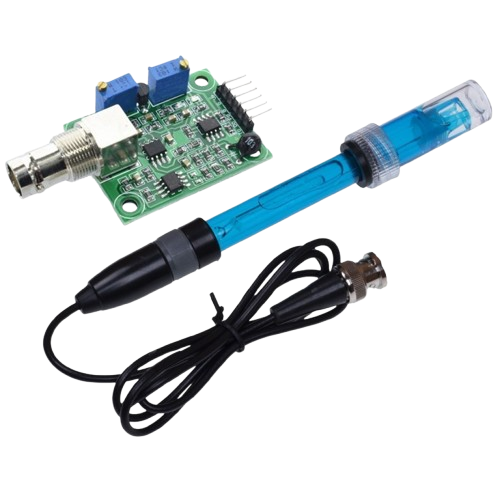
The pH sensor is an electronic component designed to measure the pH level of a solution, which indicates its acidity or alkalinity. The pH scale ranges from 0 to 14, where values below 7 represent acidic solutions, values above 7 represent alkaline solutions, and a value of 7 indicates neutrality. This sensor is widely used in applications such as water quality monitoring, aquariums, hydroponics, food processing, and laboratory experiments.
By converting the pH level into an electrical signal, the sensor provides an easy way to integrate pH measurement into electronic systems, including microcontroller-based platforms like Arduino.
Explore Projects Built with SENSOR PH
 Open Project in Cirkit Designer
 Open Project in Cirkit Designer
 Open Project in Cirkit Designer
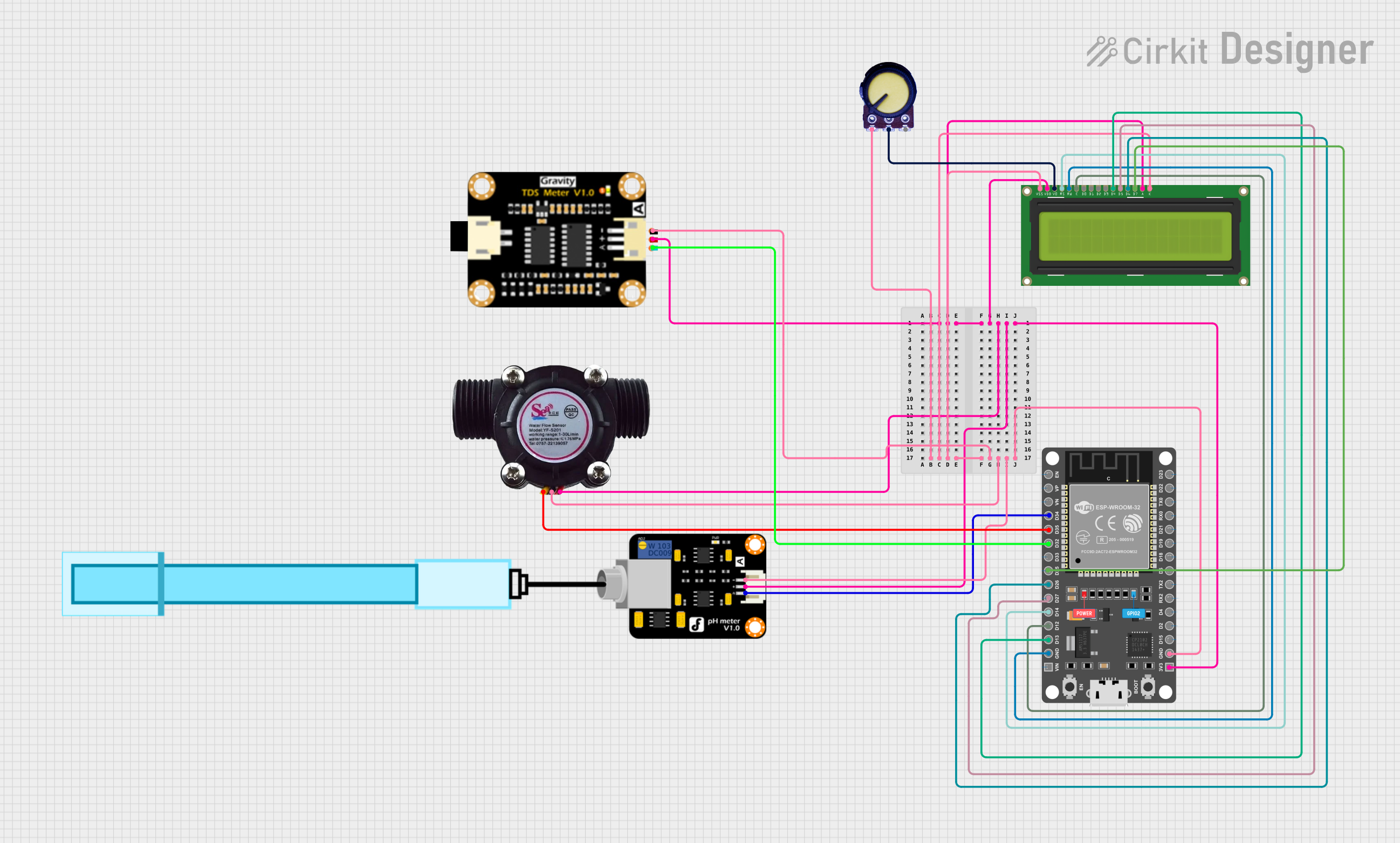 Open Project in Cirkit Designer
Explore Projects Built with SENSOR PH
Open Project in Cirkit DesignerOpen Project in Cirkit DesignerOpen Project in Cirkit DesignerOpen Project in Cirkit DesignerTechnical Specifications
- Measurement Range: 0 to 14 pH
- Accuracy: ±0.1 pH (at 25°C)
- Operating Temperature: 0°C to 60°C
- Output Voltage: Typically 0 to 5V (analog signal)
- Power Supply: 3.3V to 5V DC
- Response Time: ≤1 second
- Calibration: Requires 2-point or 3-point calibration using standard buffer solutions
- Connector Type: BNC connector for the probe, 3-pin header for the module
Pin Configuration and Descriptions
The pH sensor module typically has a 3-pin interface for connecting to a microcontroller. Below is the pin configuration:
| Pin | Name | Description |
|---|---|---|
| 1 | VCC | Power supply input (3.3V to 5V DC) |
| 2 | GND | Ground connection |
| 3 | AO | Analog output signal (proportional to pH) |
Usage Instructions
How to Use the pH Sensor in a Circuit
Connect the Sensor:
- Attach the pH probe to the BNC connector on the module.
- Connect the module's VCC pin to the 5V pin of your microcontroller.
- Connect the GND pin to the ground (GND) of your microcontroller.
- Connect the AO pin to an analog input pin on your microcontroller (e.g., A0 on Arduino UNO).
Calibrate the Sensor:
- Immerse the pH probe in a standard buffer solution (e.g., pH 4.0 or pH 7.0).
- Adjust the potentiometer on the module until the output voltage corresponds to the known pH value.
- Repeat the process with a second buffer solution for more accurate calibration.
Read the pH Value:
- Use the analog signal from the AO pin to calculate the pH value. The relationship between the voltage and pH is typically linear, but refer to the sensor's datasheet for exact details.
Important Considerations and Best Practices
- Always rinse the pH probe with distilled water before and after use to prevent contamination.
- Store the pH probe in a storage solution when not in use to maintain its accuracy and lifespan.
- Avoid exposing the probe to extreme temperatures or harsh chemicals.
- Perform regular calibration to ensure accurate readings.
- Use shielded cables for the BNC connector to minimize electrical noise.
Example Code for Arduino UNO
Below is an example of how to interface the pH sensor with an Arduino UNO to read and display the pH value:
// Define the analog pin connected to the pH sensor
const int pH_pin = A0;

// Calibration values (adjust based on your sensor's datasheet and calibration)
const float voltage_offset = 0.0; // Adjust based on calibration
const float pH_slope = 3.5;      // Voltage-to-pH conversion factor

void setup() {
  Serial.begin(9600); // Initialize serial communication
  Serial.println("pH Sensor Test");
}

void loop() {
  // Read the analog value from the pH sensor
  int sensorValue = analogRead(pH_pin);

  // Convert the analog value to voltage (assuming 5V reference)
  float voltage = sensorValue * (5.0 / 1023.0);

  // Calculate the pH value using the calibration formula
  float pH_value = (voltage - voltage_offset) * pH_slope;

  // Print the pH value to the Serial Monitor
  Serial.print("pH Value: ");
  Serial.println(pH_value);

  delay(1000); // Wait for 1 second before the next reading
}
Troubleshooting and FAQs
Common Issues and Solutions
Inaccurate Readings:
- Cause: The sensor is not calibrated properly.
- Solution: Perform a 2-point or 3-point calibration using standard buffer solutions.
No Output Signal:
- Cause: Loose connections or damaged probe.
- Solution: Check all connections and ensure the probe is securely attached to the BNC connector. Replace the probe if necessary.
Fluctuating Readings:
- Cause: Electrical noise or unstable power supply.
- Solution: Use a stable power source and shielded cables for the BNC connector.
Probe Drying Out:
- Cause: The probe was not stored in a storage solution.
- Solution: Soak the probe in a storage solution for several hours before use. Avoid letting the probe dry out in the future.
FAQs
Q: Can the pH sensor be used to measure the pH of solids?
A: No, the pH sensor is designed for liquid solutions only. For solids, you may need to dissolve them in water before measurement.Q: How often should I calibrate the pH sensor?
A: Calibration frequency depends on usage, but it is recommended to calibrate before each use for critical applications or at least once a week for general use.Q: Can I use the pH sensor with a 3.3V microcontroller?
A: Yes, the sensor module supports a power supply range of 3.3V to 5V. Ensure the analog output is compatible with your microcontroller's ADC range.Q: What is the lifespan of the pH probe?
A: The typical lifespan of a pH probe is 1 to 2 years, depending on usage and maintenance. Proper care can extend its lifespan.