
How to Use RA-01SH: Examples, Pinouts, and Specs
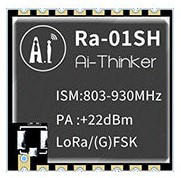
 Design with RA-01SH in Cirkit Designer
Introduction
The RA-01SH is a high-performance RF amplifier module manufactured by AI Thinker, featuring the SX1262 chipset. It is designed to enhance signal strength in wireless communication systems by providing a low noise figure and high gain. This module is ideal for applications requiring reliable RF signal amplification, such as IoT devices, wireless sensor networks, and long-range communication systems.
Explore Projects Built with RA-01SH
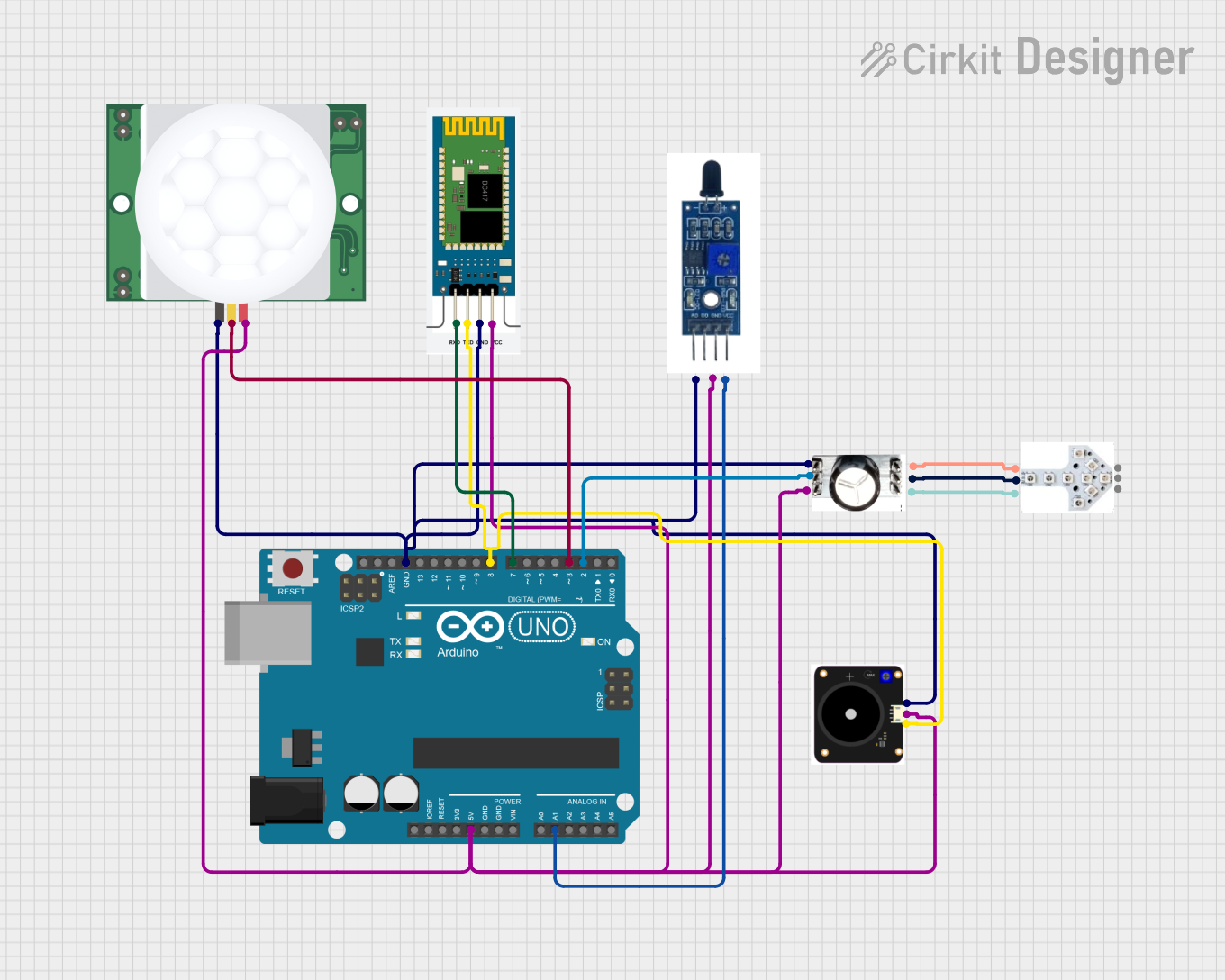 Open Project in Cirkit Designer
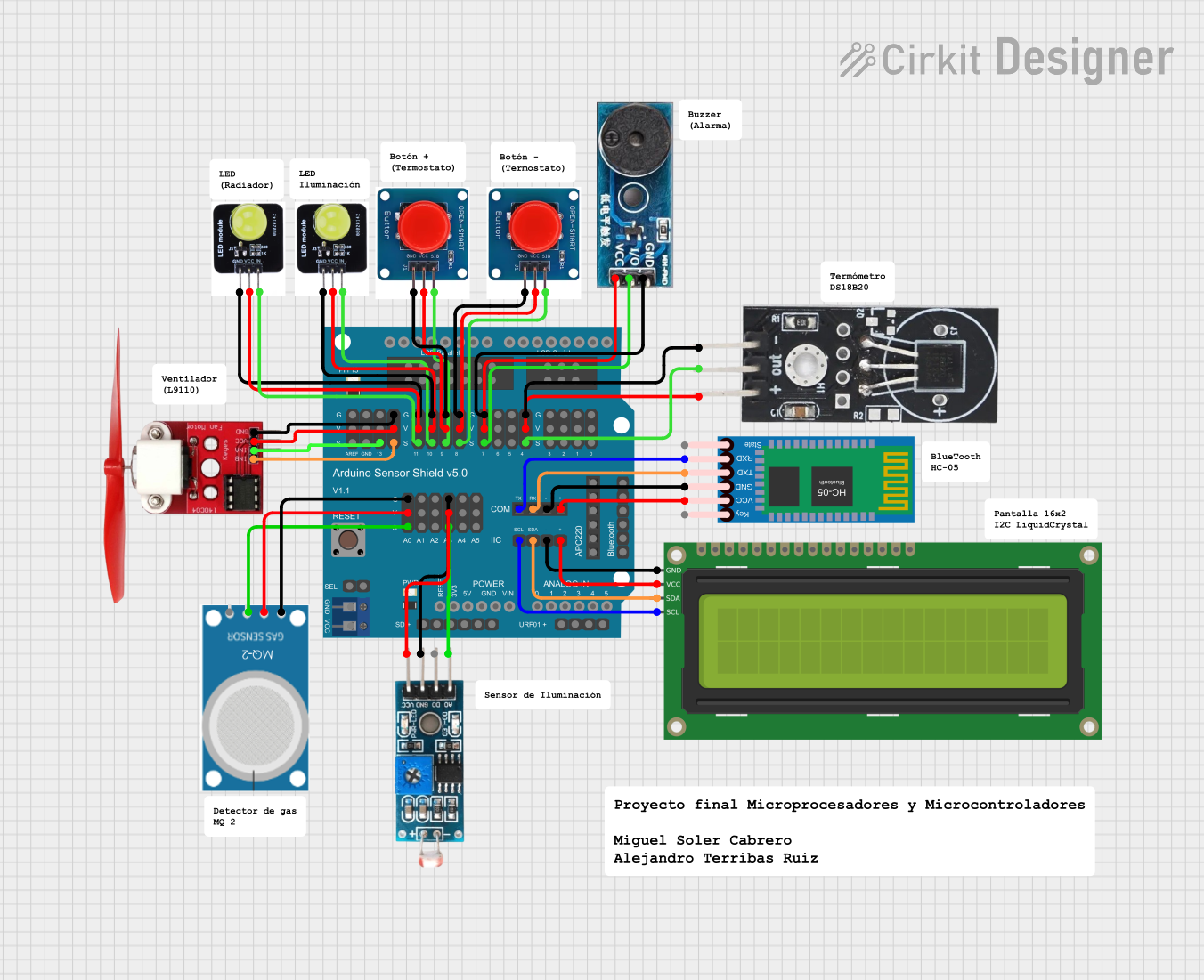 Open Project in Cirkit Designer
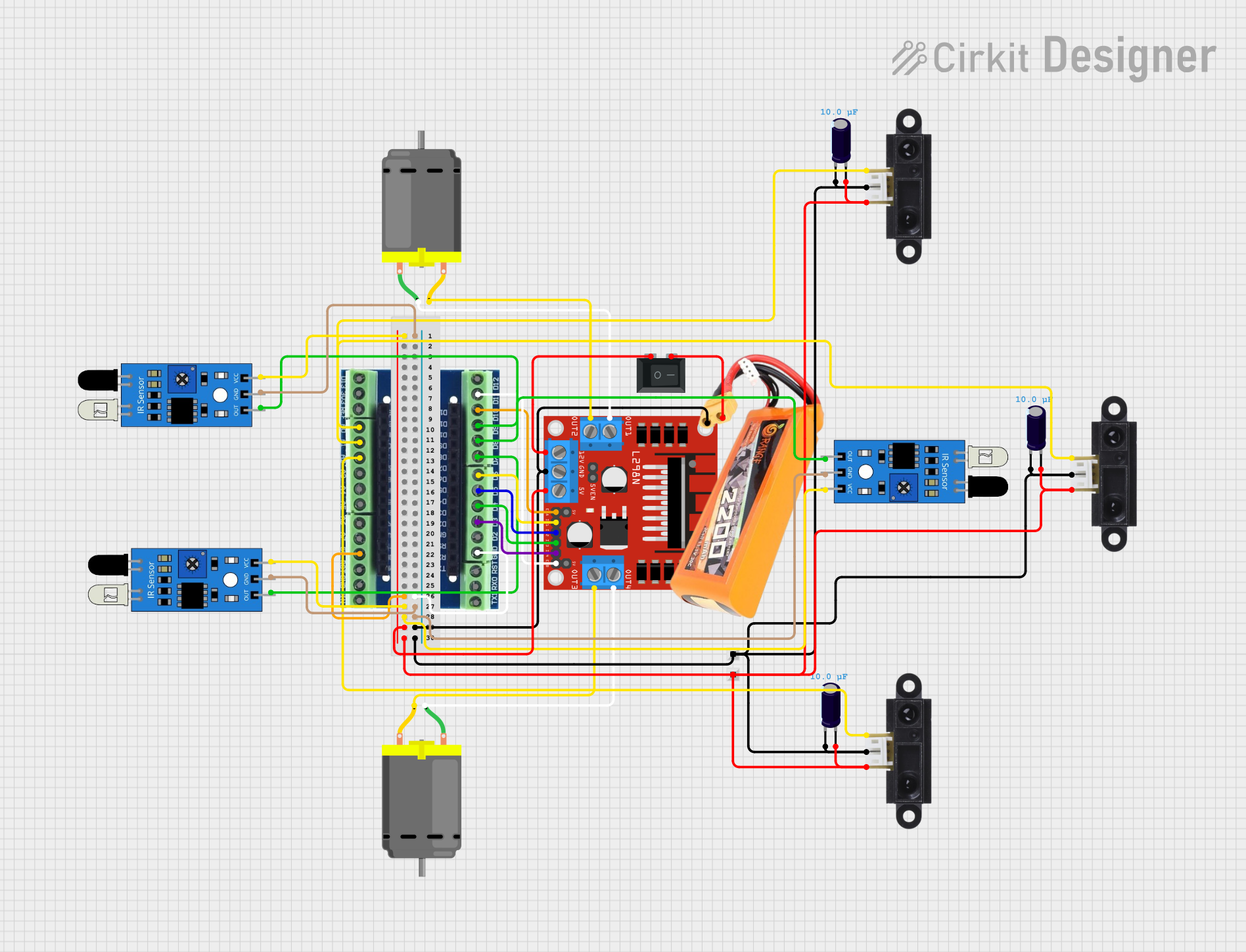 Open Project in Cirkit Designer
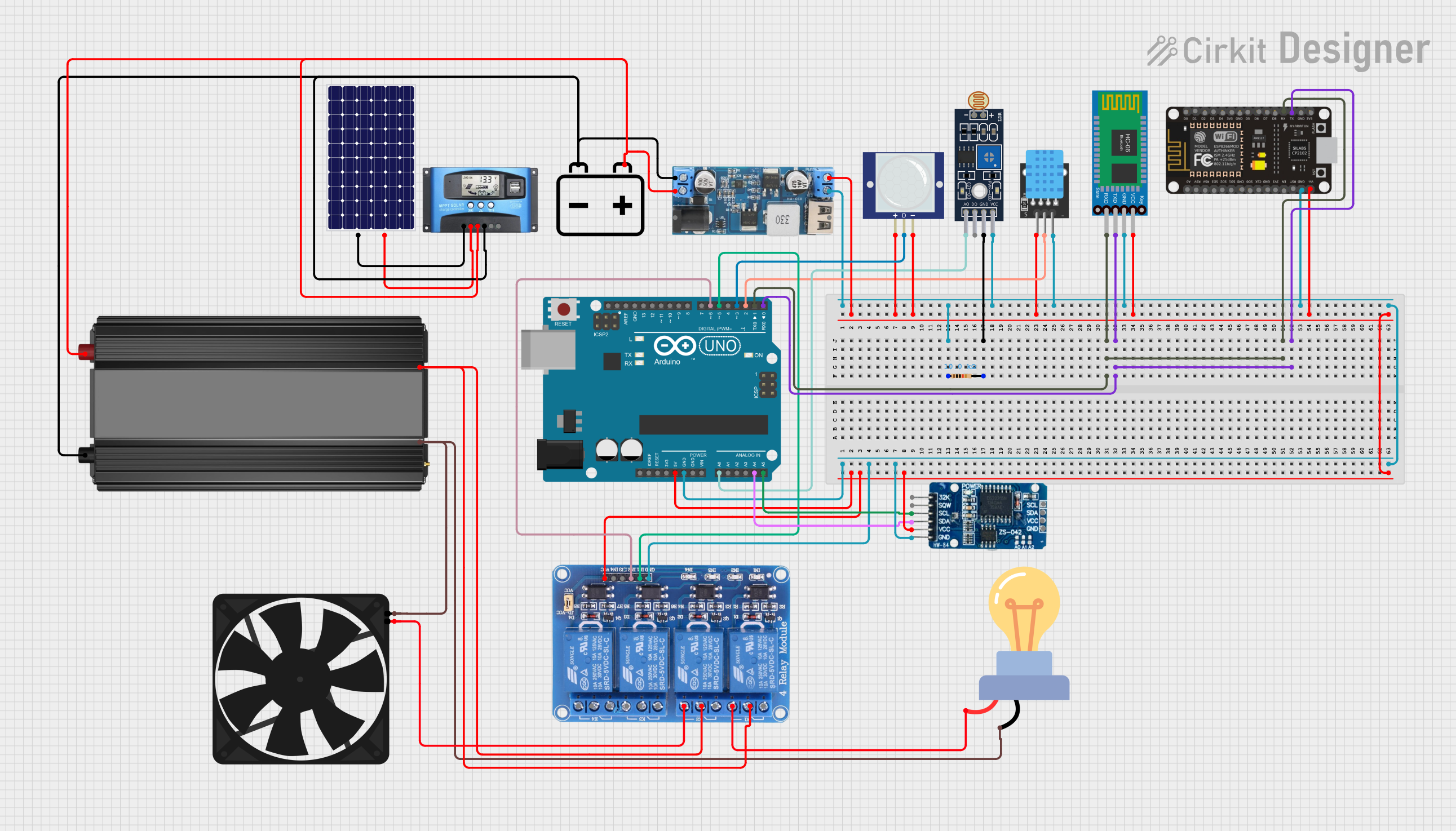 Open Project in Cirkit Designer
Explore Projects Built with RA-01SH
Open Project in Cirkit DesignerOpen Project in Cirkit DesignerOpen Project in Cirkit DesignerOpen Project in Cirkit DesignerCommon Applications and Use Cases
- IoT (Internet of Things) devices
- Wireless sensor networks
- Long-range communication systems
- RF signal repeaters
- Low-power wide-area networks (LPWAN)
Technical Specifications
The RA-01SH module is built for robust performance in RF communication systems. Below are its key technical specifications:
| Parameter | Value |
|---|---|
| Operating Frequency | 410 MHz to 525 MHz, 862 MHz to 1020 MHz |
| Modulation Type | LoRa, FSK, GFSK, MSK, GMSK |
| Output Power | Up to +22 dBm |
| Sensitivity | -148 dBm (LoRa, SF12, 125 kHz BW) |
| Supply Voltage | 1.8V to 3.7V |
| Current Consumption | 4.6 mA (Receive), 22 mA (Transmit at +10 dBm) |
| Noise Figure | < 6 dB |
| Operating Temperature | -40°C to +85°C |
| Communication Interface | SPI |
| Dimensions | 17 mm x 16 mm x 2.3 mm |
Pin Configuration and Descriptions
The RA-01SH module has a total of 8 pins. Below is the pinout and description:
| Pin Number | Pin Name | Description |
|---|---|---|
| 1 | GND | Ground connection |
| 2 | VCC | Power supply (1.8V to 3.7V) |
| 3 | SCK | SPI Clock input |
| 4 | MISO | SPI Master-In-Slave-Out |
| 5 | MOSI | SPI Master-Out-Slave-In |
| 6 | NSS | SPI Chip Select |
| 7 | DIO1 | Digital I/O pin 1 (interrupt or status signaling) |
| 8 | ANT | RF signal output/input (connect to antenna) |
Usage Instructions
The RA-01SH module is straightforward to integrate into RF communication systems. Below are the steps and best practices for using the module:
How to Use the Component in a Circuit
- Power Supply: Connect the VCC pin to a stable power source within the range of 1.8V to 3.7V. Ensure proper decoupling capacitors are used to minimize noise.
- SPI Communication: Connect the SCK, MISO, MOSI, and NSS pins to the corresponding SPI pins of your microcontroller.
- Antenna Connection: Attach a suitable antenna to the ANT pin for optimal RF performance. Use a 50-ohm impedance antenna for best results.
- Grounding: Ensure the GND pin is connected to the ground plane of your circuit to avoid noise and interference.
- Digital I/O: Use the DIO1 pin for interrupt handling or status signaling as required by your application.
Important Considerations and Best Practices
- Antenna Placement: Place the antenna away from noise sources and metal objects to avoid signal degradation.
- Power Supply Filtering: Use low ESR capacitors near the VCC pin to filter out power supply noise.
- PCB Design: Ensure proper grounding and RF trace design to minimize losses and interference.
- Firmware Configuration: Configure the SX1262 chipset using SPI commands to set the desired frequency, modulation type, and power level.
Example Code for Arduino UNO
Below is an example of how to interface the RA-01SH module with an Arduino UNO using SPI:
#include <SPI.h>

// Define RA-01SH SPI pins
#define NSS_PIN 10  // Chip Select pin
#define SCK_PIN 13  // SPI Clock pin
#define MOSI_PIN 11 // Master-Out-Slave-In pin
#define MISO_PIN 12 // Master-In-Slave-Out pin

void setup() {
  // Initialize Serial Monitor
  Serial.begin(9600);
  Serial.println("Initializing RA-01SH Module...");

  // Configure SPI pins
  pinMode(NSS_PIN, OUTPUT);
  digitalWrite(NSS_PIN, HIGH); // Set NSS high (inactive)
  SPI.begin(); // Initialize SPI communication

  // Example: Send a command to the RA-01SH
  digitalWrite(NSS_PIN, LOW); // Select the module
  SPI.transfer(0x80); // Example command (write register)
  SPI.transfer(0x01); // Example data
  digitalWrite(NSS_PIN, HIGH); // Deselect the module

  Serial.println("RA-01SH Initialized.");
}

void loop() {
  // Main loop can handle communication or other tasks
}
Troubleshooting and FAQs
Common Issues and Solutions
No RF Output Signal
- Cause: Incorrect antenna connection or configuration.
- Solution: Verify the antenna is properly connected to the ANT pin and matches the required impedance (50 ohms).
SPI Communication Fails
- Cause: Incorrect SPI wiring or configuration.
- Solution: Double-check the SPI pin connections and ensure the microcontroller's SPI settings match the RA-01SH requirements.
High Noise or Interference
- Cause: Poor grounding or power supply noise.
- Solution: Improve PCB grounding and add decoupling capacitors near the VCC pin.
Module Overheating
- Cause: Excessive output power or poor ventilation.
- Solution: Reduce the output power level and ensure proper airflow around the module.
FAQs
Q: Can the RA-01SH operate at 868 MHz for European IoT applications?
A: Yes, the RA-01SH supports frequencies from 862 MHz to 1020 MHz, making it suitable for 868 MHz applications.
Q: What is the maximum communication range of the RA-01SH?
A: The range depends on the environment, antenna, and power settings. In open areas, it can achieve several kilometers with proper configuration.
Q: Is the RA-01SH compatible with LoRaWAN?
A: Yes, the RA-01SH supports LoRa modulation and can be configured for LoRaWAN applications with appropriate firmware.
Q: Can I use the RA-01SH with a 5V microcontroller?
A: The RA-01SH operates at 1.8V to 3.7V. Use a level shifter to interface with 5V microcontrollers.