
How to Use TB6612FNG: Examples, Pinouts, and Specs
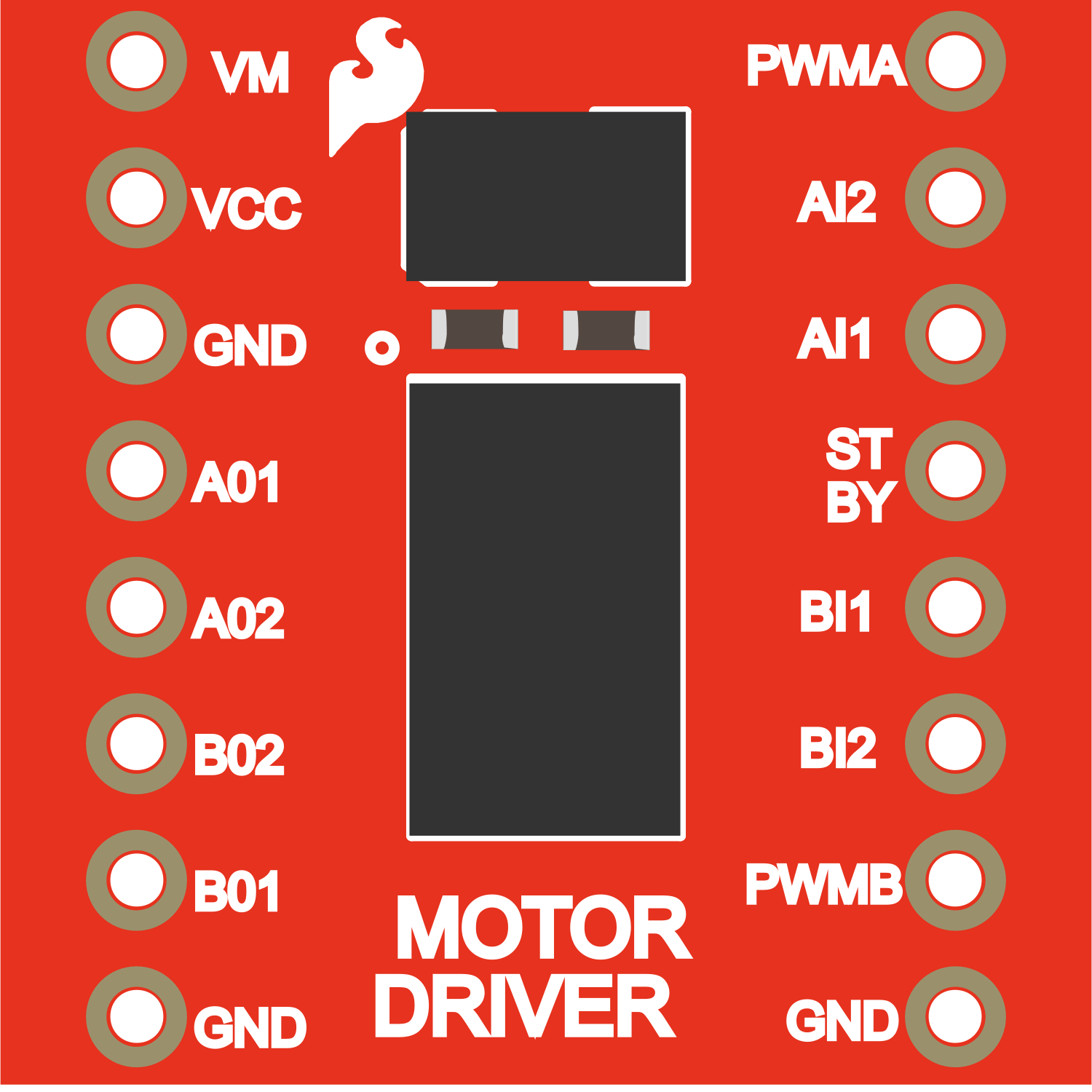
 Design with TB6612FNG in Cirkit Designer
Introduction
The TB6612FNG is a dual H-bridge motor driver IC designed for controlling two DC motors or one stepper motor. It supports PWM (Pulse Width Modulation) control for precise speed regulation and direction control. This compact and efficient IC is widely used in robotics, automation, and other motor control applications. Additionally, it includes built-in protection features such as overcurrent and thermal overload safeguards, making it a reliable choice for motor control projects.
Explore Projects Built with TB6612FNG
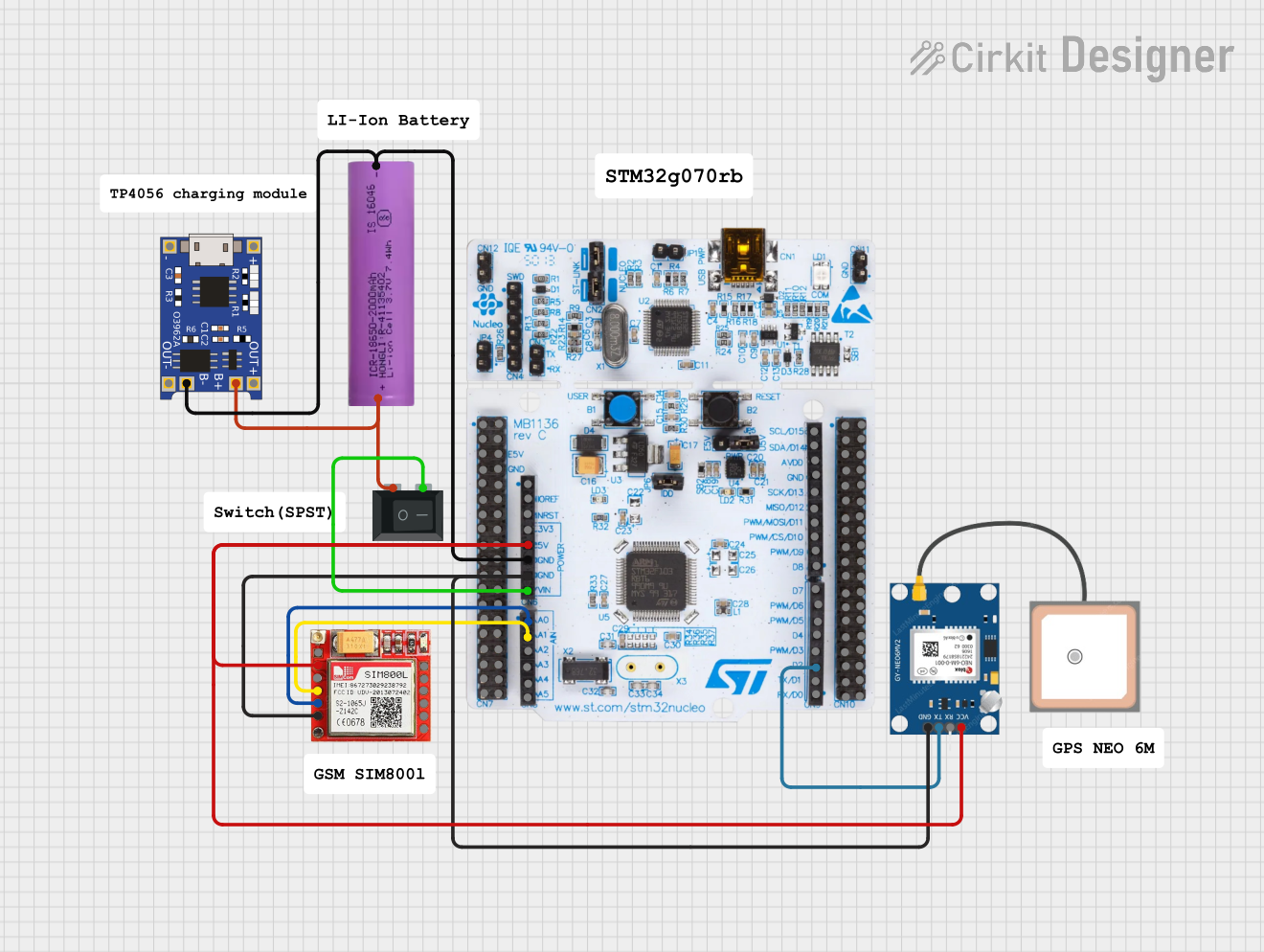 Open Project in Cirkit Designer
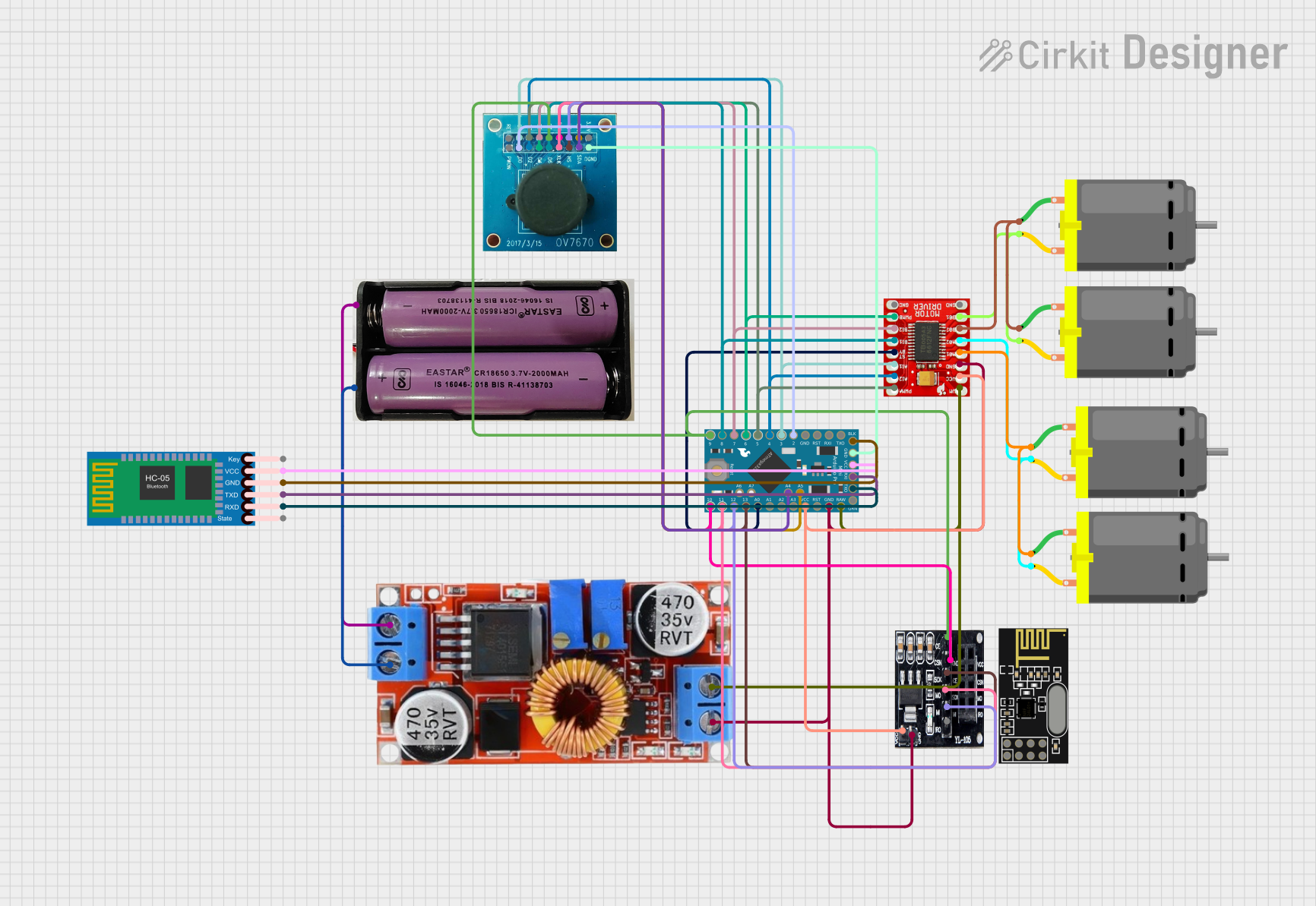 Open Project in Cirkit Designer
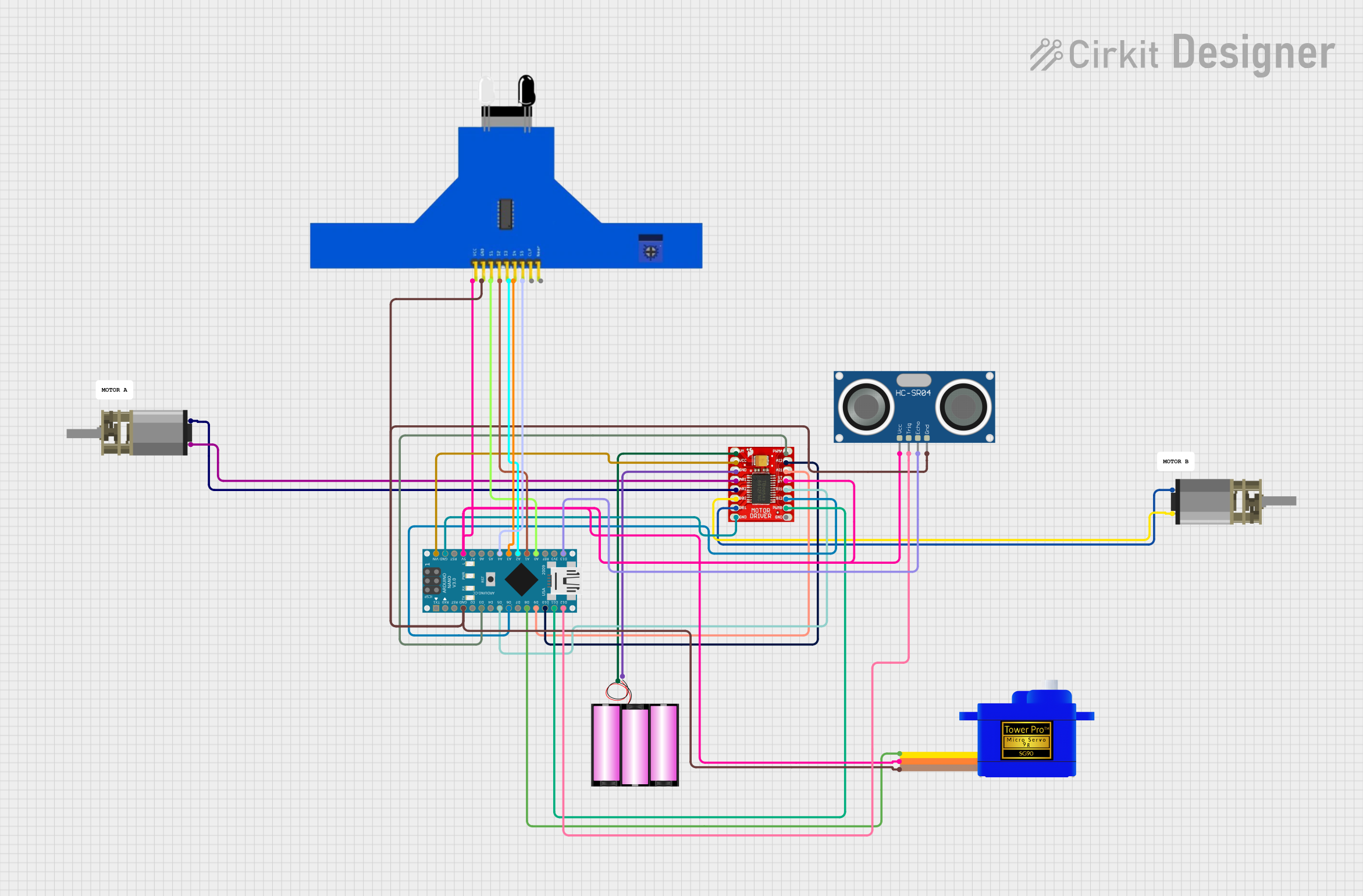 Open Project in Cirkit Designer
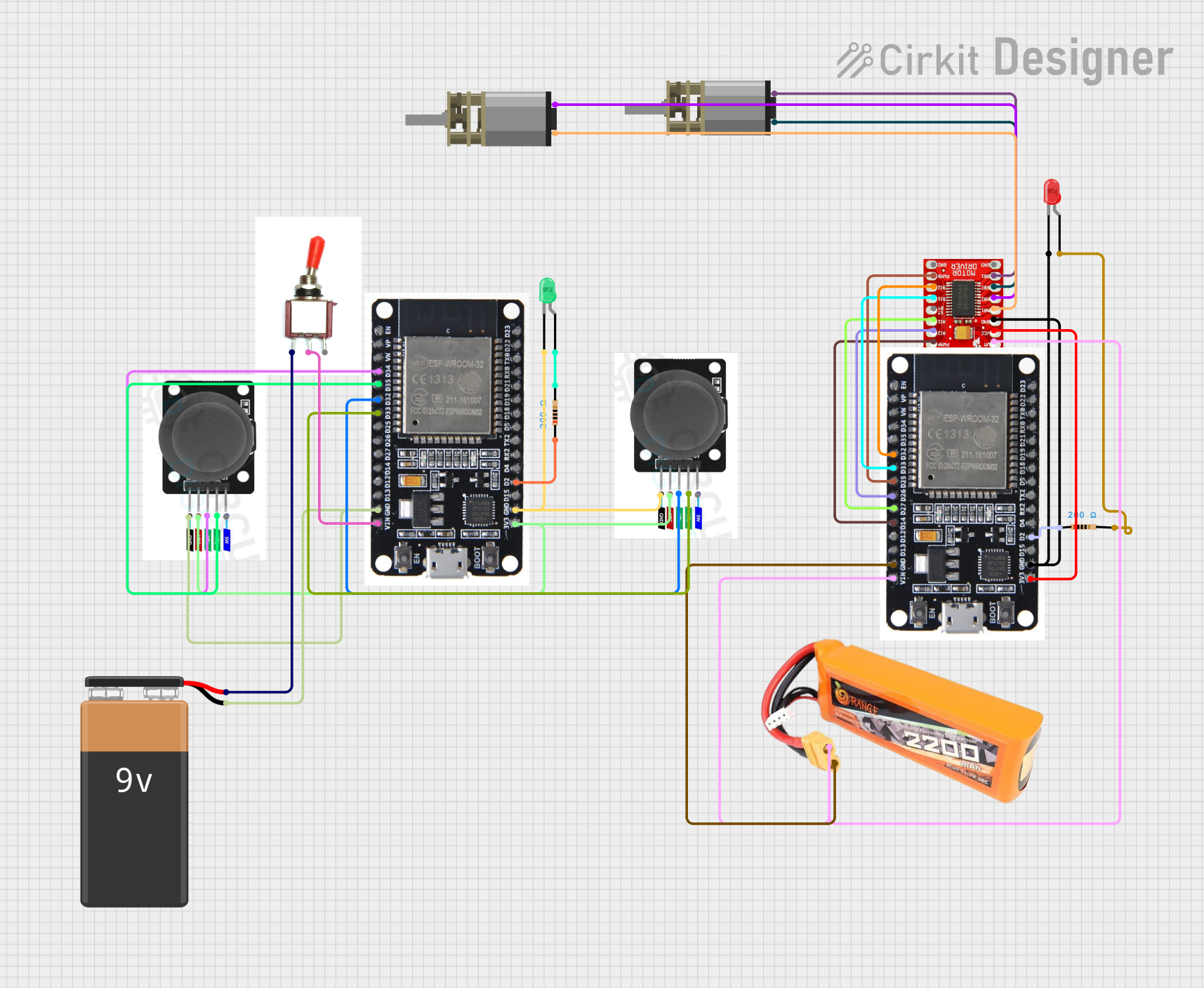 Open Project in Cirkit Designer
Explore Projects Built with TB6612FNG
Open Project in Cirkit DesignerOpen Project in Cirkit DesignerOpen Project in Cirkit DesignerOpen Project in Cirkit DesignerCommon Applications
- Robotics (e.g., controlling wheels or robotic arms)
- Automated systems (e.g., conveyor belts, actuators)
- DIY projects involving DC or stepper motors
- Educational kits for motor control learning
Technical Specifications
Key Technical Details
| Parameter | Value |
|---|---|
| Operating Voltage (Vcc) | 2.7V to 5.5V |
| Motor Voltage (VM) | 4.5V to 13.5V |
| Output Current (per channel) | 1.2A (continuous), 3.2A (peak) |
| Control Interface | PWM, Direction Control |
| Standby Current | 1 µA (typical) |
| Built-in Protections | Overcurrent, Thermal Shutdown, Undervoltage Lockout |
| Operating Temperature | -20°C to +85°C |
| Package Type | HTSSOP24 (compact surface-mount package) |
Pin Configuration and Descriptions
The TB6612FNG has 24 pins, but the most commonly used pins are listed below:
| Pin Number | Pin Name | Description |
|---|---|---|
| 1 | AIN1 | Input signal for Motor A (Direction control) |
| 2 | AIN2 | Input signal for Motor A (Direction control) |
| 3 | PWMA | PWM input for Motor A (Speed control) |
| 4 | AO1 | Output 1 for Motor A |
| 5 | AO2 | Output 2 for Motor A |
| 6 | VM | Motor power supply (4.5V to 13.5V) |
| 7 | GND | Ground |
| 8 | VCC | Logic power supply (2.7V to 5.5V) |
| 9 | STBY | Standby control (active HIGH) |
| 10 | BIN1 | Input signal for Motor B (Direction control) |
| 11 | BIN2 | Input signal for Motor B (Direction control) |
| 12 | PWMB | PWM input for Motor B (Speed control) |
| 13 | BO1 | Output 1 for Motor B |
| 14 | BO2 | Output 2 for Motor B |
Usage Instructions
How to Use the TB6612FNG in a Circuit
Power Connections:
- Connect the
VMpin to the motor power supply (4.5V to 13.5V). - Connect the
VCCpin to the logic power supply (2.7V to 5.5V). - Connect the
GNDpin to the ground of the circuit.
- Connect the
Motor Connections:
- Connect the motor terminals to
AO1andAO2for Motor A, andBO1andBO2for Motor B.
- Connect the motor terminals to
Control Signals:
- Use the
AIN1andAIN2pins to control the direction of Motor A. - Use the
BIN1andBIN2pins to control the direction of Motor B. - Provide PWM signals to
PWMAandPWMBfor speed control of Motor A and Motor B, respectively.
- Use the
Standby Mode:
- Set the
STBYpin HIGH to enable the IC. Set it LOW to put the IC in standby mode.
- Set the
Protection Features:
- The IC automatically shuts down in case of overcurrent or overheating. Ensure proper heat dissipation and avoid exceeding current limits.
Example: Using TB6612FNG with Arduino UNO
Below is an example of controlling two DC motors using the TB6612FNG and an Arduino UNO.
// Define motor control pins
const int AIN1 = 7;  // Motor A direction control pin 1
const int AIN2 = 8;  // Motor A direction control pin 2
const int PWMA = 9;  // Motor A speed control (PWM) pin
const int BIN1 = 10; // Motor B direction control pin 1
const int BIN2 = 11; // Motor B direction control pin 2
const int PWMB = 6;  // Motor B speed control (PWM) pin
const int STBY = 12; // Standby control pin

void setup() {
  // Set motor control pins as outputs
  pinMode(AIN1, OUTPUT);
  pinMode(AIN2, OUTPUT);
  pinMode(PWMA, OUTPUT);
  pinMode(BIN1, OUTPUT);
  pinMode(BIN2, OUTPUT);
  pinMode(PWMB, OUTPUT);
  pinMode(STBY, OUTPUT);

  // Enable the motor driver by setting STBY HIGH
  digitalWrite(STBY, HIGH);
}

void loop() {
  // Example: Run Motor A forward at 50% speed
  digitalWrite(AIN1, HIGH);
  digitalWrite(AIN2, LOW);
  analogWrite(PWMA, 128); // 50% duty cycle (0-255)

  // Example: Run Motor B backward at 75% speed
  digitalWrite(BIN1, LOW);
  digitalWrite(BIN2, HIGH);
  analogWrite(PWMB, 192); // 75% duty cycle (0-255)

  delay(2000); // Run motors for 2 seconds

  // Stop both motors
  analogWrite(PWMA, 0);
  analogWrite(PWMB, 0);

  delay(2000); // Wait for 2 seconds before repeating
}
Important Considerations
- Use appropriate decoupling capacitors near the
VMandVCCpins to reduce noise. - Ensure the motor's current and voltage ratings are within the TB6612FNG's limits.
- Use a heatsink or proper ventilation if operating near the maximum current limits.
Troubleshooting and FAQs
Common Issues and Solutions
Motors Not Running:
- Ensure the
STBYpin is set HIGH to enable the IC. - Verify that the power supply voltages for
VMandVCCare within the specified range. - Check the connections to the motor terminals and control pins.
- Ensure the
Overheating:
- Ensure the motor's current does not exceed the IC's continuous current rating (1.2A per channel).
- Use a heatsink or improve ventilation around the IC.
Erratic Motor Behavior:
- Check for loose or incorrect wiring.
- Verify that the PWM signals are within the correct frequency range (typically 20 kHz or higher).
Motor Runs in the Wrong Direction:
- Swap the logic levels on the direction control pins (
AIN1,AIN2,BIN1,BIN2).
- Swap the logic levels on the direction control pins (
FAQs
Q: Can I control a stepper motor with the TB6612FNG?
A: Yes, the TB6612FNG can control a bipolar stepper motor by using both H-bridges. You will need to sequence the control signals appropriately.
Q: What is the maximum PWM frequency supported?
A: The TB6612FNG supports PWM frequencies up to 100 kHz, but typical applications use frequencies around 20 kHz.
Q: Can I use the TB6612FNG with a 3.3V microcontroller?
A: Yes, the TB6612FNG is compatible with 3.3V logic levels as long as the VCC pin is powered within the 2.7V to 5.5V range.
Q: How do I protect the IC from damage?
A: Use appropriate capacitors for noise suppression, avoid exceeding current and voltage ratings, and ensure proper heat dissipation.