
How to Use LiPo batterij 2S 450mAh 7.6V, met XT30 connector: Examples, Pinouts, and Specs
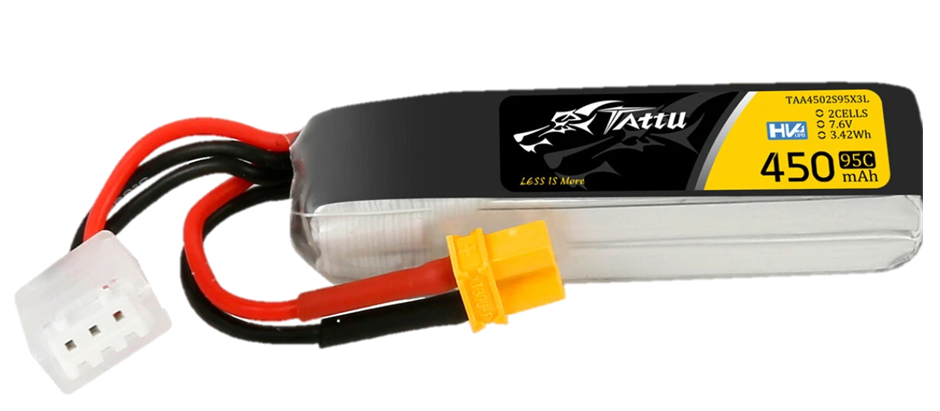
 Design with LiPo batterij 2S 450mAh 7.6V, met XT30 connector in Cirkit Designer
Introduction
The Tattu LiPo Battery 2S 450mAh 7.6V is a lightweight and compact lithium polymer battery designed for high-performance applications. With a 2-cell (2S) configuration, it delivers a nominal voltage of 7.6V and a capacity of 450mAh, making it ideal for powering small drones, RC vehicles, robotics, and other portable electronic devices. The XT30 connector ensures a secure and efficient connection, minimizing power loss and improving reliability.
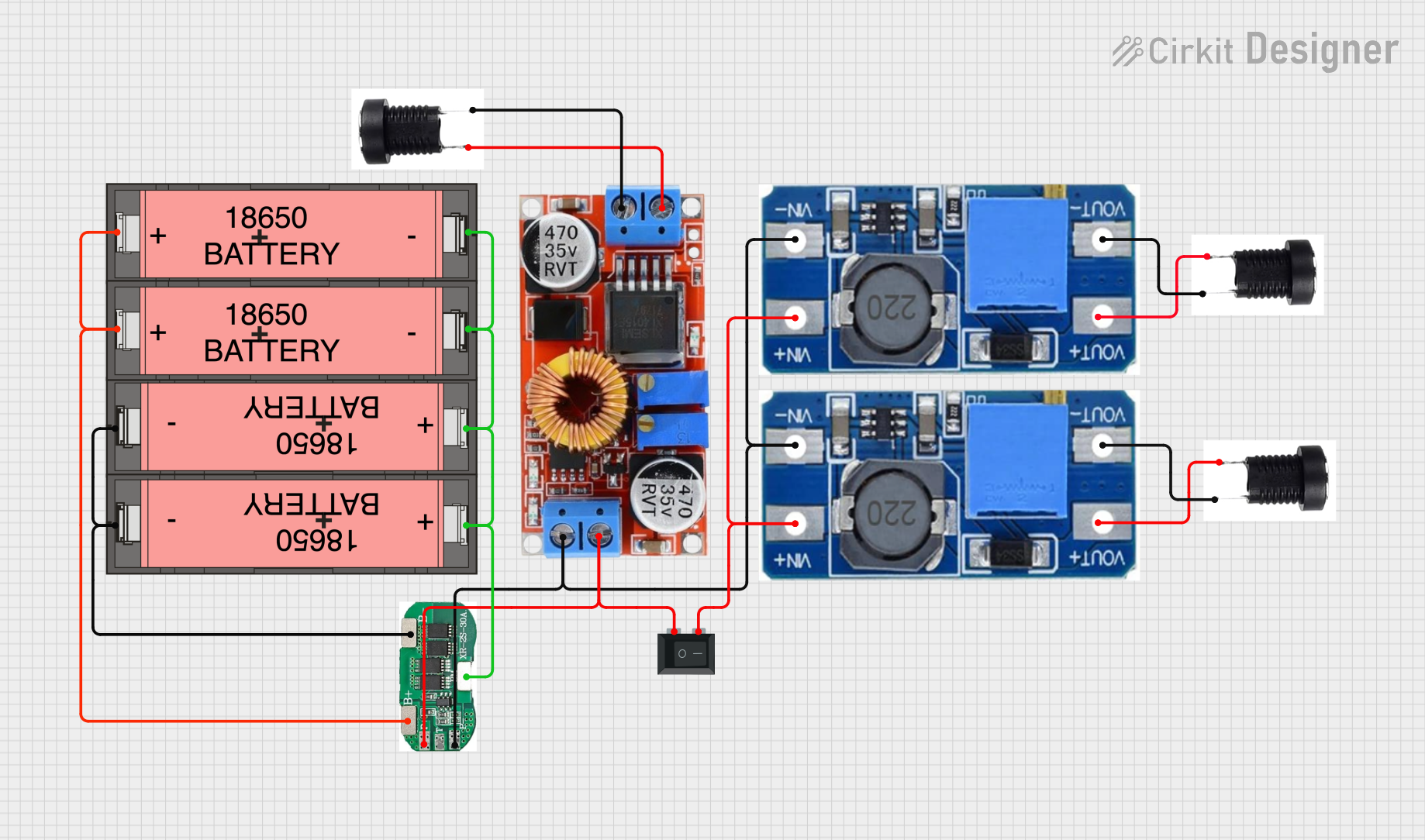
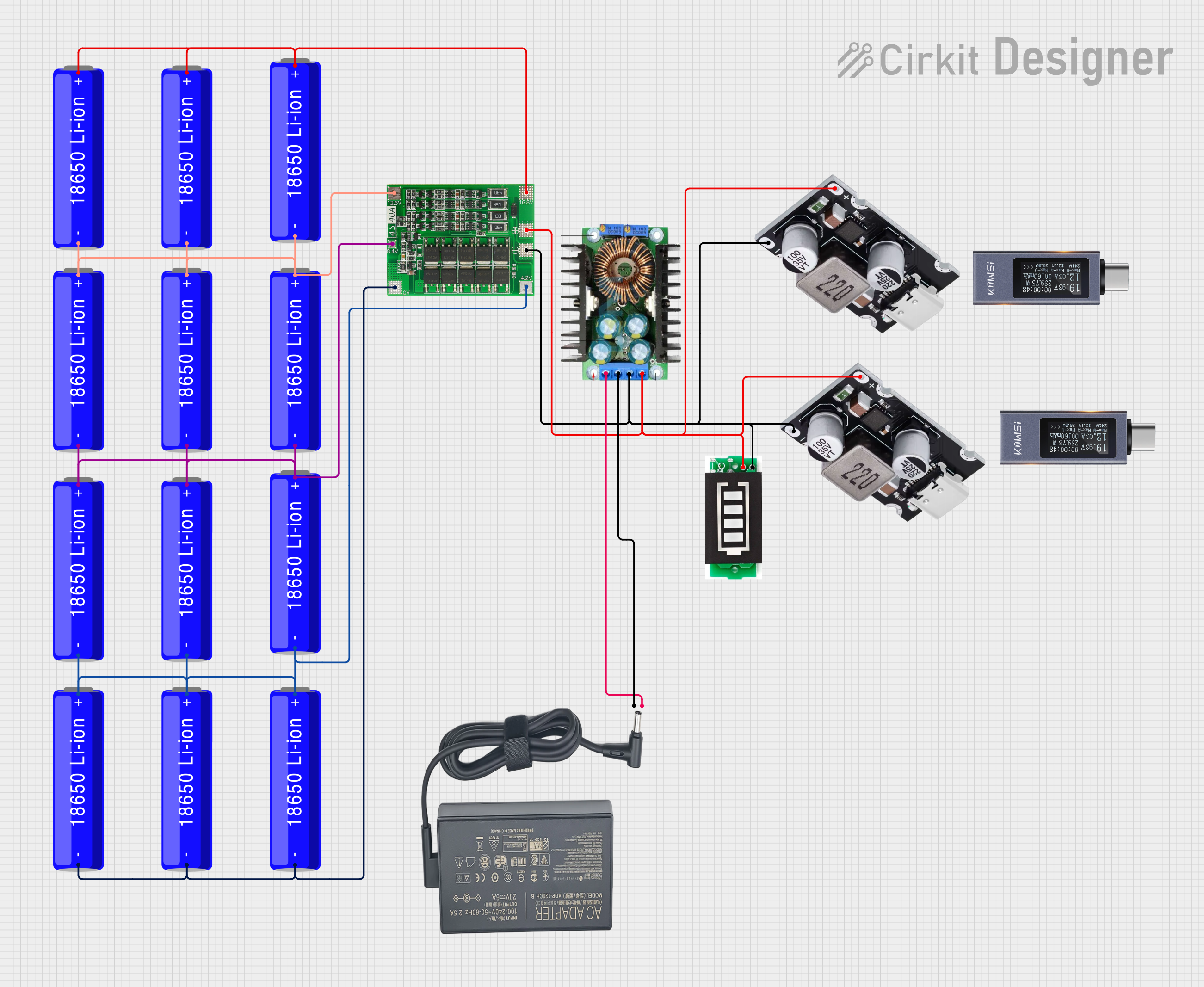
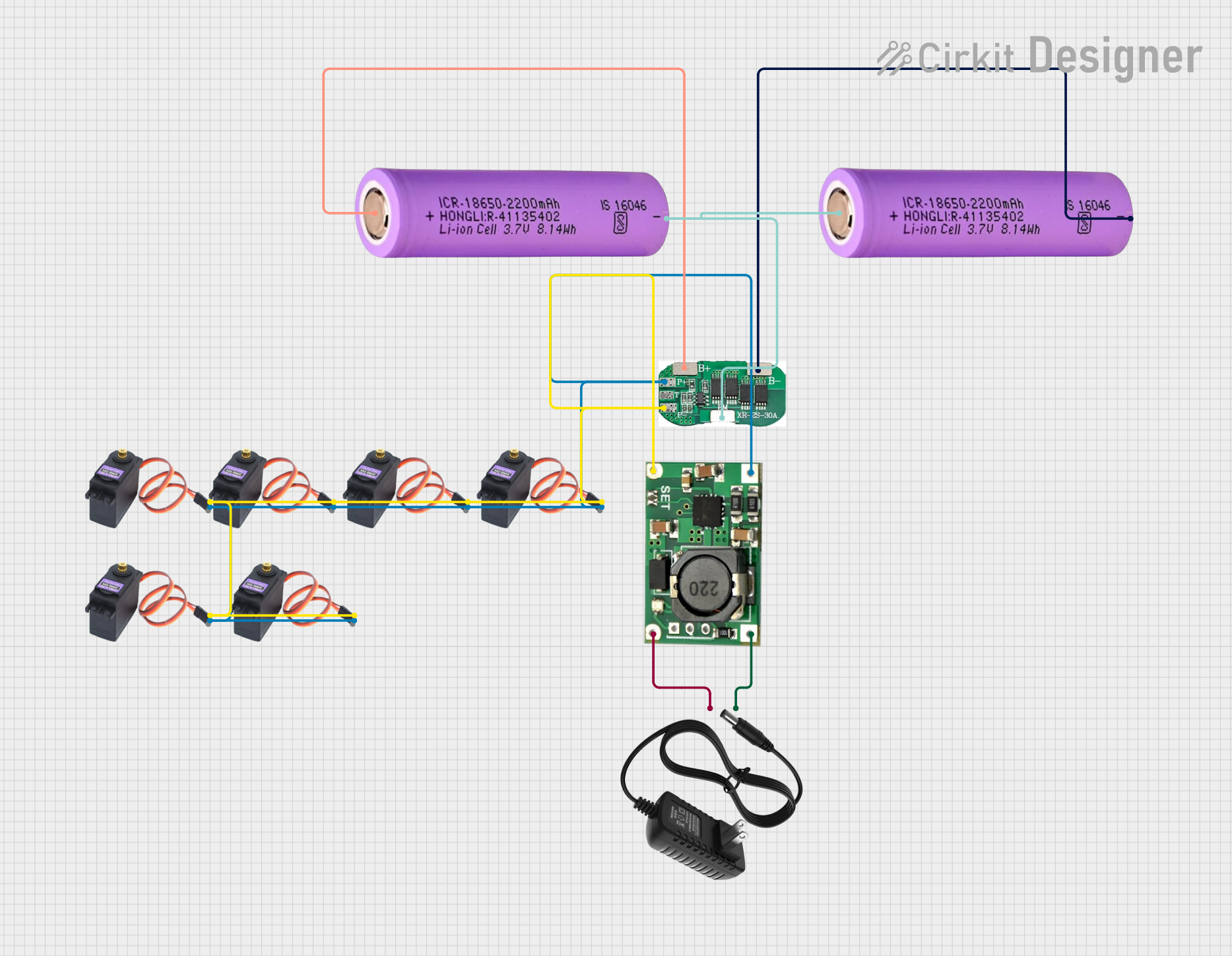
Explore Projects Built with LiPo batterij 2S 450mAh 7.6V, met XT30 connector
 Open Project in Cirkit Designer
 Open Project in Cirkit Designer
 Open Project in Cirkit Designer
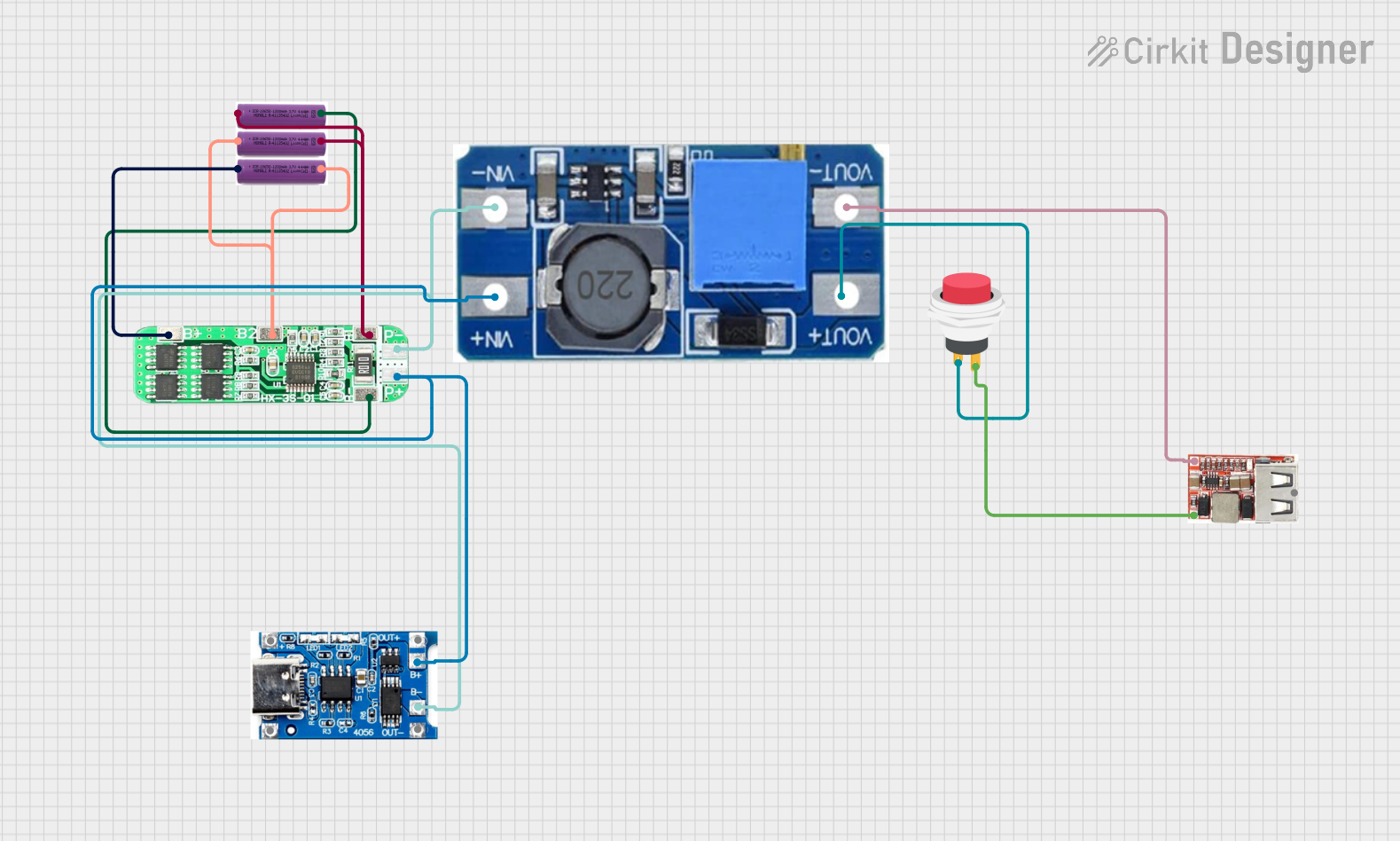 Open Project in Cirkit Designer
Explore Projects Built with LiPo batterij 2S 450mAh 7.6V, met XT30 connector
Open Project in Cirkit DesignerOpen Project in Cirkit DesignerOpen Project in Cirkit DesignerOpen Project in Cirkit DesignerCommon Applications
- Miniature drones and quadcopters
- Remote-controlled (RC) cars, boats, and planes
- Robotics and automation projects
- Portable electronic devices
- DIY electronics and prototyping
Technical Specifications
Below are the key technical details of the Tattu LiPo Battery 2S 450mAh 7.6V:
| Parameter | Specification |
|---|---|
| Nominal Voltage | 7.6V |
| Configuration | 2S (2 cells in series) |
| Capacity | 450mAh |
| Maximum Discharge Rate | 75C |
| Maximum Charge Rate | 1C |
| Connector Type | XT30 |
| Dimensions (L x W x H) | 50mm x 30mm x 12mm |
| Weight | ~40g |
| Chemistry | Lithium Polymer (LiPo) |
| Operating Temperature | -20°C to 60°C |
| Storage Voltage | 3.8V per cell (7.6V total) |
| Full Charge Voltage | 4.2V per cell (8.4V total) |
XT30 Connector Pin Configuration
The XT30 connector is a compact, high-current connector commonly used in LiPo batteries. Below is the pin configuration:
| Pin | Description |
|---|---|
| Positive (+) | Red wire (Power output) |
| Negative (-) | Black wire (Ground) |
Usage Instructions
How to Use the Battery in a Circuit
- Connect the XT30 Connector: Ensure the XT30 connector is securely plugged into the corresponding XT30 port on your device or power distribution board.
- Monitor Voltage Levels: Use a LiPo voltage monitor or a battery management system (BMS) to ensure the voltage of each cell does not drop below 3.0V or exceed 4.2V during operation.
- Charging the Battery:
- Use a LiPo-compatible balance charger to charge the battery.
- Set the charger to 2S mode (7.6V nominal) and a charge current of 0.45A (1C rate).
- Always charge the battery in a fireproof container or LiPo safety bag.
- Discharging:
- Do not exceed the maximum discharge rate of 75C (33.75A).
- Avoid deep discharges below 3.0V per cell (6.0V total) to prevent damage.
Important Considerations and Best Practices
- Storage: Store the battery at a storage voltage of 3.8V per cell (7.6V total) in a cool, dry place.
- Safety: Never puncture, short-circuit, or expose the battery to fire or water.
- Inspection: Regularly inspect the battery for swelling, damage, or loose connections before use.
- Compatibility: Ensure your device is compatible with a 7.6V 2S LiPo battery and XT30 connector.
Example: Using the Battery with an Arduino UNO
To power an Arduino UNO with this battery, you can use a DC-DC step-down converter to regulate the voltage to 5V. Below is an example circuit and code:
Circuit Setup
- Connect the battery's XT30 connector to the input of the DC-DC step-down converter.
- Adjust the converter's output to 5V using a multimeter.
- Connect the converter's output to the Arduino UNO's VIN and GND pins.
Example Code
// Example code to blink an LED on Arduino UNO
// Ensure the battery is properly connected and regulated to 5V

const int ledPin = 13; // Built-in LED pin on Arduino UNO

void setup() {
  pinMode(ledPin, OUTPUT); // Set LED pin as output
}

void loop() {
  digitalWrite(ledPin, HIGH); // Turn LED on
  delay(1000);               // Wait for 1 second
  digitalWrite(ledPin, LOW);  // Turn LED off
  delay(1000);               // Wait for 1 second
}
Troubleshooting and FAQs
Common Issues and Solutions
Battery Not Charging:
- Ensure the charger is set to 2S mode and the charge current is 0.45A.
- Check the XT30 connector for loose or damaged connections.
- Inspect the balance lead for proper connection to the charger.
Battery Swelling:
- Stop using the battery immediately if it swells.
- Swelling indicates overcharging, deep discharging, or aging. Dispose of the battery safely.
Device Not Powering On:
- Verify the battery voltage is above the minimum operating voltage of your device.
- Check the XT30 connector and wiring for secure connections.
Short Battery Life:
- Avoid deep discharges below 3.0V per cell.
- Store the battery at the recommended storage voltage (3.8V per cell).
FAQs
Q: Can I use this battery for a 3S device?
A: No, this is a 2S battery with a nominal voltage of 7.6V. Using it in a 3S device (11.1V) may result in insufficient power or damage to the device.
Q: How do I safely dispose of a damaged LiPo battery?
A: Discharge the battery completely by connecting it to a resistor or light bulb. Once discharged, take it to a local recycling center that accepts LiPo batteries.
Q: Can I charge this battery without a balance charger?
A: No, always use a balance charger to ensure each cell is charged evenly and safely.
Q: What is the maximum current this battery can provide?
A: The maximum current is calculated as Capacity × Discharge Rate = 450mAh × 75C = 33.75A.
By following these guidelines, you can safely and effectively use the Tattu LiPo Battery 2S 450mAh 7.6V in your projects.