The Adafruit LED Sequin is a compact, sewable electronics component that brings a touch of light to wearable projects. It features a single warm white LED that is designed for integration into textiles and wearable accessories. This versatile component can be used to add lighting effects to costumes, clothing, soft toys, and other fabric-based projects.
Explore Projects Built with Adafruit LED Sequin - Warm White
Use Cirkit Designer to design, explore, and prototype these projects online. Some projects support real-time simulation. Click "Open Project" to start designing instantly!
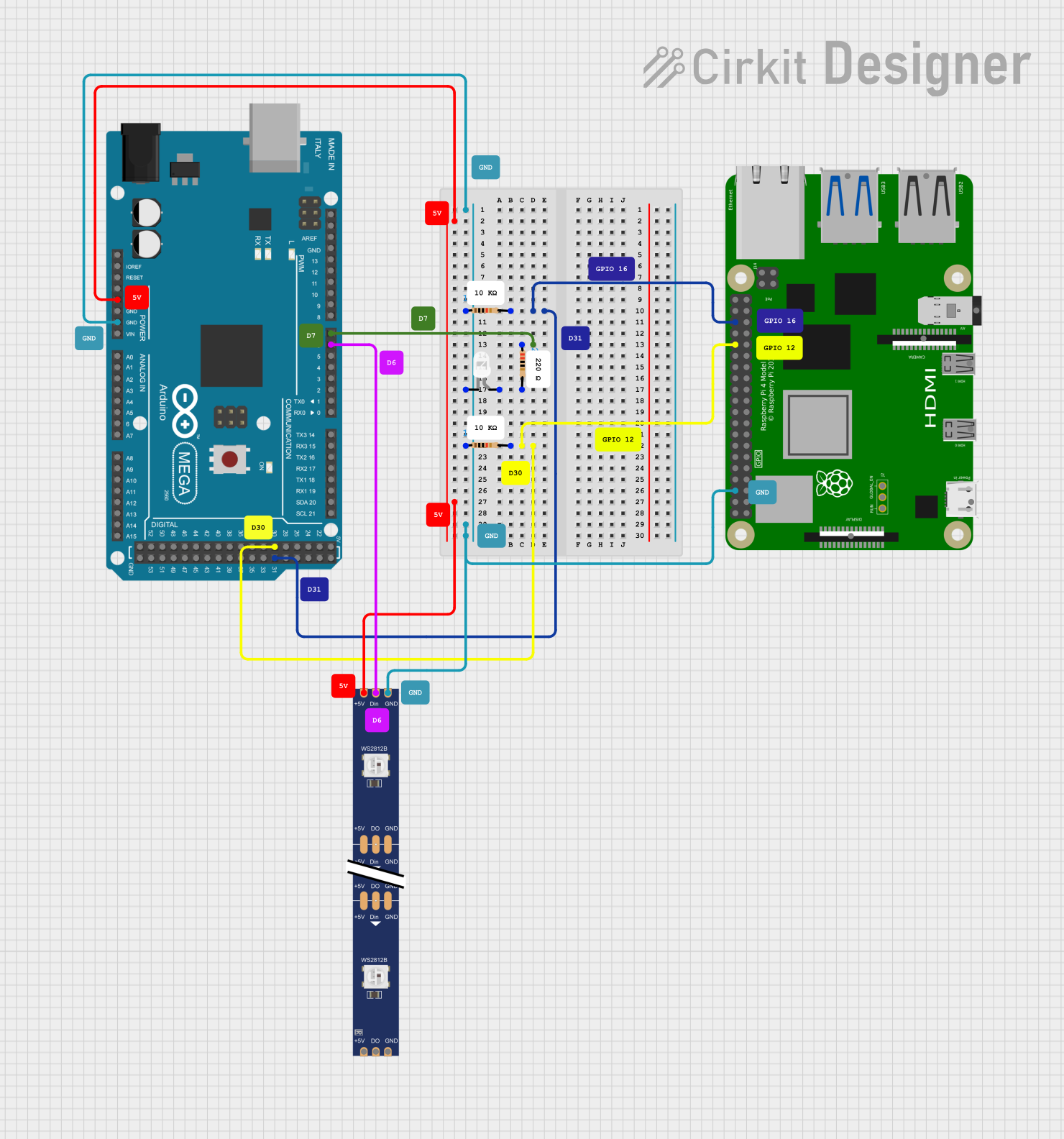
This circuit features an Arduino Mega 2560 microcontroller programmed to control a WS2812 RGB LED strip and a white LED, indicating status or providing user feedback. The Arduino and the LED strip are powered by a common 5V supply, and the circuit includes interfacing with a Raspberry Pi 4B for potential communication or coordination between the two boards.
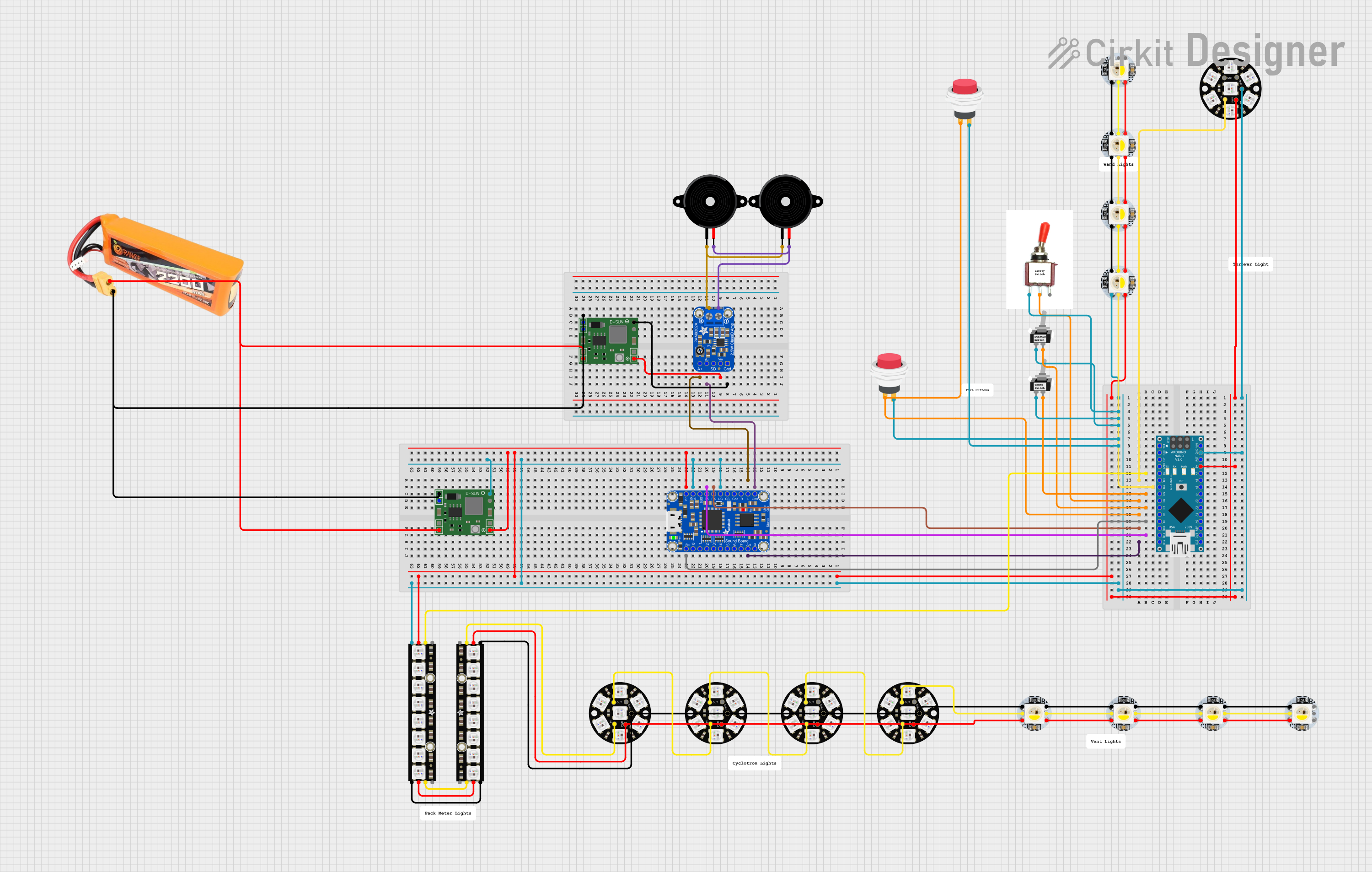
This circuit features an Arduino Nano microcontroller connected to a series of WS2812B LEDs, Adafruit NeoPixel Jewels, and Sticks, forming an addressable LED array. The Arduino controls the LED patterns and sequences, and interfaces with an Adafruit Audio FX Mini Sound Board for audio playback, which is amplified by an Adafruit PAM8302 amplifier connected to piezo speakers. The circuit includes toggle and push switches for user interaction, and uses a lipo battery with MP1584EN power regulators for power management. The embedded code on the Arduino facilitates complex lighting effects and sound playback, responding to switch states and button presses to create an interactive experience.
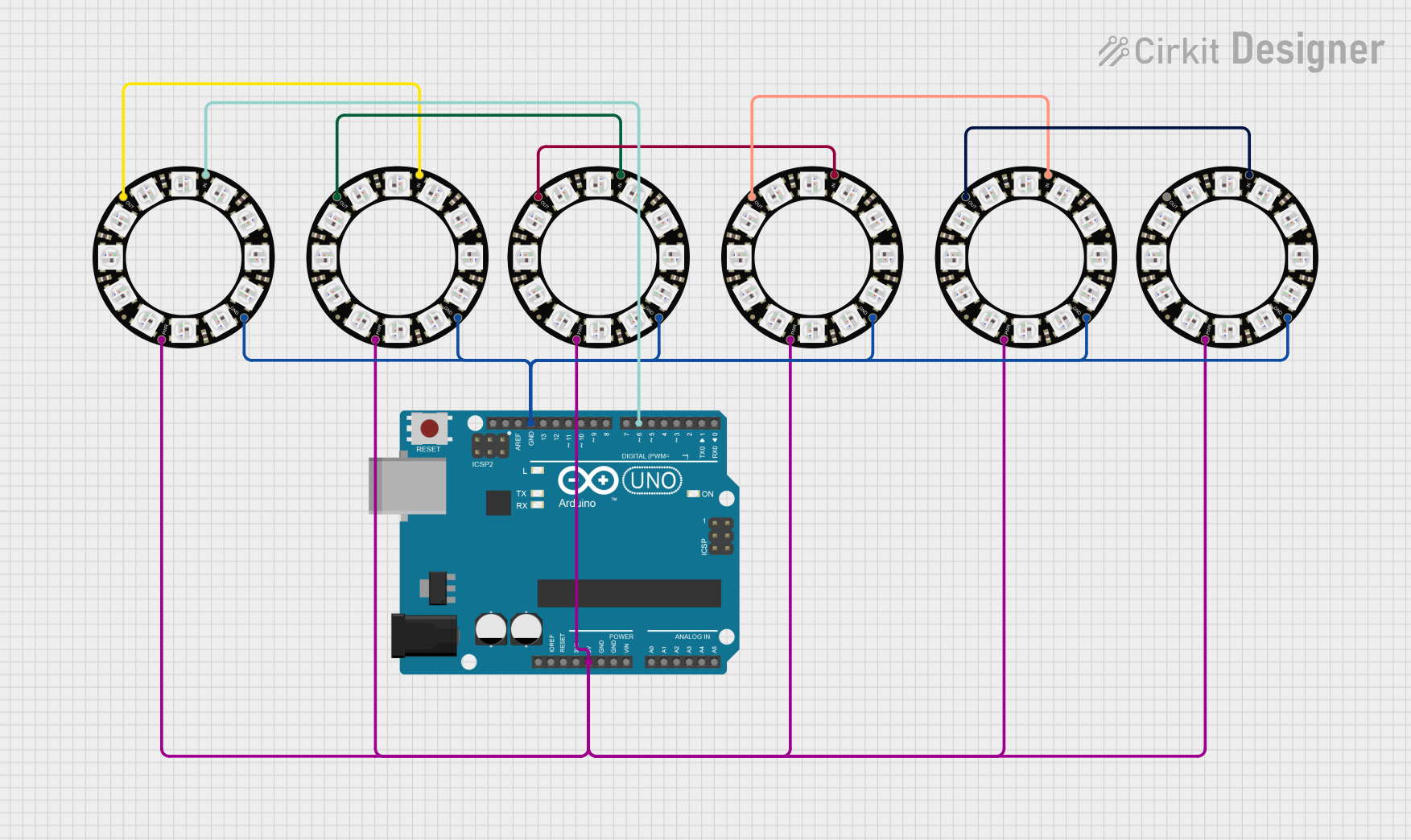
This circuit consists of an Arduino UNO microcontroller connected to six Adafruit 12 NeoPixel Rings, each with 12 LEDs, for a total of 72 LEDs. The Arduino controls the LEDs to display a yellow color with varying brightness, creating a pulsating effect.
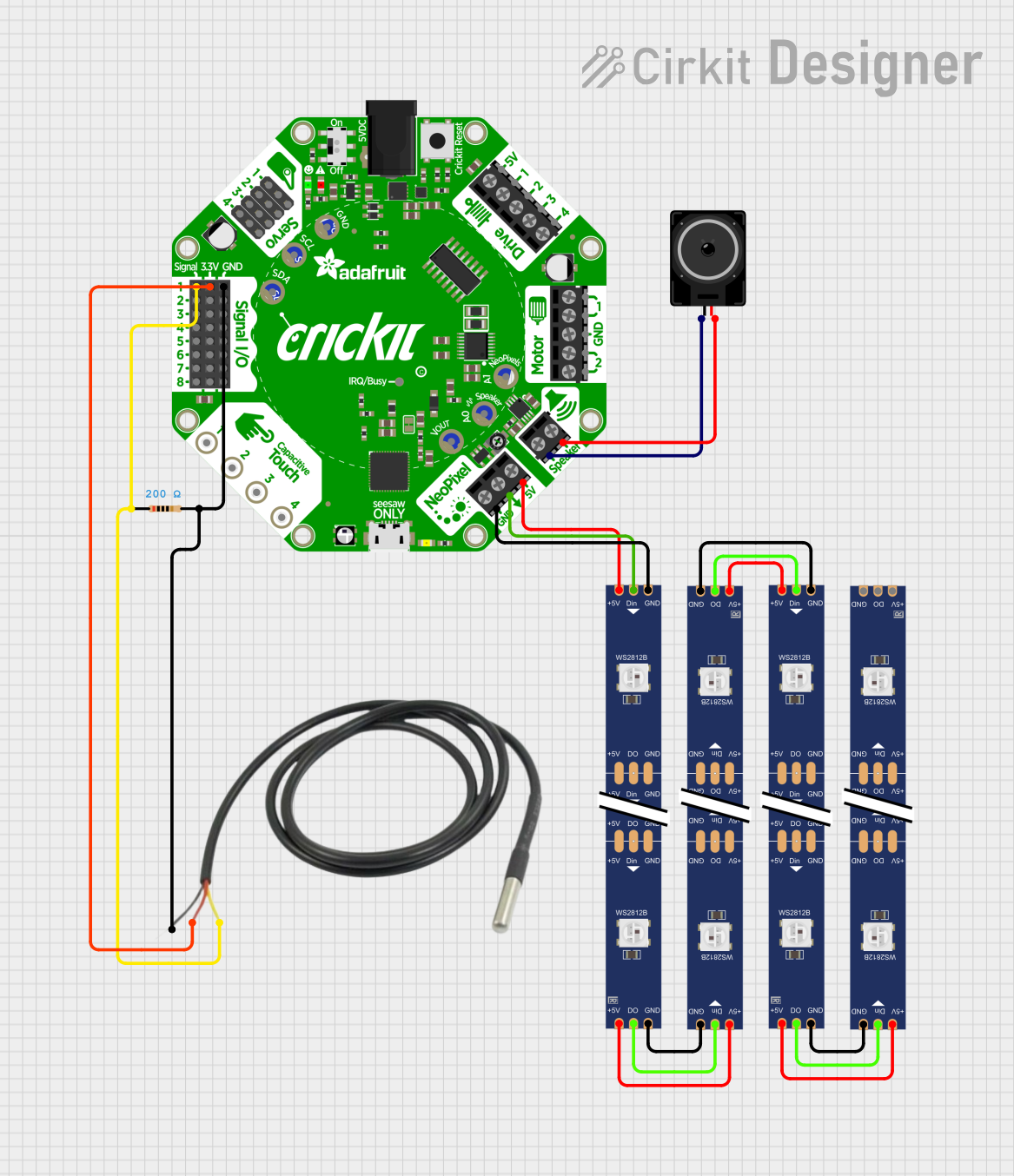
This circuit integrates an Adafruit Circuit Playground Bluefruit with an Adafruit Crickit for Circuit Playground Express to control a temperature sensor, a loudspeaker, and a series of WS2812 RGB LED strips. The Crickit board reads temperature data, drives the loudspeaker, and controls the LED strips to create visual effects based on the sensor input.
Decorative lighting for accessories (e.g., hats, bags, scarves)
Educational projects to teach sewing and electronics
Prototyping for fashion technology
Technical Specifications
Key Technical Details
LED Color: Warm White
Operating Voltage: 3V to 6V
Current Draw: 5mA (typical at 3.3V)
Brightness: Varies with voltage and current
Dimensions: 12.5mm x 7.4mm x 3.2mm
Weight: 0.6 grams
Pin Configuration and Descriptions
Pin Name
Description
+
Positive power supply (Anode)
-
Ground (Cathode)
Usage Instructions
How to Use the Component in a Circuit
Power Supply: Connect the '+' pin to a power supply between 3V and 6V. Ensure that the power does not exceed the maximum voltage rating to prevent damage to the LED.
Ground Connection: Connect the '-' pin to the ground of your power supply or microcontroller board.
Current Limiting: It is recommended to use a current-limiting resistor to prevent excessive current through the LED. A resistor value of 150Ω to 220Ω is suitable for most applications.
Sewing: Use conductive thread to sew the LED Sequin onto fabric. Ensure that the conductive thread does not create shorts between the '+' and '-' pins.
Important Considerations and Best Practices
Avoid pulling or stressing the connections, as this can damage the LED Sequin.
Test the LED Sequin with a multimeter before sewing to ensure it is functioning correctly.
When sewing multiple LED Sequins in parallel, ensure each has its own current-limiting resistor.
Keep the polarity consistent throughout your project to avoid reverse biasing the LEDs.
Example Code for Arduino UNO
// Define the pin connected to the LED Sequin
const int ledPin = 9; // PWM pin for brightness control

void setup() {
  pinMode(ledPin, OUTPUT); // Set the LED pin as an output
}

void loop() {
  analogWrite(ledPin, 127); // Set the brightness to 50%
  delay(1000);              // Wait for 1 second
  analogWrite(ledPin, 255); // Set the brightness to 100%
  delay(1000);              // Wait for 1 second
}
Troubleshooting and FAQs
Common Issues
LED Not Lighting Up: Check the polarity of the connections. Ensure that the '+' pin is connected to the positive power supply and the '-' pin to the ground.
Dim LED: Ensure that the power supply is within the recommended voltage range. If using a resistor, check that its value is not too high.
Flickering LED: Check for loose connections or intermittent contact with the conductive thread.
Solutions and Tips for Troubleshooting
Use a multimeter to verify the continuity of the conductive thread and the presence of voltage at the LED Sequin.
If the LED is too dim, try lowering the resistance slightly, but do not go below the recommended current-limiting resistor value.
For flickering issues, reinforce the stitching or soldering points to ensure a stable connection.
FAQs
Q: Can I wash garments with LED Sequins attached?
A: Yes, but hand washing is recommended. Ensure the power supply is removed, and the garment is completely dry before reapplying power.
Q: How many LED Sequins can I connect to a single power source?
A: This depends on the power source's capacity. Calculate the total current draw and ensure it does not exceed the power source's maximum current rating.
Q: Can I control the brightness of the LED Sequin?
A: Yes, you can use a PWM-capable pin on a microcontroller like the Arduino UNO to control the brightness with analogWrite() as shown in the example code.
Remember to always follow safety guidelines when working with electronics and to consult an expert if you are unsure about any aspect of your project.


 Open Project in Cirkit Designer