
How to Use switch_off: Examples, Pinouts, and Specs

 Design with switch_off in Cirkit Designer
Introduction
A switch is an essential electronic component used to control the flow of current in a circuit. The "off" state of a switch interrupts the current, effectively disconnecting the circuit or device. Switches are widely used in various applications, including household appliances, industrial machinery, and electronic devices, to provide manual or automated control over electrical circuits.
Common applications of switches include:
- Turning devices on and off (e.g., lights, fans, and motors)
- Controlling power to circuits in electronic projects
- Acting as input devices in microcontroller-based systems
Explore Projects Built with switch_off
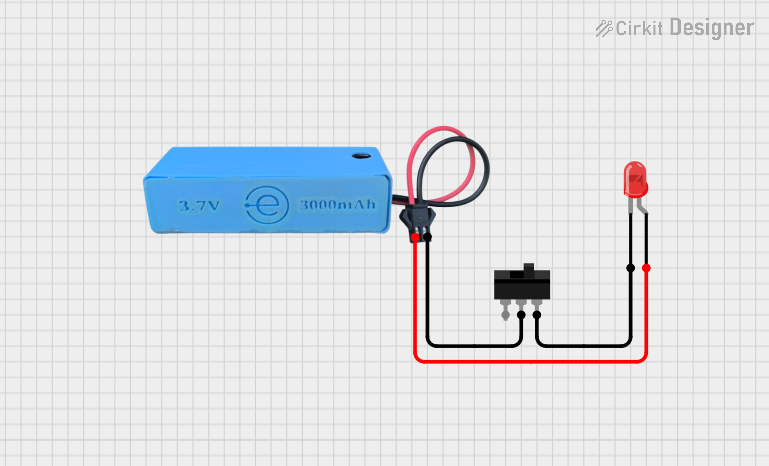 Open Project in Cirkit Designer
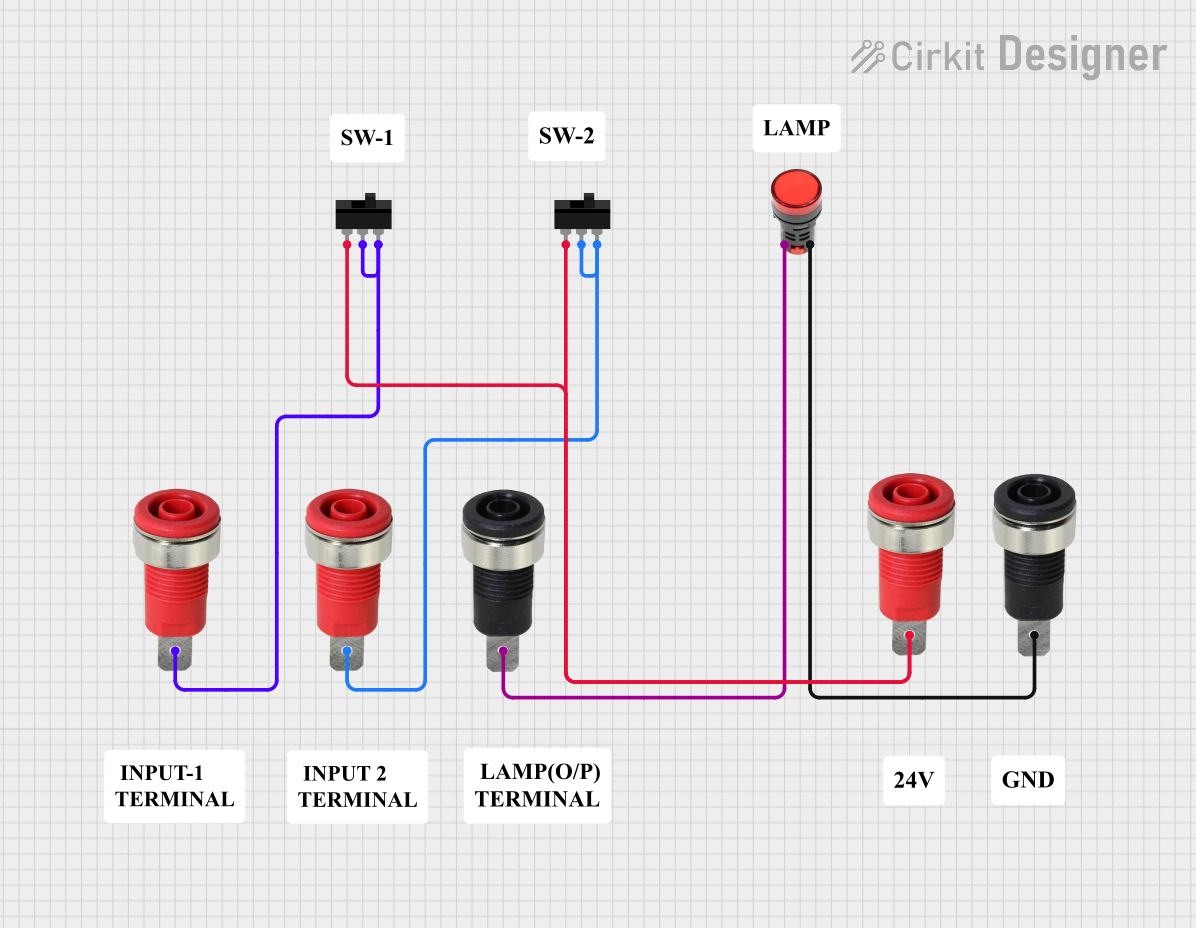 Open Project in Cirkit Designer
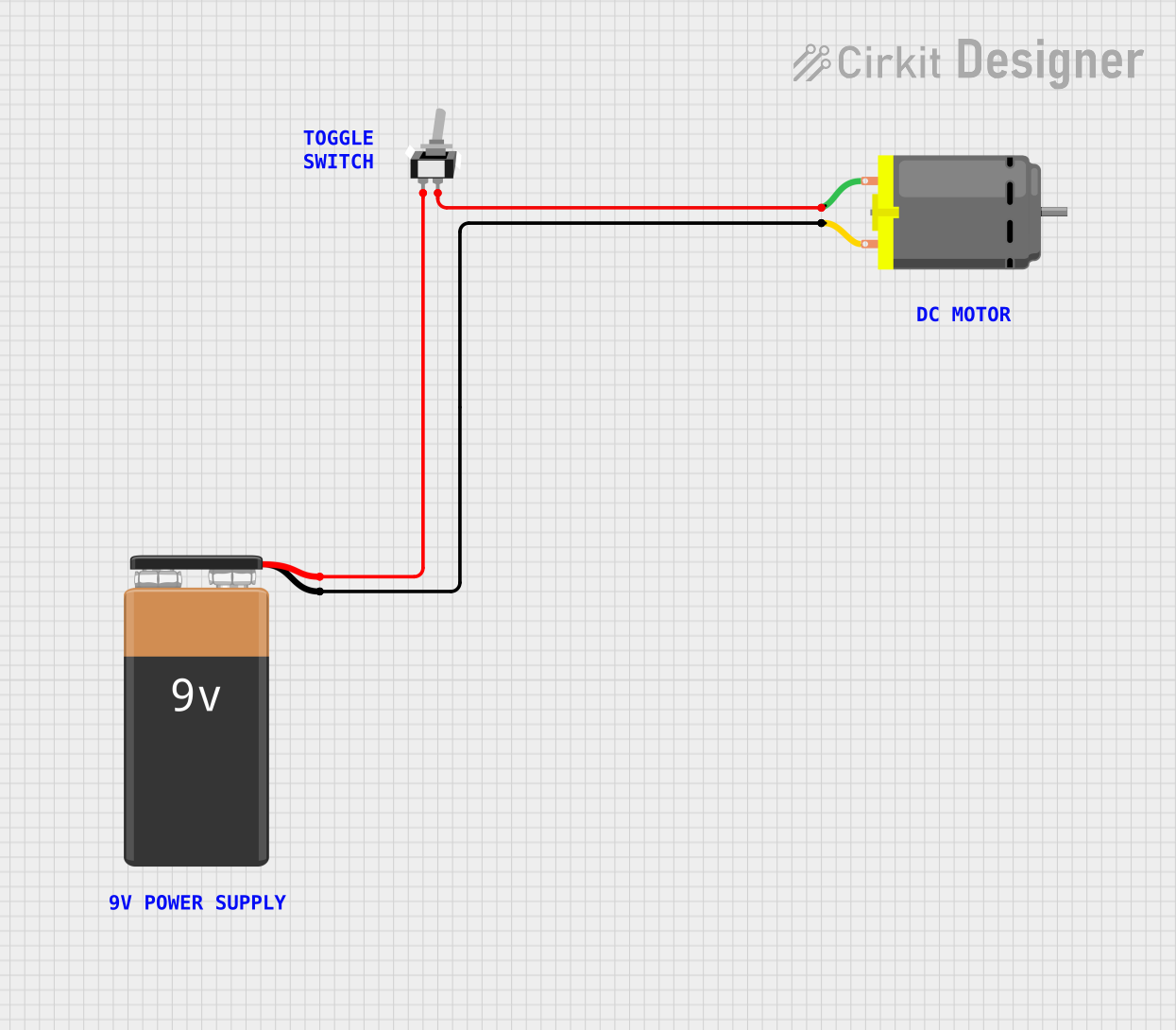 Open Project in Cirkit Designer
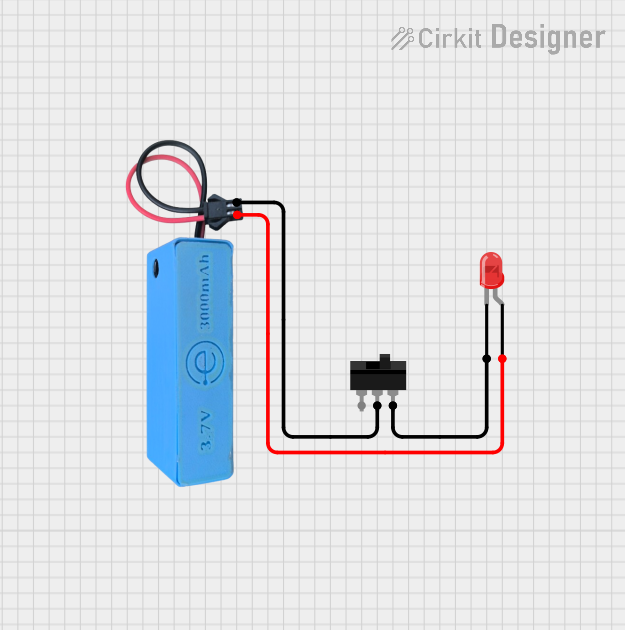 Open Project in Cirkit Designer
Explore Projects Built with switch_off
Open Project in Cirkit DesignerOpen Project in Cirkit DesignerOpen Project in Cirkit DesignerOpen Project in Cirkit DesignerTechnical Specifications
Switches come in various types and configurations, but the following are general specifications for a basic single-pole single-throw (SPST) switch in its "off" state:
- Rated Voltage: 3V to 250V (varies by model)
- Rated Current: 0.1A to 15A (varies by model)
- Contact Resistance: Typically < 50 mΩ
- Insulation Resistance: > 100 MΩ at 500V DC
- Mechanical Durability: 10,000 to 1,000,000 cycles
- Operating Temperature: -20°C to 85°C (varies by model)
Pin Configuration and Descriptions
The pin configuration of a basic SPST switch is straightforward, with two terminals:
| Pin Name | Description |
|---|---|
| Terminal 1 (Input) | Connects to the power source or signal input. |
| Terminal 2 (Output) | Connects to the load or circuit to be controlled. |
For other types of switches (e.g., DPDT, SPDT), the pin configuration may vary, but the principle remains the same: the switch either connects or disconnects the circuit.
Usage Instructions
How to Use the Switch in a Circuit
- Identify the Terminals: Locate the input and output terminals of the switch. For an SPST switch, these are typically labeled or easily identifiable.
- Connect the Circuit:
- Connect the input terminal to the power source or signal line.
- Connect the output terminal to the load or circuit you want to control.
- Test the Switch:
- Toggle the switch to the "on" position to allow current to flow.
- Toggle the switch to the "off" position to interrupt the current.
Important Considerations and Best Practices
- Voltage and Current Ratings: Ensure the switch's voltage and current ratings match or exceed the requirements of your circuit to avoid damage or failure.
- Debouncing: When using a switch with a microcontroller, consider implementing software or hardware debouncing to eliminate noise caused by rapid on/off transitions.
- Safety: Always disconnect power before wiring or modifying the switch in a circuit to prevent electric shock or damage.
Example: Using a Switch with an Arduino UNO
Below is an example of how to use a switch to control an LED with an Arduino UNO:
// Define pin numbers
const int switchPin = 2;  // Pin connected to the switch
const int ledPin = 13;    // Pin connected to the LED

void setup() {
  pinMode(switchPin, INPUT_PULLUP); // Configure switch pin as input with pull-up resistor
  pinMode(ledPin, OUTPUT);          // Configure LED pin as output
}

void loop() {
  int switchState = digitalRead(switchPin); // Read the state of the switch

  if (switchState == LOW) {
    // If the switch is pressed (LOW due to pull-up), turn on the LED
    digitalWrite(ledPin, HIGH);
  } else {
    // If the switch is not pressed, turn off the LED
    digitalWrite(ledPin, LOW);
  }
}
Note: The INPUT_PULLUP mode is used to simplify the circuit by enabling the internal pull-up resistor of the Arduino, eliminating the need for an external resistor.
Troubleshooting and FAQs
Common Issues
Switch Does Not Work:
- Cause: Incorrect wiring or loose connections.
- Solution: Double-check the wiring and ensure all connections are secure.
Switch Sparks When Toggled:
- Cause: Voltage or current exceeds the switch's rating.
- Solution: Use a switch with appropriate voltage and current ratings.
Microcontroller Reads Incorrect State:
- Cause: Switch bounce or lack of pull-up/pull-down resistor.
- Solution: Implement debouncing in software or hardware and use pull-up/pull-down resistors.
FAQs
Q: Can I use a switch to control AC devices?
A: Yes, but ensure the switch is rated for the AC voltage and current of the device. For high-power applications, use a relay or contactor controlled by the switch.
Q: What is the difference between SPST and SPDT switches?
A: An SPST (Single Pole Single Throw) switch has two terminals and acts as a simple on/off switch. An SPDT (Single Pole Double Throw) switch has three terminals and can toggle between two outputs.
Q: How do I debounce a switch in software?
A: Use a delay or a state-checking algorithm in your code to filter out rapid on/off transitions caused by mechanical bouncing.