
How to Use S7-PM1207: Examples, Pinouts, and Specs
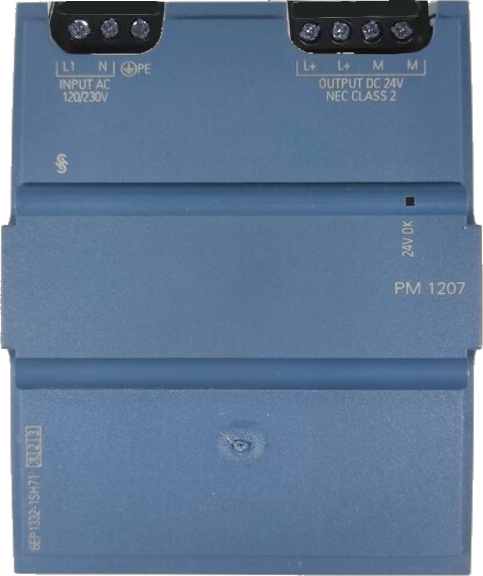
 Design with S7-PM1207 in Cirkit Designer
Introduction
The S7-PM1207 is a power supply module manufactured by Siemens, specifically designed for use with the Siemens S7-1200 Programmable Logic Controller (PLC) systems. This module provides a stable and reliable DC output voltage, ensuring the proper operation of connected devices and components in industrial automation applications. Its compact design and robust performance make it an essential component for powering automation systems in various industries.
Explore Projects Built with S7-PM1207
 Open Project in Cirkit Designer
 Open Project in Cirkit Designer
 Open Project in Cirkit Designer
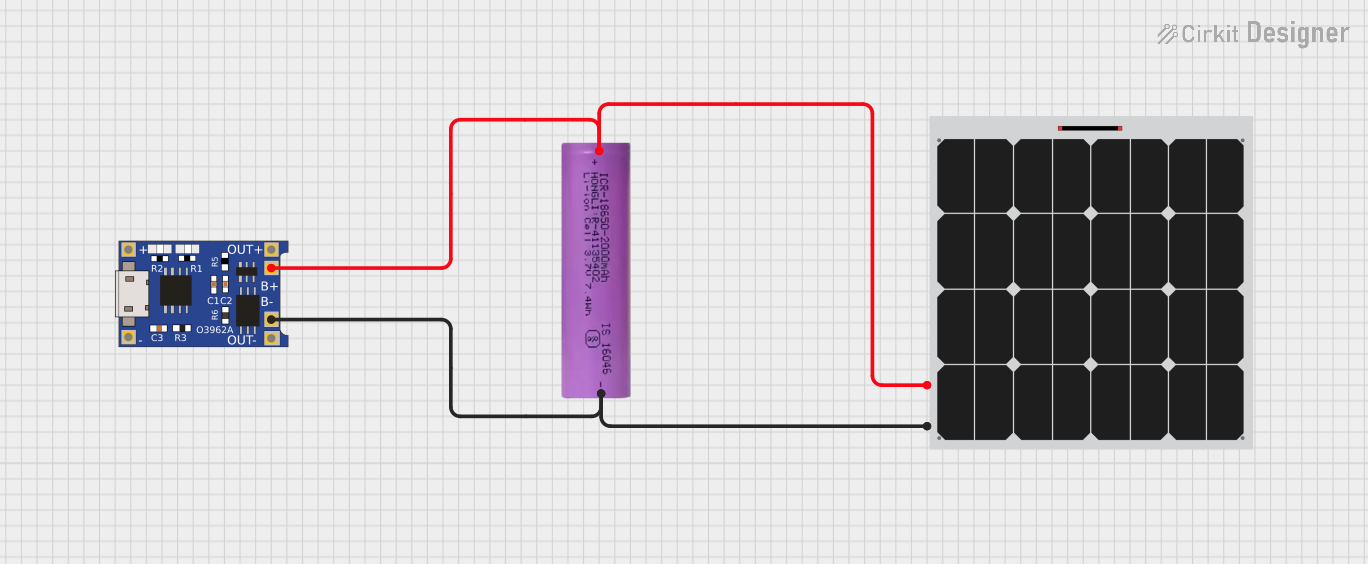 Open Project in Cirkit Designer
Explore Projects Built with S7-PM1207
Open Project in Cirkit DesignerOpen Project in Cirkit DesignerOpen Project in Cirkit DesignerOpen Project in Cirkit DesignerCommon Applications and Use Cases
- Powering Siemens S7-1200 PLC systems in industrial automation setups.
- Providing stable DC power for sensors, actuators, and other peripheral devices.
- Ensuring reliable operation in manufacturing, process control, and building automation systems.
- Suitable for environments requiring high reliability and minimal downtime.
Technical Specifications
Key Technical Details
| Parameter | Value |
|---|---|
| Input Voltage Range | 85–264 VAC (47–63 Hz) |
| Output Voltage | 24 VDC |
| Output Current | 2.5 A |
| Power Output | 60 W |
| Efficiency | > 90% |
| Operating Temperature | -20°C to +70°C |
| Storage Temperature | -40°C to +85°C |
| Dimensions (W x H x D) | 70 mm x 100 mm x 75 mm |
| Weight | Approximately 0.4 kg |
| Certifications | CE, UL, cULus, and RoHS |
Pin Configuration and Descriptions
The S7-PM1207 module features screw terminals for input and output connections. Below is the pin configuration:
Input Terminals
| Terminal Label | Description |
|---|---|
| L | Live AC input (85–264 VAC) |
| N | Neutral AC input |
| PE | Protective Earth (Ground) |
Output Terminals
| Terminal Label | Description |
|---|---|
| +24V | Positive DC output (24 VDC) |
| 0V | Negative DC output (Ground) |
Usage Instructions
How to Use the S7-PM1207 in a Circuit
- Mounting the Module: Secure the S7-PM1207 module onto a DIN rail or a flat surface using the provided mounting brackets. Ensure proper ventilation around the module to prevent overheating.
- Connecting the Input:
- Connect the AC power source to the input terminals (
L,N, andPE). - Ensure the input voltage is within the specified range (85–264 VAC).
- Connect the AC power source to the input terminals (
- Connecting the Output:
- Connect the
+24Vterminal to the positive input of the load (e.g., PLC, sensors). - Connect the
0Vterminal to the ground of the load.
- Connect the
- Powering On:
- After verifying all connections, switch on the AC power supply.
- The module will provide a stable 24 VDC output to the connected devices.
Important Considerations and Best Practices
- Overload Protection: The S7-PM1207 includes built-in overload and short-circuit protection. Ensure the total load does not exceed the maximum output current of 2.5 A.
- Ventilation: Maintain adequate airflow around the module to prevent overheating. Avoid installing the module in enclosed spaces without proper ventilation.
- Grounding: Properly connect the
PEterminal to the protective earth to ensure safety and reduce electrical noise. - Wiring: Use appropriately rated wires for both input and output connections to handle the current and voltage safely.
Example: Connecting to an S7-1200 PLC
The S7-PM1207 is commonly used to power Siemens S7-1200 PLC systems. Below is an example of how to connect the power supply to the PLC:
- Connect the
+24Vterminal of the S7-PM1207 to theL+terminal of the S7-1200 PLC. - Connect the
0Vterminal of the S7-PM1207 to theMterminal of the S7-1200 PLC. - Ensure the AC input is properly connected to the S7-PM1207 as described earlier.
Troubleshooting and FAQs
Common Issues and Solutions
| Issue | Possible Cause | Solution |
|---|---|---|
| No output voltage | Input power not connected or faulty | Verify AC input connections and voltage. |
| Output voltage is unstable | Overload or short circuit on the output | Reduce the load or check for short circuits. |
| Module overheating | Insufficient ventilation or high ambient temperature | Improve airflow or reduce ambient temperature. |
| PLC not powering on | Incorrect wiring or insufficient output current | Verify connections and ensure load is within limits. |
FAQs
Q1: Can the S7-PM1207 power multiple devices simultaneously?
A1: Yes, as long as the total current draw does not exceed 2.5 A. Use proper wiring to distribute the power.
Q2: Is the S7-PM1207 suitable for outdoor use?
A2: The module is not designed for direct outdoor use. If outdoor installation is required, ensure it is housed in a weatherproof enclosure.
Q3: What happens if the input voltage exceeds 264 VAC?
A3: The module may shut down or get damaged. Always ensure the input voltage is within the specified range.
Q4: How do I reset the module after a short circuit?
A4: Disconnect the load, resolve the short circuit, and then reconnect the load. The module will automatically recover.
Q5: Can I use the S7-PM1207 with non-Siemens devices?
A5: Yes, the S7-PM1207 can power any device requiring 24 VDC, provided the current draw is within the 2.5 A limit.