
How to Use STM32 Discovery kit LoRa, Sigfox, low-power wireless : Examples, Pinouts, and Specs
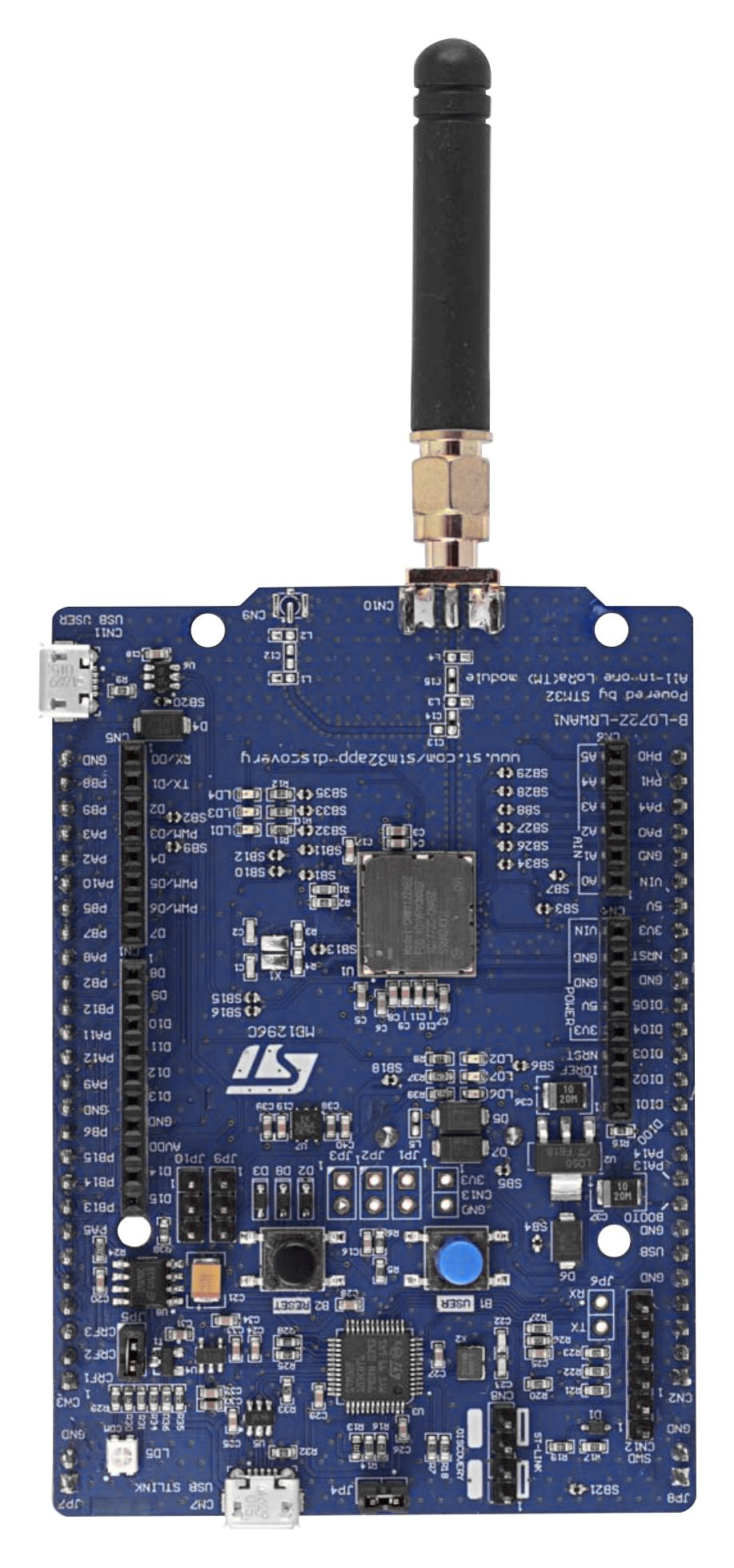
 Design with STM32 Discovery kit LoRa, Sigfox, low-power wireless in Cirkit Designer
Introduction
The STM32 Discovery Kit LoRa, Sigfox, Low-Power Wireless (manufacturer part ID: B-L072Z-LRWAN1) is a development board designed by STMicroelectronics. It is built around the STM32L072CZ microcontroller, which is part of the ultra-low-power STM32L0 series. This kit integrates LoRa® and Sigfox® communication capabilities, making it ideal for IoT applications requiring long-range, low-power wireless connectivity.
Explore Projects Built with STM32 Discovery kit LoRa, Sigfox, low-power wireless
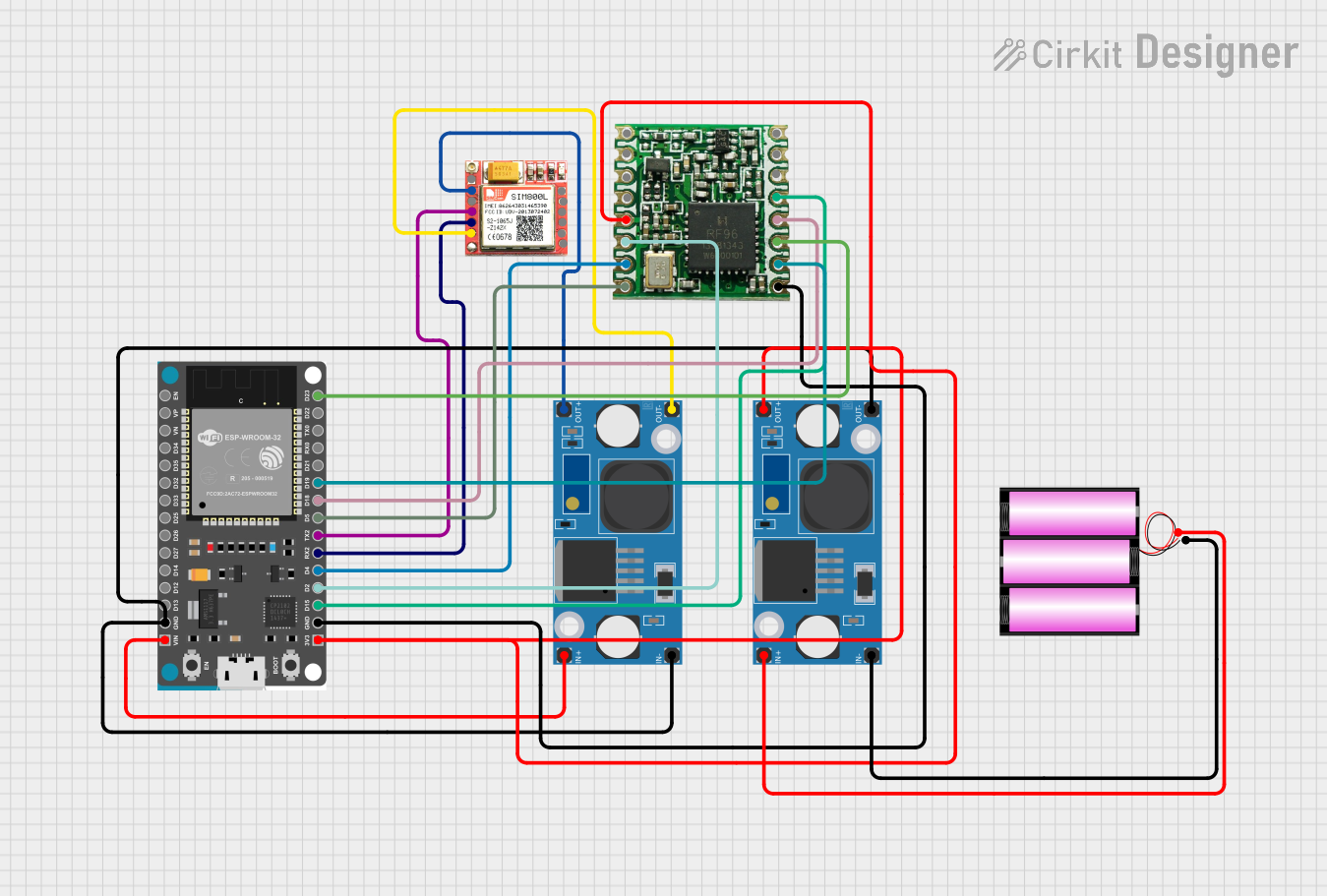 Open Project in Cirkit Designer
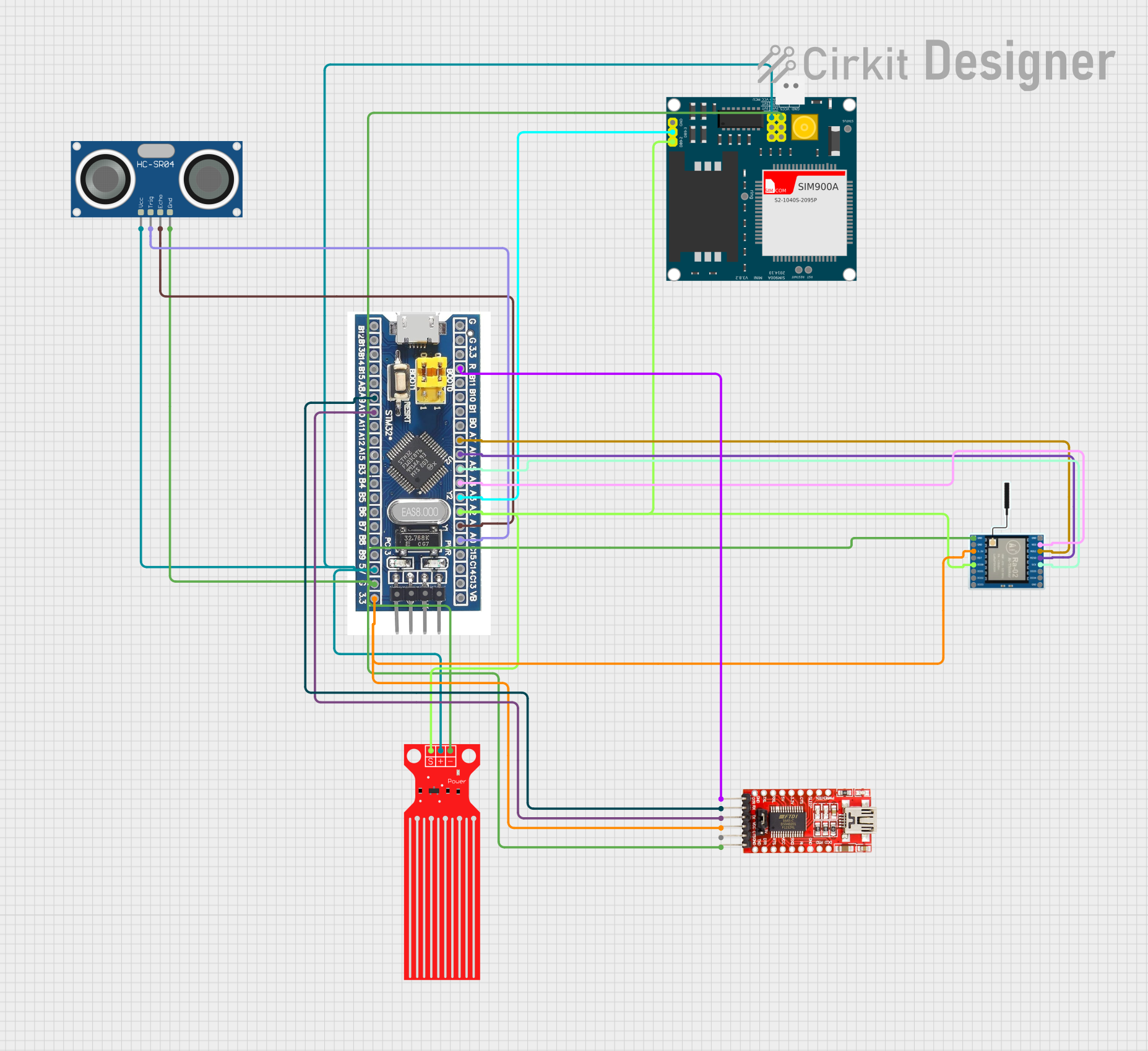 Open Project in Cirkit Designer
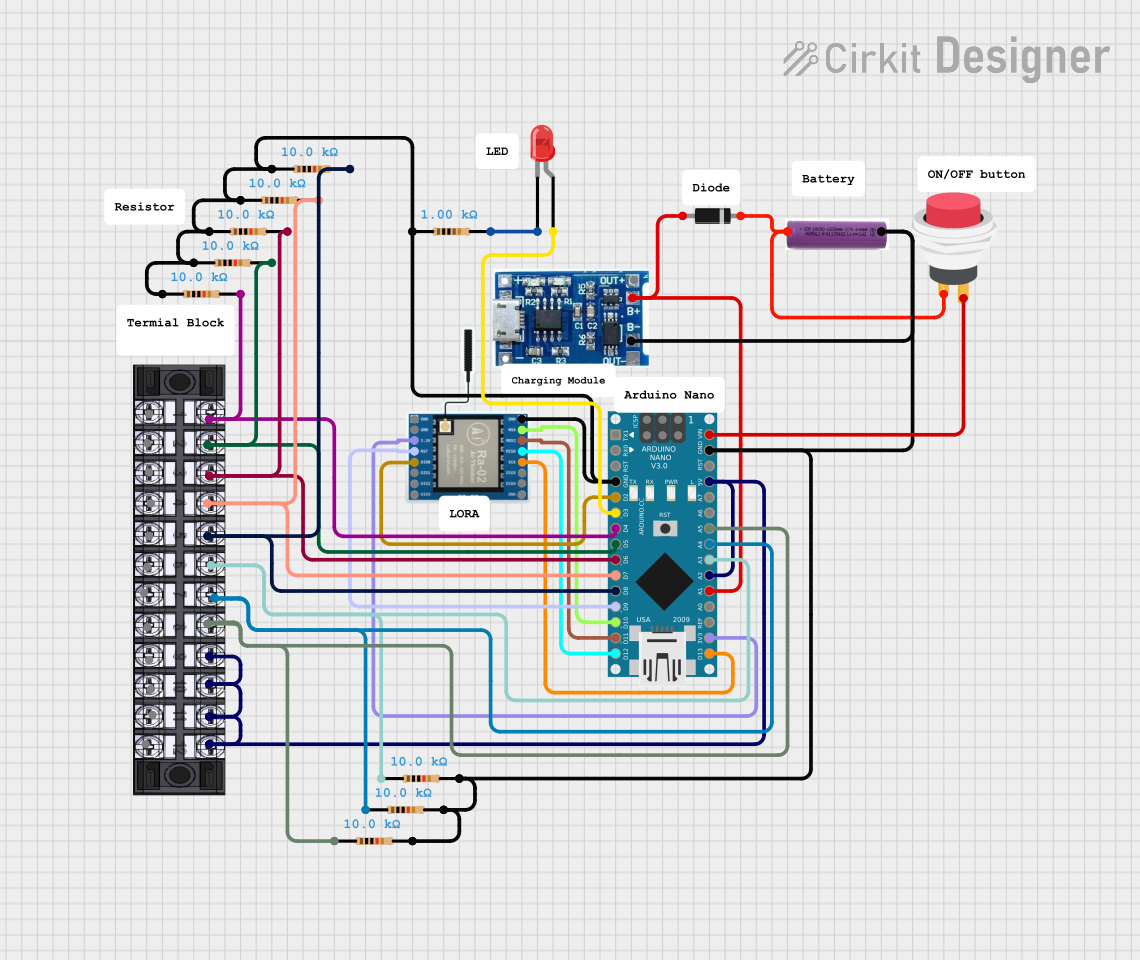 Open Project in Cirkit Designer
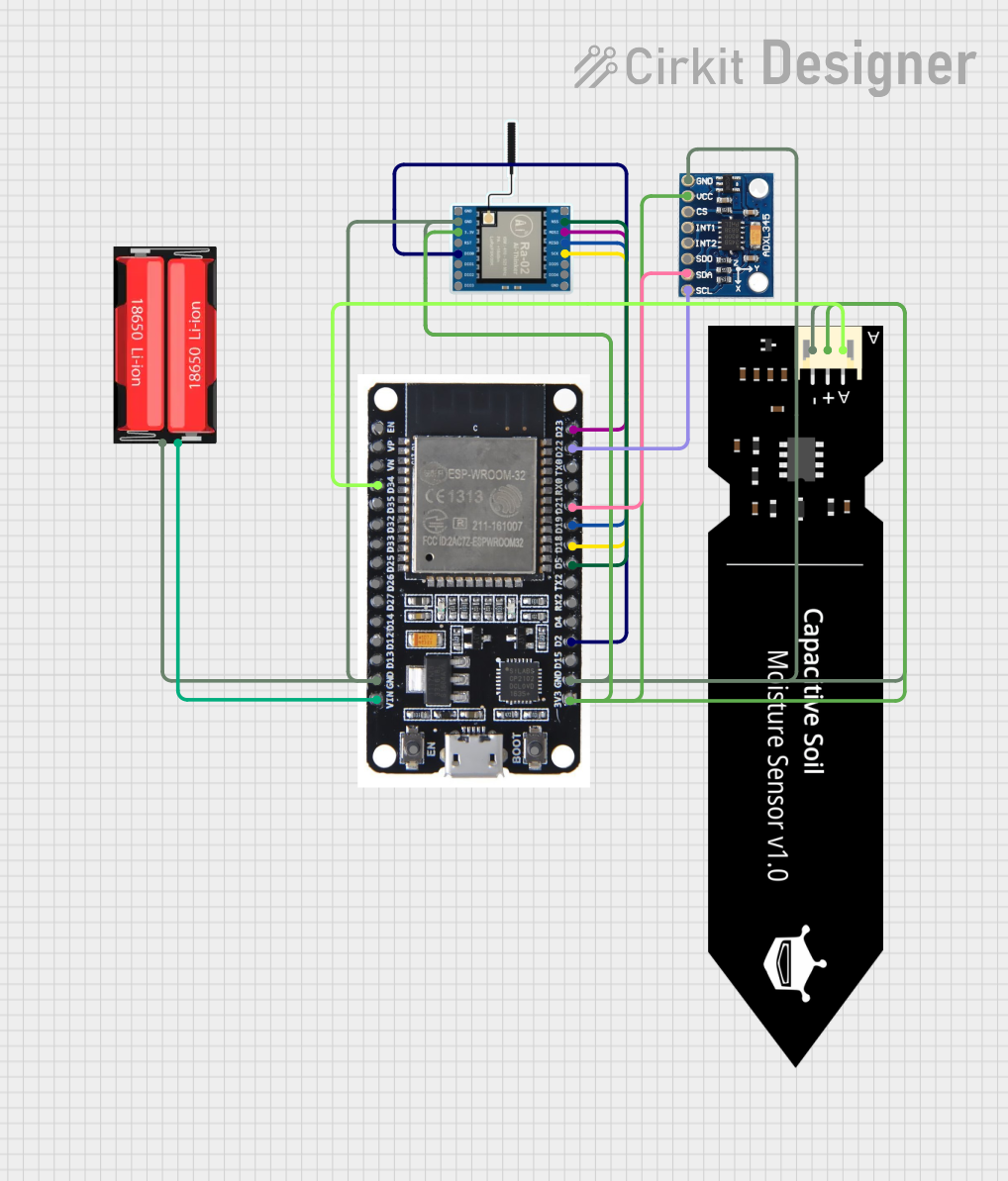 Open Project in Cirkit Designer
Explore Projects Built with STM32 Discovery kit LoRa, Sigfox, low-power wireless
Open Project in Cirkit DesignerOpen Project in Cirkit DesignerOpen Project in Cirkit DesignerOpen Project in Cirkit DesignerCommon Applications and Use Cases
- Internet of Things (IoT) devices
- Smart metering and smart cities
- Industrial monitoring and control
- Asset tracking and geolocation
- Environmental monitoring
- Home automation
Technical Specifications
Key Technical Details
| Feature | Description |
|---|---|
| Microcontroller | STM32L072CZ (ARM® Cortex®-M0+ at 32 MHz, 192 KB Flash, 20 KB RAM) |
| Wireless Connectivity | LoRa® and Sigfox® (via Semtech SX1276 transceiver) |
| Operating Voltage | 3.3V (powered via USB or external source) |
| Power Consumption | Ultra-low-power design (down to a few µA in standby mode) |
| Interfaces | UART, SPI, I2C, ADC, GPIO, USB 2.0 FS |
| Antenna | On-board antenna for LoRa®/Sigfox® communication |
| Expansion | Arduino Uno V3-compatible headers and STMod+ connector |
| Debugging | On-board ST-LINK/V2-1 debugger/programmer |
| Dimensions | 95 mm x 25 mm |
Pin Configuration and Descriptions
The STM32 Discovery Kit features Arduino Uno V3-compatible headers for easy prototyping. Below is the pinout for the Arduino header:
| Pin | Name | Function | Description |
|---|---|---|---|
| D0 | PA3 | UART RX | Serial communication receive pin |
| D1 | PA2 | UART TX | Serial communication transmit pin |
| D2 | PA10 | GPIO | General-purpose input/output |
| D3 | PB3 | GPIO/PWM | General-purpose I/O or PWM output |
| D4 | PB5 | GPIO | General-purpose input/output |
| D5 | PB4 | GPIO/PWM | General-purpose I/O or PWM output |
| D6 | PB10 | GPIO/PWM | General-purpose I/O or PWM output |
| D7 | PA8 | GPIO | General-purpose input/output |
| A0 | PA0 | ADC | Analog input |
| A1 | PA1 | ADC | Analog input |
| A2 | PA4 | ADC | Analog input |
| A3 | PB0 | ADC | Analog input |
| A4 | PC1 | I2C SDA | I2C data line |
| A5 | PC0 | I2C SCL | I2C clock line |
Usage Instructions
How to Use the Component in a Circuit
Powering the Board:
- Connect the board to a computer or USB power source using a micro-USB cable.
- Alternatively, supply 3.3V to the external power pins.
Programming the Board:
- Use the on-board ST-LINK/V2-1 debugger to program the STM32L072CZ microcontroller.
- Compatible IDEs include STM32CubeIDE, Keil MDK, and IAR Embedded Workbench.
Connecting Peripherals:
- Use the Arduino Uno V3-compatible headers to connect sensors, actuators, or other peripherals.
- For wireless communication, ensure the on-board antenna is not obstructed.
Wireless Communication:
- Configure the LoRa® or Sigfox® stack using the STM32Cube software libraries.
- Use the Semtech SX1276 transceiver for long-range communication.
Important Considerations and Best Practices
- Power Management: Utilize the ultra-low-power modes of the STM32L072CZ to maximize battery life in IoT applications.
- Antenna Placement: Ensure the on-board antenna has a clear line of sight for optimal wireless performance.
- Firmware Updates: Regularly update the firmware using STM32CubeProgrammer to ensure compatibility with the latest software libraries.
- Debugging: Use the ST-LINK/V2-1 debugger for real-time debugging and troubleshooting.
Example Code for Arduino IDE
The STM32 Discovery Kit can be programmed using the Arduino IDE with the STM32 core installed. Below is an example of sending a message over UART:
// Include the necessary library for STM32
#include <Arduino.h>

// Define UART pins
#define RX_PIN PA3  // UART RX pin
#define TX_PIN PA2  // UART TX pin

void setup() {
  // Initialize UART communication at 9600 baud
  Serial.begin(9600);
  while (!Serial) {
    // Wait for the serial port to initialize
  }
  Serial.println("STM32 LoRa Discovery Kit Initialized");
}

void loop() {
  // Send a message over UART every 2 seconds
  Serial.println("Hello from STM32 Discovery Kit!");
  delay(2000);  // Wait for 2 seconds
}
Note: Install the STM32 board package in the Arduino IDE before uploading the code.
Troubleshooting and FAQs
Common Issues and Solutions
Board Not Detected by Computer:
- Ensure the USB cable is functional and supports data transfer.
- Check that the ST-LINK/V2-1 driver is installed on your computer.
Wireless Communication Fails:
- Verify that the LoRa®/Sigfox® stack is correctly configured in the firmware.
- Ensure the antenna is properly connected and unobstructed.
Power Issues:
- Confirm that the board is receiving sufficient power (3.3V via USB or external source).
- Check for short circuits or incorrect connections on the headers.
Programming Errors:
- Ensure the correct microcontroller (STM32L072CZ) is selected in the IDE.
- Update the ST-LINK firmware using the STM32CubeProgrammer tool.
FAQs
Q: Can I use this board with batteries?
A: Yes, the board supports battery operation. Use the external power pins to connect a 3.3V battery.
Q: Is the board compatible with LoRaWAN®?
A: Yes, the board supports LoRaWAN® through the Semtech SX1276 transceiver and STM32Cube software libraries.
Q: Can I use this board with Arduino shields?
A: Yes, the board features Arduino Uno V3-compatible headers for easy integration with Arduino shields.
Q: How do I update the firmware?
A: Use the STM32CubeProgrammer tool to flash the latest firmware via the ST-LINK/V2-1 debugger.
Q: What is the range of the LoRa® communication?
A: The range depends on environmental factors but can reach up to several kilometers in open areas.