
How to Use adaptor 12v: Examples, Pinouts, and Specs
 Design with adaptor 12v in Cirkit Designer
Introduction
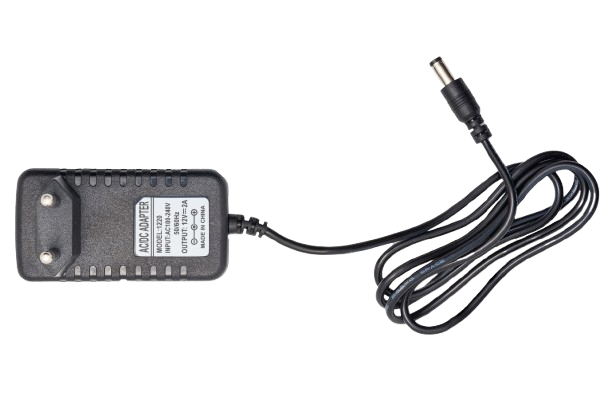
The Adaptor 12V by Power (Manufacturer Part ID: Power) is a device designed to convert electrical power from a standard AC outlet (typically 110V or 220V, depending on the region) into a stable 12-volt DC output. This adaptor is widely used to power a variety of electronic devices, including routers, LED strips, small appliances, and DIY electronics projects.
Explore Projects Built with adaptor 12v
 Open Project in Cirkit Designer
 Open Project in Cirkit Designer
 Open Project in Cirkit Designer
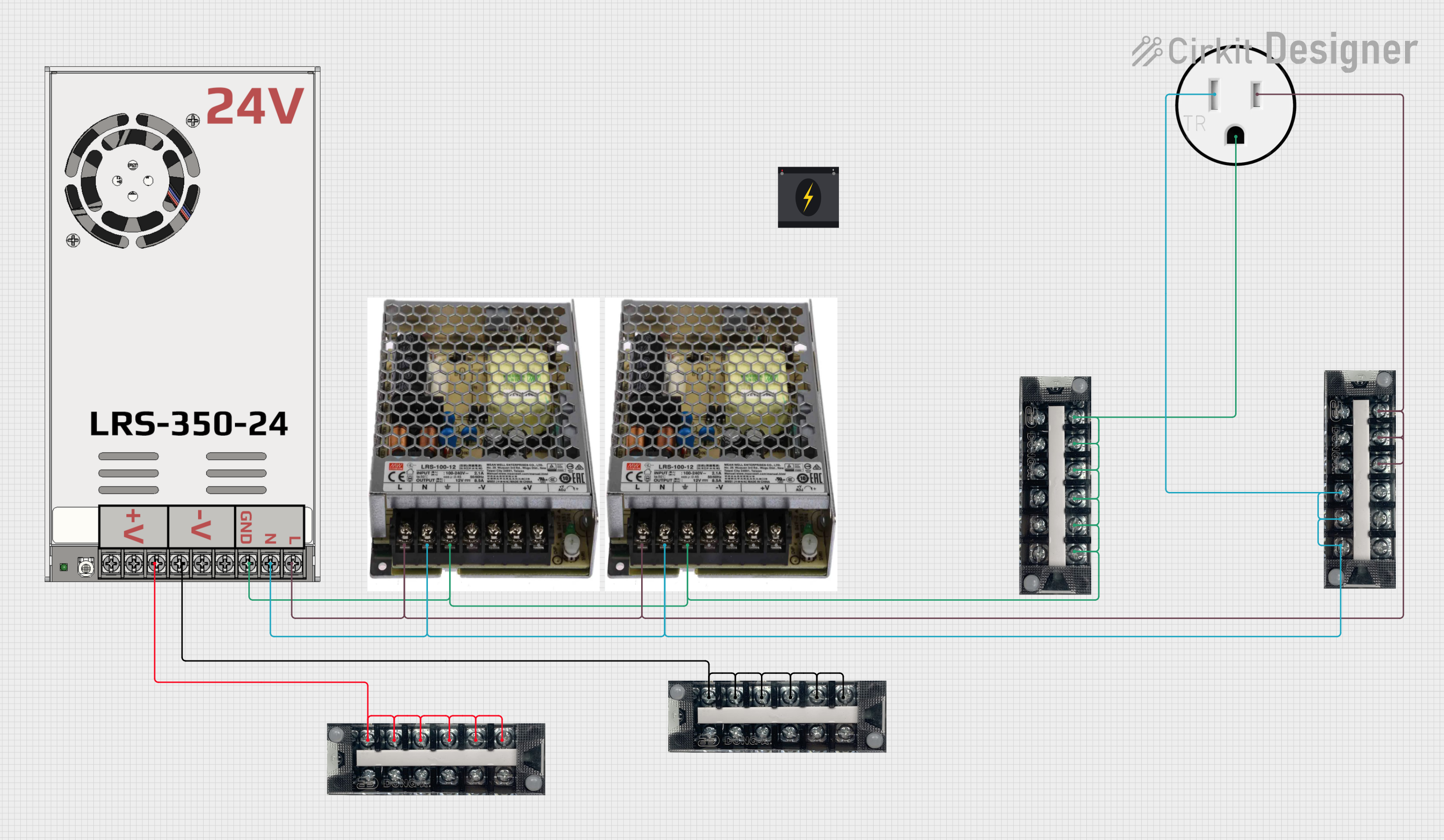 Open Project in Cirkit Designer
Explore Projects Built with adaptor 12v
Open Project in Cirkit DesignerOpen Project in Cirkit DesignerOpen Project in Cirkit DesignerOpen Project in Cirkit DesignerCommon Applications and Use Cases
- Powering LED lighting systems
- Supplying power to routers, modems, and other networking equipment
- Driving small DC motors or actuators
- Providing a stable power source for Arduino or Raspberry Pi projects
- Charging or powering portable devices that require a 12V input
Technical Specifications
Below are the key technical details for the Adaptor 12V:
| Parameter | Specification |
|---|---|
| Input Voltage | 100-240V AC, 50/60Hz |
| Output Voltage | 12V DC |
| Output Current | 1A, 2A, or 5A (varies by model) |
| Power Rating | Up to 60W (depending on model) |
| Connector Type | Barrel Jack (5.5mm outer, 2.1mm inner) |
| Efficiency | ≥ 85% |
| Operating Temperature | 0°C to 40°C |
| Storage Temperature | -20°C to 70°C |
| Safety Features | Overload protection, short-circuit protection, over-voltage protection |
Pin Configuration and Descriptions
The Adaptor 12V typically uses a barrel jack connector. Below is the pin configuration:
| Pin | Description |
|---|---|
| Outer | Ground (GND) |
| Inner | +12V DC (Positive Voltage) |
Usage Instructions
How to Use the Adaptor in a Circuit
- Verify Compatibility: Ensure the device you are powering requires a 12V DC input and that the current rating of the adaptor matches or exceeds the device's requirements.
- Connect the Barrel Jack: Plug the barrel jack into the device's power input port. Ensure the polarity matches (inner pin is positive, outer sleeve is ground).
- Plug into AC Outlet: Connect the adaptor to a standard AC outlet. The LED indicator (if present) will light up, indicating the adaptor is operational.
- Power On the Device: Turn on the connected device to confirm it is receiving power.
Important Considerations and Best Practices
- Polarity Check: Always confirm the polarity of the barrel jack matches the device's requirements. Reversed polarity can damage the device.
- Current Rating: Do not exceed the adaptor's maximum current rating. For example, if the adaptor is rated for 2A, ensure the connected device does not draw more than 2A.
- Ventilation: Place the adaptor in a well-ventilated area to prevent overheating.
- Avoid Overloading: Do not connect multiple devices to a single adaptor unless the combined current draw is within the adaptor's rating.
Example: Using the Adaptor with an Arduino UNO
The Adaptor 12V can be used to power an Arduino UNO via its DC barrel jack. Below is an example of how to connect and use it:
- Plug the adaptor's barrel jack into the Arduino UNO's power input port.
- Ensure the adaptor's output is 12V DC and the current rating is at least 1A.
- Connect the adaptor to an AC outlet.
- The Arduino UNO will power on, and the onboard LED will light up.
Sample Arduino Code
If you are using the adaptor to power an Arduino UNO for a project, here is a simple example code to blink an LED:
// This code blinks an LED connected to pin 13 of the Arduino UNO.
// Ensure the adaptor is properly connected to power the Arduino.

void setup() {
  pinMode(13, OUTPUT); // Set pin 13 as an output pin
}

void loop() {
  digitalWrite(13, HIGH); // Turn the LED on
  delay(1000);            // Wait for 1 second
  digitalWrite(13, LOW);  // Turn the LED off
  delay(1000);            // Wait for 1 second
}
Troubleshooting and FAQs
Common Issues and Solutions
Adaptor Not Powering the Device
- Cause: The adaptor may not be plugged in properly or the AC outlet may not be supplying power.
- Solution: Check the AC outlet and ensure the adaptor is securely connected.
Device Not Turning On
- Cause: The device may require more current than the adaptor can supply.
- Solution: Verify the device's current requirements and use an adaptor with a higher current rating if necessary.
Adaptor Overheating
- Cause: The adaptor may be overloaded or placed in a poorly ventilated area.
- Solution: Reduce the load on the adaptor and ensure it is placed in a well-ventilated space.
LED Indicator Not Lit
- Cause: The adaptor may be faulty or not receiving power.
- Solution: Test the adaptor with a multimeter to check for output voltage. Replace if necessary.
FAQs
Q: Can I use this adaptor to charge a 12V battery?
A: No, this adaptor is not designed for charging batteries. It provides a constant 12V output, which is unsuitable for battery charging applications.
Q: Is the adaptor waterproof?
A: No, the adaptor is not waterproof. Avoid using it in wet or humid environments.
Q: Can I use this adaptor with a device requiring less than 12V?
A: No, using this adaptor with a device requiring less than 12V may damage the device. Always match the voltage requirements.
Q: What happens if I reverse the polarity?
A: Reversing the polarity can damage the connected device. Always ensure the inner pin is positive and the outer sleeve is ground.
This concludes the documentation for the Adaptor 12V by Power.