
How to Use TDA 2822M ic: Examples, Pinouts, and Specs
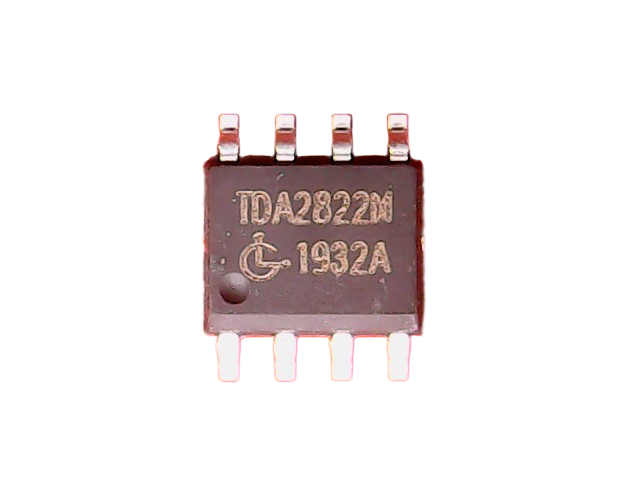
 Design with TDA 2822M ic in Cirkit Designer
Introduction
The TDA 2822M is a dual audio amplifier integrated circuit (IC) designed for low-power audio applications. It is capable of driving small speakers directly, making it an ideal choice for portable audio devices, radios, intercoms, and small sound systems. This IC provides good sound quality with minimal external components, making it both cost-effective and easy to implement in a variety of designs.
Explore Projects Built with TDA 2822M ic
 Open Project in Cirkit Designer
 Open Project in Cirkit Designer
 Open Project in Cirkit Designer
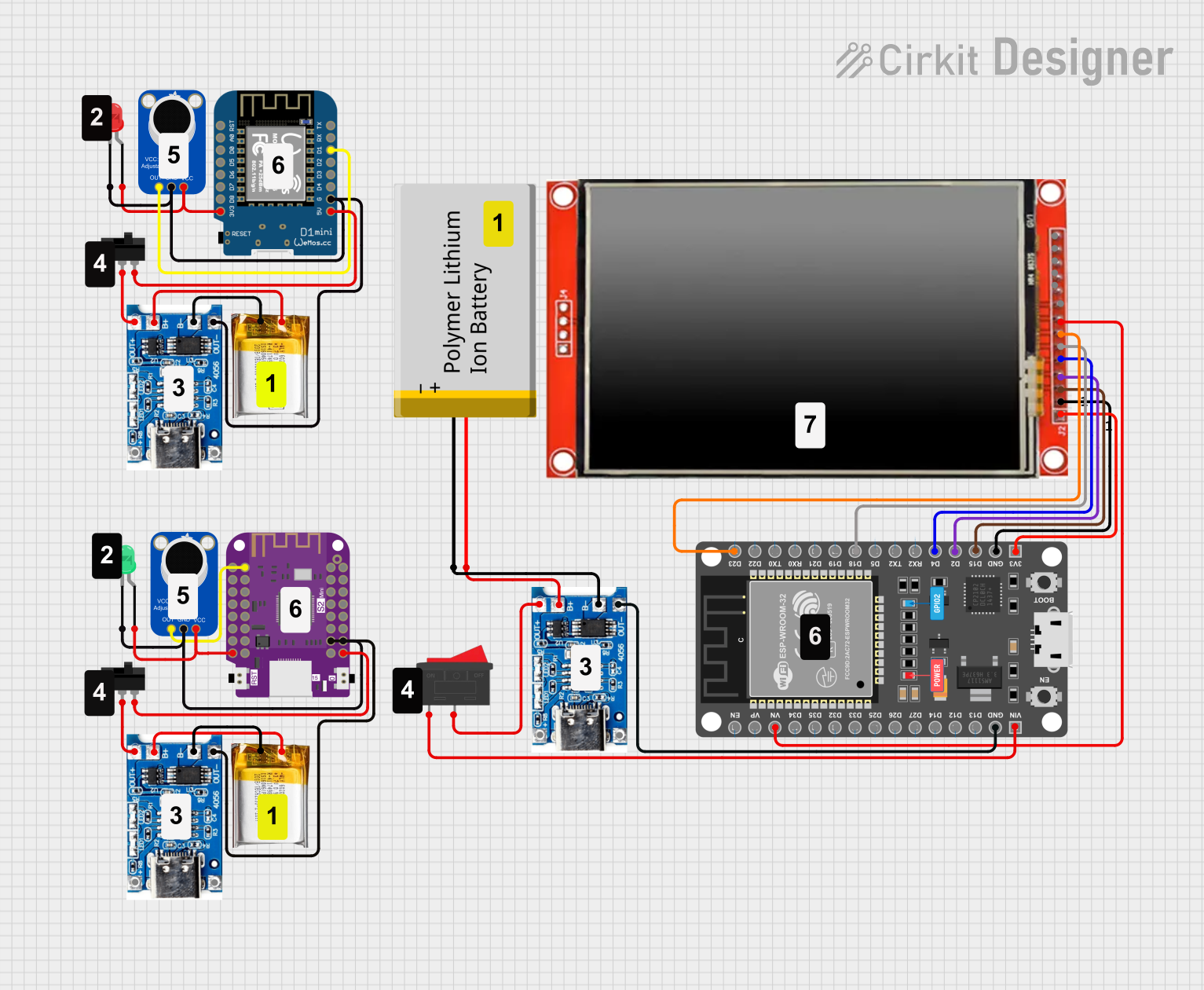 Open Project in Cirkit Designer
Explore Projects Built with TDA 2822M ic
Open Project in Cirkit DesignerOpen Project in Cirkit DesignerOpen Project in Cirkit DesignerOpen Project in Cirkit DesignerCommon Applications:
- Portable audio devices (e.g., MP3 players, radios)
- Intercom systems
- Small speaker systems
- DIY audio amplifier projects
- Battery-powered audio devices
Technical Specifications
The TDA 2822M is a versatile IC with the following key technical details:
| Parameter | Value |
|---|---|
| Supply Voltage (Vcc) | 1.8V to 15V |
| Output Power | 1W per channel (at 8Ω, Vcc = 9V) |
| Quiescent Current | 6mA (typical) |
| Total Harmonic Distortion | 0.2% (at 1kHz, Pout = 250mW) |
| Gain | 39 dB |
| Operating Temperature | -40°C to +85°C |
| Package Type | 8-pin DIP or SOP |
Pin Configuration and Descriptions
The TDA 2822M comes in an 8-pin package. Below is the pinout and description:
| Pin Number | Pin Name | Description |
|---|---|---|
| 1 | OUT1 | Output for Channel 1 |
| 2 | Vcc | Positive Supply Voltage |
| 3 | IN1(-) | Inverting Input for Channel 1 |
| 4 | IN2(-) | Inverting Input for Channel 2 |
| 5 | GND | Ground (0V) |
| 6 | IN2(+) | Non-Inverting Input for Channel 2 |
| 7 | IN1(+) | Non-Inverting Input for Channel 1 |
| 8 | OUT2 | Output for Channel 2 |
Usage Instructions
How to Use the TDA 2822M in a Circuit
The TDA 2822M is straightforward to use in audio amplifier circuits. Below is a step-by-step guide:
- Power Supply: Connect the Vcc pin (Pin 2) to a DC power supply (1.8V to 15V). Connect the GND pin (Pin 5) to the ground of the circuit.
- Input Connections:
- For Channel 1, connect the audio signal to the IN1(+) pin (Pin 7) and ground the IN1(-) pin (Pin 3) through a capacitor.
- For Channel 2, connect the audio signal to the IN2(+) pin (Pin 6) and ground the IN2(-) pin (Pin 4) through a capacitor.
- Output Connections:
- Connect the OUT1 pin (Pin 1) to the positive terminal of the speaker for Channel 1.
- Connect the OUT2 pin (Pin 8) to the positive terminal of the speaker for Channel 2.
- Decoupling Capacitors: Place a decoupling capacitor (e.g., 100µF) between the Vcc and GND pins to stabilize the power supply.
- Load: Use speakers with an impedance of 4Ω to 16Ω for optimal performance.
Example Circuit Diagram
Below is a simple stereo amplifier circuit using the TDA 2822M:
   IN1(+) ----||---- Audio Input 1
   IN1(-) ----||---- GND
   OUT1  ----->---- Speaker 1
   OUT2  ----->---- Speaker 2
   IN2(+) ----||---- Audio Input 2
   IN2(-) ----||---- GND
   Vcc   ----->---- +9V
   GND   ----->---- 0V
Arduino UNO Example
The TDA 2822M can be used with an Arduino UNO to amplify audio signals. Below is an example code snippet to generate a simple tone:
// Example: Generate a tone using Arduino and TDA 2822M
// Connect Arduino pin 9 to IN1(+) of the TDA 2822M
// Connect GND to IN1(-) and the TDA 2822M GND pin

void setup() {
  pinMode(9, OUTPUT); // Set pin 9 as output
}

void loop() {
  tone(9, 1000); // Generate a 1kHz tone on pin 9
  delay(1000);   // Play the tone for 1 second
  noTone(9);     // Stop the tone
  delay(1000);   // Wait for 1 second
}
Important Considerations:
- Use proper heat dissipation methods if the IC is used at higher power levels.
- Ensure the power supply voltage does not exceed 15V to avoid damaging the IC.
- Use decoupling capacitors to reduce noise and improve stability.
Troubleshooting and FAQs
Common Issues and Solutions
No Output Sound:
- Check the power supply connections and ensure the voltage is within the specified range.
- Verify that the input audio signal is properly connected to the IN(+) pins.
- Ensure the speakers are connected to the correct output pins (OUT1 and OUT2).
Distorted Sound:
- Check if the speaker impedance matches the recommended range (4Ω to 16Ω).
- Ensure the input signal amplitude is not too high, as it may cause clipping.
- Verify that the decoupling capacitors are properly connected.
Overheating:
- Ensure the IC is not driving a load with too low an impedance.
- Use a heatsink if the IC is operating at high power levels.
Noise or Humming:
- Add additional decoupling capacitors to the power supply lines.
- Ensure proper grounding to minimize interference.
FAQs
Q1: Can the TDA 2822M be used in a mono configuration?
Yes, the TDA 2822M can be configured in a mono bridge mode to increase output power. Refer to the datasheet for the specific circuit configuration.
Q2: What is the maximum output power of the TDA 2822M?
The maximum output power is approximately 1W per channel when driving an 8Ω load with a 9V supply.
Q3: Can I use the TDA 2822M with a 3.3V power supply?
Yes, the TDA 2822M can operate with a supply voltage as low as 1.8V, but the output power will be reduced.
Q4: Is the TDA 2822M suitable for battery-powered devices?
Yes, its low quiescent current and wide supply voltage range make it ideal for battery-powered applications.