
How to Use co2 gas sensor: Examples, Pinouts, and Specs
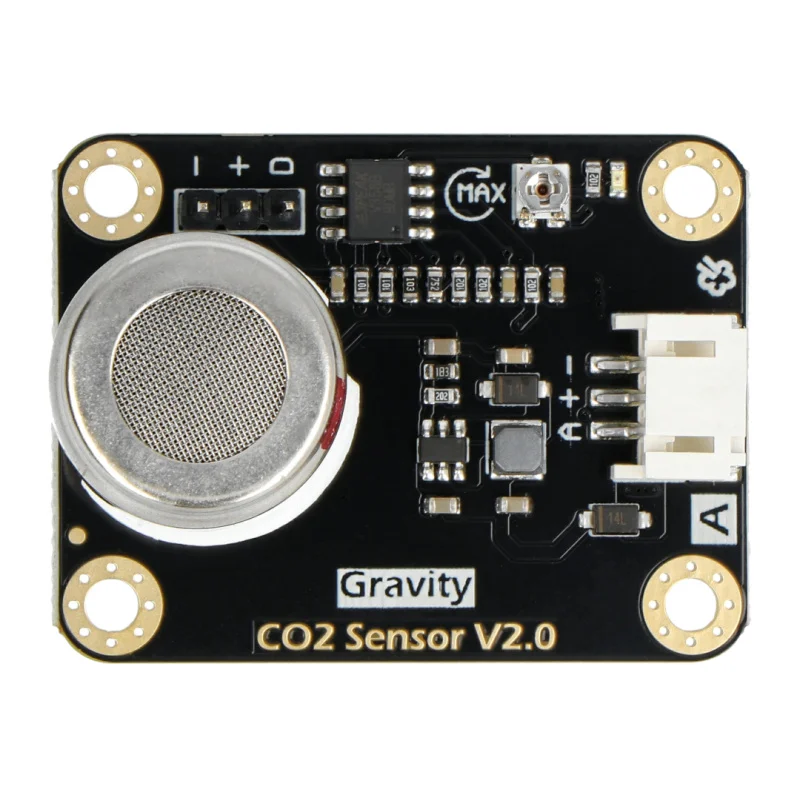
 Design with co2 gas sensor in Cirkit Designer
Introduction
The CO2 gas sensor (Manufacturer: 1231231, Part ID: 23123123) is a highly sensitive device designed to detect and measure the concentration of carbon dioxide (CO2) in the air. It is widely used in applications such as air quality monitoring, HVAC systems, industrial safety, and environmental research. This sensor provides accurate and reliable readings, making it an essential component for systems that require real-time CO2 level monitoring.
Explore Projects Built with co2 gas sensor
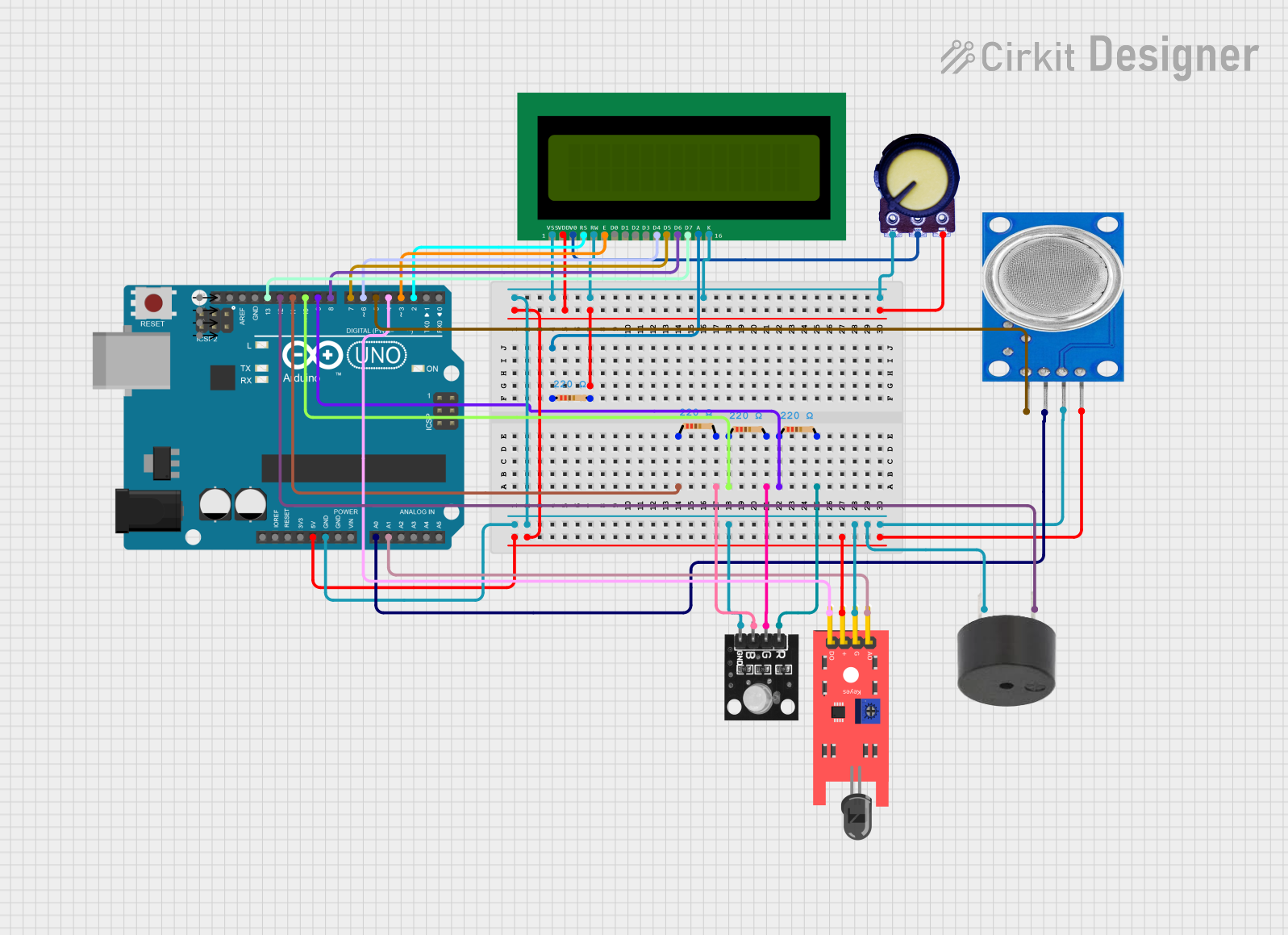 Open Project in Cirkit Designer
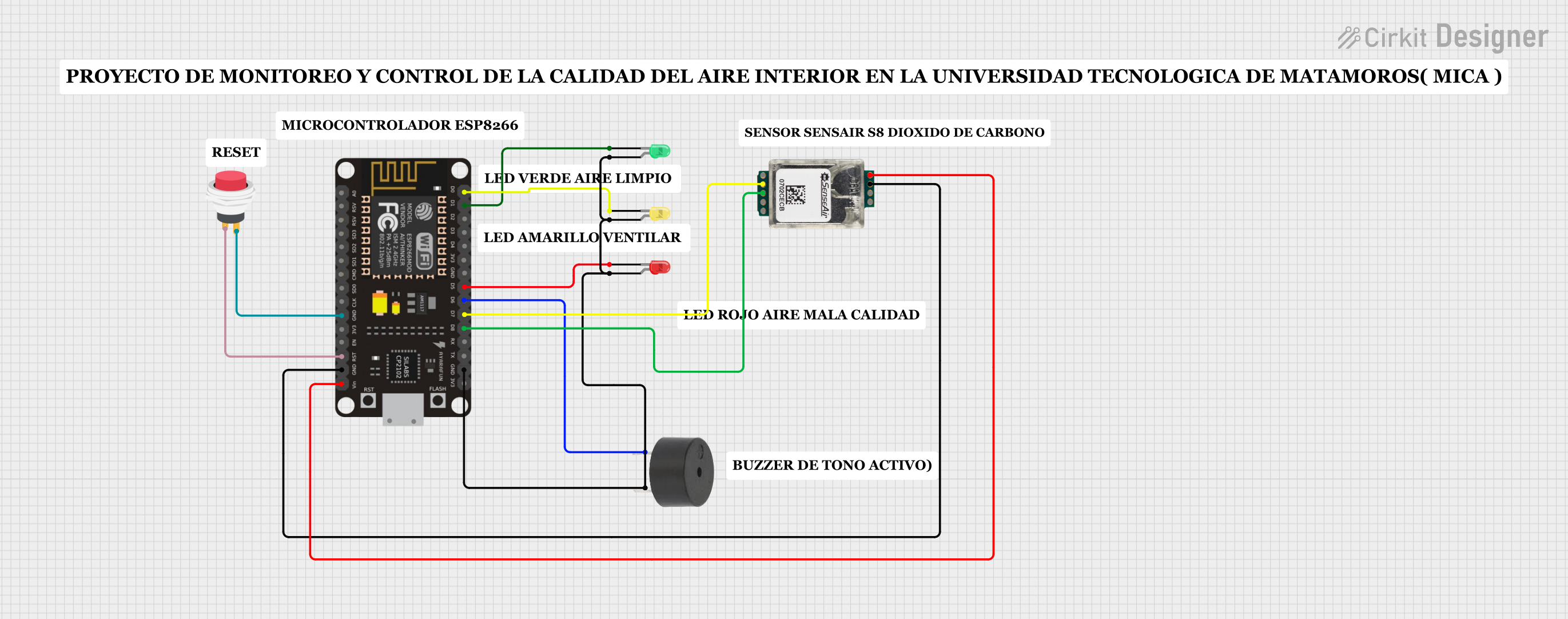 Open Project in Cirkit Designer
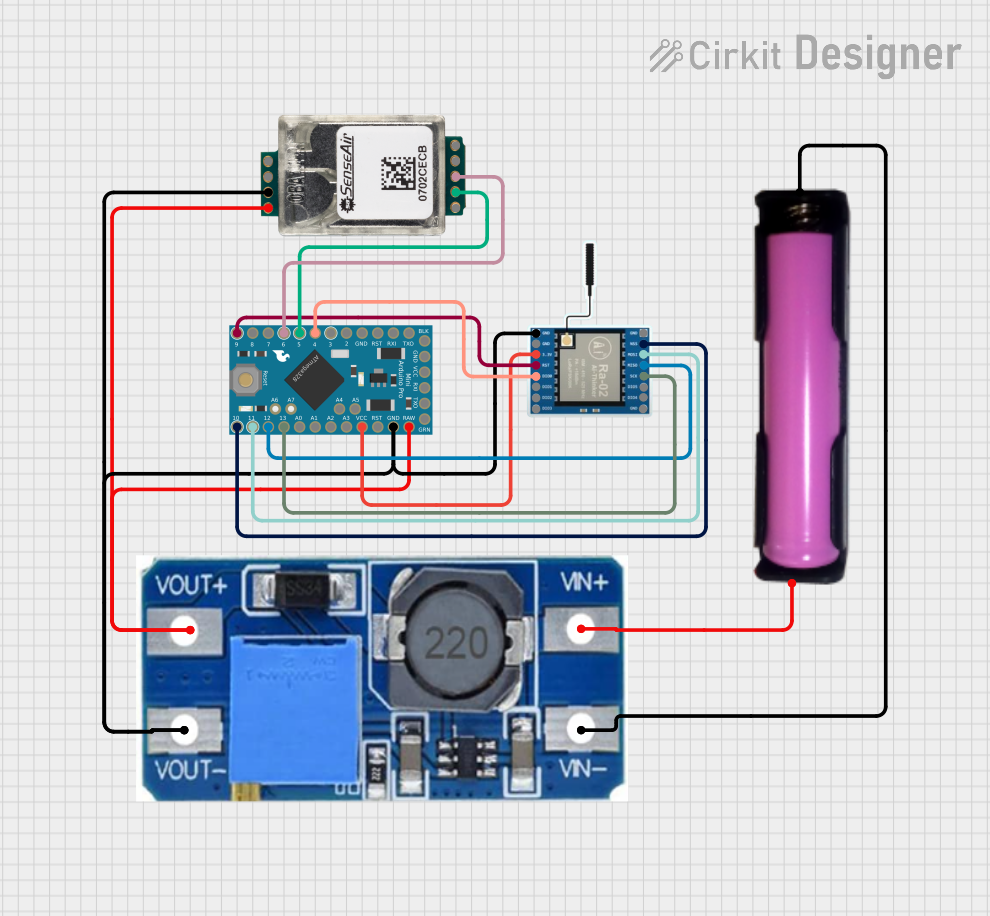 Open Project in Cirkit Designer
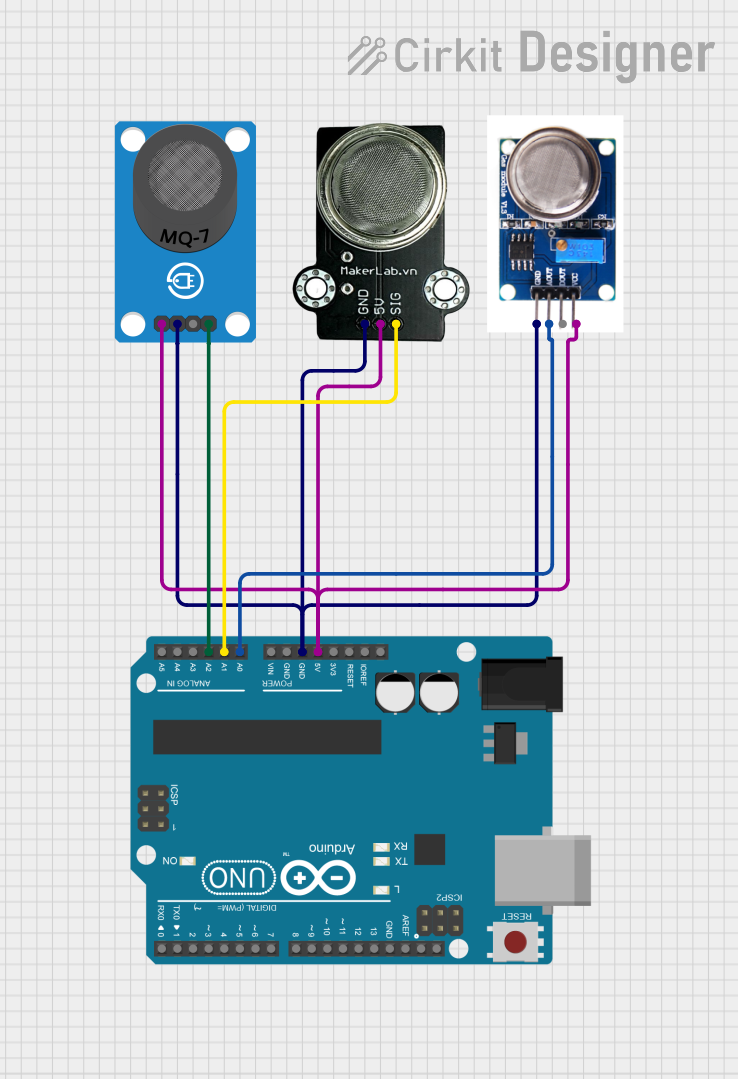 Open Project in Cirkit Designer
Explore Projects Built with co2 gas sensor
Open Project in Cirkit DesignerOpen Project in Cirkit DesignerOpen Project in Cirkit DesignerOpen Project in Cirkit DesignerCommon Applications
- Indoor air quality monitoring
- Ventilation and HVAC systems
- Greenhouse CO2 level control
- Industrial safety systems
- Environmental monitoring and research
Technical Specifications
Below are the key technical details of the CO2 gas sensor:
| Parameter | Value |
|---|---|
| Manufacturer | 1231231 |
| Part ID | 23123123 |
| Measurement Range | 0 - 5000 ppm (parts per million) |
| Accuracy | ±50 ppm or ±5% of reading |
| Operating Voltage | 3.3V - 5V DC |
| Operating Current | < 50 mA |
| Output Signal | Analog voltage or UART (digital) |
| Warm-up Time | < 3 minutes |
| Operating Temperature | -10°C to 50°C |
| Operating Humidity | 0% - 95% RH (non-condensing) |
| Dimensions | 33mm x 20mm x 10mm |
Pin Configuration
The CO2 gas sensor typically has the following pinout:
| Pin | Name | Description |
|---|---|---|
| 1 | VCC | Power supply input (3.3V - 5V DC) |
| 2 | GND | Ground connection |
| 3 | AOUT | Analog output signal proportional to CO2 levels |
| 4 | TX | UART transmit pin for digital communication |
| 5 | RX | UART receive pin for digital communication |
Usage Instructions
How to Use the Sensor in a Circuit
- Power Supply: Connect the VCC pin to a 3.3V or 5V DC power source and the GND pin to the ground of your circuit.
- Signal Output:
- For analog output, connect the AOUT pin to an analog input pin of your microcontroller.
- For digital communication, connect the TX and RX pins to the UART pins of your microcontroller.
- Warm-up Period: Allow the sensor to warm up for at least 3 minutes after powering it on to ensure accurate readings.
- Reading Data:
- For analog output, read the voltage from the AOUT pin and convert it to CO2 concentration using the sensor's datasheet formula.
- For UART communication, send the appropriate command to the sensor and parse the received data.
Important Considerations
- Calibration: Periodically calibrate the sensor as per the manufacturer's instructions to maintain accuracy.
- Ventilation: Ensure proper airflow around the sensor for accurate measurements.
- Placement: Avoid placing the sensor near heat sources or in areas with high humidity to prevent damage.
- Power Supply: Use a stable power source to avoid fluctuations in readings.
Example Code for Arduino UNO
Below is an example of how to interface the CO2 gas sensor with an Arduino UNO using the analog output:
// Define the analog pin connected to the sensor's AOUT pin
const int sensorPin = A0;

// Variable to store the sensor reading
int sensorValue = 0;

void setup() {
  // Initialize serial communication for debugging
  Serial.begin(9600);
  Serial.println("CO2 Gas Sensor Initialized");
}

void loop() {
  // Read the analog value from the sensor
  sensorValue = analogRead(sensorPin);

  // Convert the analog value to a voltage (assuming 5V reference)
  float voltage = sensorValue * (5.0 / 1023.0);

  // Convert the voltage to CO2 concentration (ppm)
  // Replace 'conversionFactor' with the appropriate value from the datasheet
  float co2Concentration = voltage * conversionFactor;

  // Print the CO2 concentration to the Serial Monitor
  Serial.print("CO2 Concentration: ");
  Serial.print(co2Concentration);
  Serial.println(" ppm");

  // Wait for 1 second before the next reading
  delay(1000);
}
Note: Replace
conversionFactorwith the appropriate value provided in the sensor's datasheet to calculate the CO2 concentration accurately.
Troubleshooting and FAQs
Common Issues and Solutions
No Output Signal:
- Ensure the sensor is properly powered (check VCC and GND connections).
- Verify that the warm-up period has elapsed before taking readings.
Inaccurate Readings:
- Check for proper calibration of the sensor.
- Ensure the sensor is not exposed to extreme temperatures or humidity.
- Verify that the power supply voltage is stable and within the specified range.
UART Communication Issues:
- Confirm the baud rate matches the sensor's default setting.
- Check the TX and RX connections between the sensor and microcontroller.
FAQs
Can this sensor detect gases other than CO2?
- No, this sensor is specifically designed to detect and measure CO2 concentrations.
How often should the sensor be calibrated?
- Calibration frequency depends on the application and environment. Refer to the manufacturer's guidelines for specific recommendations.
What is the lifespan of the sensor?
- The sensor typically has a lifespan of 5-10 years under normal operating conditions.
Can the sensor be used outdoors?
- The sensor can be used outdoors if protected from direct exposure to rain, dust, and extreme environmental conditions.
By following this documentation, users can effectively integrate and utilize the CO2 gas sensor in their projects.