
How to Use Fermion: MEMS Volatile Organic Compounds VOC Gas Detection Sensor (Breakout, 1-500ppm): Examples, Pinouts, and Specs
 Design with Fermion: MEMS Volatile Organic Compounds VOC Gas Detection Sensor (Breakout, 1-500ppm) in Cirkit Designer
Introduction
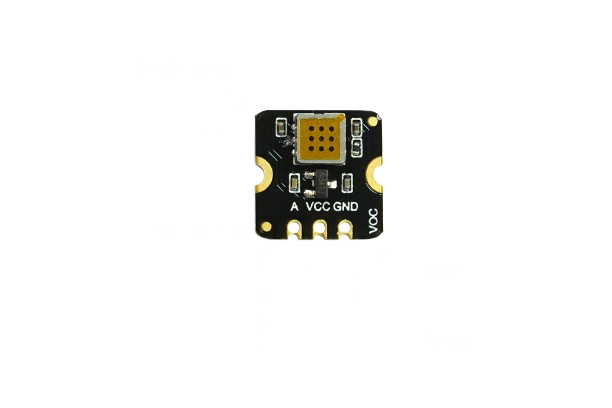
The Fermion MEMS Volatile Organic Compounds (VOC) Gas Detection Sensor is a compact and highly sensitive device designed to detect VOCs in the air. Utilizing advanced MEMS (Micro-Electro-Mechanical Systems) technology, this sensor can measure VOC concentrations in the range of 1 to 500 parts per million (ppm). Its small form factor and high accuracy make it ideal for applications such as air quality monitoring, environmental sensing, and smart home systems.
Explore Projects Built with Fermion: MEMS Volatile Organic Compounds VOC Gas Detection Sensor (Breakout, 1-500ppm)
 Open Project in Cirkit Designer
 Open Project in Cirkit Designer
 Open Project in Cirkit Designer
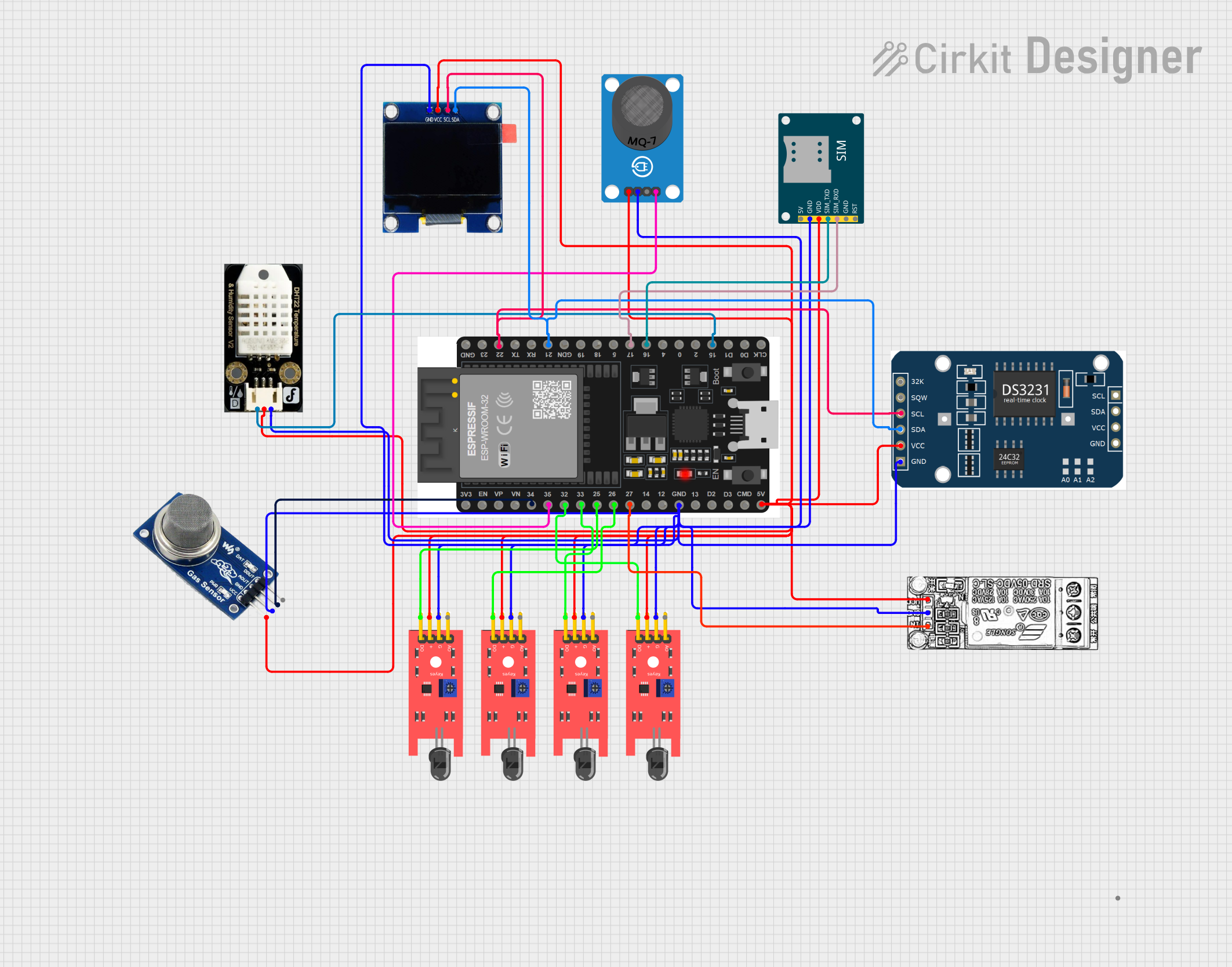 Open Project in Cirkit Designer
Explore Projects Built with Fermion: MEMS Volatile Organic Compounds VOC Gas Detection Sensor (Breakout, 1-500ppm)
Open Project in Cirkit DesignerOpen Project in Cirkit DesignerOpen Project in Cirkit DesignerOpen Project in Cirkit DesignerCommon Applications:
- Indoor air quality monitoring
- Environmental pollution detection
- Smart home and IoT devices
- Industrial safety systems
- Automotive air quality control
Technical Specifications
Below are the key technical details and pin configuration for the Fermion MEMS VOC Gas Detection Sensor:
Key Technical Details:
| Parameter | Value |
|---|---|
| Measurement Range | 1 to 500 ppm |
| Operating Voltage | 3.3V to 5V |
| Operating Current | < 10 mA |
| Interface | Analog Output |
| Response Time | < 10 seconds |
| Operating Temperature | -40°C to 85°C |
| Dimensions | 22mm x 18mm x 3.3mm |
Pin Configuration:
| Pin Name | Description |
|---|---|
| VCC | Power supply input (3.3V to 5V) |
| GND | Ground |
| AOUT | Analog output signal (VOC level) |
Usage Instructions
How to Use the Sensor in a Circuit:
- Power the Sensor: Connect the
VCCpin to a 3.3V or 5V power source and theGNDpin to the ground of your circuit. - Read the Output: The
AOUTpin provides an analog voltage proportional to the VOC concentration. Connect this pin to an analog input pin of a microcontroller (e.g., Arduino UNO) to read the sensor's output. - Calibrate the Sensor: Allow the sensor to warm up for at least 5 minutes after powering it on to ensure accurate readings.
- Process the Data: Use the microcontroller to convert the analog signal into a VOC concentration value (ppm) using the sensor's datasheet or calibration curve.
Important Considerations:
- Ventilation: Ensure proper airflow around the sensor for accurate measurements.
- Avoid Contaminants: Keep the sensor away from liquids, dust, and corrosive gases that could damage it.
- Warm-Up Time: Always allow the sensor to stabilize after powering it on.
- Analog Signal Noise: Use a capacitor (e.g., 0.1 µF) between
AOUTandGNDto reduce noise in the analog signal.
Example Code for Arduino UNO:
// Example code to read VOC levels from the Fermion MEMS VOC Sensor
// Connect AOUT to A0 on the Arduino UNO

const int sensorPin = A0; // Analog pin connected to AOUT
float sensorVoltage = 0.0; // Variable to store sensor voltage
float vocConcentration = 0.0; // Variable to store VOC concentration (ppm)

void setup() {
  Serial.begin(9600); // Initialize serial communication
  Serial.println("Fermion MEMS VOC Sensor Test");
}

void loop() {
  // Read the analog voltage from the sensor
  int sensorValue = analogRead(sensorPin);

  // Convert the analog value (0-1023) to voltage (0-5V for Arduino UNO)
  sensorVoltage = sensorValue * (5.0 / 1023.0);

  // Convert the voltage to VOC concentration (ppm)
  // Note: Replace the formula below with the actual calibration curve
  vocConcentration = sensorVoltage * 100.0; // Example conversion

  // Print the results to the Serial Monitor
  Serial.print("Sensor Voltage: ");
  Serial.print(sensorVoltage);
  Serial.print(" V, VOC Concentration: ");
  Serial.print(vocConcentration);
  Serial.println(" ppm");

  delay(1000); // Wait 1 second before the next reading
}
Troubleshooting and FAQs
Common Issues and Solutions:
No Output Signal:
- Cause: Incorrect wiring or insufficient power supply.
- Solution: Double-check the connections and ensure the power supply is within the specified range (3.3V to 5V).
Inaccurate Readings:
- Cause: Insufficient warm-up time or environmental interference.
- Solution: Allow the sensor to stabilize for at least 5 minutes after powering it on. Ensure the sensor is placed in a well-ventilated area.
Fluctuating Analog Output:
- Cause: Electrical noise in the circuit.
- Solution: Add a decoupling capacitor (e.g., 0.1 µF) between
AOUTandGNDto filter out noise.
Sensor Not Responding to VOCs:
- Cause: Sensor may be damaged or exposed to contaminants.
- Solution: Inspect the sensor for physical damage and ensure it is not exposed to liquids or corrosive gases.
FAQs:
Q: Can this sensor detect specific VOCs (e.g., formaldehyde, benzene)?
- A: The sensor provides a general VOC concentration and cannot differentiate between specific compounds.
Q: How do I calibrate the sensor?
- A: Refer to the sensor's datasheet for calibration instructions. Typically, you can use a known VOC concentration to create a calibration curve.
Q: Can I use this sensor outdoors?
- A: Yes, but ensure it is protected from extreme weather conditions and contaminants.
Q: What is the lifespan of the sensor?
- A: The sensor's lifespan depends on usage and environmental conditions. Refer to the datasheet for detailed information.