
How to Use Reed Switch: Examples, Pinouts, and Specs
 Design with Reed Switch in Cirkit Designer
Introduction
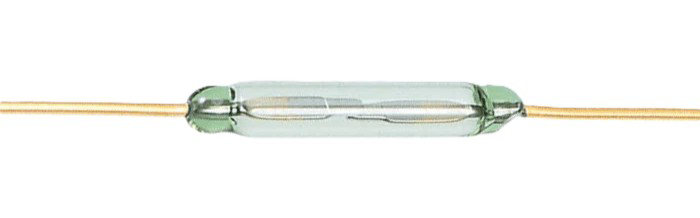
A reed switch is an electromagnetic switch that opens and closes in response to a magnetic field. It consists of two ferromagnetic contacts sealed within a small glass tube. When a magnetic field is applied, the contacts close, completing an electrical circuit. Once the magnetic field is removed, the contacts return to their open state.
Reed switches are widely used in various applications due to their simplicity, reliability, and low power consumption. Common use cases include:
- Door and window sensors in security systems
- Position and proximity sensing
- Speed sensing in bicycles and treadmills
- Liquid level detection in tanks
- Automotive applications, such as brake or gear position sensing
Explore Projects Built with Reed Switch
 Open Project in Cirkit Designer
 Open Project in Cirkit Designer
 Open Project in Cirkit Designer
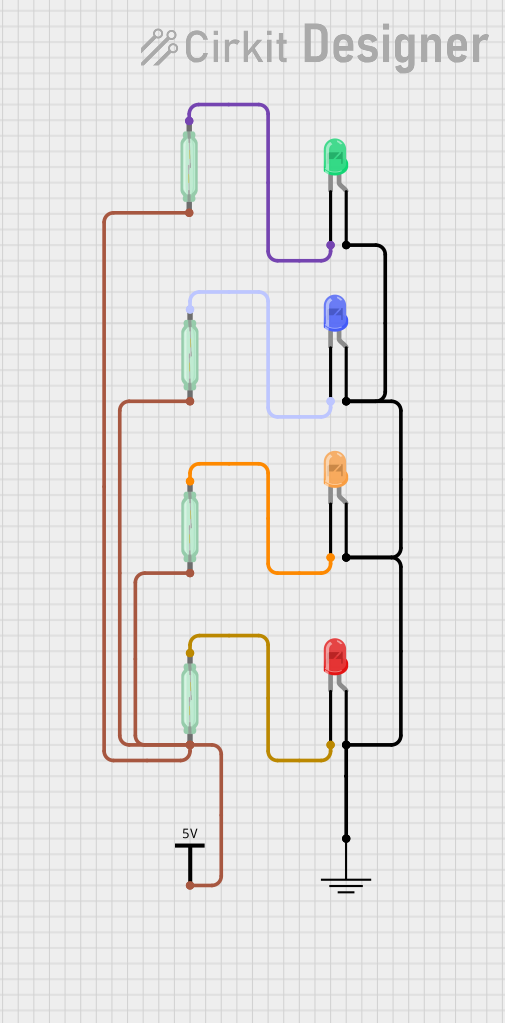 Open Project in Cirkit Designer
Explore Projects Built with Reed Switch
Open Project in Cirkit DesignerOpen Project in Cirkit DesignerOpen Project in Cirkit DesignerOpen Project in Cirkit DesignerTechnical Specifications
Below are the key technical details of a typical reed switch. Note that specifications may vary depending on the manufacturer and model.
| Parameter | Value |
|---|---|
| Contact Form | SPST (Single Pole Single Throw) |
| Switching Voltage | 3V to 250V DC/AC |
| Switching Current | 10mA to 3A |
| Contact Resistance | 50 mΩ to 200 mΩ |
| Insulation Resistance | >10⁹ Ω |
| Operating Temperature | -40°C to +125°C |
| Response Time | 0.5 ms to 2 ms |
| Glass Tube Dimensions | 10 mm to 50 mm (length) |
Pin Configuration and Descriptions
Reed switches typically have two leads (pins) extending from the glass tube. These leads are the electrical contacts of the switch.
| Pin | Description |
|---|---|
| Pin 1 | Contact 1 (connects to the circuit) |
| Pin 2 | Contact 2 (connects to the circuit) |
Usage Instructions
How to Use the Reed Switch in a Circuit
- Placement in the Circuit: Connect the reed switch in series with the load or as part of a sensing circuit. Ensure the switch is oriented correctly to interact with the magnetic field.
- Magnet Placement: Place a magnet near the reed switch to close the contacts. The distance between the magnet and the switch depends on the sensitivity of the reed switch and the strength of the magnet.
- Pull-Up or Pull-Down Resistor: When using the reed switch as an input to a microcontroller (e.g., Arduino), include a pull-up or pull-down resistor to ensure a stable signal.
Important Considerations and Best Practices
- Debouncing: Reed switches may produce electrical noise (bouncing) when the contacts close or open. Use a capacitor or software debouncing techniques to filter out noise.
- Current Limitation: Do not exceed the maximum current rating of the reed switch to avoid damaging the contacts.
- Magnetic Interference: Avoid placing the reed switch near strong magnetic fields or other magnetic components that could cause unintended operation.
- Mounting: Handle the glass tube carefully to prevent breakage. Use appropriate mounting hardware or enclosures for protection.
Example: Connecting a Reed Switch to an Arduino UNO
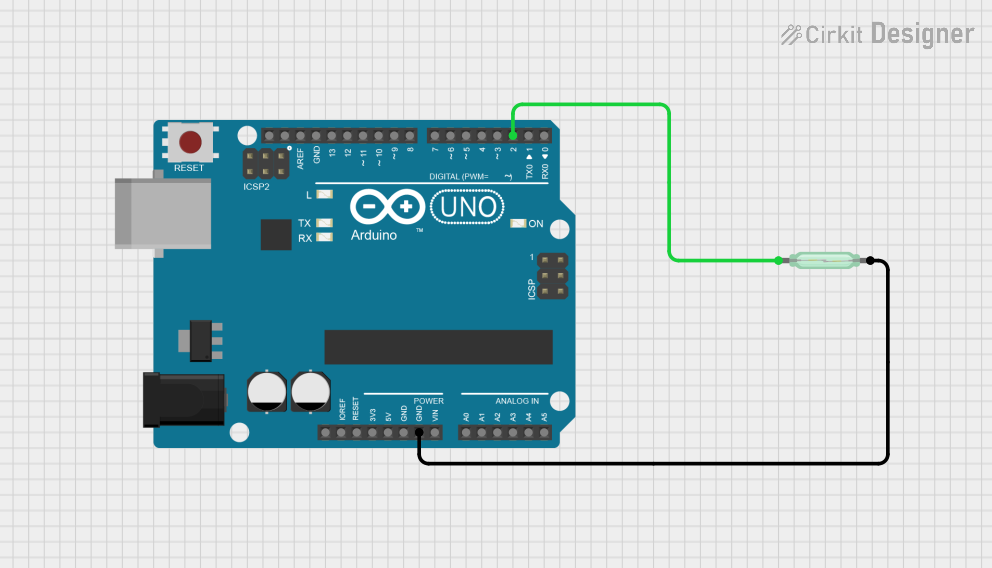
Below is an example of how to use a reed switch with an Arduino UNO to detect the presence of a magnet.
// Reed Switch Example with Arduino UNO
// This code reads the state of a reed switch and turns on an LED when the switch is closed.

const int reedSwitchPin = 2; // Pin connected to the reed switch
const int ledPin = 13;       // Pin connected to the onboard LED

void setup() {
  pinMode(reedSwitchPin, INPUT_PULLUP); // Set reed switch pin as input with pull-up resistor
  pinMode(ledPin, OUTPUT);             // Set LED pin as output
  Serial.begin(9600);                  // Initialize serial communication
}

void loop() {
  int reedState = digitalRead(reedSwitchPin); // Read the state of the reed switch

  if (reedState == LOW) { // Reed switch is closed (magnet present)
    digitalWrite(ledPin, HIGH); // Turn on the LED
    Serial.println("Magnet detected!");
  } else { // Reed switch is open (no magnet)
    digitalWrite(ledPin, LOW); // Turn off the LED
    Serial.println("No magnet detected.");
  }

  delay(100); // Small delay to stabilize readings
}
Troubleshooting and FAQs
Common Issues and Solutions
Reed Switch Not Responding to Magnet
- Cause: Magnet is too weak or too far from the switch.
- Solution: Use a stronger magnet or reduce the distance between the magnet and the reed switch.
Switch Bouncing Causes Erratic Behavior
- Cause: Electrical noise from the contacts opening and closing.
- Solution: Add a small capacitor (e.g., 0.1 µF) across the reed switch or implement software debouncing.
Reed Switch Breaks During Installation
- Cause: Excessive force applied to the glass tube.
- Solution: Handle the switch carefully and use protective enclosures or mounting clips.
False Triggering Due to Nearby Magnetic Fields
- Cause: Interference from other magnetic sources.
- Solution: Shield the reed switch or relocate it away from interfering magnetic fields.
FAQs
Q: Can a reed switch handle AC signals?
A: Yes, reed switches can handle both AC and DC signals, provided the voltage and current ratings are not exceeded.
Q: How do I increase the sensitivity of a reed switch?
A: Use a stronger magnet or a reed switch with a lower pull-in sensitivity rating.
Q: Can I use a reed switch in high-vibration environments?
A: Reed switches are sensitive to vibration, which may cause false triggering. Consider using a solid-state alternative like a Hall effect sensor in such environments.