
How to Use INR21700: Examples, Pinouts, and Specs
 Design with INR21700 in Cirkit Designer
Introduction
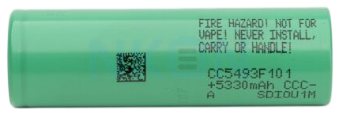
The Samsung INR21700 is a high-performance lithium-ion rechargeable battery cell designed for demanding applications. With its cylindrical 21700 form factor, it offers a nominal voltage of 3.7V and is known for its high energy density, long cycle life, and excellent thermal stability. These characteristics make it a popular choice for applications such as electric vehicles (EVs), power tools, energy storage systems, and portable electronics.
Explore Projects Built with INR21700
 Open Project in Cirkit Designer
 Open Project in Cirkit Designer
 Open Project in Cirkit Designer
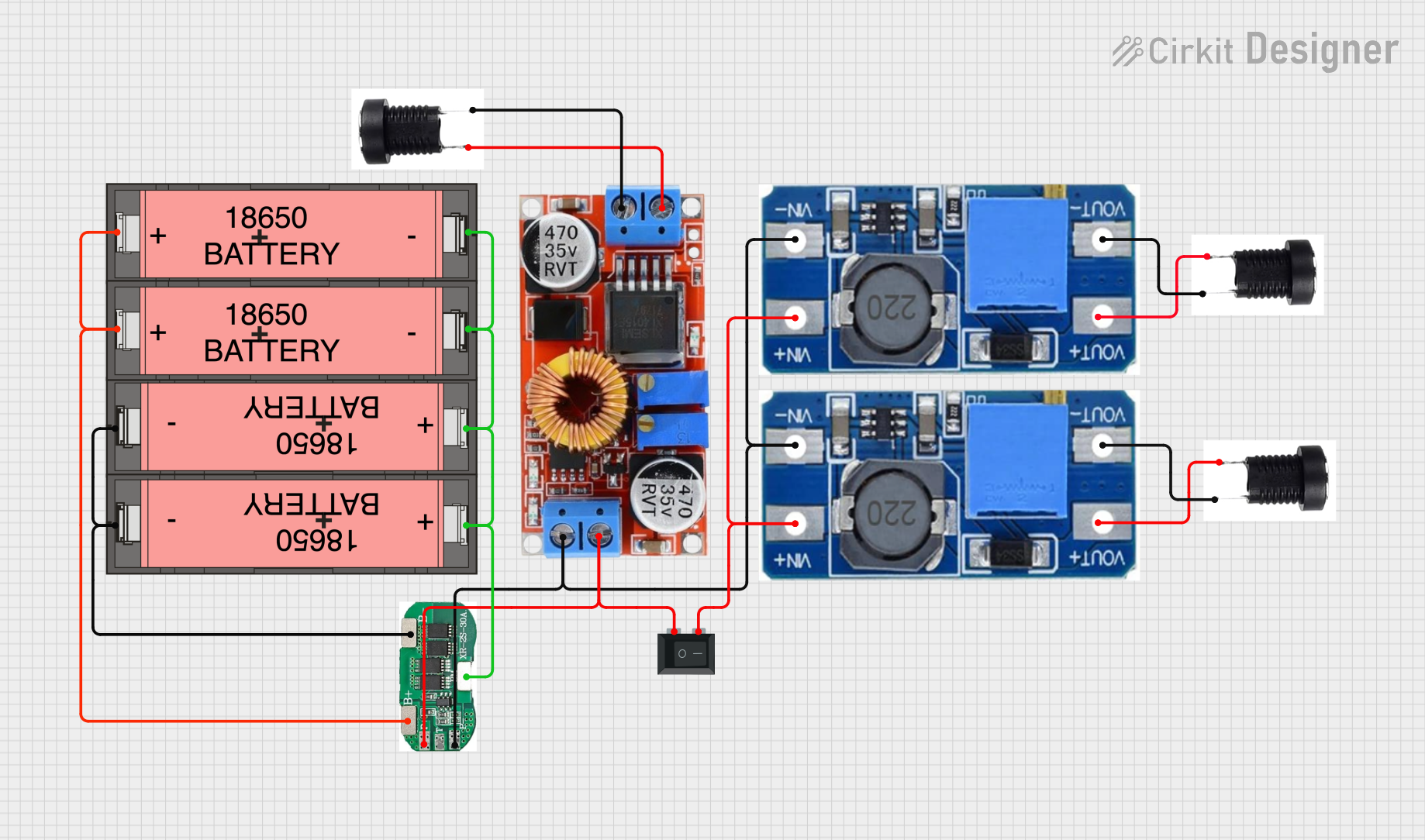 Open Project in Cirkit Designer
Explore Projects Built with INR21700
Open Project in Cirkit DesignerOpen Project in Cirkit DesignerOpen Project in Cirkit DesignerOpen Project in Cirkit DesignerCommon Applications
- Electric Vehicles (EVs): Used in battery packs for extended driving range.
- Power Tools: Provides reliable power for cordless drills, saws, and other tools.
- Energy Storage Systems: Ideal for renewable energy storage solutions.
- Portable Electronics: Powers devices like laptops, flashlights, and drones.
Technical Specifications
Below are the key technical details of the Samsung INR21700 battery cell:
| Parameter | Value |
|---|---|
| Nominal Voltage | 3.7V |
| Capacity | 4000–5000mAh (varies by model) |
| Maximum Discharge Current | 15A–35A (continuous) |
| Charging Voltage | 4.2V (maximum) |
| Charging Current | Standard: 2.5A, Max: 4A |
| Dimensions | 21mm (diameter) x 70mm (length) |
| Weight | ~65g |
| Operating Temperature | Charge: 0°C to 45°C, Discharge: -20°C to 60°C |
| Cycle Life | >500 cycles (at 80% capacity retention) |
Pin Configuration and Descriptions
The INR21700 is a cylindrical cell with two terminals:
| Pin | Description |
|---|---|
| Positive Terminal (+) | Connects to the positive side of the circuit. |
| Negative Terminal (-) | Connects to the ground or negative side of the circuit. |
Usage Instructions
How to Use the INR21700 in a Circuit
- Battery Holder or Spot Welding: Use a compatible 21700 battery holder or spot-weld nickel strips to the terminals for secure connections.
- Charging: Use a lithium-ion battery charger with a constant current/constant voltage (CC/CV) profile. Ensure the charging voltage does not exceed 4.2V.
- Discharging: Connect the battery to your load, ensuring the current draw does not exceed the maximum discharge current (15A–35A, depending on the model).
- Protection Circuit Module (PCM): Always use a PCM or Battery Management System (BMS) to prevent overcharging, over-discharging, and short circuits.
Important Considerations and Best Practices
- Thermal Management: Ensure proper ventilation or cooling to prevent overheating during high-current discharge.
- Storage: Store the battery in a cool, dry place at a charge level of 40–60% for long-term storage.
- Safety Precautions: Avoid puncturing, short-circuiting, or exposing the battery to fire or water.
- Series/Parallel Connections: When connecting multiple cells, ensure they are balanced and use a BMS to manage the pack.
Example: Using INR21700 with Arduino UNO
To power an Arduino UNO with an INR21700, you can use a DC-DC step-down converter to regulate the battery's voltage to 5V. Below is an example circuit and code:
Circuit Setup
- Connect the positive terminal of the INR21700 to the input of the DC-DC converter.
- Connect the output of the DC-DC converter to the Arduino UNO's 5V and GND pins.
- Use a BMS to protect the battery during operation.
Arduino Code Example
// Example code to blink an LED using Arduino UNO powered by INR21700
// Ensure the DC-DC converter outputs a stable 5V to the Arduino

const int ledPin = 13; // Pin connected to the onboard LED

void setup() {
  pinMode(ledPin, OUTPUT); // Set the LED pin as an output
}

void loop() {
  digitalWrite(ledPin, HIGH); // Turn the LED on
  delay(1000);                // Wait for 1 second
  digitalWrite(ledPin, LOW);  // Turn the LED off
  delay(1000);                // Wait for 1 second
}
Troubleshooting and FAQs
Common Issues and Solutions
Battery Overheating:
- Cause: High discharge current or poor ventilation.
- Solution: Reduce the load current and ensure proper cooling.
Battery Not Charging:
- Cause: Faulty charger or damaged battery.
- Solution: Check the charger output voltage and replace the battery if necessary.
Short Cycle Life:
- Cause: Frequent deep discharges or overcharging.
- Solution: Use a BMS and avoid discharging below 2.5V or charging above 4.2V.
Voltage Drop Under Load:
- Cause: High internal resistance or excessive current draw.
- Solution: Use a battery with a higher discharge rating or reduce the load.
FAQs
Q: Can I use the INR21700 without a BMS?
A: It is not recommended. A BMS ensures safe operation by preventing overcharging, over-discharging, and short circuits.
Q: How do I dispose of an INR21700 battery?
A: Dispose of the battery at a certified recycling facility. Do not throw it in regular trash.
Q: Can I connect multiple INR21700 cells in series or parallel?
A: Yes, but ensure the cells are balanced and use a BMS to manage the pack safely.
Q: What is the self-discharge rate of the INR21700?
A: The self-discharge rate is typically very low, around 2–3% per month under normal conditions.