
How to Use 12VDC LEAD ACID BATTERY: Examples, Pinouts, and Specs
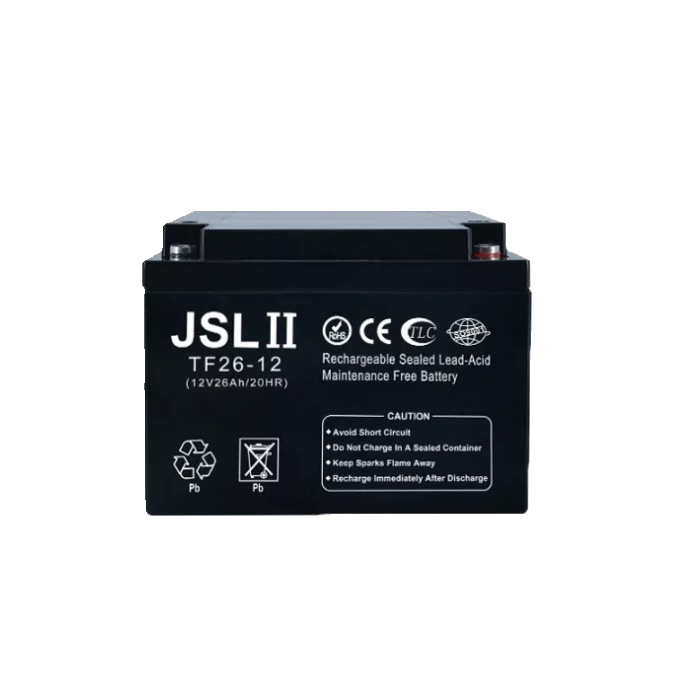
 Design with 12VDC LEAD ACID BATTERY in Cirkit Designer
Introduction
The 12VDC Lead Acid Battery is a rechargeable energy storage device that delivers a nominal voltage of 12 volts. It is widely used in applications requiring reliable and consistent power, such as automotive systems, uninterruptible power supplies (UPS), emergency lighting, and renewable energy systems. This battery operates using lead dioxide and sponge lead plates immersed in an electrolyte solution of sulfuric acid, making it a robust and cost-effective solution for high-capacity energy storage.
Explore Projects Built with 12VDC LEAD ACID BATTERY
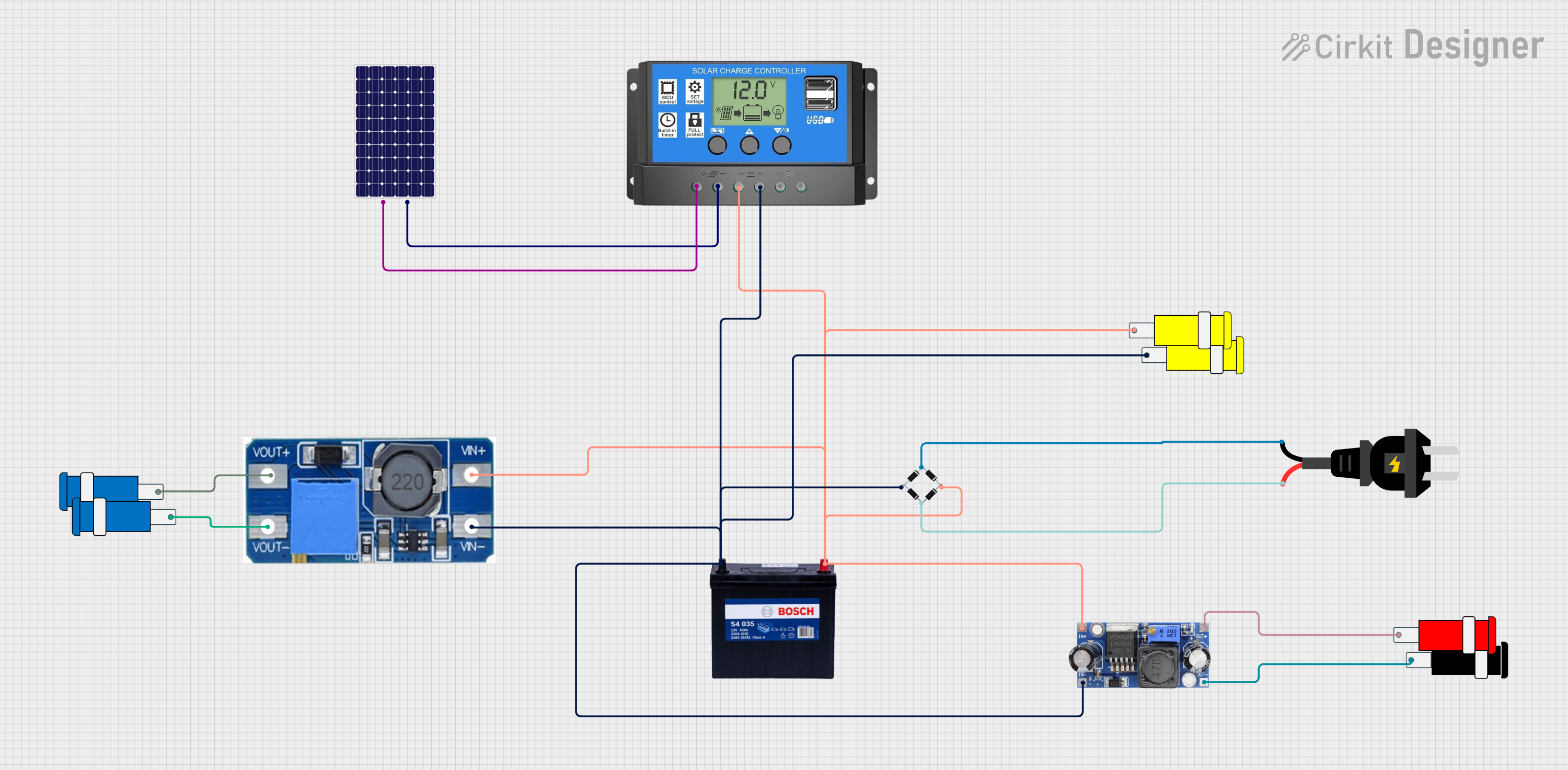 Open Project in Cirkit Designer
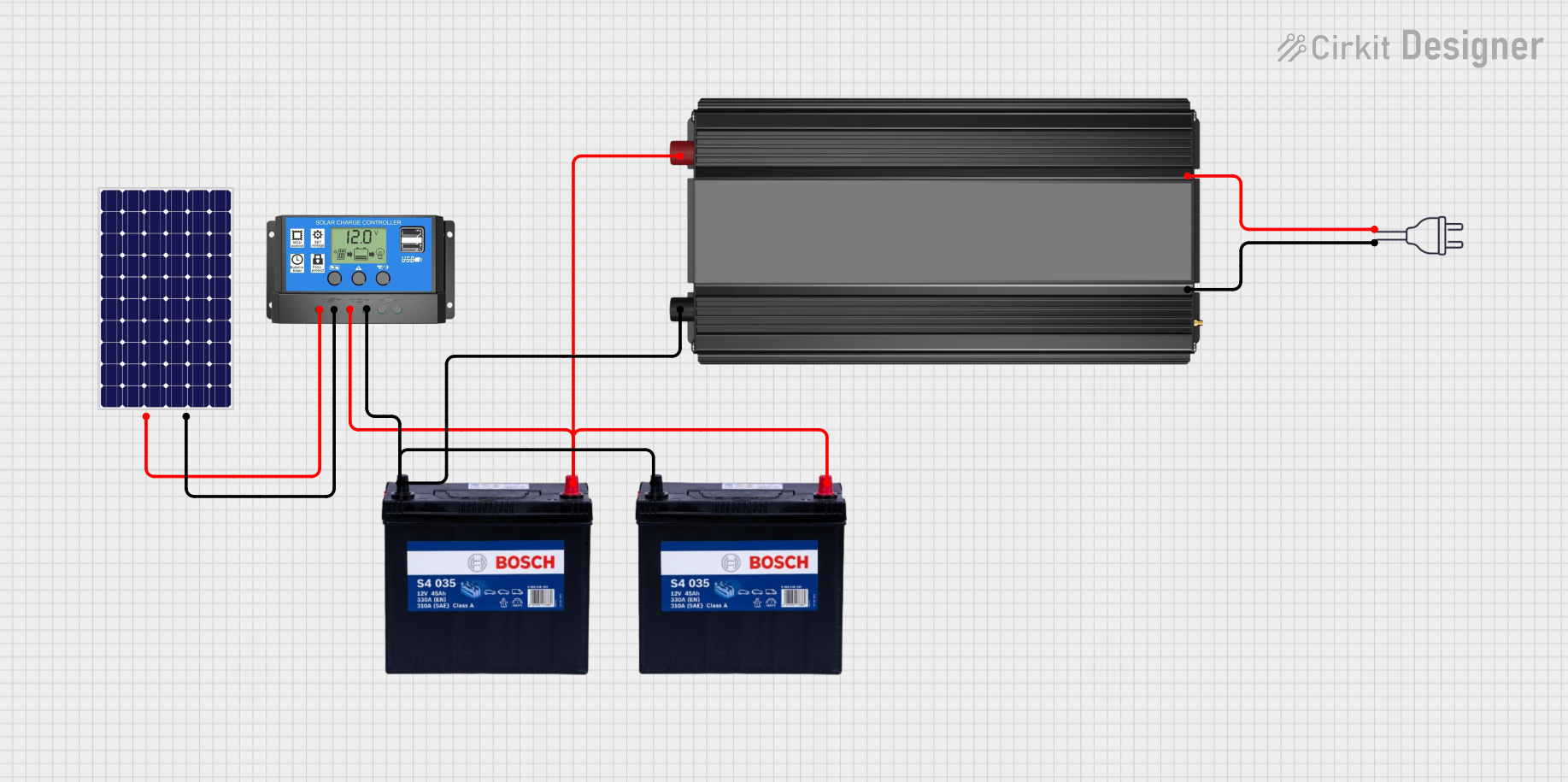 Open Project in Cirkit Designer
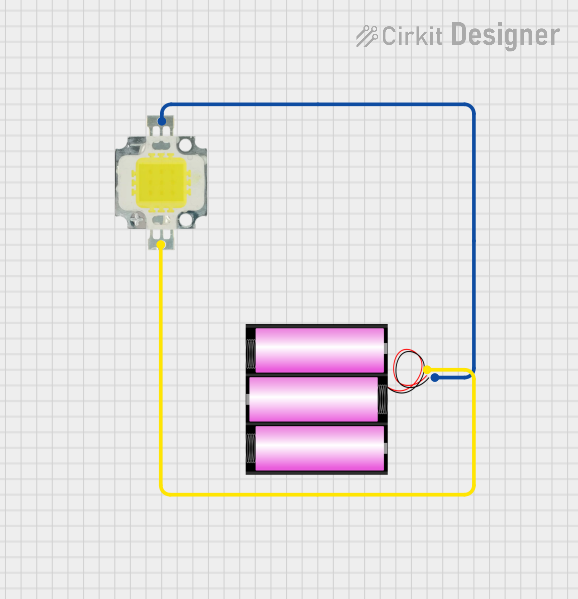 Open Project in Cirkit Designer
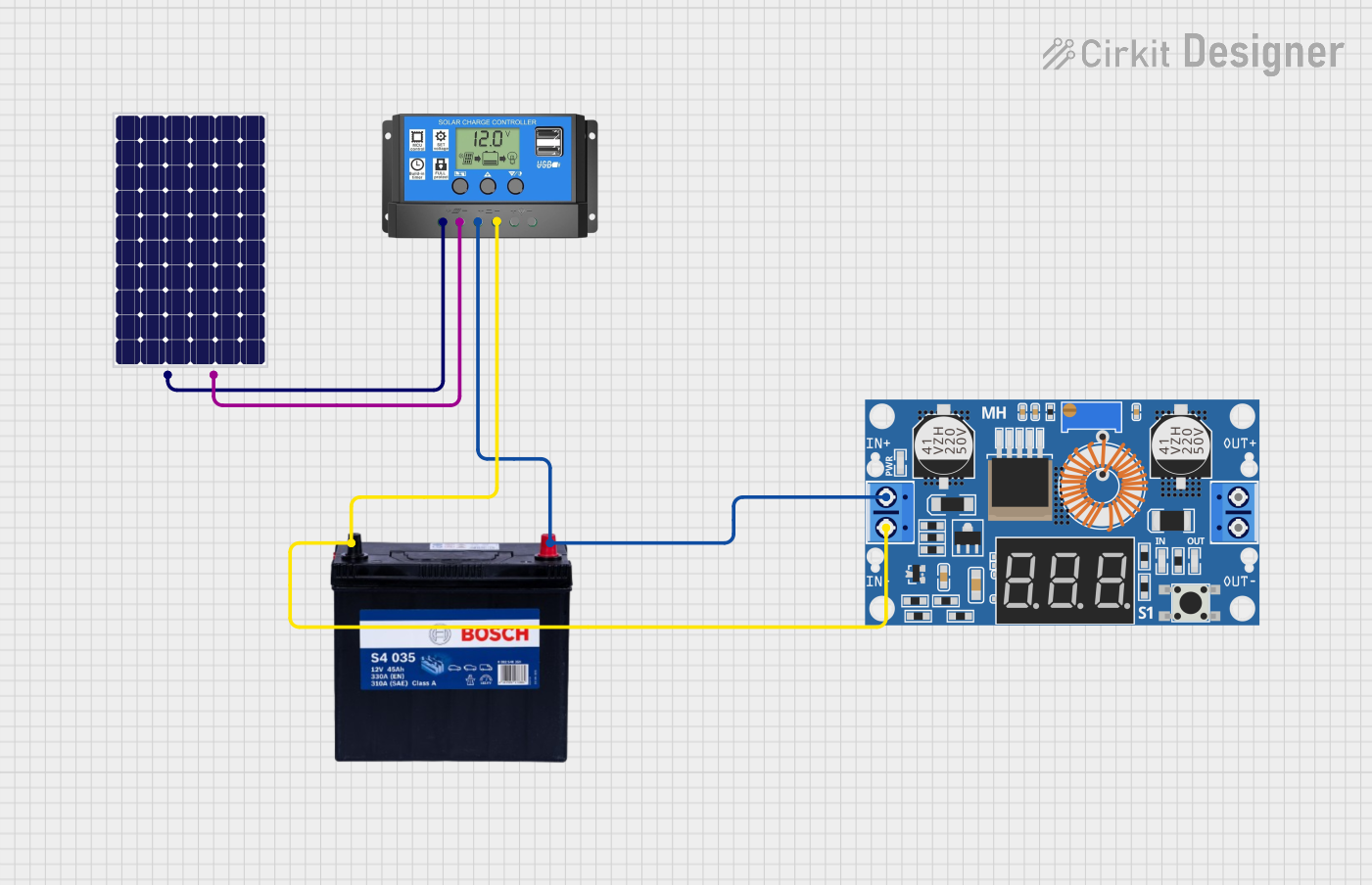 Open Project in Cirkit Designer
Explore Projects Built with 12VDC LEAD ACID BATTERY
Open Project in Cirkit DesignerOpen Project in Cirkit DesignerOpen Project in Cirkit DesignerOpen Project in Cirkit DesignerCommon Applications:
- Automotive starting, lighting, and ignition (SLI) systems
- Backup power for UPS and emergency systems
- Solar and wind energy storage
- Electric scooters, wheelchairs, and golf carts
- Alarm systems and security devices
Technical Specifications
Below are the key technical details of a standard 12VDC Lead Acid Battery:
| Parameter | Specification |
|---|---|
| Nominal Voltage | 12V |
| Capacity | Typically 7Ah to 200Ah (varies by model) |
| Chemistry | Lead dioxide (positive plate), sponge lead (negative plate), sulfuric acid electrolyte |
| Charging Voltage | 13.8V to 14.4V (depending on application) |
| Float Voltage | 13.2V to 13.8V |
| Discharge Cutoff Voltage | 10.5V to 11.0V |
| Maximum Discharge Current | Varies by model (e.g., 10A to 1000A) |
| Operating Temperature Range | -20°C to 50°C |
| Cycle Life | 200 to 1000 cycles (depending on depth of discharge) |
| Self-Discharge Rate | ~3% per month at 25°C |
| Weight | Varies by capacity (e.g., 2kg to 60kg) |
Terminal Configuration
The terminal configuration of a 12VDC Lead Acid Battery may vary depending on the model. Below is a general description of common terminal types:
| Terminal Type | Description |
|---|---|
| F1/F2 Faston Tabs | Flat, quick-connect tabs for small batteries |
| Bolt Terminals | Threaded posts for secure cable connections |
| Automotive Posts | Standard posts for car battery clamps |
Usage Instructions
How to Use the 12VDC Lead Acid Battery in a Circuit
- Determine the Load Requirements: Ensure the battery's capacity (Ah) and discharge current meet the power requirements of your application.
- Connect the Terminals:
- Identify the positive (+) and negative (-) terminals.
- Use appropriate connectors or clamps to attach the battery to your circuit.
- Ensure a secure and corrosion-free connection.
- Charging the Battery:
- Use a compatible lead acid battery charger with the correct voltage and current ratings.
- Set the charger to the recommended charging voltage (13.8V to 14.4V).
- Avoid overcharging, as it can damage the battery and reduce its lifespan.
- Discharging the Battery:
- Do not discharge the battery below the cutoff voltage (10.5V to 11.0V) to prevent damage.
- Monitor the battery voltage during use to avoid deep discharge.
Important Considerations and Best Practices
- Ventilation: Lead acid batteries release hydrogen gas during charging. Use the battery in a well-ventilated area to prevent gas buildup.
- Temperature: Avoid exposing the battery to extreme temperatures, as this can affect performance and lifespan.
- Maintenance: For flooded lead acid batteries, periodically check and refill the electrolyte levels with distilled water. Sealed lead acid (SLA) batteries are maintenance-free.
- Polarity: Always connect the positive terminal to the positive load and the negative terminal to the negative load. Reversing polarity can damage the battery and connected devices.
- Storage: Store the battery in a cool, dry place and recharge it every 3-6 months to prevent self-discharge.
Example: Connecting to an Arduino UNO
A 12VDC Lead Acid Battery can be used to power an Arduino UNO via a voltage regulator or DC-DC converter to step down the voltage to 5V. Below is an example circuit and code:
Circuit:
- Connect the positive terminal of the battery to the input of a 5V DC-DC converter.
- Connect the output of the converter to the Arduino UNO's 5V and GND pins.
- Ensure proper polarity and secure connections.
Code:
// Example code to blink an LED using Arduino UNO powered by a 12VDC Lead Acid Battery

const int ledPin = 13; // Pin connected to the onboard LED

void setup() {
  pinMode(ledPin, OUTPUT); // Set the LED pin as an output
}

void loop() {
  digitalWrite(ledPin, HIGH); // Turn the LED on
  delay(1000);                // Wait for 1 second
  digitalWrite(ledPin, LOW);  // Turn the LED off
  delay(1000);                // Wait for 1 second
}
Troubleshooting and FAQs
Common Issues and Solutions
| Issue | Possible Cause | Solution |
|---|---|---|
| Battery not charging | Charger malfunction or incorrect settings | Verify charger voltage and current ratings |
| Battery discharges too quickly | High load or aging battery | Reduce load or replace the battery |
| Corrosion on terminals | Exposure to moisture or acid leakage | Clean terminals and apply anti-corrosion grease |
| Low voltage after charging | Sulfation or internal damage | Perform a desulfation cycle (if possible) or replace the battery |
| Overheating during use | Excessive load or poor ventilation | Reduce load and ensure proper ventilation |
FAQs
Can I use a 12VDC Lead Acid Battery indoors?
- Yes, but ensure proper ventilation to prevent hydrogen gas buildup during charging.
How long does a 12VDC Lead Acid Battery last?
- The lifespan depends on usage and maintenance. Typically, it lasts 3-5 years with proper care.
Can I connect multiple batteries together?
- Yes, you can connect batteries in series to increase voltage or in parallel to increase capacity. Ensure all batteries are of the same type and capacity.
What happens if I overcharge the battery?
- Overcharging can cause overheating, gas release, and damage to the battery. Always use a charger with overcharge protection.
By following these guidelines, you can ensure safe and efficient use of your 12VDC Lead Acid Battery in various applications.