
How to Use MCP23S17: Examples, Pinouts, and Specs
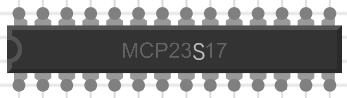
 Design with MCP23S17 in Cirkit Designer
Introduction
The MCP23S17 is a 16-bit I/O expander with an SPI (Serial Peripheral Interface) communication interface. It is designed to expand the number of GPIO (General Purpose Input/Output) pins available in microcontroller-based applications. The device features two 8-bit ports (PORTA and PORTB), which can be individually configured as input or output. Additionally, it supports interrupt-on-change functionality, making it ideal for applications requiring event-driven input monitoring.
Explore Projects Built with MCP23S17
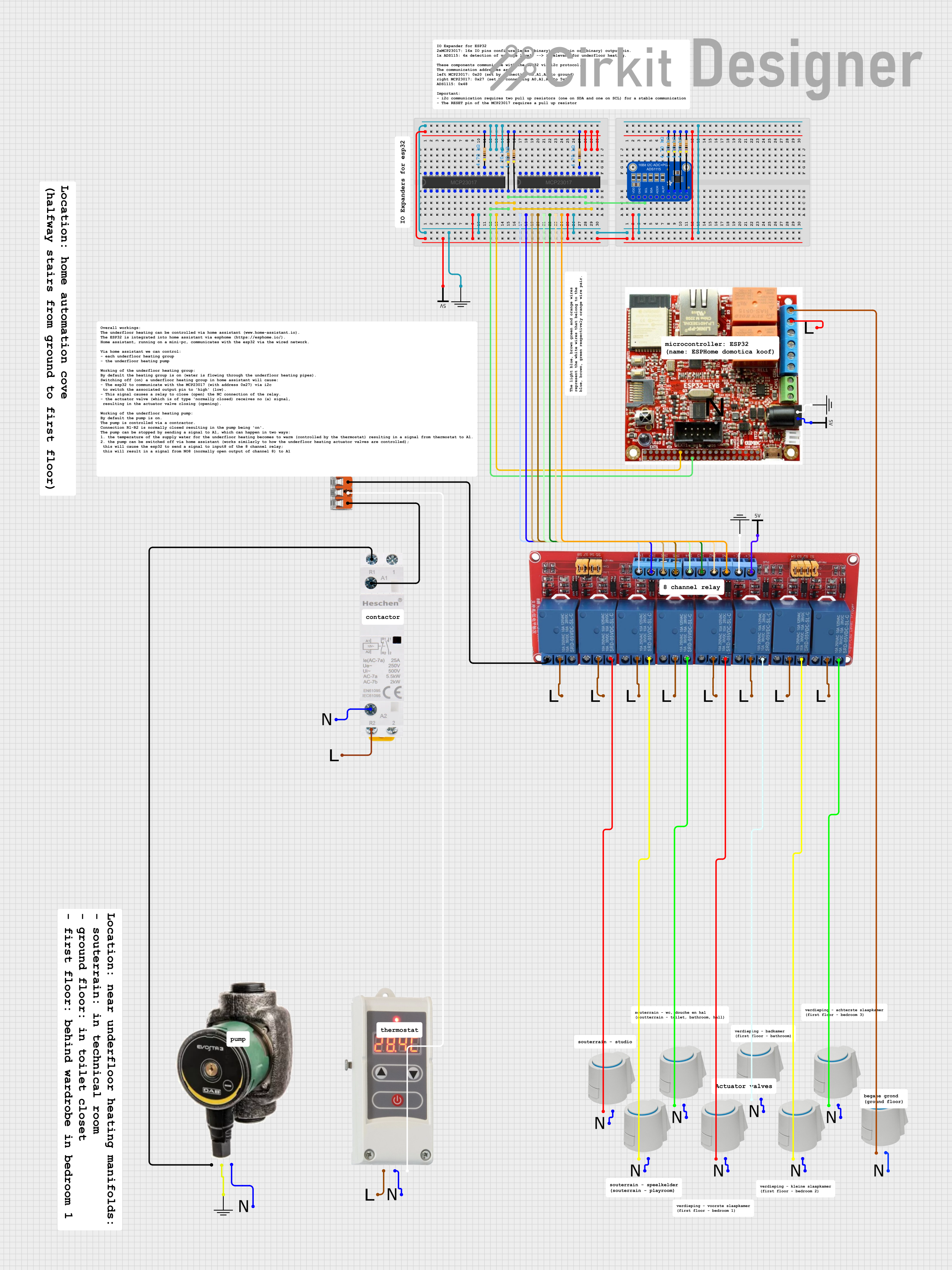 Open Project in Cirkit Designer
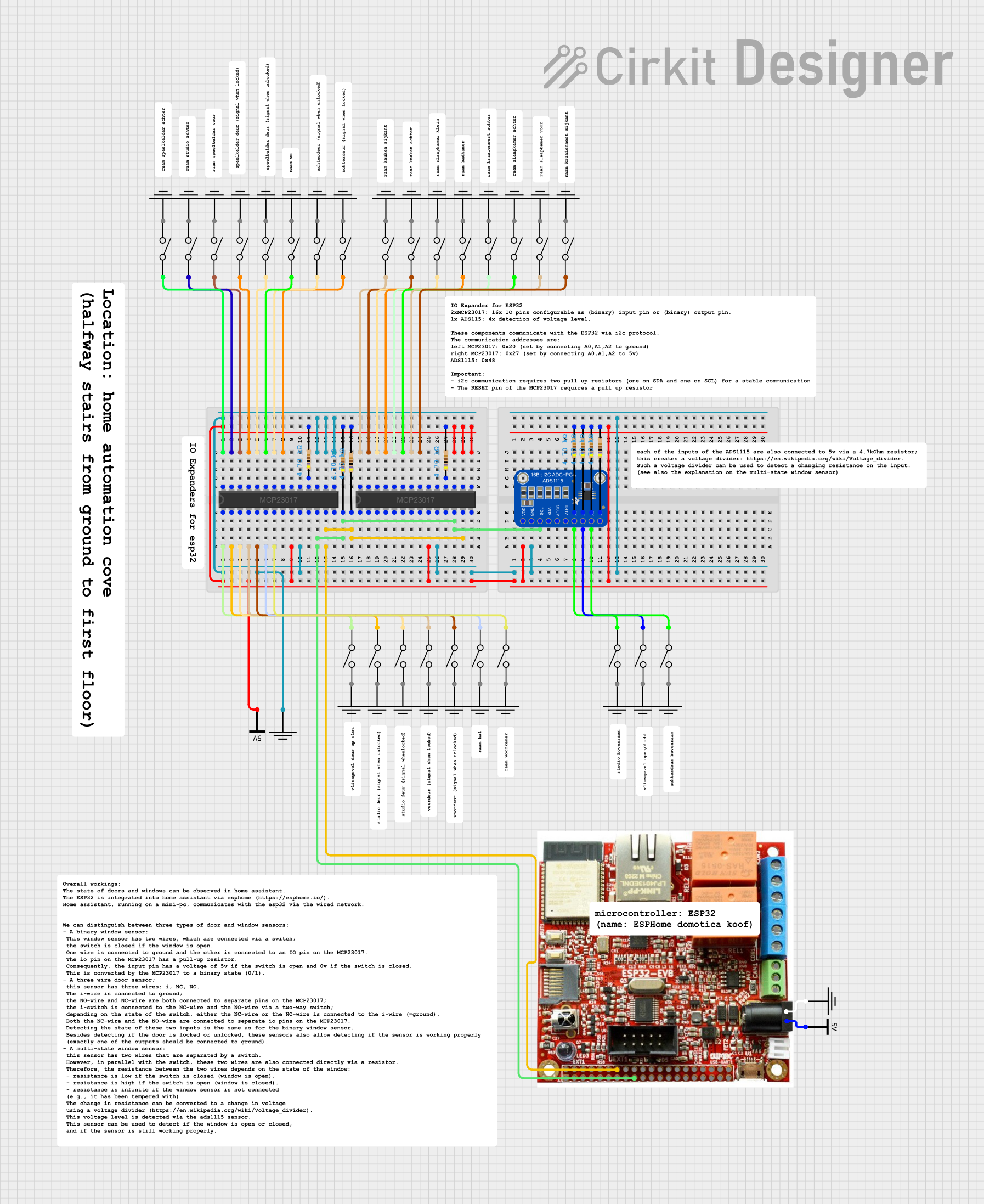 Open Project in Cirkit Designer
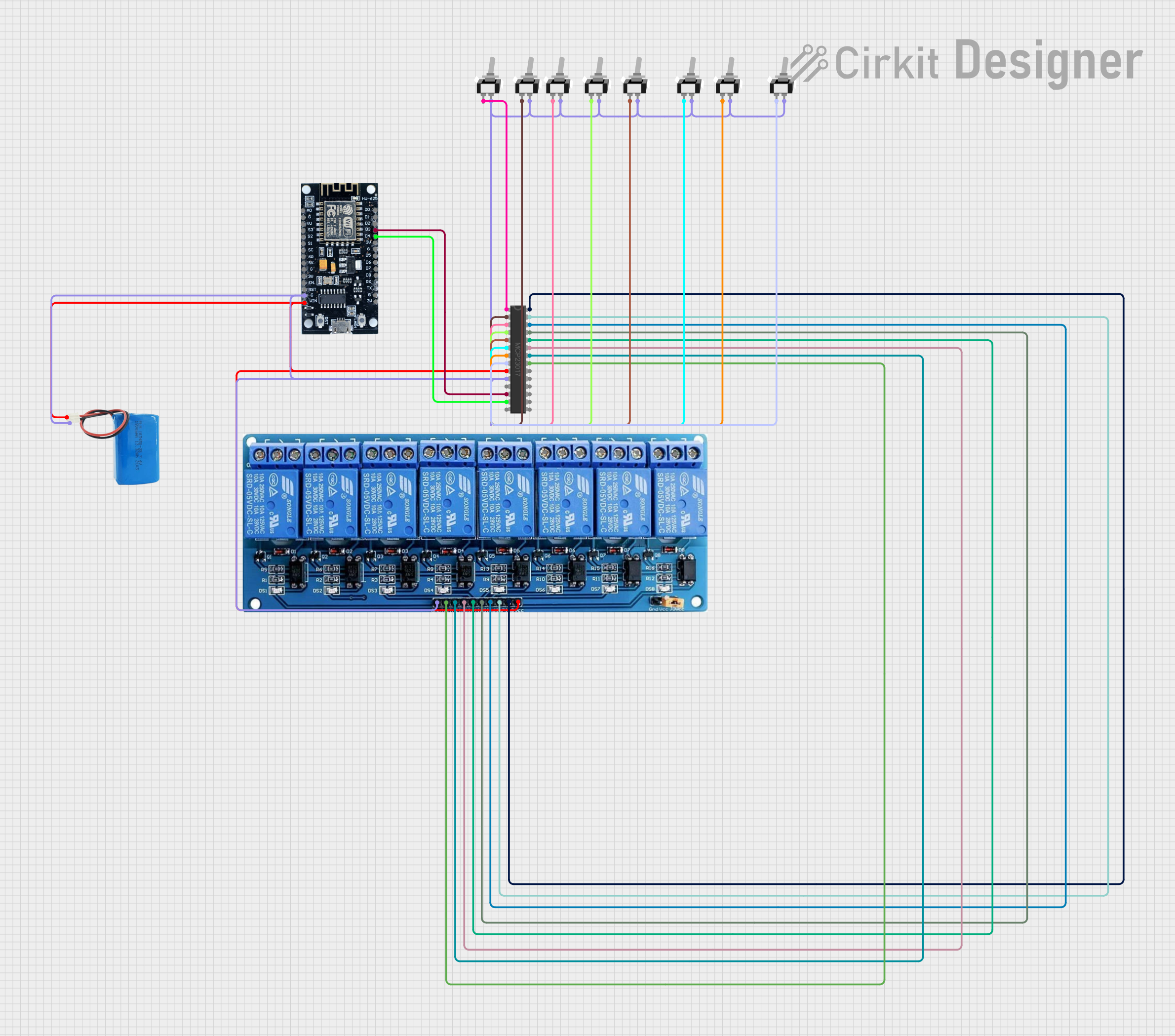 Open Project in Cirkit Designer
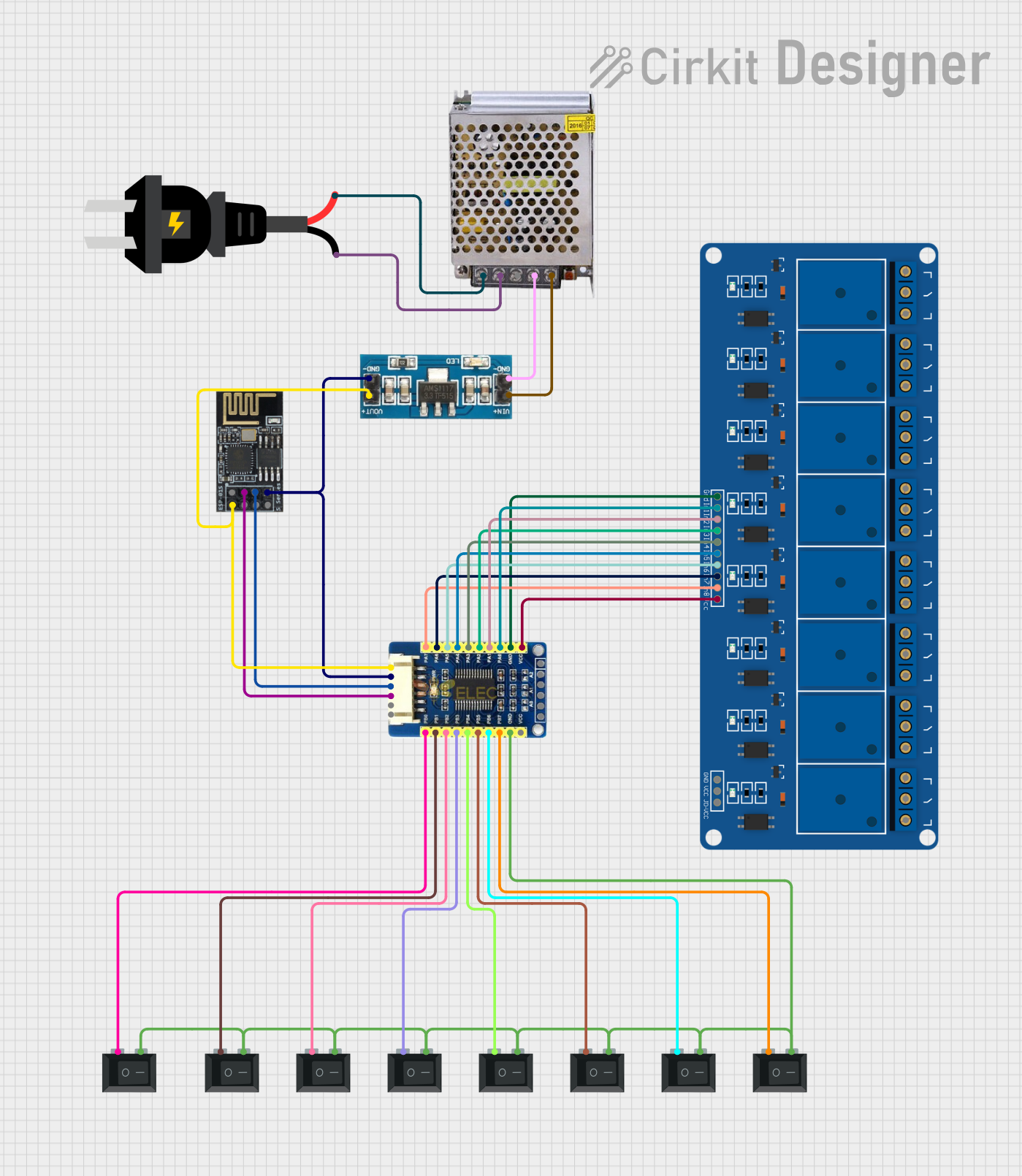 Open Project in Cirkit Designer
Explore Projects Built with MCP23S17
Open Project in Cirkit DesignerOpen Project in Cirkit DesignerOpen Project in Cirkit DesignerOpen Project in Cirkit DesignerCommon Applications and Use Cases
- Expanding GPIO pins in microcontroller systems
- Keypad and button matrix interfacing
- LED control and multiplexing
- Sensor data acquisition
- Industrial control systems
- Home automation projects
Technical Specifications
The MCP23S17 is a versatile and robust I/O expander. Below are its key technical details:
| Parameter | Value |
|---|---|
| Operating Voltage (VDD) | 1.8V to 5.5V |
| Communication Interface | SPI (up to 10 MHz) |
| GPIO Pins | 16 (split into two 8-bit ports) |
| GPIO Voltage Levels | 0V to VDD |
| Interrupt Pins | 2 (INTA, INTB) |
| Maximum Sink Current | 25 mA per pin |
| Maximum Source Current | 25 mA per pin |
| Package Options | PDIP, SOIC, SSOP, QFN |
| Operating Temperature | -40°C to +125°C |
Pin Configuration and Descriptions
The MCP23S17 has 28 pins. Below is the pinout and description:
| Pin Number | Pin Name | Description |
|---|---|---|
| 1 | GPB0 | GPIO Port B, Bit 0 |
| 2 | GPB1 | GPIO Port B, Bit 1 |
| 3 | GPB2 | GPIO Port B, Bit 2 |
| 4 | GPB3 | GPIO Port B, Bit 3 |
| 5 | GPB4 | GPIO Port B, Bit 4 |
| 6 | GPB5 | GPIO Port B, Bit 5 |
| 7 | GPB6 | GPIO Port B, Bit 6 |
| 8 | GPB7 | GPIO Port B, Bit 7 |
| 9 | VSS | Ground (0V) |
| 10 | INTB | Interrupt output for Port B |
| 11 | INTA | Interrupt output for Port A |
| 12 | SCL/SCK | SPI Clock Input |
| 13 | SDA/SDI | SPI Data Input |
| 14 | A0 | Address Pin 0 (used for device addressing) |
| 15 | A1 | Address Pin 1 (used for device addressing) |
| 16 | A2 | Address Pin 2 (used for device addressing) |
| 17 | RESET | Active-low Reset Input |
| 18 | CS | Chip Select (Active Low) |
| 19 | SDO | SPI Data Output |
| 20 | VDD | Power Supply (1.8V to 5.5V) |
| 21 | GPA7 | GPIO Port A, Bit 7 |
| 22 | GPA6 | GPIO Port A, Bit 6 |
| 23 | GPA5 | GPIO Port A, Bit 5 |
| 24 | GPA4 | GPIO Port A, Bit 4 |
| 25 | GPA3 | GPIO Port A, Bit 3 |
| 26 | GPA2 | GPIO Port A, Bit 2 |
| 27 | GPA1 | GPIO Port A, Bit 1 |
| 28 | GPA0 | GPIO Port A, Bit 0 |
Usage Instructions
The MCP23S17 is straightforward to use in SPI-based systems. Below are the steps and considerations for integrating it into your circuit:
Connecting the MCP23S17
- Power Supply: Connect the VDD pin to a power source (1.8V to 5.5V) and the VSS pin to ground.
- SPI Interface: Connect the SCL/SCK, SDA/SDI, and SDO pins to the SPI clock, data input, and data output lines of your microcontroller, respectively.
- Chip Select: Connect the CS pin to a GPIO pin on your microcontroller to enable/disable communication with the MCP23S17.
- Address Pins: Configure the A0, A1, and A2 pins to set the device address (useful when multiple MCP23S17 devices are on the same SPI bus).
- GPIO Pins: Connect the GPAx and GPBx pins to your desired peripherals (e.g., LEDs, switches, sensors).
- Interrupts: Optionally, connect the INTA and INTB pins to monitor interrupt events.
Configuring the MCP23S17
The MCP23S17 is configured by writing to its internal registers via SPI. Below is an example of how to configure the device using an Arduino UNO:
#include <SPI.h>

// Define MCP23S17 SPI settings
#define MCP23S17_CS 10  // Chip Select pin for MCP23S17
#define IOCON 0x0A      // IOCON register address
#define IODIRA 0x00     // I/O Direction register for Port A
#define IODIRB 0x01     // I/O Direction register for Port B
#define GPIOA 0x12      // GPIO register for Port A
#define GPIOB 0x13      // GPIO register for Port B

void setup() {
  pinMode(MCP23S17_CS, OUTPUT);
  digitalWrite(MCP23S17_CS, HIGH); // Set CS high to disable MCP23S17
  SPI.begin();                     // Initialize SPI

  // Configure MCP23S17
  digitalWrite(MCP23S17_CS, LOW);  // Select MCP23S17
  SPI.transfer(0x40);              // Write opcode (0x40 = write, address = 0)
  SPI.transfer(IOCON);             // Select IOCON register
  SPI.transfer(0x28);              // Set IOCON (e.g., enable hardware addressing)
  digitalWrite(MCP23S17_CS, HIGH); // Deselect MCP23S17

  // Set Port A as output and Port B as input
  digitalWrite(MCP23S17_CS, LOW);
  SPI.transfer(0x40);              // Write opcode
  SPI.transfer(IODIRA);            // Select IODIRA register
  SPI.transfer(0x00);              // Set all Port A pins as output
  digitalWrite(MCP23S17_CS, HIGH);

  digitalWrite(MCP23S17_CS, LOW);
  SPI.transfer(0x40);              // Write opcode
  SPI.transfer(IODIRB);            // Select IODIRB register
  SPI.transfer(0xFF);              // Set all Port B pins as input
  digitalWrite(MCP23S17_CS, HIGH);
}

void loop() {
  // Example: Toggle Port A pins
  digitalWrite(MCP23S17_CS, LOW);
  SPI.transfer(0x40);              // Write opcode
  SPI.transfer(GPIOA);             // Select GPIOA register
  SPI.transfer(0xFF);              // Set all Port A pins high
  digitalWrite(MCP23S17_CS, HIGH);
  delay(500);

  digitalWrite(MCP23S17_CS, LOW);
  SPI.transfer(0x40);              // Write opcode
  SPI.transfer(GPIOA);             // Select GPIOA register
  SPI.transfer(0x00);              // Set all Port A pins low
  digitalWrite(MCP23S17_CS, HIGH);
  delay(500);
}
Best Practices
- Use pull-up or pull-down resistors on GPIO pins to ensure stable logic levels.
- Decouple the power supply with a 0.1 µF capacitor near the VDD pin.
- Avoid exceeding the maximum current ratings to prevent damage to the device.
Troubleshooting and FAQs
Common Issues
No Response from MCP23S17:
- Ensure the CS pin is correctly toggled during SPI communication.
- Verify the SPI clock speed does not exceed 10 MHz.
- Check the wiring of the SPI lines (SCK, SDI, SDO).
Interrupts Not Triggering:
- Confirm that the interrupt-on-change feature is enabled in the configuration registers.
- Ensure the INTA/INTB pins are connected to the microcontroller.
Incorrect GPIO Behavior:
- Verify the IODIRA and IODIRB registers are correctly configured for input/output.
- Check for loose or incorrect connections on the GPIO pins.
FAQs
Q: Can I use multiple MCP23S17 devices on the same SPI bus?
A