
How to Use SERVO MOTOR 50KG 14V: Examples, Pinouts, and Specs

 Design with SERVO MOTOR 50KG 14V in Cirkit Designer
Introduction
The SERVO MOTOR 50KG 14V is a high-torque servo motor designed to deliver up to 50 kg-cm of torque at a rated voltage of 14V. This powerful motor is ideal for applications requiring precise angular position control, such as robotics, industrial automation, RC vehicles, and robotic arms. Its robust design and high torque output make it suitable for heavy-duty tasks where precision and reliability are critical.
Common applications include:
- Robotic arms and grippers
- Industrial automation systems
- RC vehicles (e.g., cars, boats, and planes)
- Pan-tilt camera systems
- Heavy-duty servo-controlled mechanisms
Explore Projects Built with SERVO MOTOR 50KG 14V
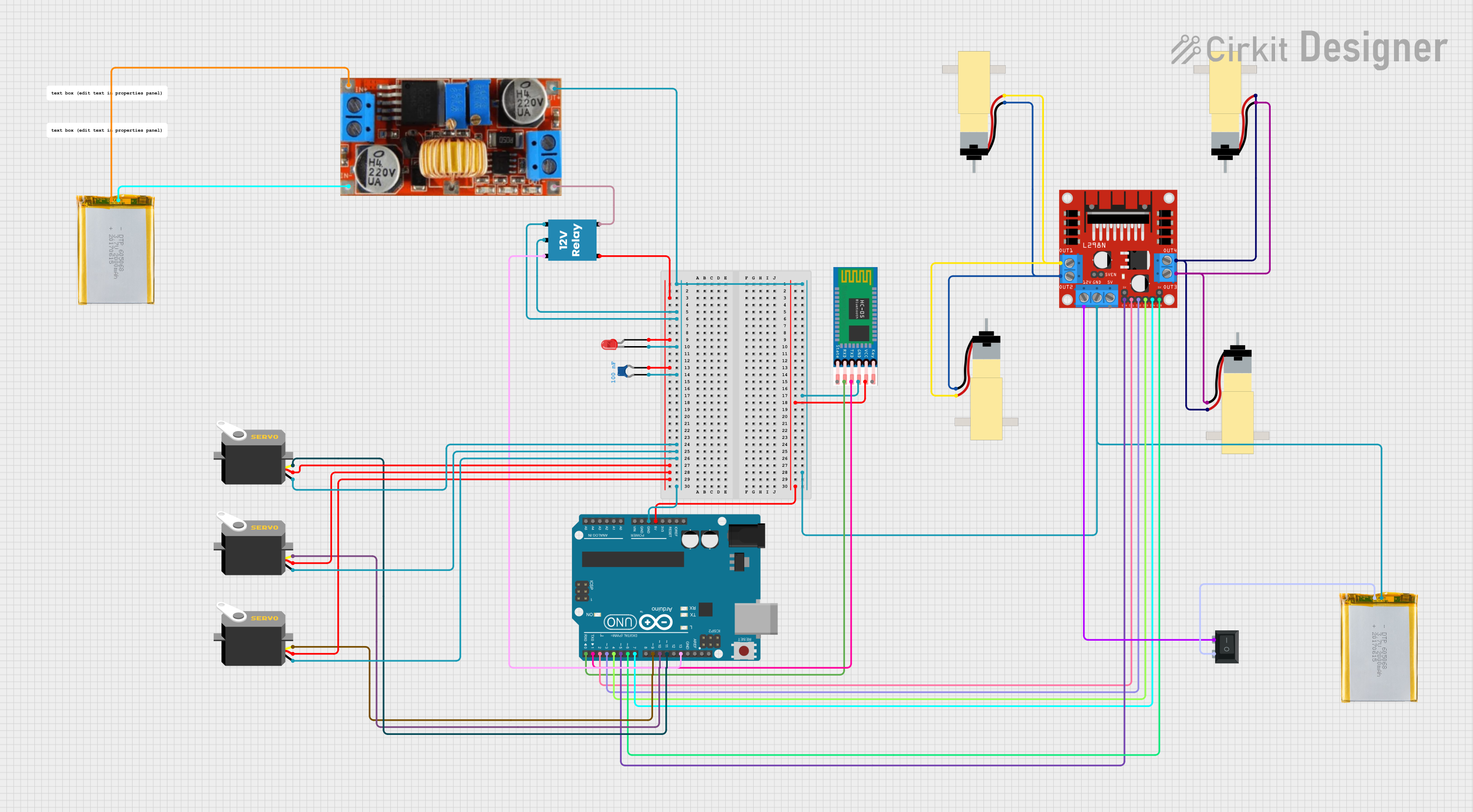 Open Project in Cirkit Designer
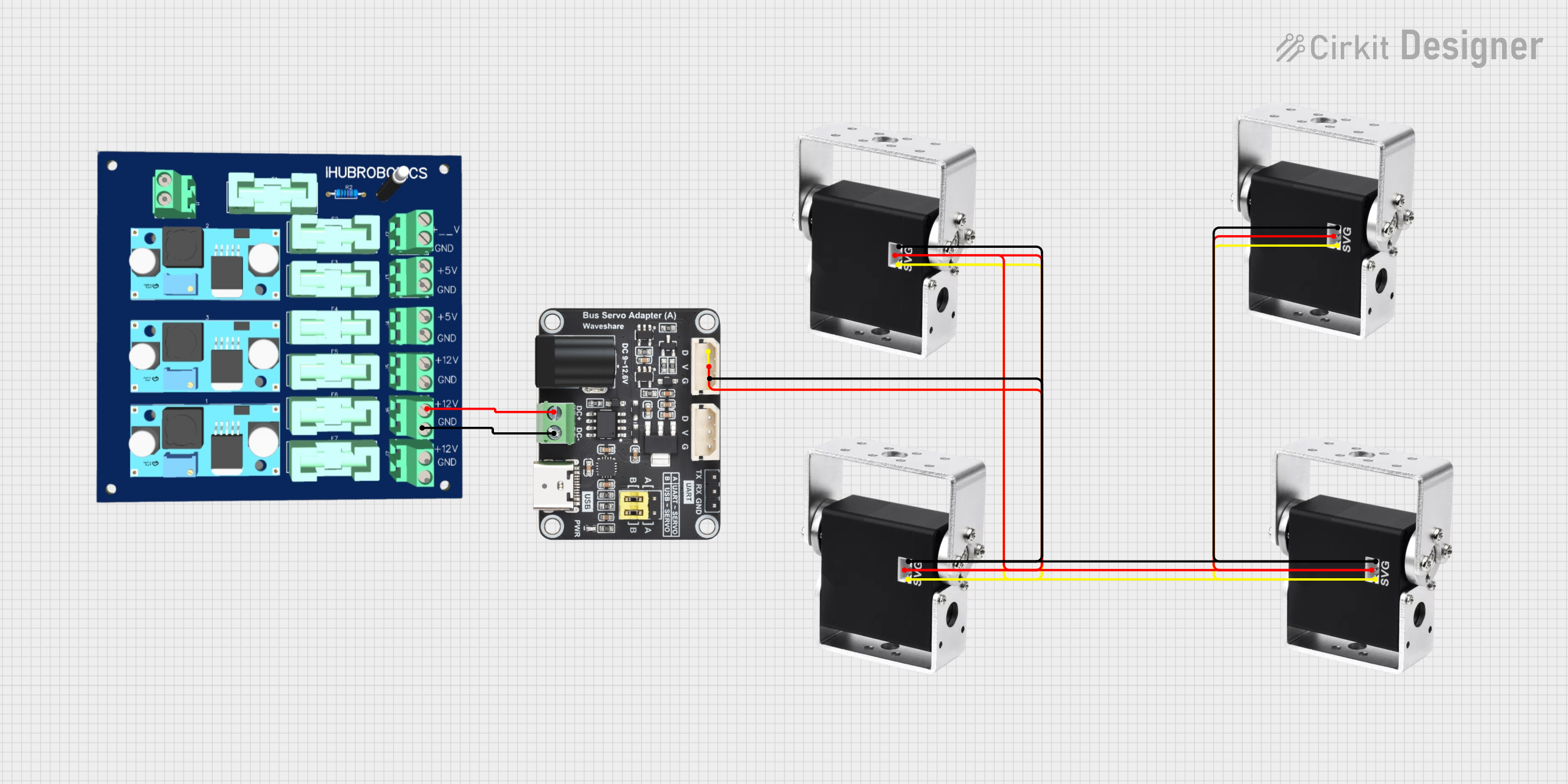 Open Project in Cirkit Designer
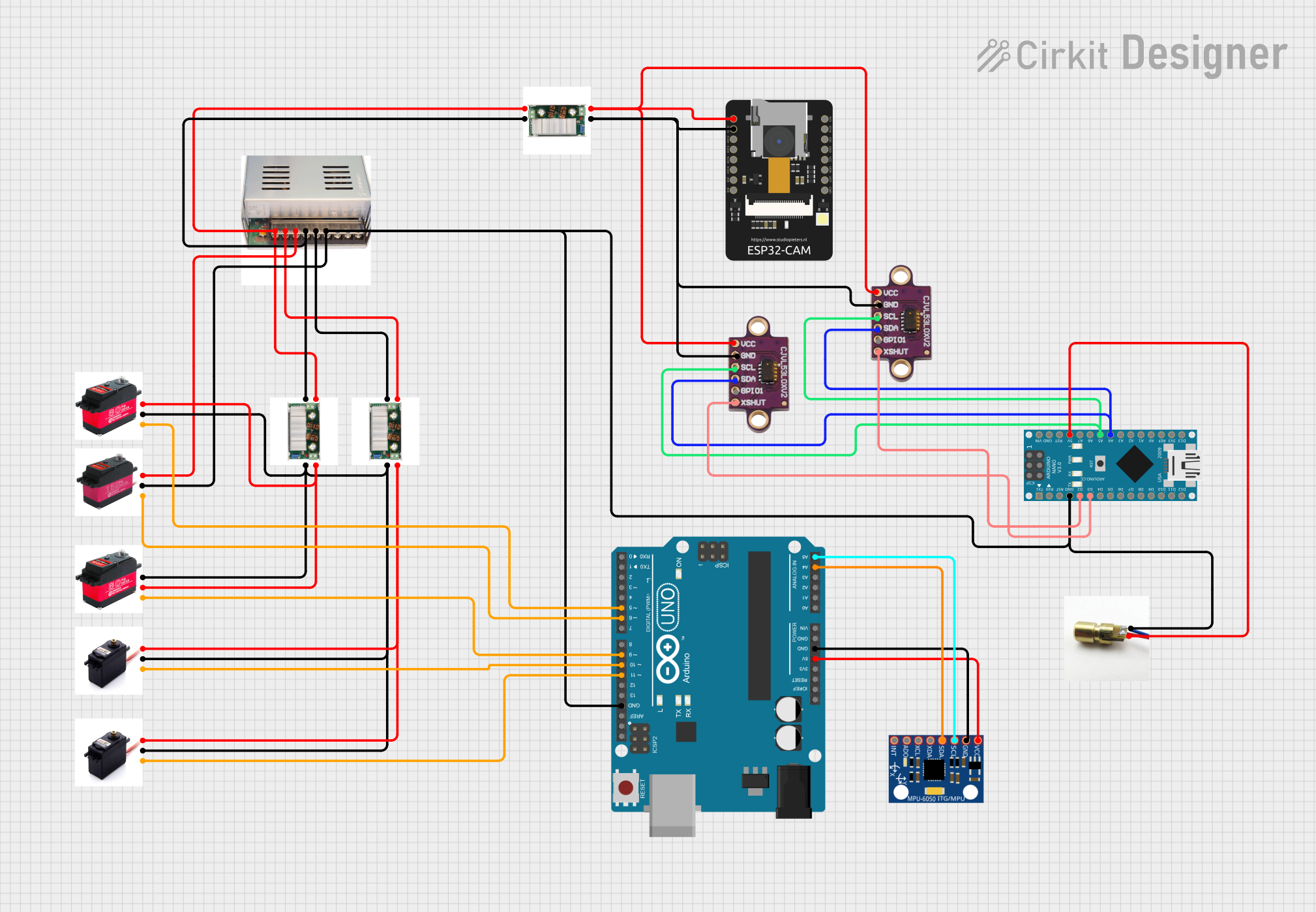 Open Project in Cirkit Designer
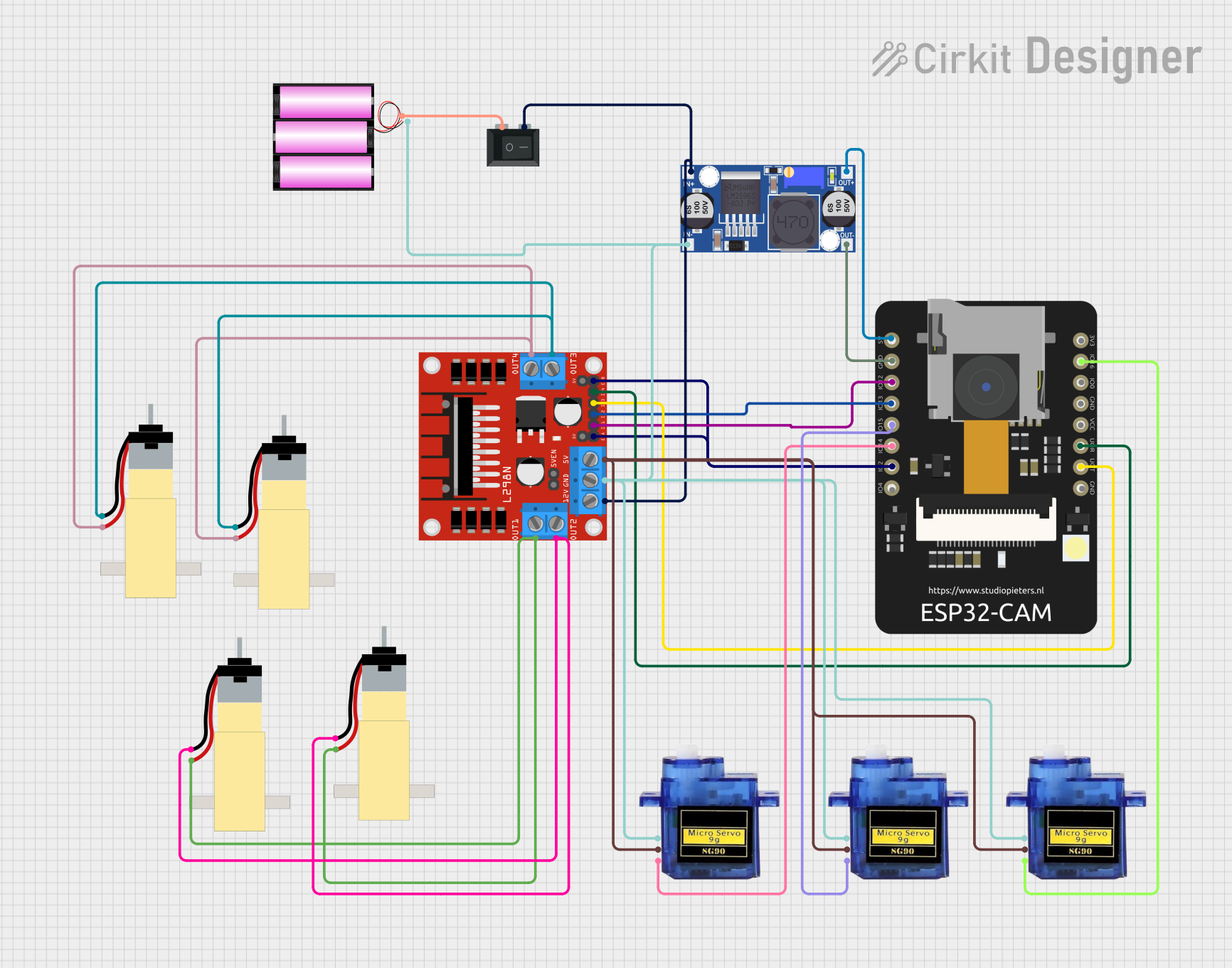 Open Project in Cirkit Designer
Explore Projects Built with SERVO MOTOR 50KG 14V
Open Project in Cirkit DesignerOpen Project in Cirkit DesignerOpen Project in Cirkit DesignerOpen Project in Cirkit DesignerTechnical Specifications
Below are the key technical details of the SERVO MOTOR 50KG 14V:
| Parameter | Specification |
|---|---|
| Operating Voltage | 12V - 14V |
| Stall Torque | 50 kg-cm (at 14V) |
| Operating Speed | 0.16 sec/60° (at 14V, no load) |
| Control Signal | PWM (Pulse Width Modulation) |
| PWM Signal Range | 500 µs - 2500 µs |
| Angle Range | 0° - 180° |
| Gear Material | Metal |
| Bearing Type | Dual ball bearings |
| Motor Type | Coreless motor |
| Weight | 180 g |
| Dimensions | 40 mm x 20 mm x 40 mm |
| Operating Temperature | -10°C to 50°C |
Pin Configuration
The SERVO MOTOR 50KG 14V typically has a 3-wire interface. The pin configuration is as follows:
| Pin Name | Wire Color | Description |
|---|---|---|
| VCC | Red | Power supply (12V - 14V) |
| GND | Black | Ground |
| Signal | Yellow | PWM control signal |
Usage Instructions
How to Use the Servo Motor in a Circuit
- Power Supply: Connect the red wire (VCC) to a stable 12V-14V power source. Ensure the power supply can provide sufficient current (at least 3A) to handle the motor's peak load.
- Ground Connection: Connect the black wire (GND) to the ground of your power supply and the ground of your control circuit (e.g., Arduino).
- PWM Signal: Connect the yellow wire (Signal) to a PWM-capable pin on your microcontroller (e.g., Arduino UNO pin 9 or 10).
- Control Signal: Use a PWM signal with a pulse width between 500 µs (0°) and 2500 µs (180°) to control the servo's angular position.
Important Considerations and Best Practices
- Power Supply: Use a dedicated power supply for the servo motor to avoid voltage drops that could affect other components in your circuit.
- PWM Signal: Ensure the PWM signal is clean and within the specified range to avoid erratic behavior.
- Load: Avoid exceeding the maximum torque rating (50 kg-cm) to prevent damage to the motor.
- Mounting: Securely mount the servo to prevent vibrations or misalignment during operation.
- Heat Management: Operate the servo within the specified temperature range (-10°C to 50°C) to avoid overheating.
Example Code for Arduino UNO
Below is an example of how to control the SERVO MOTOR 50KG 14V using an Arduino UNO:
#include <Servo.h> // Include the Servo library

Servo myServo; // Create a Servo object

void setup() {
  myServo.attach(9); // Attach the servo to pin 9
}

void loop() {
  myServo.write(0); // Move servo to 0 degrees
  delay(1000); // Wait for 1 second

  myServo.write(90); // Move servo to 90 degrees
  delay(1000); // Wait for 1 second

  myServo.write(180); // Move servo to 180 degrees
  delay(1000); // Wait for 1 second
}
Code Explanation:
- The
Servolibrary is used to control the servo motor. - The
attach()function links the servo to a PWM-capable pin (pin 9 in this case). - The
write()function sets the servo's position in degrees (0° to 180°). - Delays are added to allow the servo to reach the desired position before the next command.
Troubleshooting and FAQs
Common Issues and Solutions
Servo Not Moving:
- Cause: Insufficient power supply.
- Solution: Ensure the power supply provides 12V-14V and sufficient current (at least 3A).
Erratic Movement:
- Cause: Noisy or incorrect PWM signal.
- Solution: Verify the PWM signal is within the 500 µs - 2500 µs range and free of noise.
Overheating:
- Cause: Prolonged operation under high load or outside the temperature range.
- Solution: Reduce the load or ensure proper ventilation to dissipate heat.
Limited Range of Motion:
- Cause: Incorrect PWM signal range or mechanical obstruction.
- Solution: Check the PWM signal and ensure there are no physical obstructions.
FAQs
Q1: Can I power the servo directly from the Arduino?
A1: No, the servo requires a higher voltage (12V-14V) and current than the Arduino can provide. Use an external power supply.
Q2: What happens if I exceed the torque rating?
A2: Exceeding the torque rating can damage the motor or gears. Always operate within the specified limits.
Q3: Can I use this servo for continuous rotation?
A3: No, this servo is designed for positional control (0° to 180°). For continuous rotation, use a modified or dedicated continuous rotation servo.
Q4: How do I extend the servo's lifespan?
A4: Operate within the specified voltage, torque, and temperature limits. Avoid sudden or excessive loads.
This concludes the documentation for the SERVO MOTOR 50KG 14V.