
How to Use Sensor de partícules en suspensió: Examples, Pinouts, and Specs
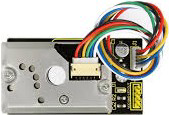
 Design with Sensor de partícules en suspensió in Cirkit Designer
Introduction
The Sensor de Partícules en Suspensió is a device designed to detect and measure the concentration of suspended particles in air or liquid. It is widely used in applications such as environmental monitoring, air quality assessment, industrial process control, and HVAC systems. By providing real-time data on particulate matter, this sensor helps ensure compliance with safety standards and supports efforts to maintain healthy environments.
Common applications include:
- Air quality monitoring for PM2.5 and PM10 particles
- Industrial dust monitoring
- Liquid contamination detection
- HVAC system efficiency analysis
Explore Projects Built with Sensor de partícules en suspensió
 Open Project in Cirkit Designer
 Open Project in Cirkit Designer
 Open Project in Cirkit Designer
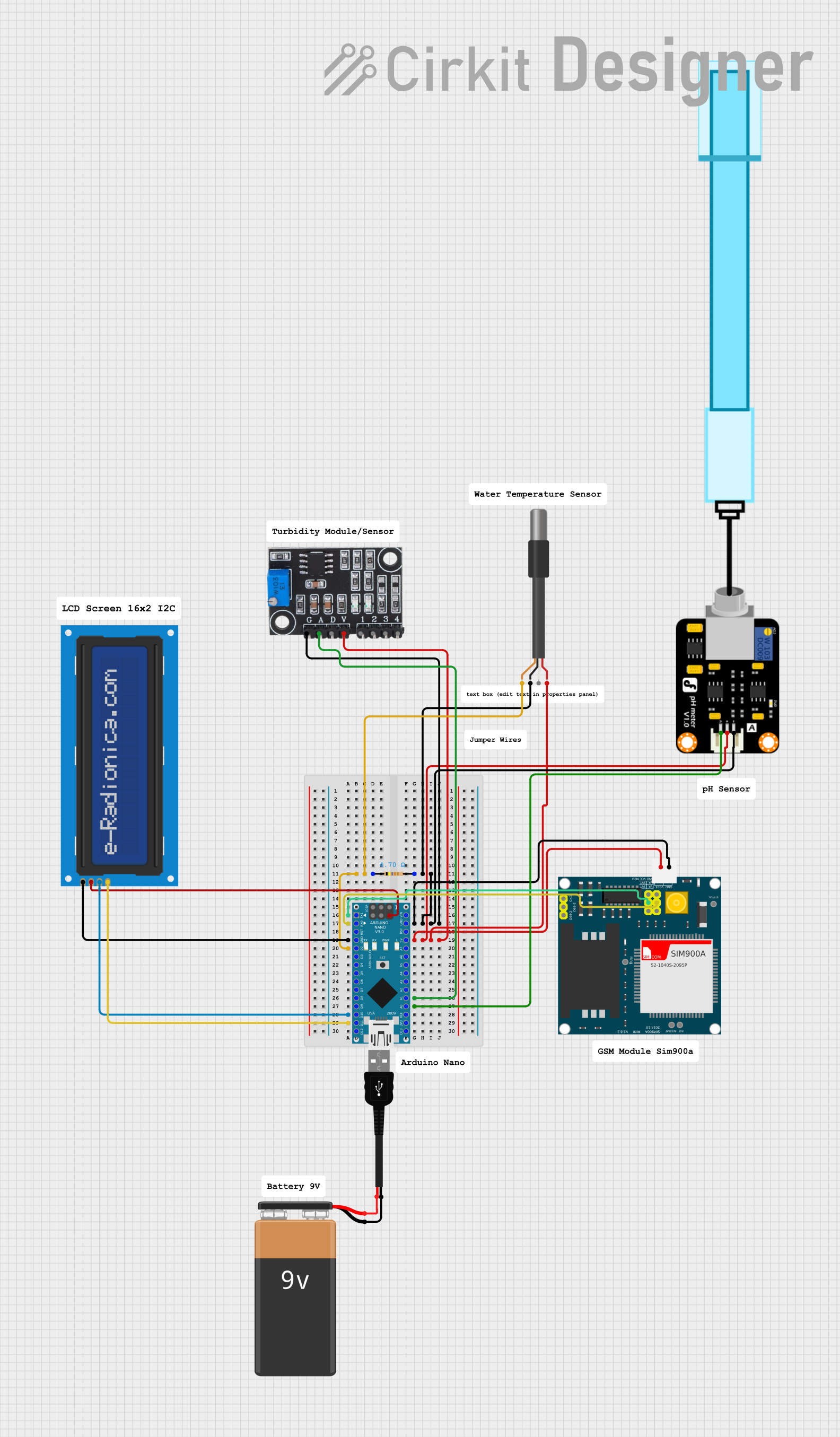 Open Project in Cirkit Designer
Explore Projects Built with Sensor de partícules en suspensió
Open Project in Cirkit DesignerOpen Project in Cirkit DesignerOpen Project in Cirkit DesignerOpen Project in Cirkit DesignerTechnical Specifications
Below are the key technical details of the Sensor de Partícules en Suspensió:
| Parameter | Value |
|---|---|
| Operating Voltage | 5V DC |
| Operating Current | 100 mA (typical) |
| Particle Size Detection | 0.3 µm to 10 µm |
| Measurement Range | 0 to 1,000 µg/m³ |
| Output Signal Type | Digital (UART/Serial) or PWM |
| Response Time | < 1 second |
| Operating Temperature | -10°C to 50°C |
| Operating Humidity | 0% to 95% RH (non-condensing) |
| Dimensions | 50 mm x 40 mm x 20 mm |
Pin Configuration and Descriptions
The sensor typically comes with a 6-pin connector. The pinout is as follows:
| Pin | Name | Description |
|---|---|---|
| 1 | VCC | Power supply input (5V DC) |
| 2 | GND | Ground connection |
| 3 | TXD | UART Transmit (data output) |
| 4 | RXD | UART Receive (data input, optional) |
| 5 | PWM | Pulse Width Modulation output for particle data |
| 6 | RESET | Reset pin (active low, optional) |
Usage Instructions
How to Use the Sensor in a Circuit
- Power the Sensor: Connect the VCC pin to a 5V DC power source and the GND pin to ground.
- Data Connection:
- For UART communication, connect the TXD pin to the RX pin of your microcontroller (e.g., Arduino UNO) and the RXD pin to the TX pin of the microcontroller.
- For PWM output, connect the PWM pin to a digital input pin on your microcontroller.
- Optional Reset: If needed, connect the RESET pin to a GPIO pin on your microcontroller for manual or software-based resets.
- Read Data: Use the appropriate protocol (UART or PWM) to read particle concentration data from the sensor.
Important Considerations and Best Practices
- Placement: Install the sensor in a location with good airflow for accurate readings. Avoid placing it near sources of vibration or excessive heat.
- Power Supply: Use a stable 5V DC power source to ensure reliable operation.
- Warm-Up Time: Allow the sensor to warm up for 30 seconds after powering on for accurate measurements.
- Data Filtering: Implement software filtering to smooth out noise in the data, especially when using PWM output.
- Maintenance: Periodically clean the sensor's air inlet to prevent dust accumulation, which can affect accuracy.
Example Code for Arduino UNO
Below is an example of how to interface the sensor with an Arduino UNO using UART communication:
#include <SoftwareSerial.h>

// Define RX and TX pins for SoftwareSerial
SoftwareSerial particleSensor(10, 11); // RX = pin 10, TX = pin 11

void setup() {
  Serial.begin(9600); // Initialize Serial Monitor
  particleSensor.begin(9600); // Initialize sensor communication

  Serial.println("Particle Sensor Initialized");
}

void loop() {
  if (particleSensor.available()) {
    // Read data from the sensor
    String data = particleSensor.readStringUntil('\n');

    // Print the received data to the Serial Monitor
    Serial.println("Particle Data: " + data);
  }

  delay(1000); // Wait 1 second before reading again
}
Note: Ensure the sensor's TXD pin is connected to Arduino pin 10 and RXD pin to Arduino pin 11.
Troubleshooting and FAQs
Common Issues and Solutions
No Data Output:
- Cause: Incorrect wiring or baud rate mismatch.
- Solution: Double-check the connections and ensure the baud rate matches the sensor's specifications (typically 9600 bps).
Inaccurate Readings:
- Cause: Dust accumulation or improper placement.
- Solution: Clean the sensor's air inlet and ensure proper installation in a well-ventilated area.
Sensor Not Powering On:
- Cause: Insufficient power supply.
- Solution: Verify that the power source provides a stable 5V DC and check the VCC and GND connections.
Intermittent Data Loss:
- Cause: Electrical noise or loose connections.
- Solution: Use shorter wires, secure all connections, and consider adding decoupling capacitors near the sensor.
FAQs
Q: Can this sensor detect gases or only particles?
A: This sensor is specifically designed to detect suspended particles (e.g., dust, smoke, pollen) and cannot measure gases.
Q: How do I interpret the data output?
A: The sensor outputs particle concentration in micrograms per cubic meter (µg/m³). Refer to the sensor's datasheet for detailed data format.
Q: Can I use this sensor outdoors?
A: While the sensor can operate in outdoor environments, it should be protected from direct exposure to rain or extreme conditions to ensure longevity.
Q: Is calibration required?
A: Most sensors are factory-calibrated, but periodic calibration may be necessary for critical applications. Refer to the manufacturer's guidelines.