
How to Use capacitive soil moisture sensor v2.0: Examples, Pinouts, and Specs
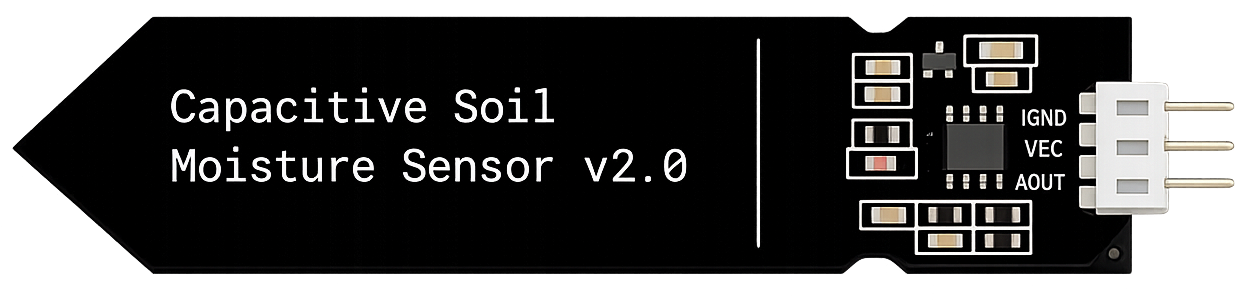
 Design with capacitive soil moisture sensor v2.0 in Cirkit Designer
Introduction
The Capacitive Soil Moisture Sensor v2.0 is a reliable and durable sensor designed to measure the volumetric water content in soil. Unlike traditional resistive sensors, this sensor uses capacitive sensing technology, which eliminates the risk of corrosion and ensures long-term accuracy and stability. It is ideal for applications requiring precise soil moisture monitoring, such as agriculture, gardening, and environmental monitoring.
Explore Projects Built with capacitive soil moisture sensor v2.0
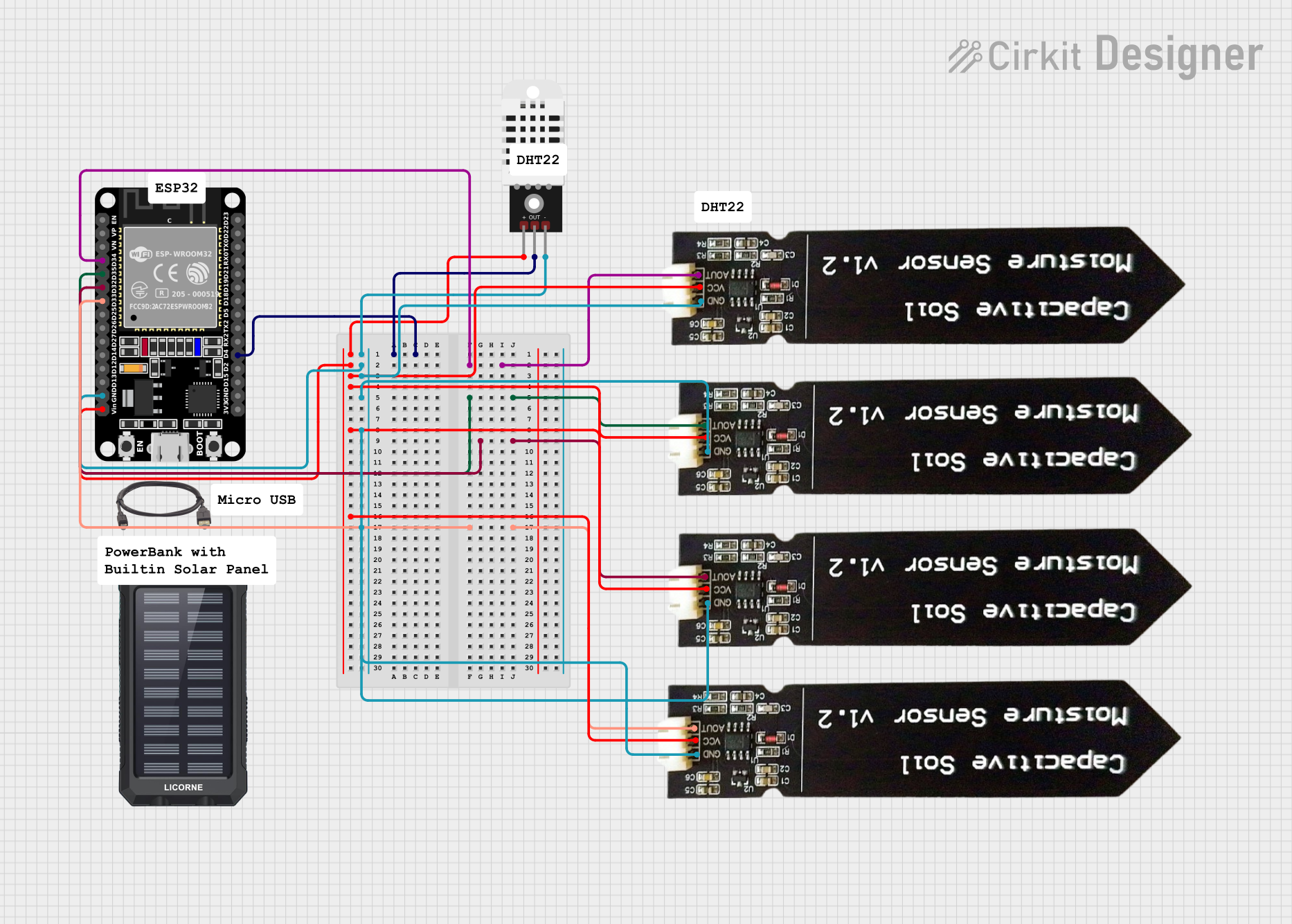 Open Project in Cirkit Designer
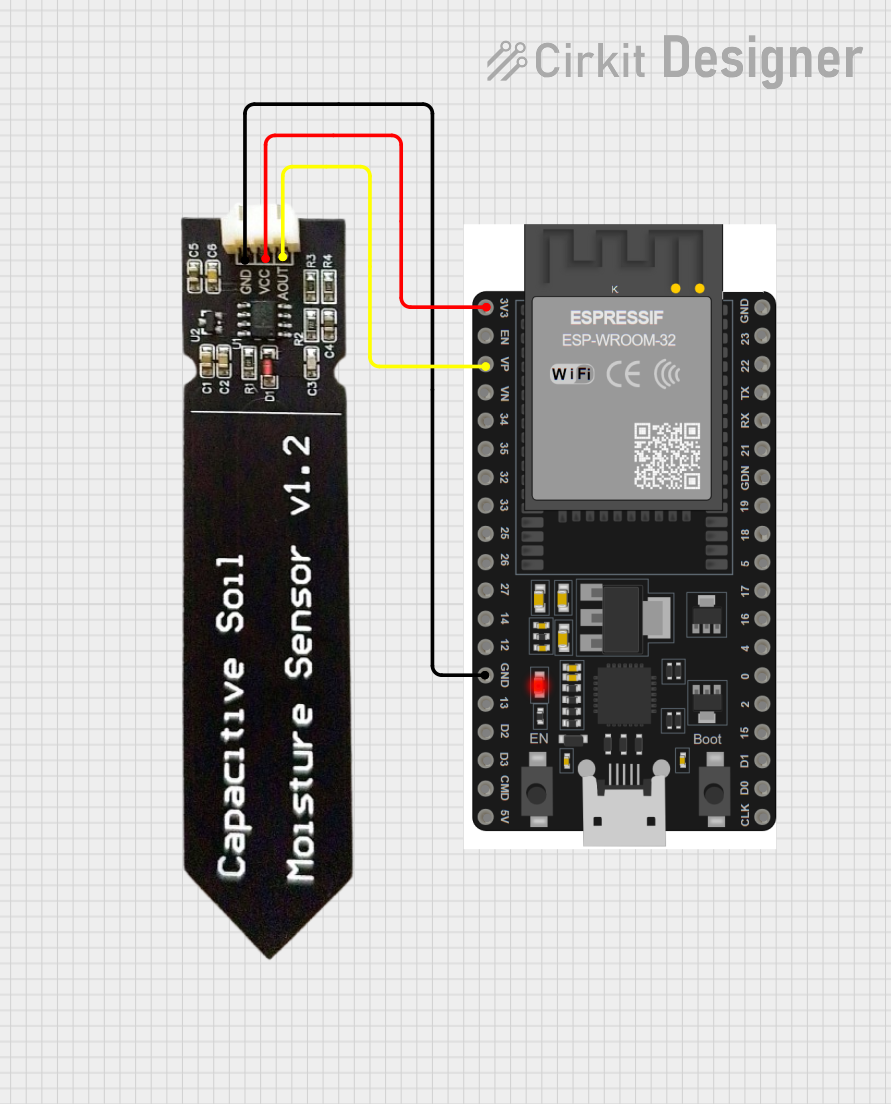 Open Project in Cirkit Designer
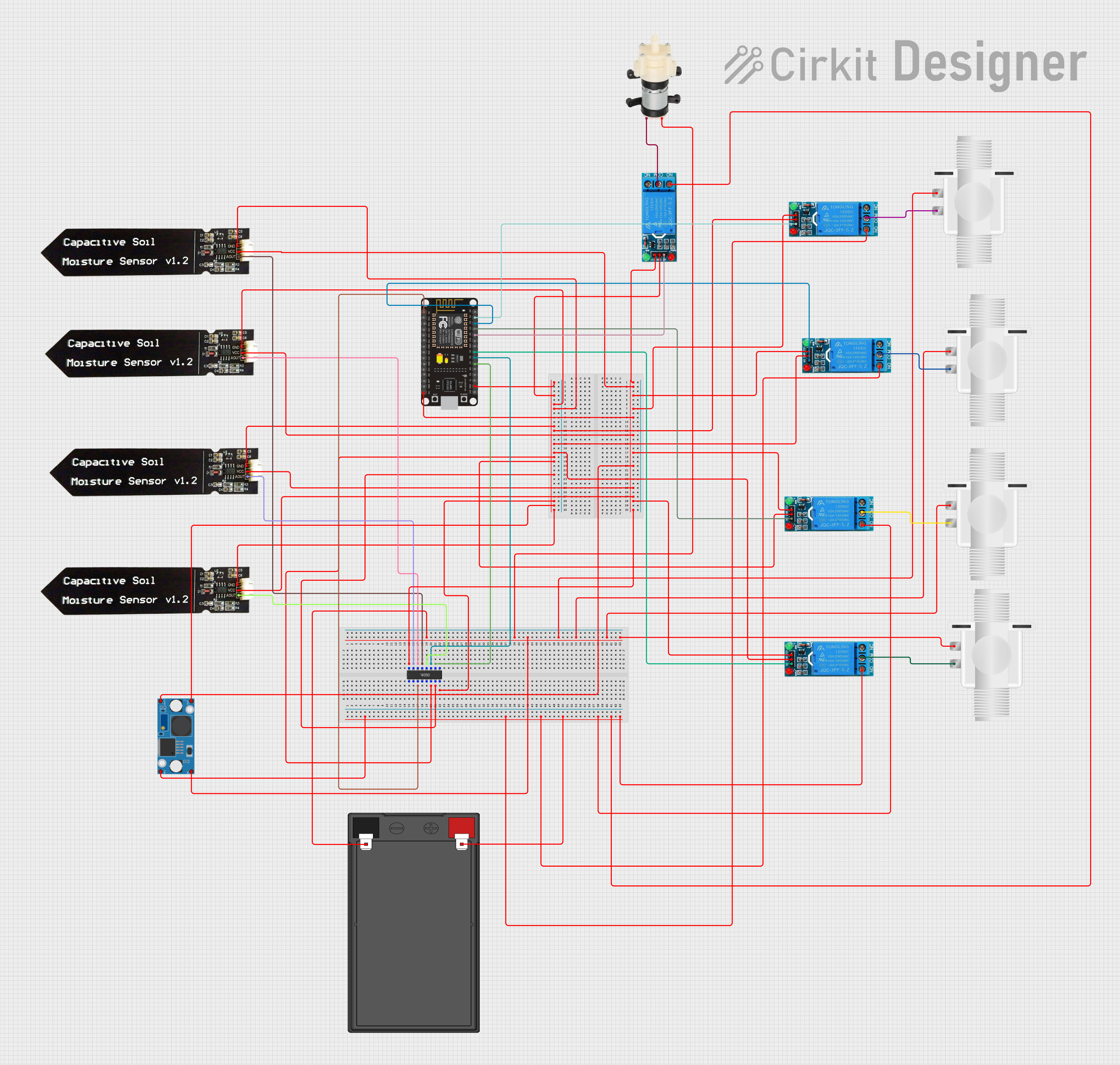 Open Project in Cirkit Designer
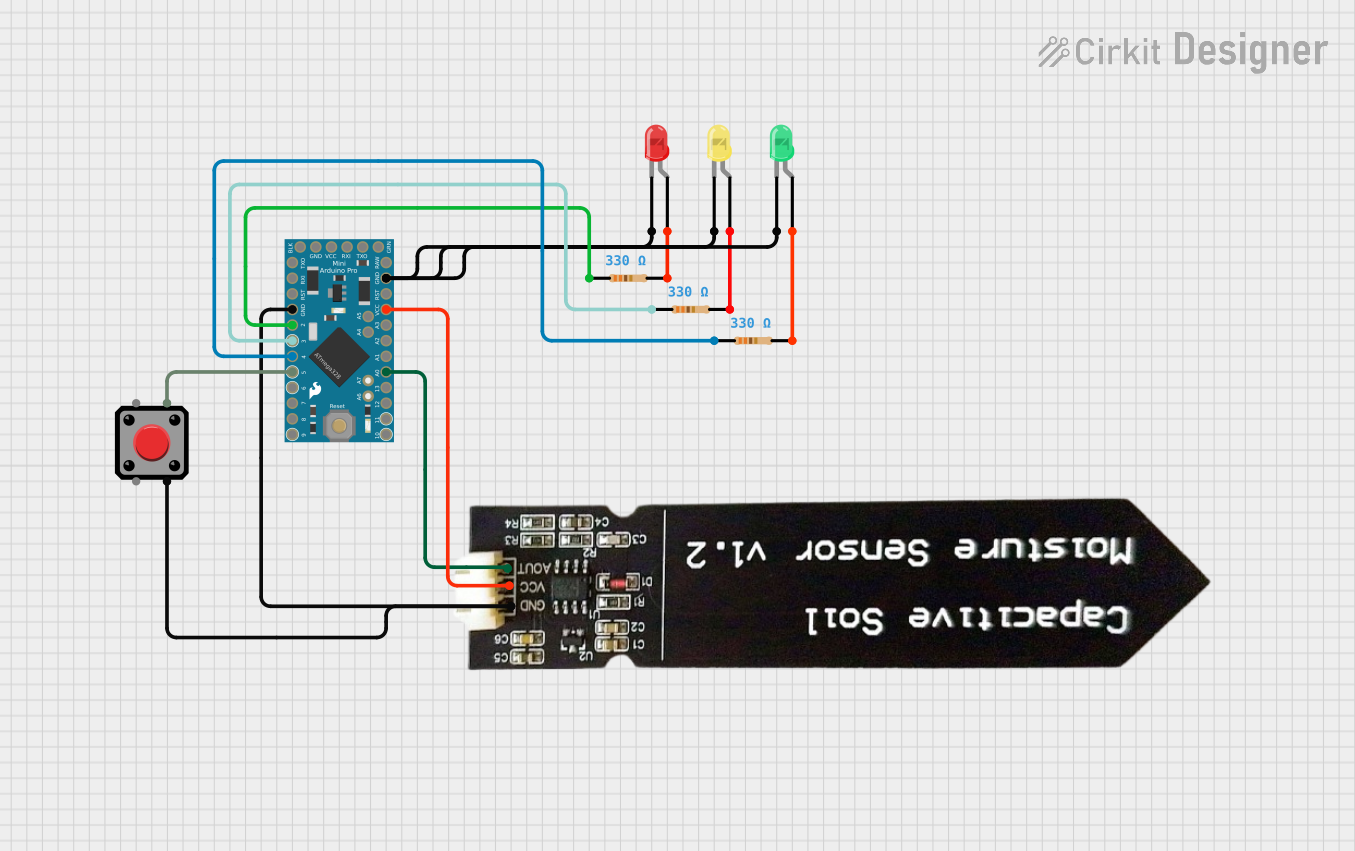 Open Project in Cirkit Designer
Explore Projects Built with capacitive soil moisture sensor v2.0
Open Project in Cirkit DesignerOpen Project in Cirkit DesignerOpen Project in Cirkit DesignerOpen Project in Cirkit DesignerCommon Applications and Use Cases
- Smart irrigation systems
- Greenhouse automation
- Soil moisture monitoring for agriculture
- Research and environmental studies
- DIY gardening projects
Technical Specifications
Below are the key technical details and pin configuration for the Capacitive Soil Moisture Sensor v2.0:
Key Technical Details
| Parameter | Value |
|---|---|
| Operating Voltage | 3.3V - 5.5V |
| Output Signal | Analog (0-3V) |
| Current Consumption | < 20mA |
| Measurement Range | 0% - 100% soil moisture |
| Sensor Dimensions | 98mm x 23mm x 3mm |
| Interface Type | Analog |
| Corrosion Resistance | Yes (capacitive technology) |
| Operating Temperature | -40°C to 85°C |
Pin Configuration and Descriptions
| Pin Name | Pin Type | Description |
|---|---|---|
| VCC | Power | Connect to 3.3V or 5V power supply |
| GND | Ground | Connect to the ground of the power supply |
| AOUT | Analog Out | Outputs an analog voltage proportional to soil |
| moisture level (higher voltage = drier soil) |
Usage Instructions
How to Use the Sensor in a Circuit
- Power the Sensor: Connect the
VCCpin to a 3.3V or 5V power source and theGNDpin to the ground. - Read the Output: Connect the
AOUTpin to an analog input pin of a microcontroller (e.g., Arduino UNO) to read the soil moisture level. - Insert into Soil: Place the sensor's probe into the soil you want to measure. Ensure the sensor is fully inserted for accurate readings.
Important Considerations and Best Practices
- Avoid Submerging the Sensor: The sensor is designed for soil moisture measurement, not for use in water or other liquids.
- Calibration: For precise measurements, calibrate the sensor by taking readings in dry and fully saturated soil to determine the range of analog values.
- Placement: Insert the sensor into the soil at the root level of the plants for the most relevant moisture readings.
- Power Supply: Use a stable power source to avoid fluctuations in the output signal.
Example Code for Arduino UNO
Below is an example of how to use the Capacitive Soil Moisture Sensor v2.0 with an Arduino UNO:
// Define the analog pin connected to the sensor's AOUT pin
const int sensorPin = A0;

// Variable to store the sensor reading
int sensorValue = 0;

void setup() {
  // Initialize serial communication for debugging
  Serial.begin(9600);
}

void loop() {
  // Read the analog value from the sensor
  sensorValue = analogRead(sensorPin);

  // Map the sensor value to a percentage (0% to 100%)
  int moisturePercent = map(sensorValue, 0, 1023, 0, 100);

  // Print the moisture percentage to the Serial Monitor
  Serial.print("Soil Moisture: ");
  Serial.print(moisturePercent);
  Serial.println("%");

  // Wait for 1 second before taking the next reading
  delay(1000);
}
Note: The map() function assumes the sensor's analog output ranges from 0 to 1023. Adjust the range based on your calibration results for more accurate readings.
Troubleshooting and FAQs
Common Issues and Solutions
No Output or Incorrect Readings:
- Solution: Ensure the sensor is properly powered (3.3V or 5V) and the connections are secure.
- Solution: Verify that the sensor is inserted into the soil correctly and not submerged in water.
Fluctuating Readings:
- Solution: Use a stable power supply to minimize noise in the analog signal.
- Solution: Add a capacitor (e.g., 0.1µF) between the
VCCandGNDpins to filter out power supply noise.
Output Voltage Too Low:
- Solution: Check if the soil is too wet, as the sensor outputs a lower voltage in moist soil.
- Solution: Ensure the sensor is not damaged or corroded.
FAQs
Q: Can this sensor be used outdoors?
A: Yes, but it is recommended to protect the sensor's electronics from direct exposure to water or extreme weather conditions.
Q: How do I calibrate the sensor?
A: Take readings in dry soil and fully saturated soil to determine the minimum and maximum analog output values. Use these values to map the sensor's output to a percentage scale.
Q: Can I use this sensor with a 3.3V microcontroller?
A: Yes, the sensor operates within a voltage range of 3.3V to 5.5V, making it compatible with 3.3V microcontrollers like the ESP32 or Raspberry Pi Pico.
Q: Is the sensor waterproof?
A: The sensor's probe is designed to be inserted into soil, but the electronics should not be submerged in water. Use waterproofing measures if necessary.