
How to Use Power Inverter: Examples, Pinouts, and Specs
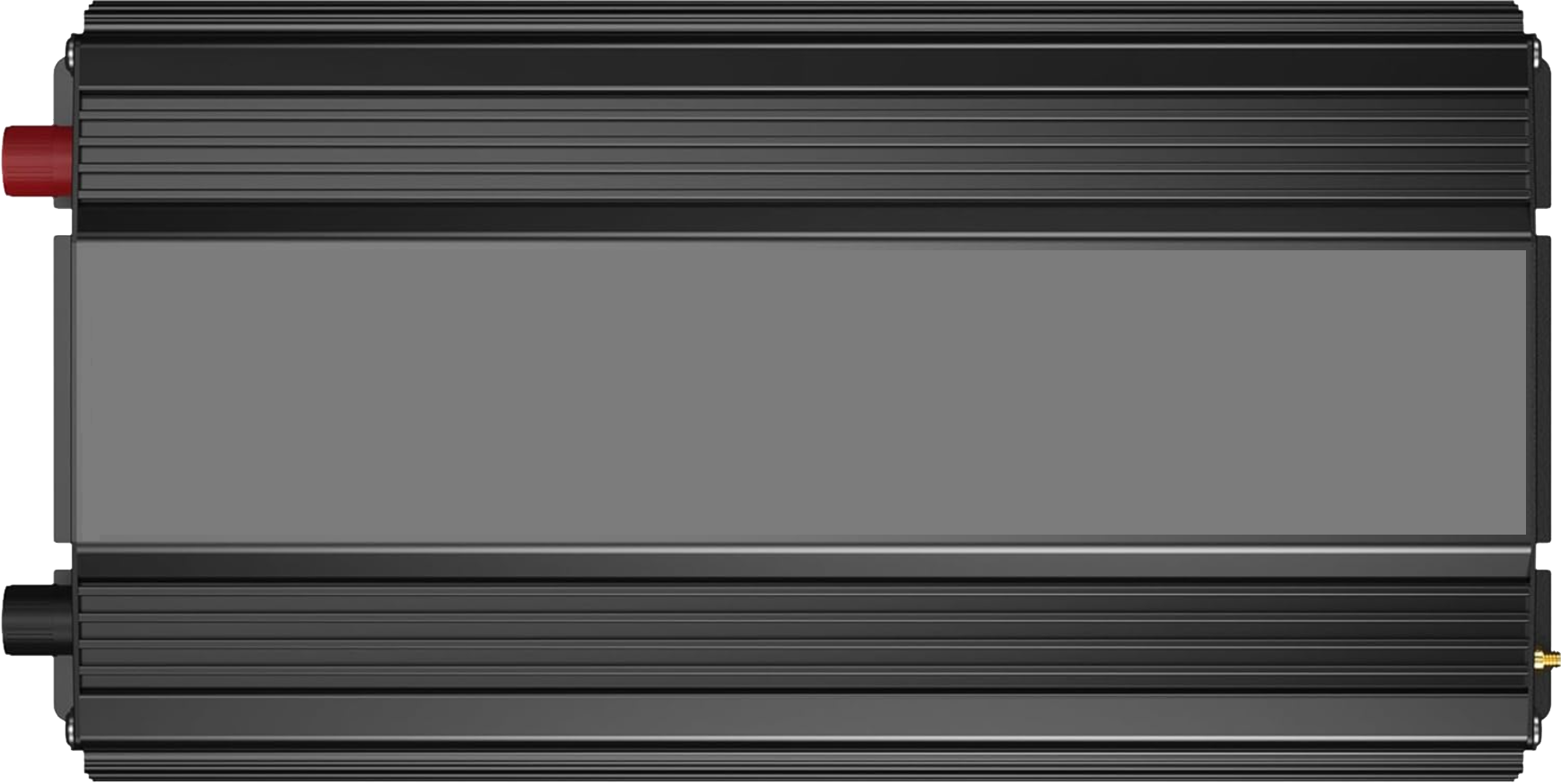
 Design with Power Inverter in Cirkit Designer
Introduction
The VOLTWORKS Store ETL UL458 12V DC to 220V AC 4000W Power Inverter is a high-performance electronic device designed to convert 12V DC power from sources such as batteries into 220V AC power. This enables the operation of AC-powered devices in environments where only DC power is available, such as vehicles, off-grid solar systems, and remote locations.
Explore Projects Built with Power Inverter
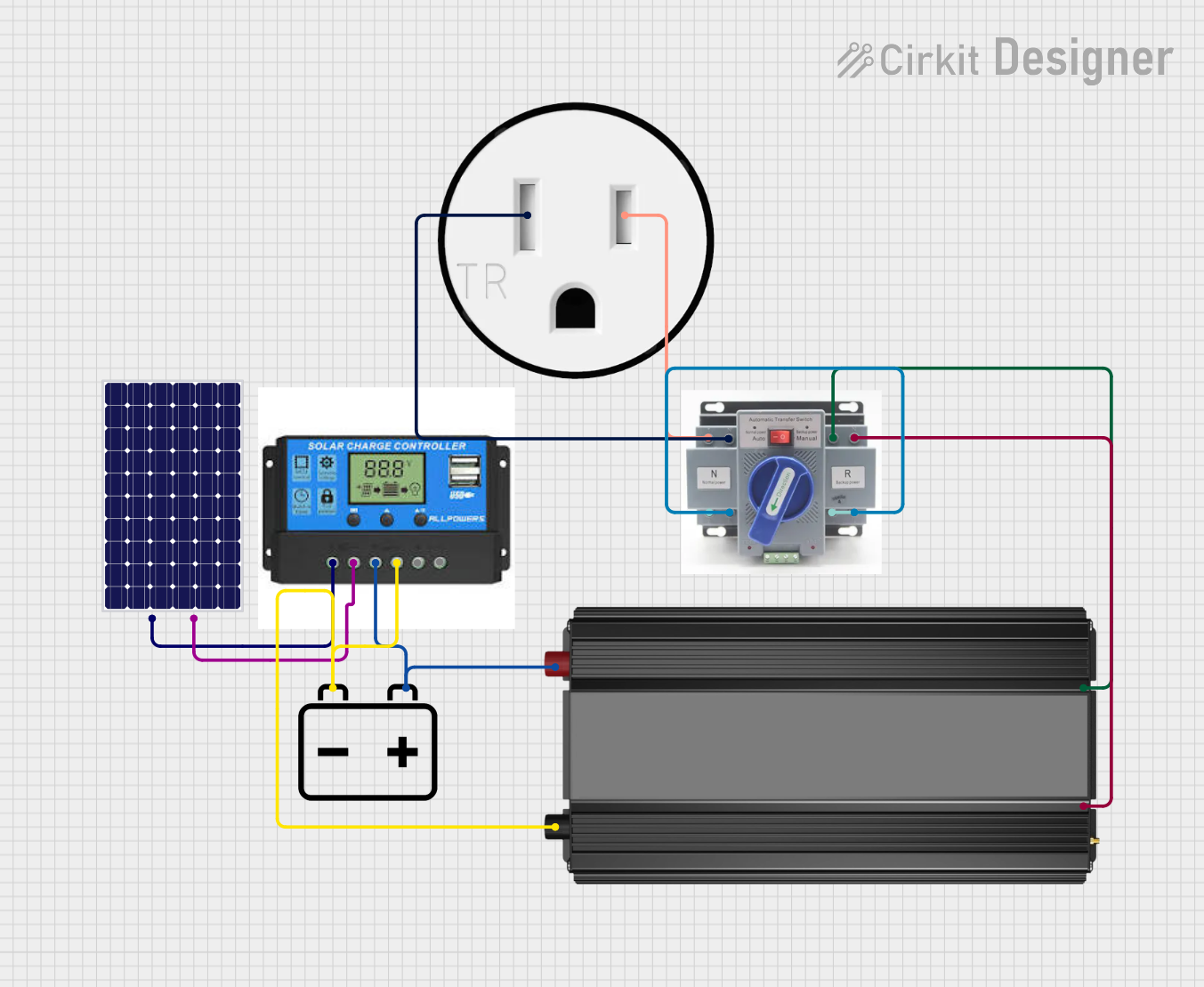 Open Project in Cirkit Designer
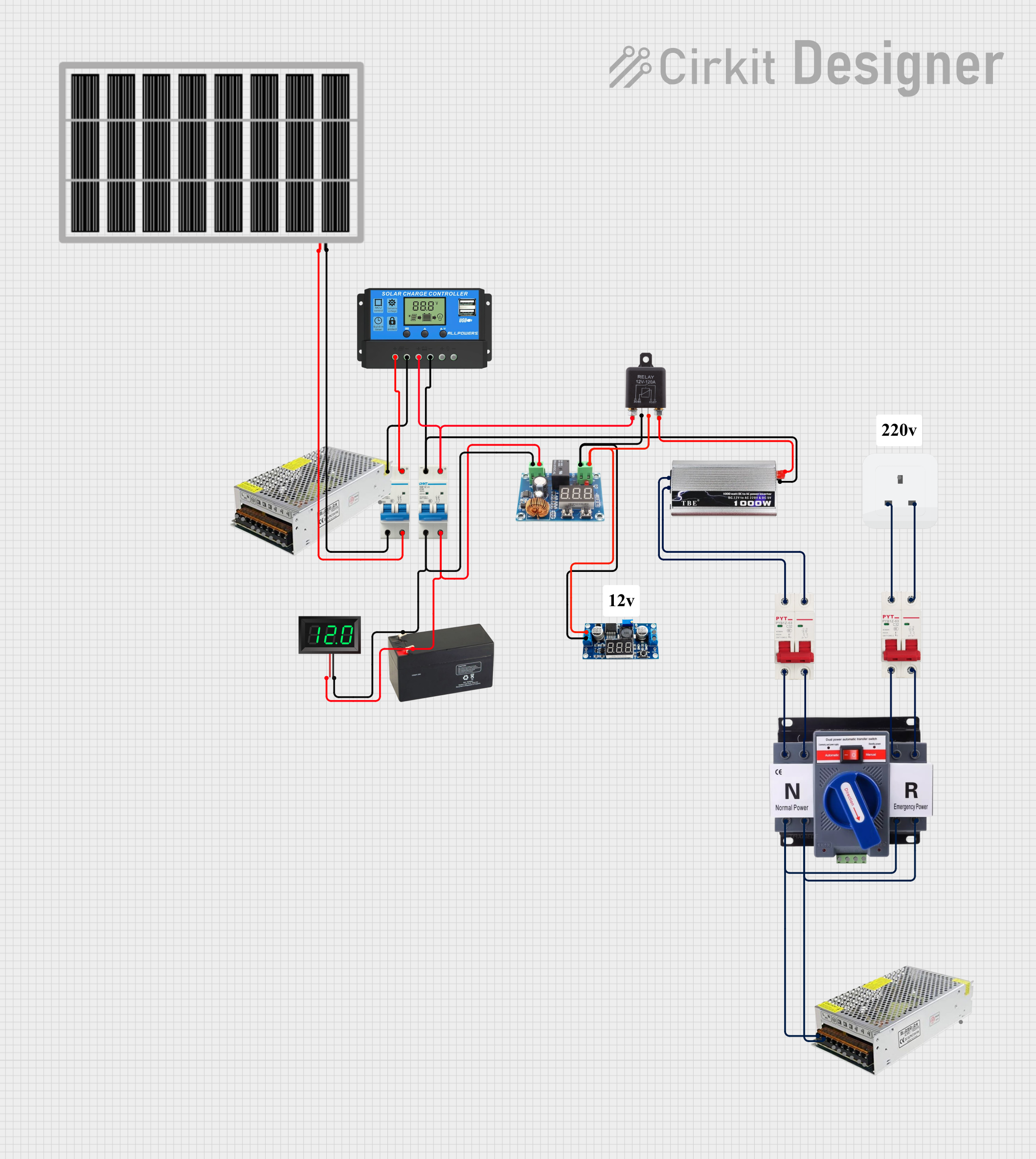 Open Project in Cirkit Designer
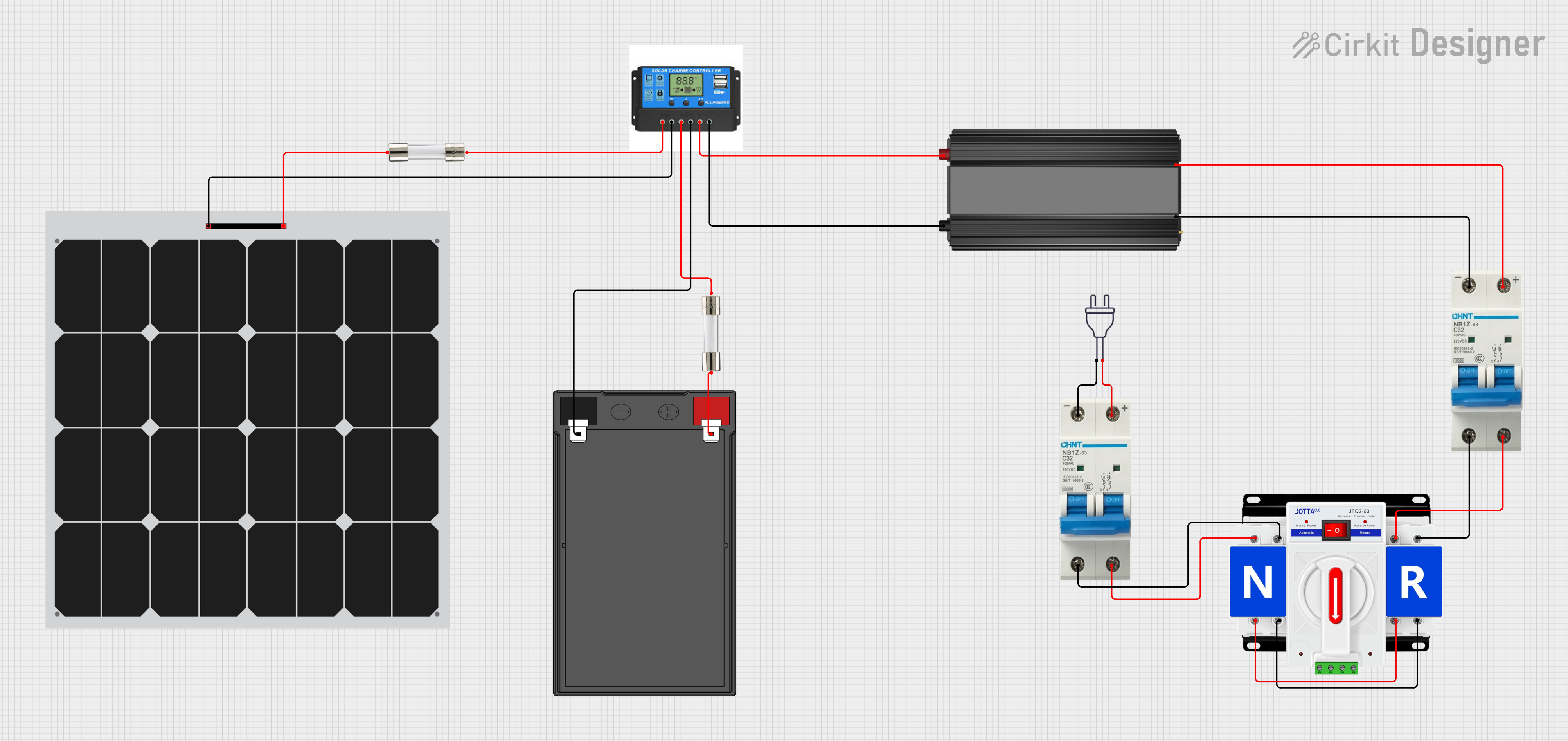 Open Project in Cirkit Designer
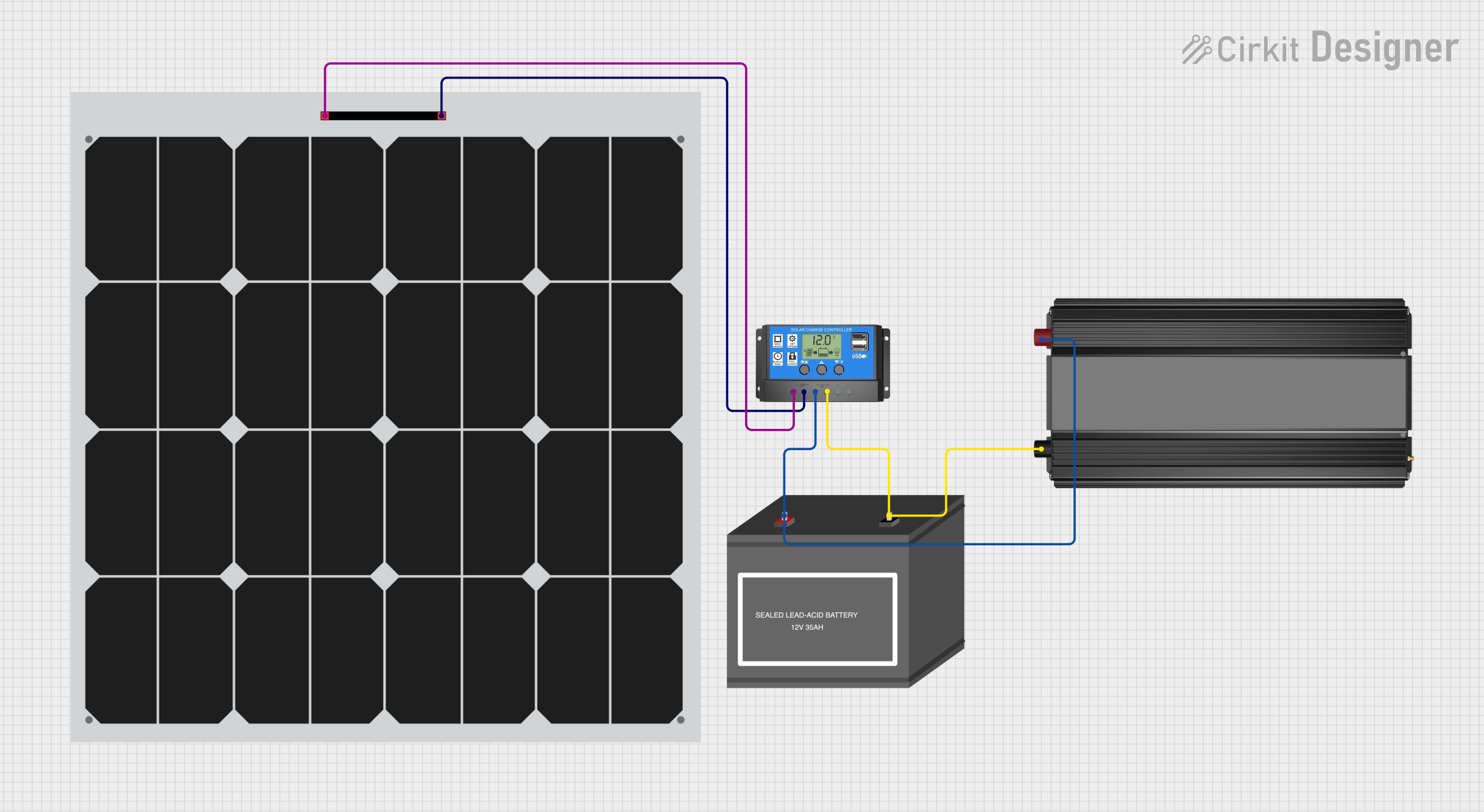 Open Project in Cirkit Designer
Explore Projects Built with Power Inverter
Open Project in Cirkit DesignerOpen Project in Cirkit DesignerOpen Project in Cirkit DesignerOpen Project in Cirkit DesignerCommon Applications and Use Cases
- Powering household appliances (e.g., refrigerators, microwaves, TVs) in off-grid setups.
- Providing AC power for tools and equipment in vehicles or remote job sites.
- Supporting emergency backup power systems during outages.
- Enabling portable power solutions for camping, RVs, and boats.
Technical Specifications
The following table outlines the key technical details of the ETL UL458 12V DC to 220V AC 4000W Power Inverter:
| Specification | Details |
|---|---|
| Input Voltage | 12V DC |
| Output Voltage | 220V AC ± 5% |
| Continuous Power Output | 4000W |
| Peak Power Output | 8000W |
| Output Waveform | Pure Sine Wave |
| Efficiency | ≥ 90% |
| Frequency | 50Hz ± 1% |
| Protection Features | Overload, over-temperature, short circuit, low voltage, and over-voltage |
| Cooling System | Intelligent temperature-controlled fan |
| Operating Temperature | -10°C to 40°C |
| Dimensions | 16.5 x 9.8 x 4.3 inches (approx.) |
| Weight | 10.5 lbs (approx.) |
Pin Configuration and Descriptions
The ETL UL458 Power Inverter does not have traditional pins but includes the following key input/output terminals and ports:
| Terminal/Port | Description |
|---|---|
| DC Input Terminals | Connect to a 12V DC battery (positive and negative terminals). |
| AC Output Sockets | Standard 220V AC outlets for connecting appliances or devices. |
| USB Ports | Provide 5V DC output for charging USB-powered devices (e.g., phones, tablets). |
| Ground Terminal | Ensures proper grounding for safety and reduced electrical noise. |
| Remote Control Port | Allows connection to an optional remote control for convenient operation. |
Usage Instructions
How to Use the Power Inverter in a Circuit
Connect the DC Input Terminals:
- Ensure the power source (e.g., 12V battery) is fully charged and capable of supplying the required current.
- Connect the positive (red) and negative (black) terminals of the inverter to the corresponding terminals of the battery using appropriately rated cables.
Ground the Inverter:
- Attach the ground terminal of the inverter to a suitable grounding point to ensure safety and minimize electrical noise.
Connect AC Devices:
- Plug your AC-powered devices into the inverter's AC output sockets. Ensure the total power consumption of connected devices does not exceed the inverter's continuous power rating (4000W).
Power On the Inverter:
- Turn on the inverter using the power switch or optional remote control. The inverter will begin converting DC to AC power.
Monitor Operation:
- Observe the inverter's status indicators (e.g., LED lights or display) for normal operation or any fault conditions.
Important Considerations and Best Practices
- Battery Capacity: Use a battery with sufficient capacity to handle the inverter's power requirements. For example, a 12V battery with a high amp-hour (Ah) rating is recommended.
- Cable Sizing: Use thick, low-resistance cables to minimize voltage drop and heat generation. Refer to the inverter's manual for recommended cable sizes.
- Ventilation: Ensure the inverter is placed in a well-ventilated area to prevent overheating. Avoid enclosing it in tight spaces.
- Load Management: Do not exceed the inverter's continuous power rating. For devices with high startup currents (e.g., refrigerators), ensure the peak power rating (8000W) is not exceeded.
- Safety: Always disconnect the inverter from the battery when not in use to prevent accidental discharge or damage.
Arduino UNO Integration
While the ETL UL458 Power Inverter is not directly controlled by an Arduino UNO, it can be used in projects where the Arduino controls devices powered by the inverter. For example, you can use the Arduino to automate the operation of AC devices connected to the inverter.
Here is an example Arduino sketch to control a relay module that switches an AC device powered by the inverter:
// Example: Controlling an AC device powered by the inverter using a relay module
const int relayPin = 7; // Pin connected to the relay module

void setup() {
  pinMode(relayPin, OUTPUT); // Set relay pin as output
  digitalWrite(relayPin, LOW); // Ensure relay is off at startup
}

void loop() {
  // Turn on the AC device
  digitalWrite(relayPin, HIGH);
  delay(5000); // Keep the device on for 5 seconds

  // Turn off the AC device
  digitalWrite(relayPin, LOW);
  delay(5000); // Keep the device off for 5 seconds
}
Note: Ensure proper isolation between the Arduino and the AC circuit to avoid electrical hazards.
Troubleshooting and FAQs
Common Issues and Solutions
| Issue | Possible Cause | Solution |
|---|---|---|
| Inverter does not power on | Battery is not connected or is discharged | Check battery connections and ensure the battery is charged. |
| AC devices do not work | Overload or incompatible device | Ensure the total load is within the inverter's power rating. |
| Inverter shuts down unexpectedly | Over-temperature or low battery voltage | Check ventilation and battery voltage. Allow the inverter to cool down. |
| Audible alarm or fault indicator active | Low voltage, overload, or short circuit | Verify input voltage, reduce load, or check for short circuits. |
| USB ports not working | Internal fault or excessive load on USB ports | Disconnect USB devices and restart the inverter. |
FAQs
Can I use this inverter with a 24V battery?
- No, this inverter is designed specifically for 12V DC input. Using a 24V battery may damage the inverter.
What type of appliances can I power with this inverter?
- You can power most household appliances, tools, and electronics as long as their total power consumption does not exceed 4000W.
How do I calculate the runtime of my battery with this inverter?
- Use the formula:
Runtime (hours) = Battery Capacity (Ah) × Battery Voltage (V) ÷ Load Power (W). For example, a 12V 200Ah battery powering a 1000W load would last approximately 2.4 hours.
- Use the formula:
Is the inverter safe for sensitive electronics?
- Yes, the pure sine wave output is suitable for sensitive electronics like laptops, TVs, and medical equipment.
By following this documentation, users can effectively utilize the VOLTWORKS Store ETL UL458 Power Inverter for a wide range of applications while ensuring safety and optimal performance.