
How to Use CC1101: Examples, Pinouts, and Specs
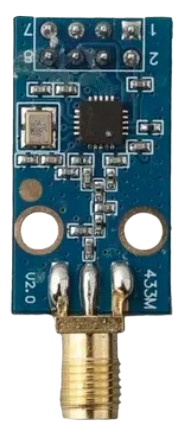
 Design with CC1101 in Cirkit Designer
Introduction
The CC1101 is a low-power sub-1 GHz transceiver designed for wireless communication in the ISM (Industrial, Scientific, and Medical) and SRD (Short Range Device) frequency bands. It supports multiple modulation formats, including ASK, FSK, GFSK, and MSK, making it highly versatile for various applications. The CC1101 is widely used in remote control systems, wireless sensor networks, home automation, and industrial monitoring due to its low power consumption and robust performance.
Explore Projects Built with CC1101
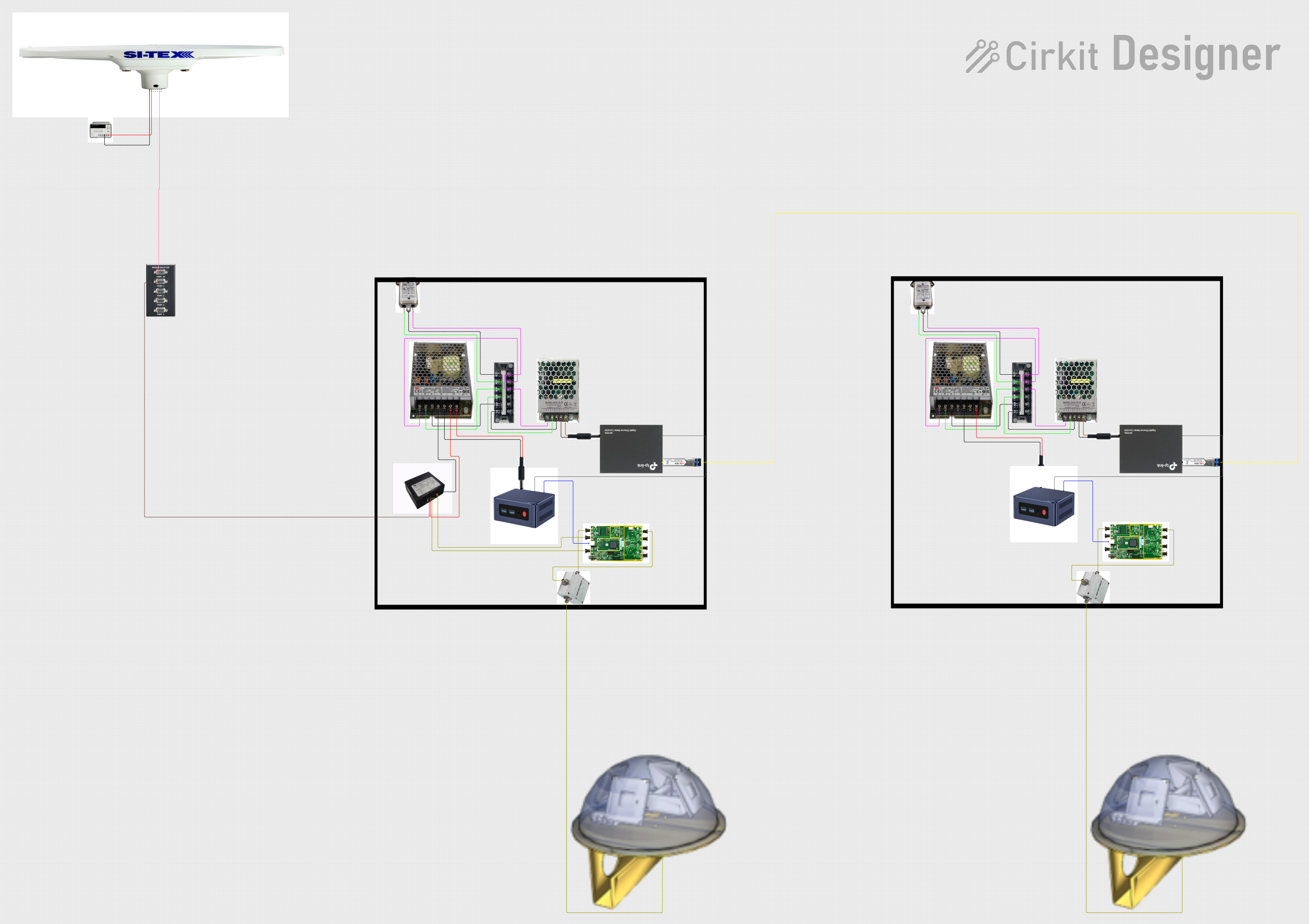 Open Project in Cirkit Designer
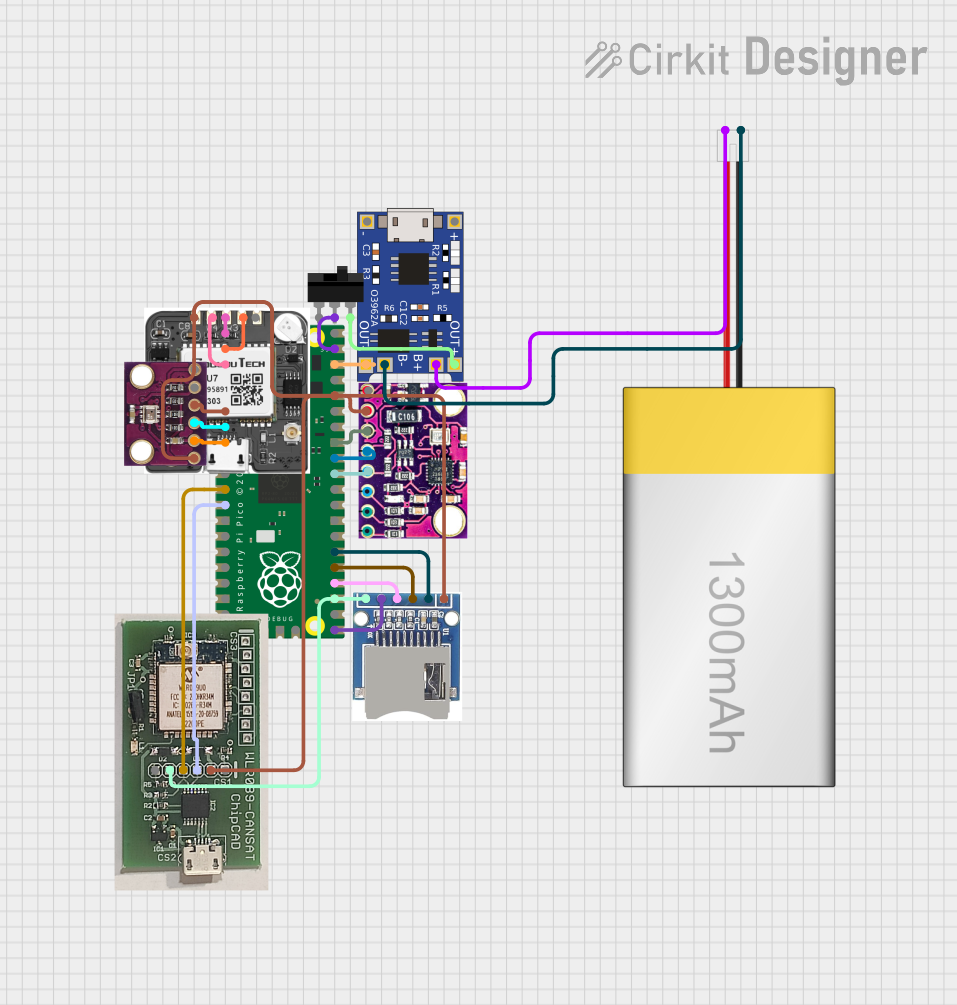 Open Project in Cirkit Designer
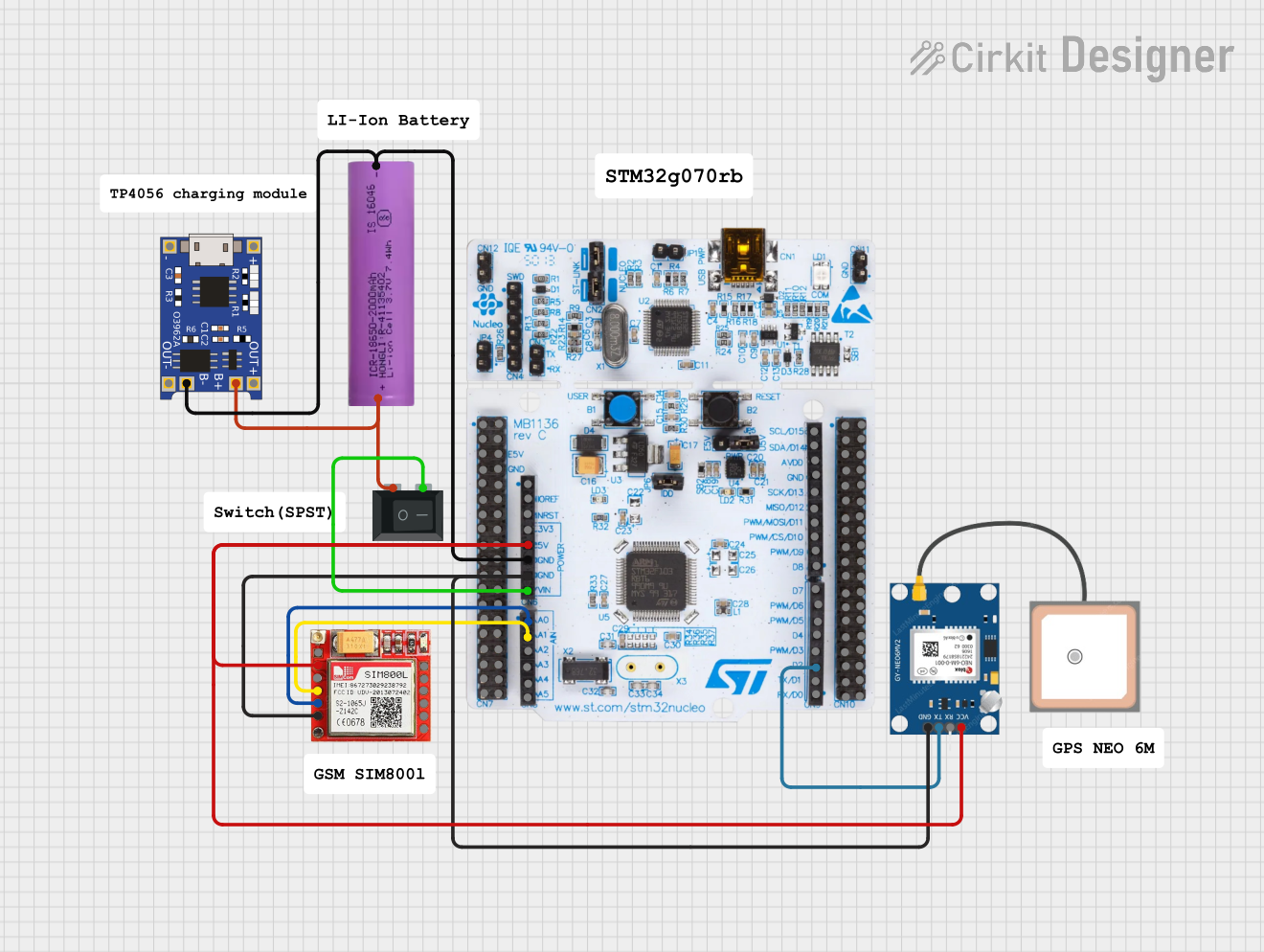 Open Project in Cirkit Designer
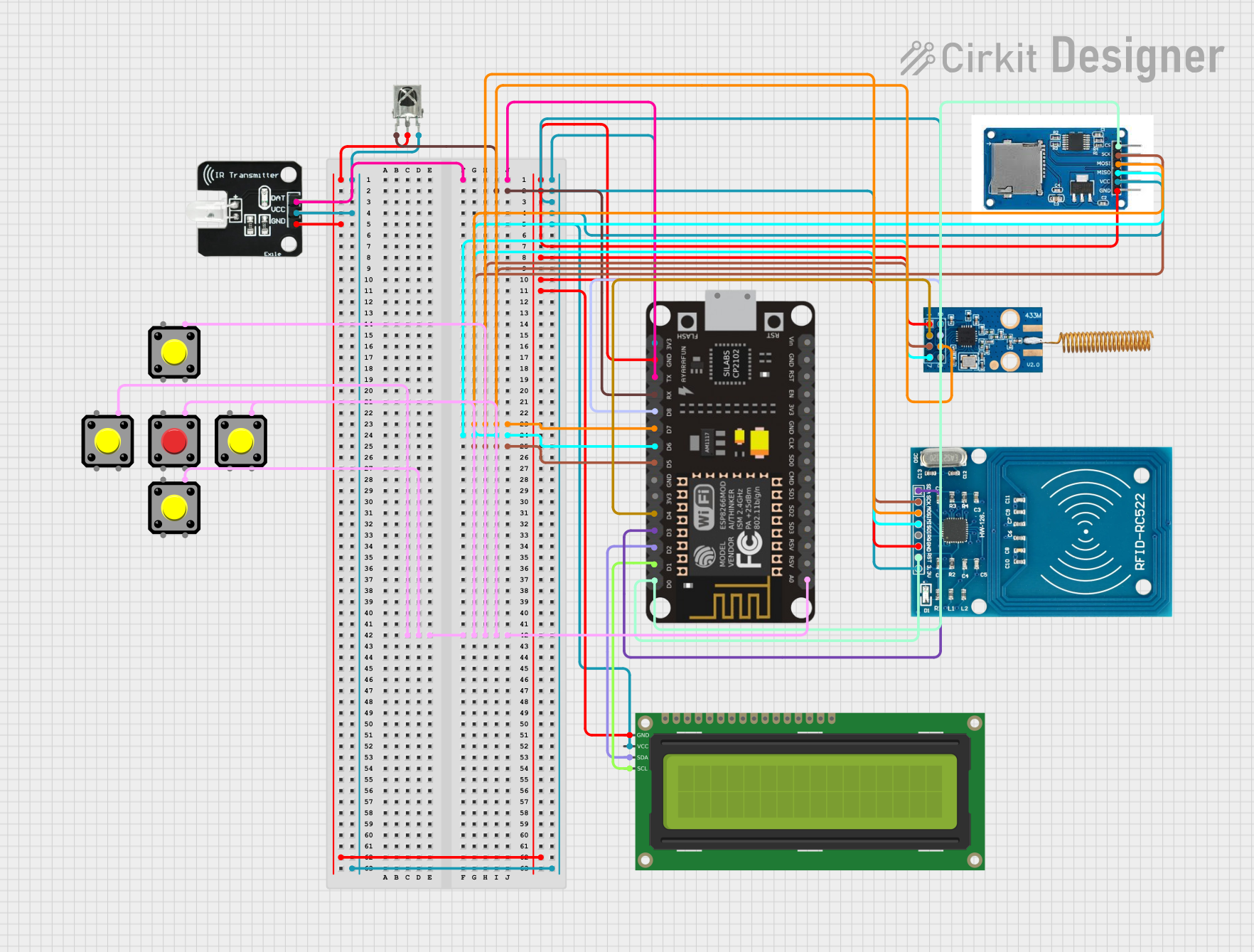 Open Project in Cirkit Designer
Explore Projects Built with CC1101
Open Project in Cirkit DesignerOpen Project in Cirkit DesignerOpen Project in Cirkit DesignerOpen Project in Cirkit DesignerTechnical Specifications
The CC1101 offers a range of features and specifications that make it suitable for low-power wireless communication. Below are the key technical details:
General Specifications
- Frequency Range: 300 MHz to 928 MHz (programmable)
- Modulation Formats: ASK, FSK, GFSK, MSK
- Data Rate: 0.6 kbps to 600 kbps
- Supply Voltage: 1.8 V to 3.6 V
- Current Consumption:
- RX Mode: 14.7 mA (typical)
- TX Mode: 21.2 mA at +10 dBm output power
- Output Power: Programmable from -30 dBm to +10 dBm
- Sensitivity: -116 dBm at 1.2 kbps
- Interface: SPI (Serial Peripheral Interface)
- Operating Temperature: -40°C to +85°C
Pin Configuration and Descriptions
The CC1101 is typically available in a 20-pin QFN package. Below is the pin configuration and description:
| Pin Number | Pin Name | Description |
|---|---|---|
| 1 | GND | Ground |
| 2 | GND | Ground |
| 3 | GND | Ground |
| 4 | AVDD | Analog Power Supply |
| 5 | DVDD | Digital Power Supply |
| 6 | DCOUPL | Decoupling Capacitor for Digital Core |
| 7 | GDO0 | General Purpose Digital Output 0 |
| 8 | GDO2 | General Purpose Digital Output 2 |
| 9 | GDO1 | General Purpose Digital Output 1 |
| 10 | CSn | SPI Chip Select (Active Low) |
| 11 | SCLK | SPI Clock |
| 12 | SI | SPI Data Input |
| 13 | SO | SPI Data Output |
| 14 | GND | Ground |
| 15 | XOSC_Q1 | Crystal Oscillator Pin 1 |
| 16 | XOSC_Q2 | Crystal Oscillator Pin 2 |
| 17 | RF_N | RF Negative Input/Output |
| 18 | RF_P | RF Positive Input/Output |
| 19 | AVDD | Analog Power Supply |
| 20 | GND | Ground |
Usage Instructions
The CC1101 can be integrated into a circuit for wireless communication. Below are the steps and considerations for using the CC1101:
Circuit Integration
- Power Supply: Connect the CC1101 to a stable power supply within the range of 1.8 V to 3.6 V. Use decoupling capacitors near the power pins to reduce noise.
- SPI Interface: Connect the SPI pins (CSn, SCLK, SI, SO) to the corresponding pins on your microcontroller. Ensure proper pull-up or pull-down resistors if required.
- Antenna: Attach an appropriate antenna to the RF_P and RF_N pins for optimal wireless performance. Match the antenna impedance to 50 ohms.
- Crystal Oscillator: Connect a 26 MHz crystal oscillator to the XOSC_Q1 and XOSC_Q2 pins. Use appropriate load capacitors as specified in the datasheet.
Configuration and Programming
The CC1101 is configured via SPI commands. You can set parameters such as frequency, modulation, and data rate by writing to the device's configuration registers.
Example: Using CC1101 with Arduino UNO
Below is an example of interfacing the CC1101 with an Arduino UNO for basic communication:
#include <SPI.h>

// Define CC1101 SPI pins
#define CC1101_CS 10  // Chip Select pin
#define CC1101_MISO 12 // Master In Slave Out
#define CC1101_MOSI 11 // Master Out Slave In
#define CC1101_SCK 13  // Serial Clock

void setup() {
  // Initialize SPI
  SPI.begin();
  pinMode(CC1101_CS, OUTPUT);
  digitalWrite(CC1101_CS, HIGH); // Set CS high to deselect CC1101

  Serial.begin(9600);
  Serial.println("Initializing CC1101...");

  // Example: Write to a CC1101 register
  writeCC1101Register(0x02, 0x06); // Example: Set a configuration register
}

void loop() {
  // Main loop code
}

// Function to write to a CC1101 register
void writeCC1101Register(byte addr, byte value) {
  digitalWrite(CC1101_CS, LOW); // Select CC1101
  SPI.transfer(addr);           // Send register address
  SPI.transfer(value);          // Send value to write
  digitalWrite(CC1101_CS, HIGH); // Deselect CC1101
}
Best Practices
- Use proper shielding and grounding to minimize RF interference.
- Match the antenna impedance to the CC1101 for optimal performance.
- Use a low-noise power supply to avoid degrading the RF signal quality.
- Configure the CC1101 registers according to your application requirements.
Troubleshooting and FAQs
Common Issues
No Communication with CC1101:
- Cause: Incorrect SPI connections or configuration.
- Solution: Verify the SPI wiring and ensure the SPI clock speed is within the CC1101's supported range.
Poor Wireless Range:
- Cause: Improper antenna or mismatched impedance.
- Solution: Use a properly tuned antenna and ensure a 50-ohm impedance match.
High Power Consumption:
- Cause: Incorrect power mode configuration.
- Solution: Configure the CC1101 to enter low-power modes (e.g., idle or sleep) when not transmitting or receiving.
Unstable Communication:
- Cause: Noise or interference in the RF environment.
- Solution: Use proper shielding and select a less congested frequency band.
FAQs
Q: Can the CC1101 operate at 433 MHz?
- A: Yes, the CC1101 supports operation at 433 MHz, as well as other sub-1 GHz frequencies.
Q: What is the maximum data rate supported by the CC1101?
- A: The CC1101 supports data rates up to 600 kbps.
Q: Can I use the CC1101 with a 5V microcontroller?
- A: Yes, but you need a level shifter to interface the 3.3V CC1101 with a 5V microcontroller.
Q: Does the CC1101 support encryption?
- A: No, the CC1101 does not have built-in encryption. You can implement encryption in your microcontroller if needed.