
How to Use MQ-3 Gas Sensor: Examples, Pinouts, and Specs
 Design with MQ-3 Gas Sensor in Cirkit Designer
Introduction
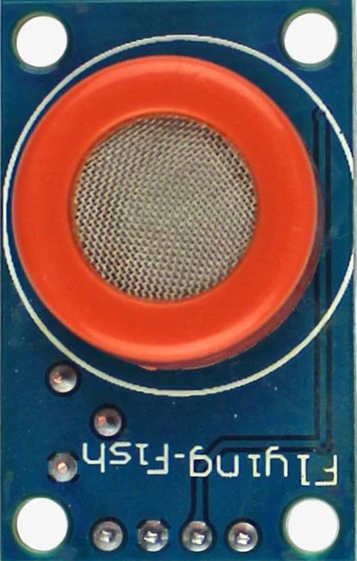
The MQ-3 Gas Sensor, manufactured by Flying Fish (Part ID: MQ-3), is a versatile and reliable sensor designed to detect alcohol and other volatile organic compounds (VOCs). It operates on the principle of resistive change when exposed to target gases, providing an analog output proportional to the gas concentration. This sensor is widely used in applications such as breath analyzers, air quality monitoring systems, and industrial safety equipment.
Explore Projects Built with MQ-3 Gas Sensor
 Open Project in Cirkit Designer
 Open Project in Cirkit Designer
 Open Project in Cirkit Designer
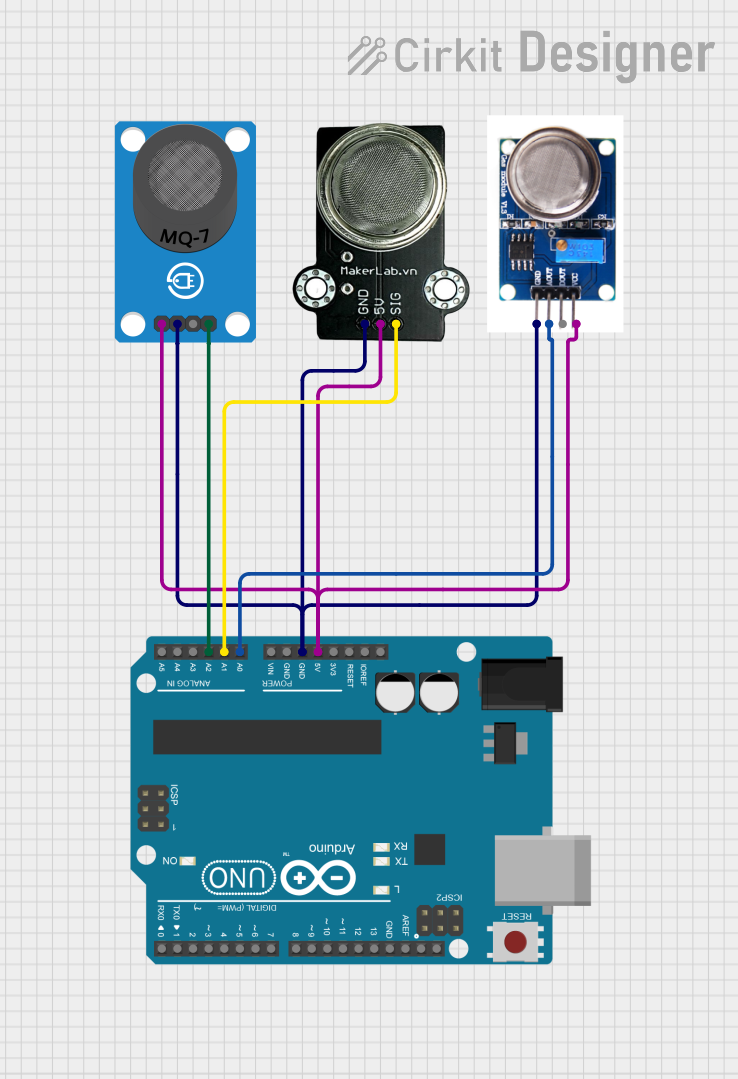 Open Project in Cirkit Designer
Explore Projects Built with MQ-3 Gas Sensor
Open Project in Cirkit DesignerOpen Project in Cirkit DesignerOpen Project in Cirkit DesignerOpen Project in Cirkit DesignerCommon Applications:
- Breath alcohol analyzers
- Air quality monitoring systems
- Gas leakage detection
- Industrial safety systems
- Smart home automation for environmental monitoring
Technical Specifications
Key Technical Details:
| Parameter | Value |
|---|---|
| Operating Voltage | 5V DC |
| Load Resistance (RL) | Adjustable (typically 10 kΩ) |
| Heater Voltage (VH) | 5V ± 0.2V |
| Heater Power Consumption | ≤ 800 mW |
| Detection Range | 0.04 mg/L to 4 mg/L (alcohol) |
| Preheat Time | ≥ 24 hours for stable output |
| Output Signal | Analog (0-5V) |
| Sensitivity | High sensitivity to alcohol |
| Operating Temperature | -10°C to 50°C |
| Humidity Range | ≤ 95% RH |
| Dimensions | 32mm x 20mm x 22mm |
Pin Configuration and Descriptions:
| Pin Name | Pin Type | Description |
|---|---|---|
| VCC | Power | Connect to 5V DC power supply |
| GND | Ground | Connect to ground of the power supply |
| AOUT | Analog Out | Outputs an analog voltage proportional to gas |
| DOUT | Digital Out | Outputs HIGH or LOW based on gas concentration |
Usage Instructions
How to Use the MQ-3 Gas Sensor in a Circuit:
- Power the Sensor: Connect the
VCCpin to a 5V DC power supply and theGNDpin to ground. - Analog Output: Connect the
AOUTpin to an analog input pin of a microcontroller (e.g., Arduino UNO) to read the gas concentration as a voltage. - Digital Output: Optionally, connect the
DOUTpin to a digital input pin of a microcontroller. The digital output is HIGH when the gas concentration exceeds a preset threshold, which can be adjusted using the onboard potentiometer. - Preheat the Sensor: Allow the sensor to preheat for at least 24 hours for optimal accuracy.
- Calibrate the Sensor: Use a known gas concentration to calibrate the sensor and map the analog output voltage to the gas concentration.
Important Considerations and Best Practices:
- Preheating: The sensor requires a preheating period of at least 24 hours for stable and accurate readings.
- Ventilation: Ensure proper ventilation around the sensor to avoid saturation and improve response time.
- Power Supply: Use a stable 5V power supply to avoid fluctuations in readings.
- Avoid Contamination: Keep the sensor away from water, dust, and corrosive gases to maintain its longevity.
- Calibration: Periodically recalibrate the sensor to account for aging and environmental changes.
Example Code for Arduino UNO:
// MQ-3 Gas Sensor Example Code for Arduino UNO
// Reads analog output from the sensor and prints gas concentration to Serial Monitor

const int analogPin = A0; // Connect AOUT pin of MQ-3 to A0 on Arduino
int sensorValue = 0;      // Variable to store the analog reading

void setup() {
  Serial.begin(9600); // Initialize Serial communication at 9600 baud
  pinMode(analogPin, INPUT); // Set A0 as input
}

void loop() {
  sensorValue = analogRead(analogPin); // Read analog value from MQ-3
  float voltage = sensorValue * (5.0 / 1023.0); // Convert to voltage (0-5V)

  // Print the sensor value and voltage to Serial Monitor
  Serial.print("Sensor Value: ");
  Serial.print(sensorValue);
  Serial.print(" | Voltage: ");
  Serial.print(voltage);
  Serial.println(" V");

  delay(1000); // Wait for 1 second before next reading
}
Troubleshooting and FAQs
Common Issues and Solutions:
No Output or Incorrect Readings:
- Cause: Insufficient preheating time.
- Solution: Ensure the sensor is preheated for at least 24 hours before use.
Fluctuating Readings:
- Cause: Unstable power supply or environmental interference.
- Solution: Use a regulated 5V power supply and ensure proper ventilation.
Sensor Not Responding to Gas:
- Cause: Sensor contamination or damage.
- Solution: Clean the sensor gently with dry air or replace it if damaged.
Digital Output Always HIGH or LOW:
- Cause: Incorrect threshold adjustment.
- Solution: Adjust the potentiometer to set the desired threshold level.
FAQs:
Q1: Can the MQ-3 detect gases other than alcohol?
A1: Yes, the MQ-3 can detect other volatile organic compounds (VOCs), but it is most sensitive to alcohol.
Q2: How do I calibrate the sensor?
A2: Use a known concentration of alcohol gas and record the analog output voltage. Map this voltage to the gas concentration for accurate readings.
Q3: Can I use the MQ-3 with a 3.3V microcontroller?
A3: The MQ-3 requires a 5V power supply for the heater. However, you can use a voltage divider to step down the analog output for 3.3V microcontrollers.
Q4: How long does the sensor last?
A4: The MQ-3 sensor typically lasts for several years with proper use and maintenance. Periodic calibration is recommended to maintain accuracy.